How we built a demand generation system for a B2B agritech player in central Europe
Article summary
Share
Summary
The client, an agritech company in CEE, had strong expertise, a solid home market, and a reputation built over decades through network selling, trade events, and referral relationships. Then they set an ambitious objective: grow beyond the network. Sell into markets where nobody knew the company name, where buyers were researching digitally, comparing vendors without ever picking up the phone, and expecting operational proof before the first conversation.
And the problem was immediate. The company’s marketing system, website, messaging, and entire digital presence were designed for an audience already familiar with the brand. For buyers in new markets, the company was kind of invisible.
That’s why we accepted the honor and challenge to redesigned the demand generation infrastructure from positioning to conversion, built for the reality of how B2B industrial buyers research and evaluate vendors in 2025 (and beyond).
Let’s dig in.
About the agritech client
A B2B industrial agritech company based in Poland, operating in the industrial food processing ecosystem of Central and Eastern Europe, mainly Poland. The company had decades of industry expertise, a strong customer base earned through direct relationships, trade events, printed product catalogs, and referral networks. Their reputation in the home market was solid and earned.
The engagement started because the leadership team recognized the ceiling of network-driven growth. The existing customer base was strong, but new customer acquisition outside the home network was slow, unstructured, and dependent on personal introductions. The company wanted to enter new markets where their expertise applied with a super clear fit, but their name did not carry.
Who was in the room
We worked with the Marketing and Sales Director as our primary counterpart throughout the engagement. He carried both the commercial perspective and the marketing execution responsibility, which gave the project a tighter decision loop than engagements where marketing and sales sit in separate offices with separate calendars.
The Founding team provided input at key strategic decision points: positioning direction, market priorities, and budget allocation.
Day-to-day decisions and implementation lived with the Marketing and Sales Director, and the speed of the engagement reflected his ability to call both sides of the marketing-sales conversation from a single chair. For us it was a very good case, that sped the process and shortened the decision process.
Client situation analysis
The client’s expertise was never in question. Their product lines were credible and the real deal, their operational knowledge was deep, and their existing customers were loyal.
But, unfortunately, none of this expertise was visible to a buyer in a new market running a search query, asking an AI tool for vendor recommendations, or comparing options on a shortlist assembled without a single phone call.
This is where the industry data research entered the chat. A 2025 Gartner survey of 646 B2B buyers found 67% prefer completing purchases without interacting with a sales representative in the early stages. 45% used AI tools during a recent purchase. Separate research from Forrester and Gartner shows buyers now complete roughly 70% of their evaluation before contacting a vendor. Buying committees in B2B typically include 6 to 10 stakeholders, each with their own criteria, proof requirements, and veto power.
These numbers come from technology sectors, but the behavioral pattern is spreading into every industrial complex-tech vertical, including agritech.
The buyer on the other side of the table is the same person who uses ChatGPT at home and Google at work. When searching for food processing solutions, they start digitally, compare digitally, and form a preference digitally. The vendor who has no digital proof, no operational content, and no findable expertise loses the deal before anyone picks up the phone.
Remeber, our client had a strong offline reputation earned over decades in their existing geography. Online, buyers in new markets would find almost nothing of value for them. And the company was now trying to generate demand in precisely those markets where its offline reputation did not travel without a sales rep.
The challenge
Four problems needed solving.
Generic positioning.
The messaging on the website and in sales materials was broad and product-focused. Descriptions sounded interchangeable with three or four competitors in the same space.
There was no segmentation by use case, no operational specificity and no clear answer to the question “why this company for my particular problem”.
The SEO and GEO structure was too weak to surface the company for relevant industry searches.
Technical credibility invisible online.
The company had deep knowledge sitting inside its engineering team, but very little of this knowledge lived in digital form.
No technical articles, no proof-driven case studies, no operational guides, no use-case pages explaining how the solutions worked in specific production environments. Not great.
The expertise lived in face-to-face conversations and in printed catalogs, which meant a digital-first buyer running a search would never encounter it.
Website built as a catalogue
The site structure was flat, with limited SEO & AI discoverablity value
During our audit we discovered no segmented landing pages, no conversion flows, and no lead nurturing paths. We only found the regular landing pages all the players have.
At the end of the day, a buyer searching for the company’s exact capability would find nothing relevant. The site served visitors who already knew the company. It did not serve the buyers the company needed to reach.
Single-audience marketing against a decision-making unit
The agritech company’s existing marketing spoke to one type of buyer. In practice, the purchasing decision involves multiple stakeholders with different concerns and different proof needs. Marketing to one audience left the rest of the decision making unit unsupported, which meant deals stalled or went to competitors providing the right information to the right people at the right time.
The agritech buying group we redesigned for
The modern B2B buying process in agritech involves at least six stakeholders, each filtering for different information. We designed the messaging architecture and content strategy to serve all of them.
- Operations leaders in agritech care about production efficiency, throughput, integration with existing lines, and downtime risk. They want to see how the solution works inside a production environment similar to theirs, with implementation timelines and operational benchmarks.
- Procurement teams care about cost structure, compliance with sourcing policies, vendor reliability, and delivery terms. They need structured comparison material and clear commercial conditions.
- Technical teams care about specifications, compatibility with existing equipment, installation complexity, and long-term maintenance requirements. They want technical documentation, integration guides, and engineering-level detail.
- Compliance stakeholders care about food safety standards, traceability, certifications, and regulatory alignment with European and local requirements. They need certification documentation, audit evidence, and regulatory mapping.
- Leadership cares about strategic fit, return on investment, vendor stability, and long-term partnership potential. They need the business case, the competitive context, and confidence the vendor will still be around in five years.
- Finance cares about total cost of ownership, payment terms, capital expenditure versus operational expenditure trade-offs, and measurable return. They need cost models and ROI projections grounded in operational evidence.
- When the company marketed to one of these groups and left the others without relevant content, the internal buying process stalled. Our job was to make sure every stakeholder found the right information, in the format they expected, at the moment they needed it.
Objectives
We agreed three objectives at the start of the engagement.
- Make the company’s operational expertise visible and findable to buyers in markets where the company had no existing relationships, no reputation, and no network to lean on.
- Rebuild the messaging architecture around operational outcomes and use cases rather than product catalogs, segmented by the six stakeholder types in the buying group.
- Build a demand generation strategy & infrastructure the in-house team would operate after the project, with documented processes, templates, and a clear operating cadence.
What we did
We ran the engagement in four phases.
Phase 1: Diagnosis and audit.
We audited the company’s positioning, website structure, existing content, SEO performance, competitor messaging, and buyer journey. We mapped how agritech buyers in the target markets were searching for solutions, what queries they used, which competitors appeared in those searches, and where the client was absent. We ran a GEO assessment to understand how AI tools like ChatGPT, Perplexity, and Google AI Overviews referenced (or failed to reference) the company and its competitors when answering buyer queries. The diagnosis confirmed what we expected: the company was invisible in the digital channels where new-market buyers were making their decisions.
Phase 2: Repositioning and message architecture designed for agritech.
We shifted the communication from product-catalog language to operational-outcome language. The messaging was reorganized around six themes: operational efficiency, compliance and traceability, labor optimization, automation, measurable production outcomes, and implementation confidence. Each theme was then segmented by stakeholder type and by use case, producing a message matrix the in-house team would use across all content and commercial materials going forward.
Phase 3: Content and technical infrastructure build.
We built the content ecosystem the company was missing. Technical articles explaining how the solutions worked in specific production contexts. Use-case pages organized by operational problem rather than product name. Landing pages segmented by industry application and by stakeholder need. Implementation-focused content showing the path from purchase decision to operational result. Proof-driven assets: case study frameworks, operational benchmarks, ROI models. The website was restructured for SEO performance and GEO readiness, with content architecture designed to surface in both traditional search results and AI-generated recommendations. The EMARKETER 2026 data on this trend is relevant: for 34 percent of B2B marketers, AI search platforms are now where qualified prospects first hear about their company. We structured the content so the company would appear in these conversations rather than be absent from them.
Phase 4: Conversion system and funnel design.
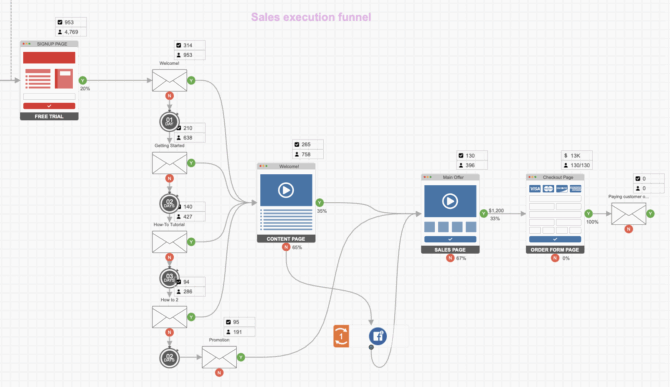
We built the conversion paths the website lacked. Segmented landing pages tied to specific operational problems and stakeholder needs. Clear calls to action moving visitors from research mode into engagement mode. Lead qualification flows separating high-intent buyers from early-stage researchers. Downloadable assets (technical guides, benchmark reports, implementation checklists) gated behind lightweight forms producing qualified contact data. Activation, engagement, and conversion email sequences triggered after each download. Consultation journey paths for buyers ready for a direct conversation. The focus shifted from passive browsing to guided conversion, with each path designed for a specific buyer type at a specific stage of their research.
Deliverables
The core deliverables included a repositioned messaging framework organized by use case and operational context, a message matrix segmented by agritech focused stakeholder type and buyer journey stage, a technical content ecosystem (educational articles, technical landing pages, operational explainers, implementation guides, proof-driven assets), a restructured website architecture optimized for SEO and GEO, segmented landing pages and conversion paths, lead qualification flows and gated asset design, email activation and nurturing sequences, and the operating cadence and templates the in-house team would run after the engagement.
Our solution
Six principles carried the strategy from diagnosis to execution.
- Operational specificity over generic product language. Every page, every asset, every message was rewritten to describe what the solution does for a specific production problem, in a specific operational context, with a specific measurable outcome.
- Use-case segmentation over one-size messaging. One website talking to six different stakeholders through one generic message was replaced by structured content paths, each designed for a specific buyer type looking for a specific answer.
- Proof and education over brand claims. The content ecosystem was built around demonstrating competence: how things work, why they work, what results to expect, and what implementation looks like. This is especially relevant in industrial food processing where buyers have low tolerance for marketing language and high tolerance for technical depth.
- Discoverability architecture over passive web presence. The website and content structure were rebuilt for SEO and GEO, ensuring the company would surface when new-market buyers searched for operational solutions, asked AI tools for vendor comparisons, or researched specific production challenges.
- Guided conversion over open browsing. Visitors arriving from search or AI-driven discovery were guided through structured paths toward specific actions: download a technical guide, request a benchmark comparison, book a consultation. The passive “browse our products” experience was replaced by an active system moving the right visitors toward the right next step.
- Stakeholder-specific messaging over single-audience marketing. Every content asset and conversion path was designed with a specific stakeholder in mind, ensuring operations, procurement, technical, compliance, leadership, and finance teams each found relevant material without needing to dig for it.
Overcoming the challenges
The hardest part of this engagement was cultural.
The company had built its success on personal relationships, handshake deals, and face-to-face meetings at industry events. Asking the team to invest in digital content, SEO architecture, and conversion funnels felt, to some in the organization, like admitting the old approach was broken. It was not broken. The network-based model worked inside the home market. The demand generation system extended the company’s reach beyond the network, into markets where handshakes had not happened yet and where the first impression would be digital.
The second challenge was knowledge extraction. The company’s deepest expertise lived inside the heads of engineers, project managers, and senior salespeople who had spent years solving production problems for customers. Turning their knowledge into written content meant interviews, reviews, and editorial work requiring their time. We built the process around structured templates and short interview formats to minimize disruption while maximizing the quality of the output.
The third challenge was patience. The Marketing and Sales Director understood the sequencing logic, but the Founding team wanted commercial results fast. We set clear expectations at the start: the infrastructure had to exist before the traffic arrived, the content had to be indexed before it generated leads, and the conversion paths had to be tested before they were optimized. The operating cadence we built included monthly progress checkpoints so the Founding team had visibility into momentum without needing to wait for the final pipeline numbers.
Results
The strategy is still in execution as of early 2026, so we are not reporting pipeline numbers here. We will update this section with performance data as the execution matures and the numbers become meaningful.
What we can describe is the infrastructure now in place and the early directional signals.
The company now has a messaging architecture organized by operational outcome and by stakeholder type, replacing the generic product-catalog language it operated with before the engagement. The website is restructured for SEO and GEO performance, with segmented landing pages, technical content, and conversion paths the company did not have six months ago. The content ecosystem includes technical articles, use-case pages, implementation guides, and proof-driven assets covering the core capabilities the company needs to be known for in new markets.
Early signals show increased qualified inbound interest from outside the existing network, which is exactly the outcome the engagement was designed to produce. Organic search visibility for industry-specific and operational queries has improved. The sales and marketing functions are now aligned on lead qualification criteria, meaning the leads entering the funnel are evaluated against shared standards for the first time. Engagement from target accounts across the buying group has strengthened, particularly from technical and operations stakeholders who previously had no relevant content to engage with.
We will add the numbers when they are mature enough to be credible and if the client agrees with it.
Key takeaways
This project reinforced principles applying across traditional industrial B2B sectors building demand generation for new markets.
Your reputation does not travel with you. Inside your network, your name carries weight earned over years. Outside your network, buyers have no reason to trust you, and they will not call to find out. Your digital presence is the only version of the company new-market buyers will see, and it needs to carry the selling before any human conversation begins.
Buyer behavior has already shifted in industrial sectors. The Gartner 2025 data is clear: 67% of B2B buyers prefer a rep-free experience, 45% use AI tools during purchases, and 70% of the evaluation is complete before a vendor is contacted. Food processing and agritech buyers follow the same pattern. Companies waiting for this shift to “reach their industry” are already behind.
Multi-stakeholder buying groups need segmented proof. A single website with a product catalog serves none of the six stakeholders in a modern industrial buying process well. Operations, procurement, technical, compliance, leadership, and finance teams each filter for different information. The companies providing stakeholder-specific content earn the shortlist.
SEO is now necessary but insufficient. GEO is becoming part of the vendor discovery infrastructure. For 34 percent of B2B marketers, AI search platforms are where qualified prospects first hear about their company (EMARKETER 2026). Industrial companies with structured, specific, proof-driven content are already appearing in AI-generated vendor recommendations. Companies without it are being left out of those conversations entirely.
Education-first content earns trust faster than product-first content in industrial B2B. Buyers in food processing and agritech have low tolerance for marketing language and high tolerance for technical depth. Content showing how things work, what results to expect, and what implementation looks like builds the credibility needed to earn a first meeting.
Infrastructure before campaigns. The conversion paths, the content ecosystem, the messaging architecture, and the measurement layer had to exist before paid traffic or outbound motions made sense. Building the engine before starting it is the sequence most industrial companies get backwards, and correcting it is the most valuable work we did in this engagement.
Work with Milk and Cookies Studio
We work with B2B SaaS, deep-tech, and complex-tech companies bringing strong products, serious operational expertise, and the ambition to grow beyond their existing networks. Our work spans go-to-market strategy, full-funnel marketing, demand and lead generation, and fractional CMO engagements.
If you are planning to sell into markets where your reputation does not yet exist, or if your digital presence does not reflect the expertise your team delivers in the field, we would rather have one direct conversation about the choices in front of you than send you a pitch deck. Reach us at [email protected] or through the contact form here.