Marketing Spotlight: Mapping Stotles’ Marketing and Sales Tactics
In this article, we put Stotles in the “Marketing Spotlight” as we take a closer look at how their sales and marketing strategies are working and what sets them apart (in January 2026).
Article summary
Share
TL;DR: Conclusions and Key Takeaways
🎀 This section gives you the main insights without all the details. It’s the stuff you need to remember, whether you’re reading this now or in 6 months. We made this for people who want to get the core message fast.
We’re looking at how Stotles markets itself and moves prospects through its sales funnel. Stotles was designed to fix the public procurement process, increase competition and transparency, and give suppliers a clearer path to government buyers.
We analyzed their content. Website, social media, ads. What stood out? Stotles knows its niche, and they’re not trying to be everything to everyone. They’re focused on making public sector procurement less painful for B2G companies. Their platform consolidates what would normally be scattered across dozens of portals and spreadsheets into a single location.
What Stotles does right:
Stotles wins by simplifying a chaotic public sector market into a single, usable system built specifically for B2G teams. Stotles prioritizes trust and clarity over flashy marketing because public sector buyers value safety and predictability.
Splitting Sales and Bid workflows lowers adoption friction and creates natural expansion opportunities across teams.
Educational content builds authority and trust. Their Academy, Help Center, and all of their videos reduce friction both before and after acquisition.
Their best SEO practice is their Glossary. A glossary captures intent. People searching for industry terms are usually trying to solve a problem, and that often leads them straight to your product.
By becoming a hub, Stotles increases retention and embeds itself deeper into customers’ workflows.
Ungated access to real data builds trust early and acts as a powerful product teaser.
On YouTube, short, product-focused videos outperform long-form content.
As for their social media content, events, partnerships, and webinars drive the highest engagement because they signal credibility and momentum.
For their paid advertisement strategy, clear, problem-focused messaging outperforms creative experimentation in B2G markets.
But there are some hiccups. Social media is an afterthought. Founders aren’t using their personal brands, even though there is potential. They don’t have social media pages where decision-makers actually spend time. No Instagram, TikTok, or Facebook. Yeah, it’s B2G, but buyers are still humans who scroll. There is an inconsistent posting frequency on both social media and site content. Frequency helps build an audience.
Stotles has a great product with smart positioning. They understand their market, but they’re playing it safe when they could be dominating.
📝 A quick note before you start reading: The data and analysis in this article are valid as of the time we wrote it. We don’t know when you’ll be reading this, maybe next week, maybe six months from now, and things might have changed since we looked at this company’s marketing and sales approach. Still, the insights and lessons here stay useful, even if the numbers or tactics have evolved a bit.
If you’ve ever tried to sell to the government, you know the pain. Dozens of procurement portals, each with its own login. Tender documents that read like they were written by a committee of lawyers having a bad day. Deadlines hidden in the fine print. Opportunities are scattered across systems that don’t talk to each other. It’s enough to make you question if public sector revenue is worth the headache.
Stotles looked at this mess and decided to fix it. They consolidate public sector procurement into one place: tenders, buyer contacts, past awards, AI-powered bid qualification, and more. The pitch is simple: stop wasting time hunting for opportunities and start focusing on winning them.
They raised $13M in Series A funding in May 2025. They have big-name clients like Zoom, Vodafone, Salesforce, and Workday. According to their site, there are: 1.4M+ tenders tracked, 200k+ buyer documents, and 210k+ contacts in their database. They’re solving a real problem for companies that want government contracts without the chaos.
At Milk and Cookies Studio, we’re particularly interested in how this product works: the marketing logic behind it, what the sales funnel looks like, and where efforts are actually being focused. We also want to understand which areas are underutilized or left in the background.
We’ve searched their website, social media, ads, reviews, and content to see what’s working and what’s not. The SEO glossary? Smart. The freemium plan? Also smart. But some of it has room for growing, like their social presence and inconsistent content schedule.
Whether you’re in B2G sales looking for tools, building a SaaS product, or just curious how a niche platform markets itself, there’s something useful here. Here’s what we found.
Understanding Stotles
Stotles is a B2G SaaS platform that helps companies win public sector contracts. They consolidate procurement data from government portals across the UK into one searchable database. Instead of manually checking dozens of sites for tender opportunities, you log into Stotles and see everything in one feed: AI summaries, buyer insights, past award data, and bid management tools.
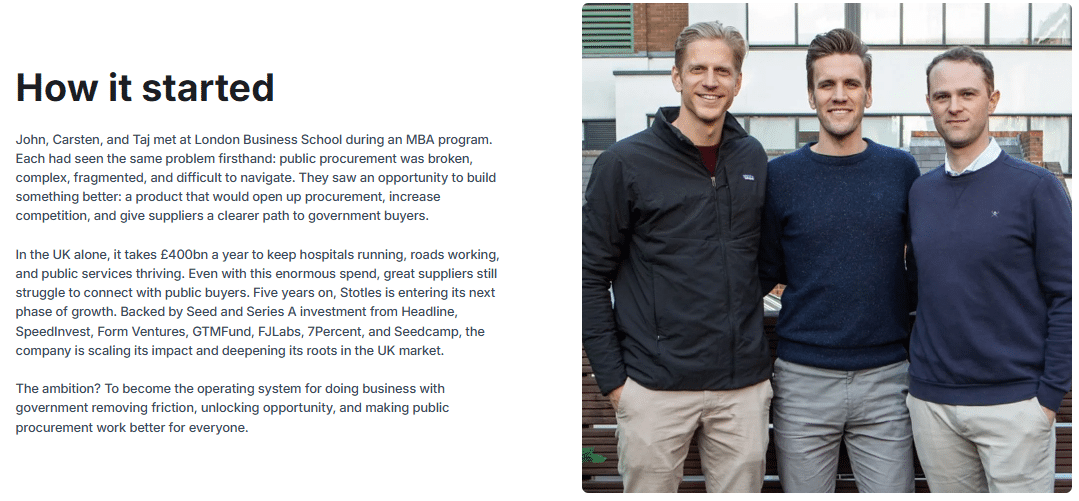
Stotles was founded in October 2019 by John Witt (CEO), Taj Kamranpour (COO), and Carsten Schaltz (CPO). Their headquarters are in London, England, United Kingdom, and the company size is between 51 and 100 employees, with 60 associated members.
The platform targets B2G sales teams and bid managers who are tired of spreadsheets, scattered data, and missed opportunities because they didn’t check the right portal at the right time. It’s like a CRM purpose-built for selling to government, with all the procurement data already inside.
They split their offering into two main products: Sales Studio (for building a pipeline and GTM strategy) and Bid Studio (for managing and writing tender responses). Both have free tiers, paid Growth plans, and custom Expert plans for enterprises.
The public sector procurement software space isn’t empty. Stotles is competing against established players and newer entrants, each with different angles on the same basic problem.
Stotles’ Brand Promise Analysis
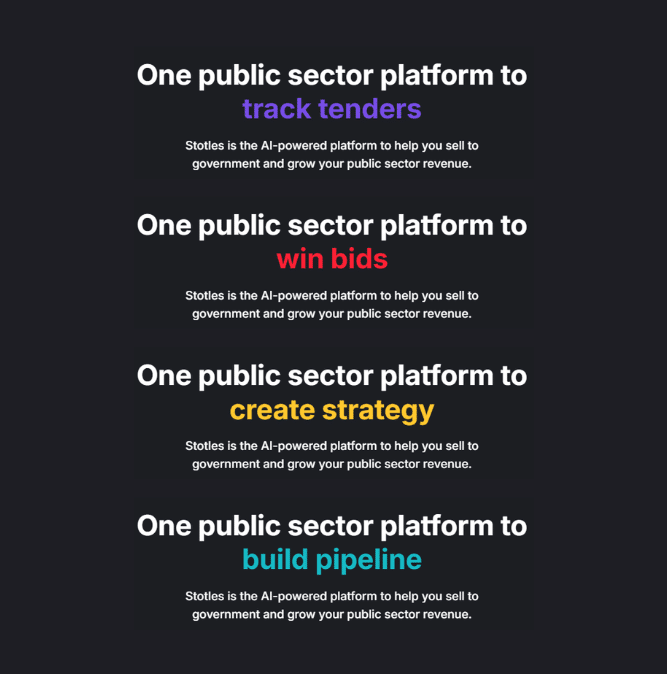
The opening promise on their website positions Stotles as a public sector platform designed to track tenders, win bids, create a strategy, and build a pipeline.
The site highlights a carousel of trusted brands, including Zoom, Vodafone, Salesforce, Cloudflare, and Snowflake. Associating with such high-profile companies signals credibility and builds trust.
Stotles states that winning government contracts shouldn’t mean navigating endless applications, portals, and spreadsheets. They bring everything you need into one platform, so you can stop juggling tools and start closing deals.
To reinforce trust, they display some data points, like: 1.4M+ Tenders and Awards, 200k+ buyer documents, 210k+ buyer contacts, and 15k+ buying organisations.
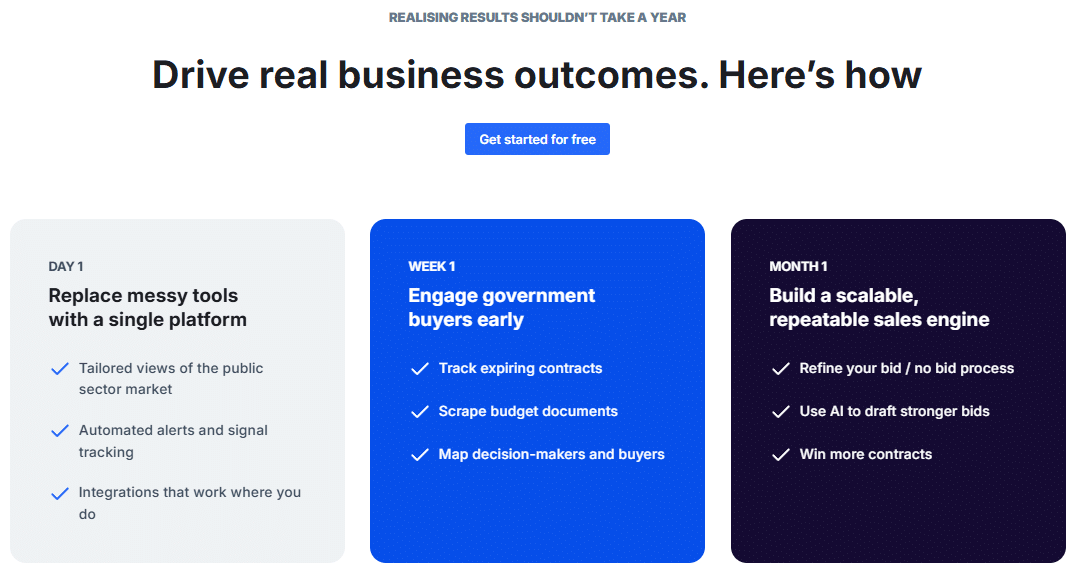
For them, results shouldn’t take a year. Stotles provides a plan for an entire month on how you can replace messy tools, engage government buyers early, and how to build a scalable, repeatable sales engine.
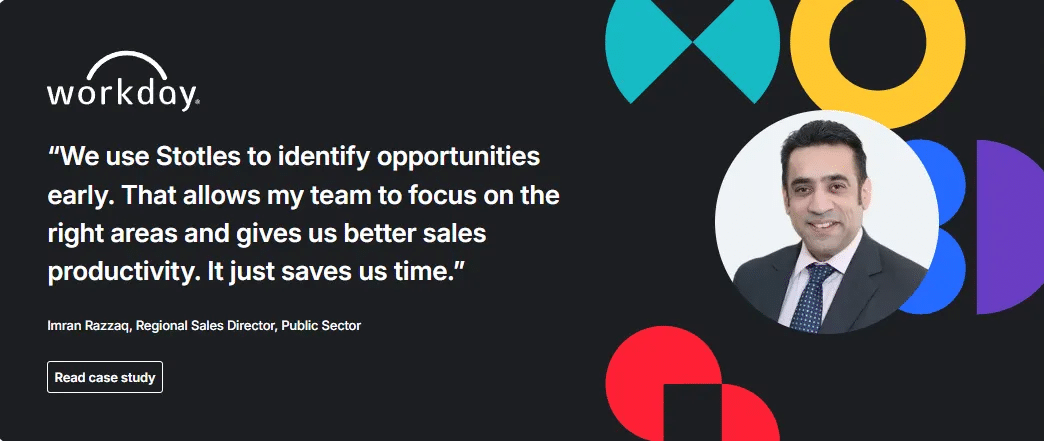
This is followed by a testimonial from Imran Razzaq, who was the Regional Sales Director, Public Sector at Workday, and a short FAQ section addressing common questions such as how the Stotles platform works, team size limits, available integrations, and the level of customer support offered.
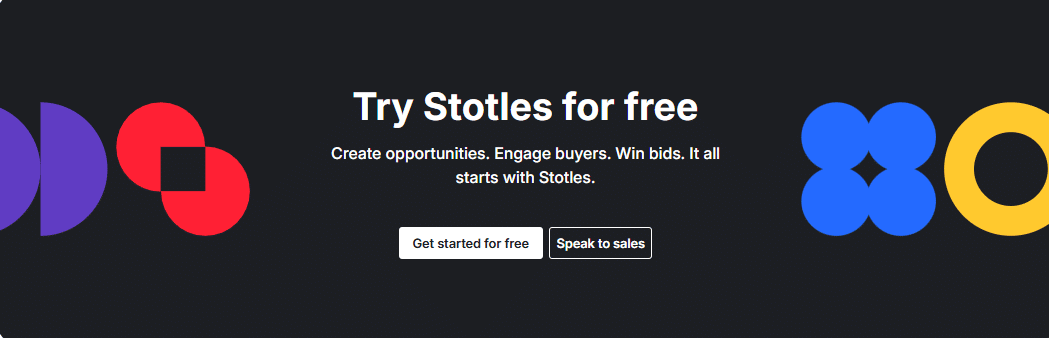
At the bottom of the page, the site reinforces its core CTA: Try Stotles for free.
The homepage’s primary goal is to push users to sign up for free or request a demo. A straightforward headline and instant trust signals make the value proposition clear, eliminating friction on the first interaction.
The scroll progression follows the classic formula: problem, solution, proof, objection handling, call to action. Nothing revolutionary, but executed cleanly. The free trial CTA is always more prominent than the demo request, which makes sense, because lower friction means more volume.
The conversion flow is good but conservative. They’re not doing anything cutting-edge, which works for their audience. Government contractors prefer straightforward over flashy. Stotles’ brand promise succeeds because it aligns perfectly with public sector buyers’ risk-averse mindset.
Stotles’ Service and Product Breakdown
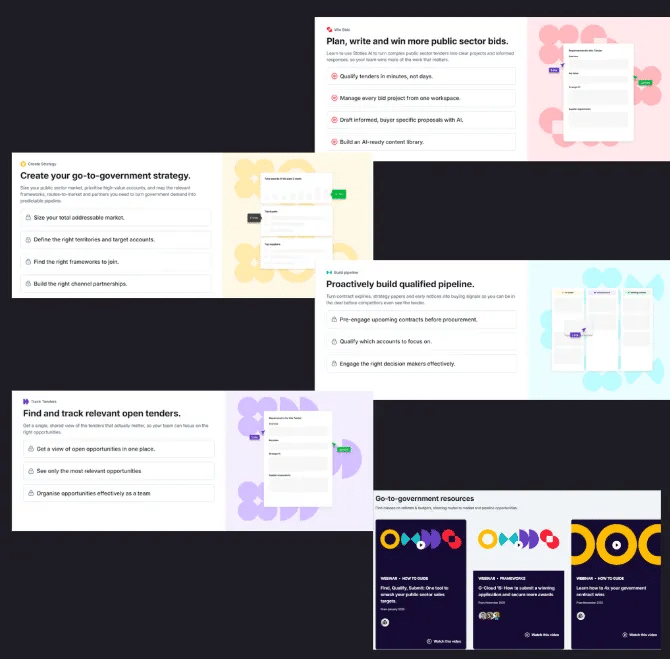
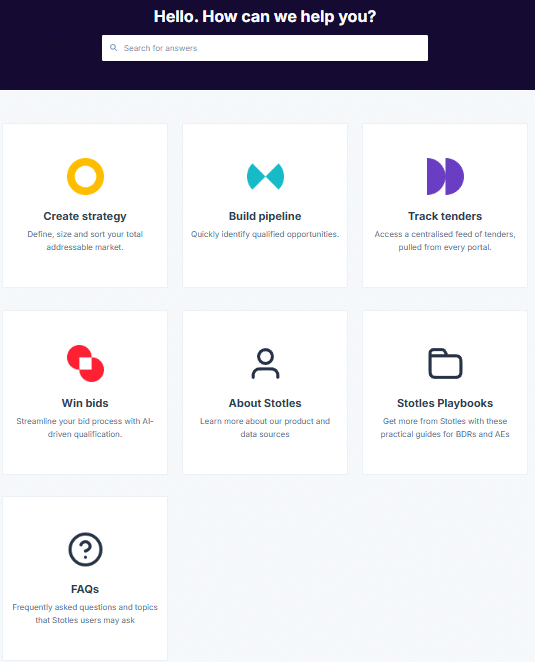
Stotles platform helps you create a strategy (define, size, and sort your total addressable market), build a pipeline (quickly identify qualified opportunities), track tenders (access a centralised feed of tenders, pulled from every portal), and win bids (streamline your bid process with AI-driven qualification).
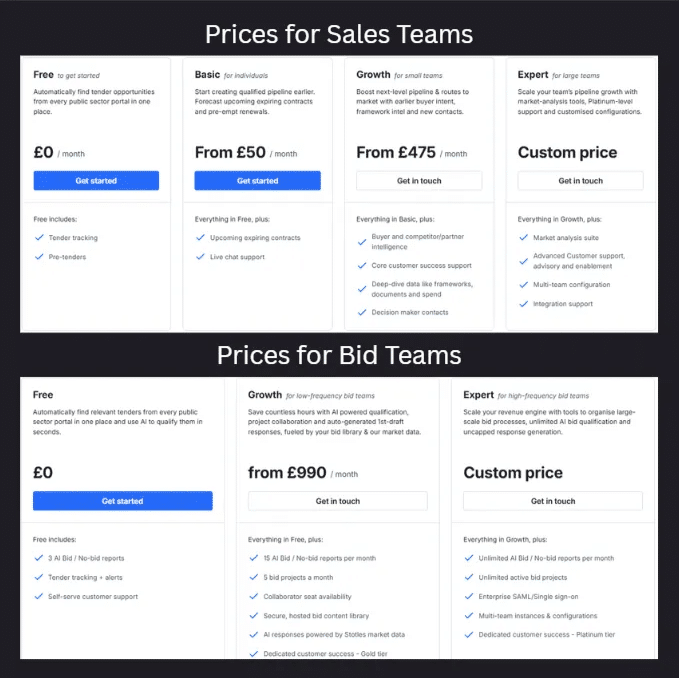
At their Pricing page, you’ll see that Stotles divides its product in 2 categories: one for Sales teams, one for Bid teams.
Their Sales Studio helps create go-to-market strategies and build targeted government pipelines to increase revenue productivity. Their Bid Studio uses powerful AI tools to streamline tender management, improve bid qualification, and draft stronger bids with higher win rates.
Both categories have a Free, Growth, and an Expert Plan. For Sales teams, they added a Basic package. Each plan has a starting price, except the Expert one, where you’ll need to contact the sales team.
Stotles offers 3 Customer Success tiers to scale and support your business in meeting its public sector goals every step of the way. There is the Silver one, which offers a light-touch CS input to help achieve your desired outcomes, the Gold one, which offers proactive support and guidance to maximise ROI, and the Platinum one, for an enterprise-grade, high-touch strategic partnership.
The platform offers add-ons, like Research credits, Managed FOI requests, Business process building, and Training packages. To find out more about the add-ons, you are redirected to the Request a demo page, where you need to fill out a form (name, company, work email, experience working with the public sector, and employee count).
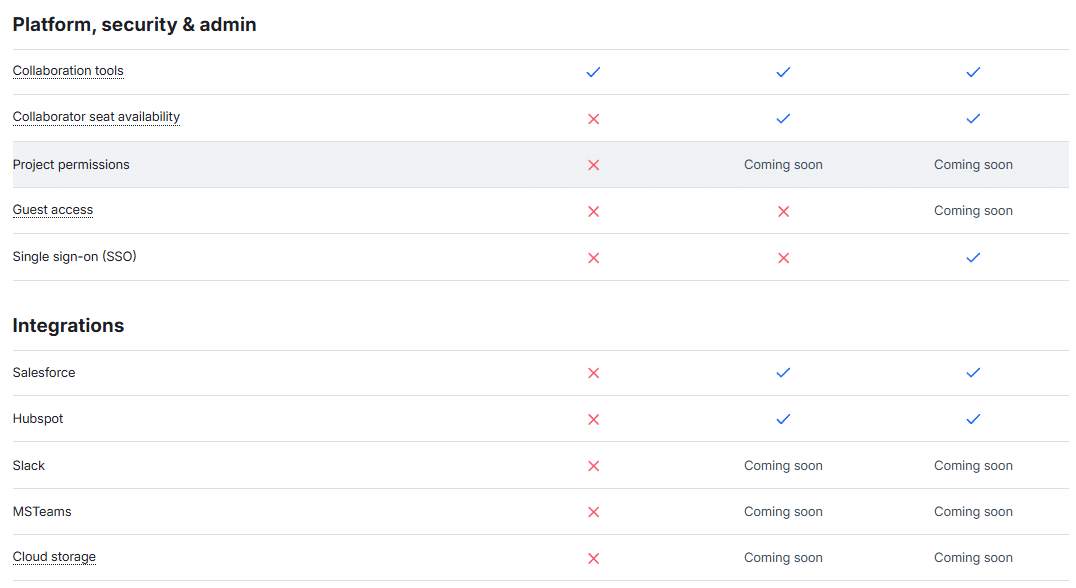
At the bottom of the page, you can compare the plans. Here you’ll see that the Free plan doesn’t include an AI tender document summary, the Expert plan has unlimited win bids, and some new features are coming soon. By structuring the product around real public sector workflows, Stotles offers clarity.
First Page Sage’s 2025 analysis shows B2B SaaS freemium models typically convert 2-5% of free users to paid, with top performers reaching 10%. For products in Stotles’ likely price range, the median conversion rate is 10%. By offering free tiers, Stotles enters users into a proven conversion funnel that prioritizes product experience over sales pressure.
Stotles University offers a collection of short videos and webinars that help teams find, qualify, and win public sector opportunities. Content is structured across the 4 core categories, along with go-to government resources.
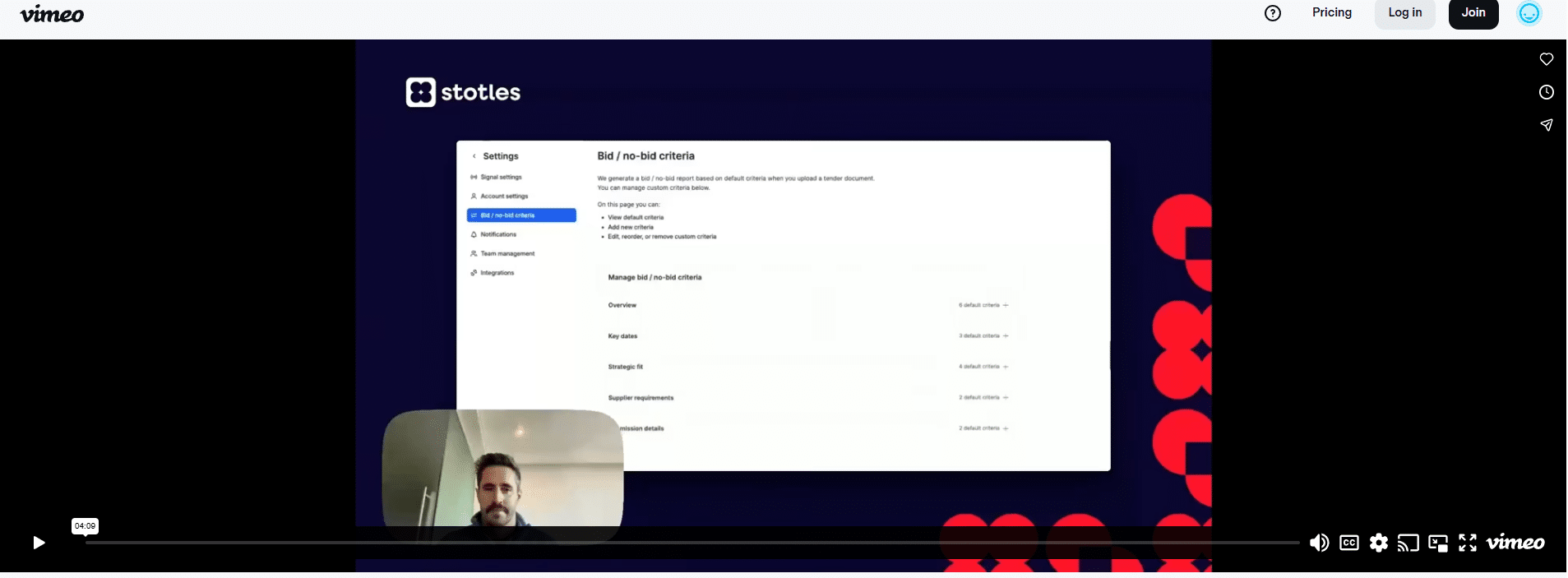
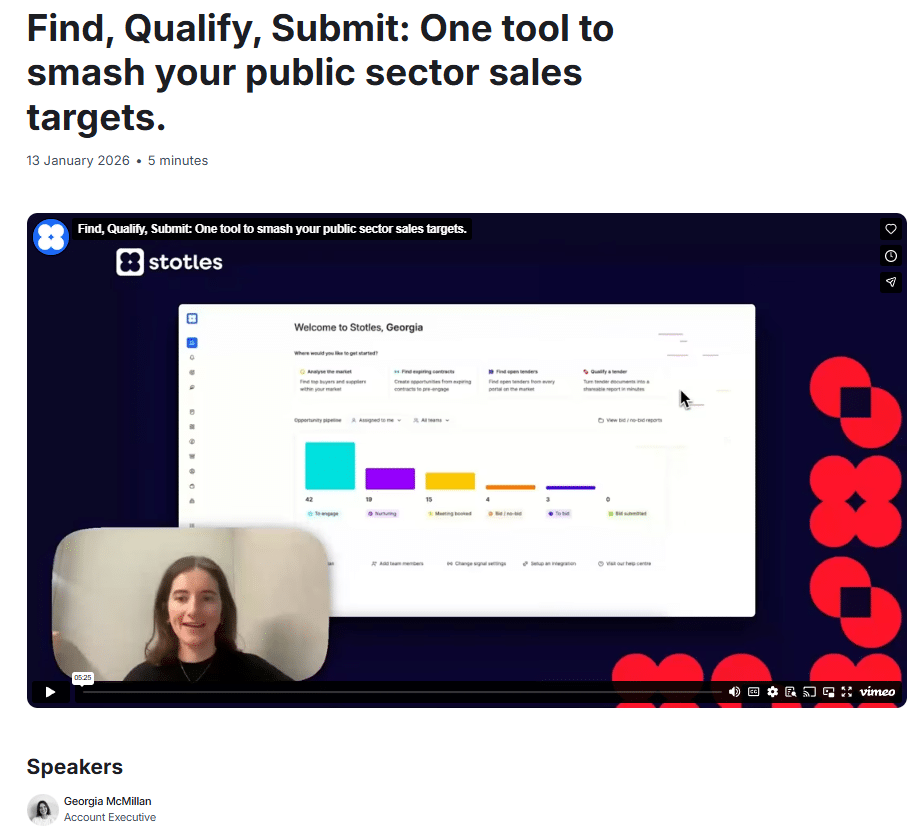
For some categories, like Win Bids, the page has a Vimeo video that provides a deeper look into how the platform works and the value it delivers. Each video includes a view count, upload date, and a short description. Other categories, however, are gated, with no clear indication of how or when users can access the content.
💡 Steal This: Treat education as a growth lever, not a brand nice-to-have. If your buyers need to learn before they buy, own that learning curve publicly.
The go-to government videos are free, and they feature the speakers’ names and job titles, an overview, and key takeaways. Education strengthens trust, but clearer positioning could turn learning content into a stronger acquisition lever.
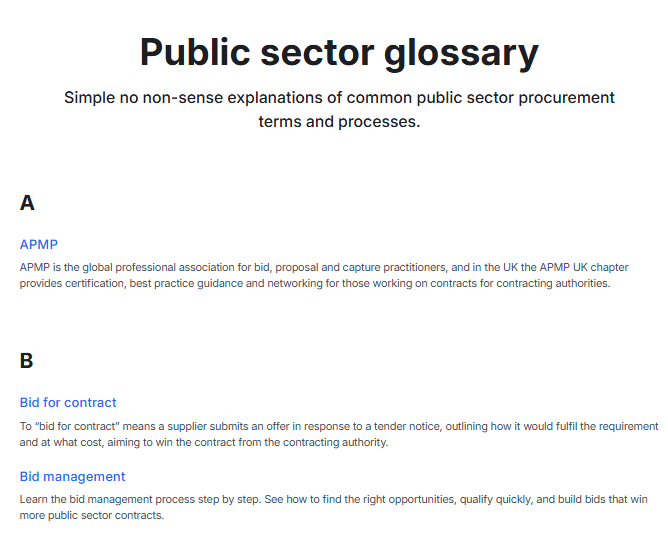
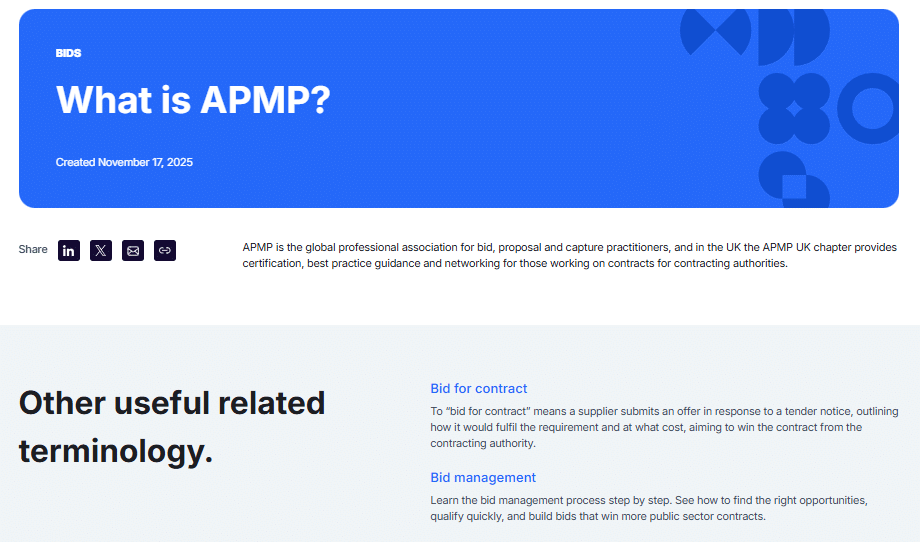
Using a common and effective SEO tactic, Stotles offers a free glossary of industry terms. Each term links to its own dedicated page, repeating the definition from the main glossary while also showing related terms. These pages are shareable via LinkedIn, email, or by copying the link for use across other channels.
The glossary proves that deeply niche SEO can outperform generic content when it’s tied closely to user intent.
💡 Steal This: Build one deep, defensible SEO asset (like a glossary or database) instead of publishing weekly surface-level blog posts. Depth compounds. Volume doesn’t.
Ahrefs’ 2025 research shows that B2B SaaS SEO delivers approximately 702% average ROI over three years, and 71% of B2B buyers begin their purchasing journey with a Google search. By targeting industry-specific terminology, Stotles captures high-intent traffic at the exact moment prospects need information.
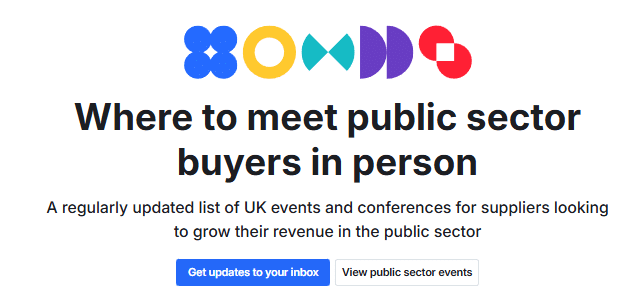
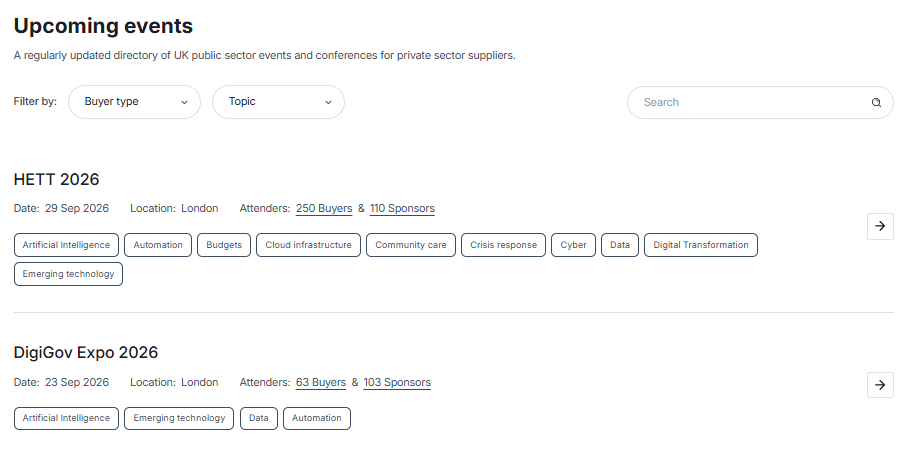
On this page, you’ll find Stotles’ list of UK industry events and conferences for suppliers looking to grow their business revenue in the public sector.
Each listing includes key details such as the number of attendees (for both buyers and sponsors), the event date, and location. Events are also labeled with tags that can be used as filters by buyer type and topic. Clicking on an event redirects users to the official event website, where they can register directly.
Meeting buyers where they already gather reinforces Stotles’ role as an insider rather than an outsider selling in, and it reinforces the idea that Stotles is an industry hub.
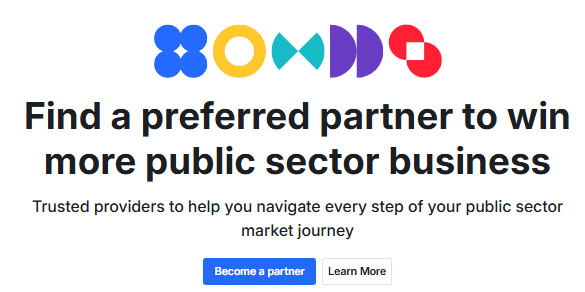
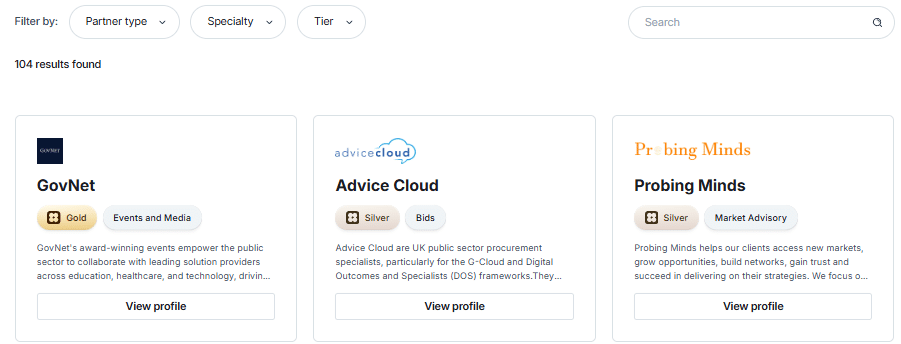
Here you’ll find trusted providers to help you navigate every step of your public sector market journey. You can scroll through the list or filter it by type, specialty, or tier if you are looking for something specific. Each partner has a profile page, where you can read more about them, see their specialty, or contact them through a form.
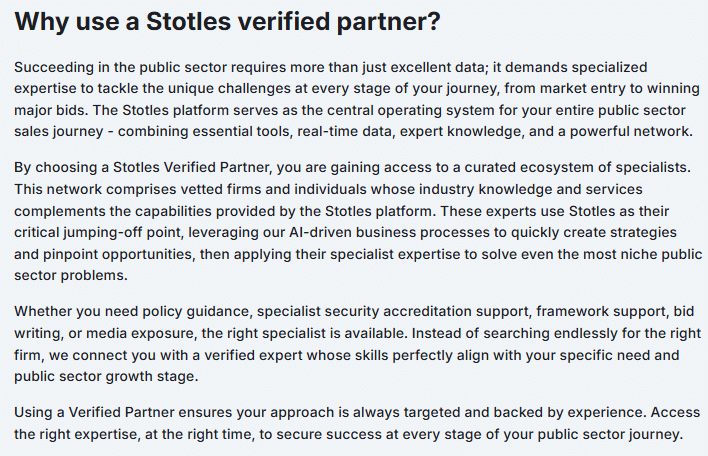
The form requests name, work email, company, experience working with the public sector drop-down list, and a message box for details. On these pages, you’ll see a recurring section called Why use a Stotles verified partner? We don’t have any information about how you can end up on this list. Is there an application process, does Stotles take a referral fee, or is it free exposure in exchange for quality assurance?
Stotles understood that they can’t be everything. They don’t write bids, handle compliance, or provide strategy consulting. But their customers need those services. So Stotles becomes the hub, where data, tools, and specialists are in one place.
This keeps customers in the Stotles world even when they need services outside the platform. It also creates a moat. If you’re a bid writer and all your clients use Stotles, you’re invested in Stotles succeeding. Partnerships expand Stotles’ influence beyond its own product, embedding it deeper into the public sector.
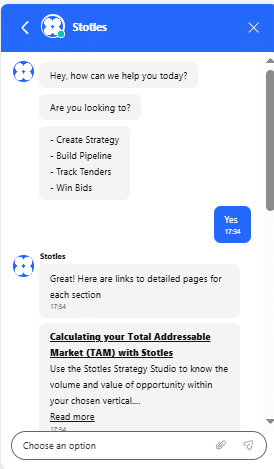
Following the usual Help Center format, small articles on dedicated pages can be found here. Among the 4 main categories, they added an About Stotles section, a Stotles Playbook, and FAQs. You also have a chat plugin available, which gives you AI-predefined answers. Chat boxes are usually on the bottom-right corner by default for LTR languages. They decided to customize the plug-in and move it to the bottom-left corner. They don’t seem to have a UI obstruction or a proactive campaign, so the reason is unknown.
A comprehensive help center supports scale, even if it remains more functional than brand-driven.
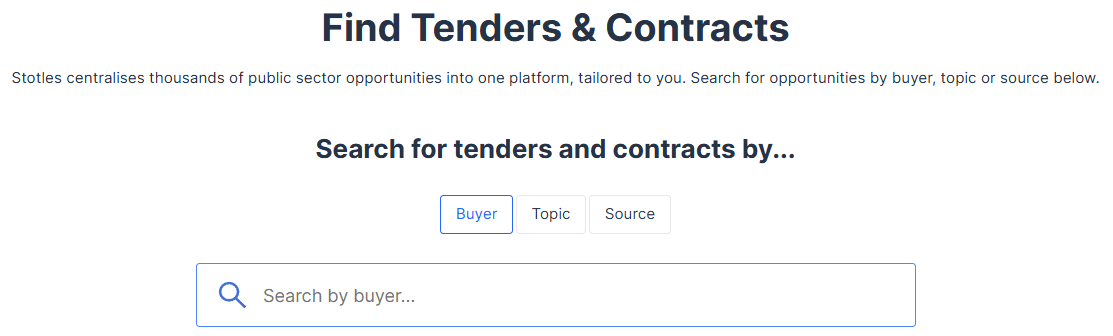
This is one of the most interesting and useful page on Stotles’ site. You can search for public sector opportunities by scrolling through the list or filtering it by buyer, topic, and source. On each page, you’ll find: buyer’s name, value, close date, description, and how many suppliers have saved this notice.
AI summaries for products, contract structure, supplier requirements, and key contacts are available in the Stotles App. You can also see similar pre-tenders, open or awarded contracts, and you can explore top buyers for public sector contracts.
At the bottom of the page, you’ll find the CPV codes required for the contract, along with a Sign Up button.
CPV stands for Common Procurement Vocabulary, and this code is a European system for classifying public contracts, helping authorities describe what they’re buying (supplies, works, services) and allowing suppliers to find contracts. This system improves the fairness and accessibility of the procurement process.
Open access to valuable data builds early trust and makes the product as useful before it ever asks for commitment. Stotles’ competitive edge doesn’t come from novelty, but from owning multiple touchpoints across the public sector buying journey.
Stotles’ Leadership Presence Analysis
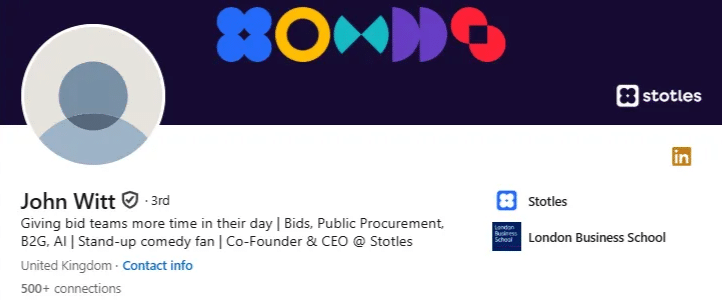
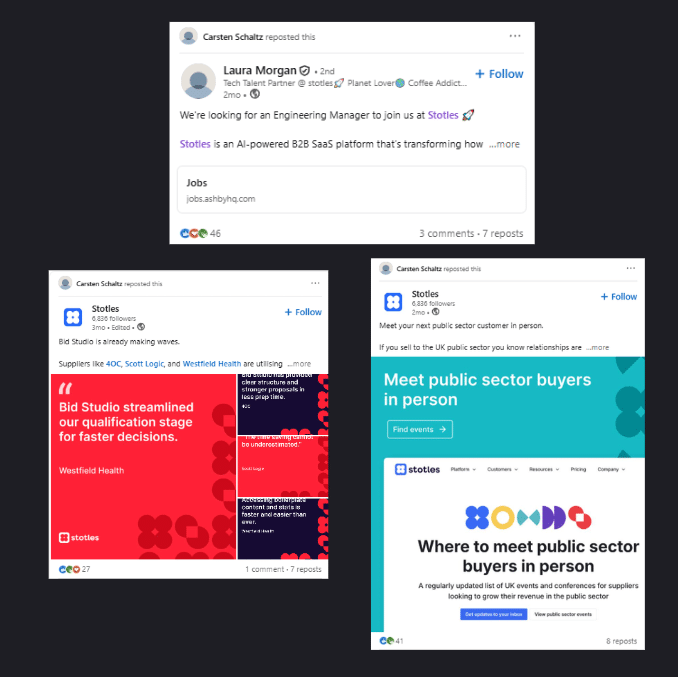
Next, we will analyze the LinkedIn presence of Stotles’ founders: John Witt (CEO), Taj Kamranpour (COO), and Carsten Schaltz (CPO).
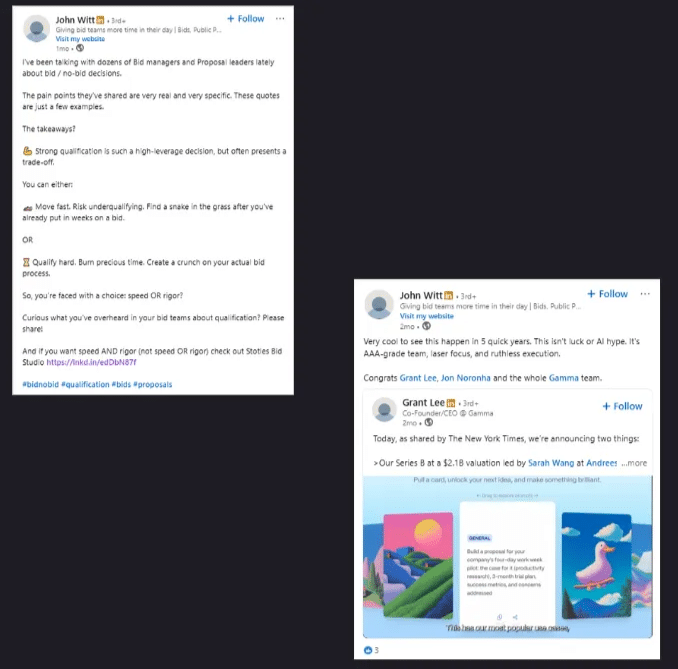
John has 3.5k followers, and he posts a few times per month about Stotles. His engagement is modest, with posts having around 45 reactions, 10 comments, and 5 reposts, in the best case.
He usually posts long texts with no image, accompanied by related hashtags (#PublicSectorSales, #BidManagement, #SalesLeadership), tags, and/or links. He often reposts others’ posts with his thoughts on that matter.
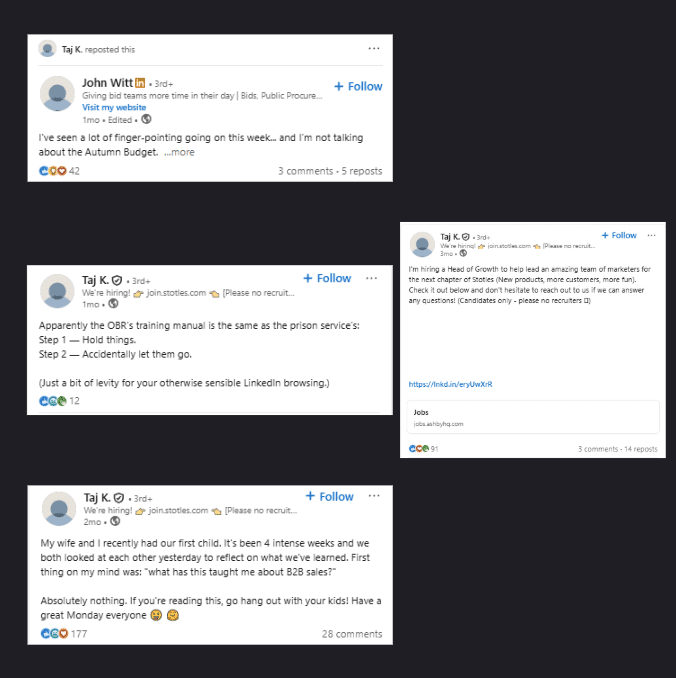
Taj has 3.4k followers, and he follows the same strategy as Carsten. He does repost more often than he posts original content. He has the most potential, in terms of engagement rate; his OG posts have over 170 reactions and almost 30 comments.
Look, founder voices matter. A lot. More than most CEOs realize. More often than not, we see CEO profiles generating significantly more traction than the company’s brand page. While it may seem counterintuitive, it actually makes perfect sense.
Nobody wants another corporate account in their feed. They want actual humans. This shift explains the rise of user-generated content across social media and the growing fatigue around traditional influencers.
💡 Steal This: Focus founder visibility on consistency over charisma. One clear voice, repeated over time, outperforms sporadic thought leadership spikes.
When building your brand’s online authority, executive advocacy matters. As a leader, your voice carries trust and visibility, so don’t underestimate the impact of showing up and speaking for your company. Stotles has credible leadership voices, but without consistency, their impact remains smaller than their potential.
2025 research shows that 80% of B2B social leads come from LinkedIn, and 88% of marketers report that audiences view personal branding as more genuine than corporate content. More strikingly, 70% of consumers feel more connected to brands when founders are active on social platforms. With companies using employee advocacy seeing 561% greater reach than brand content alone, Stotles’ founders are leaving significant visibility on the table.
Stotles’ Social Media Strategy
In this section, we will analyze Stotles’ social media presence by looking at their LinkedIn, YouTube, and X pages.
Stotles’ LinkedIn page has 7k followers. They are not as active as other similar companies, as they post around twice a month.
Their content pillars are:
Company Updates
Events (online and offline)
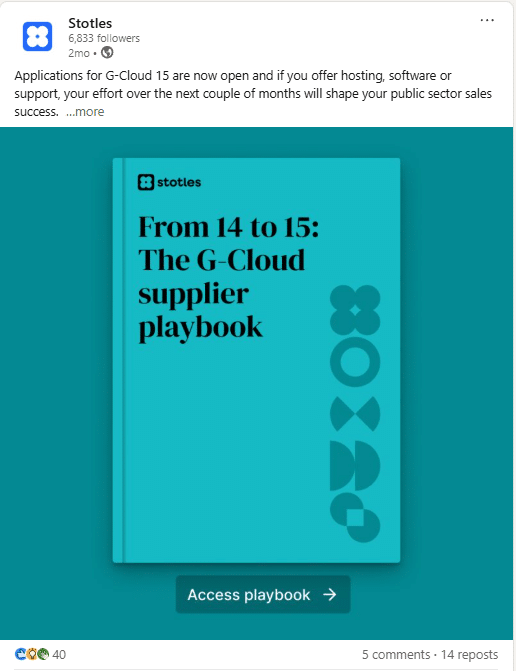
Promotion of their content, like reports
On a post, Stotles stay away from using hashtags, but they will often put a link for an event or report in the description, and tag other pages or people. Their posts have 30 reactions, 5 reposts, and up to 5 comments on average.
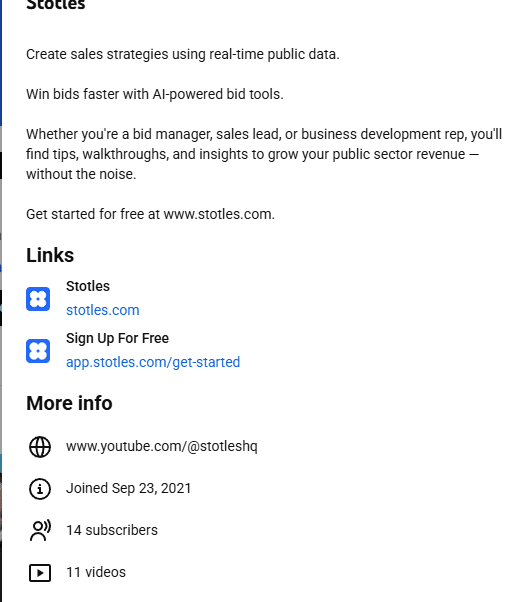
Their channel has 14 subscribers, 11 videos, and 30k views. They have short product tutorials, clients’ testimonials, and webinars.
Video thumbnails, although related to the video, can be optimized to catch people’s eyes, especially when it comes to webinars. If the shorter descriptive videos are made for prospects, webinars can be a long-term option.
In the video description, you will find a link to their website. Stotles’ videos have no comments and almost no likes. They post only normal videos, not Shorts. Video content exists, but its tactical use limits long-term brand equity.
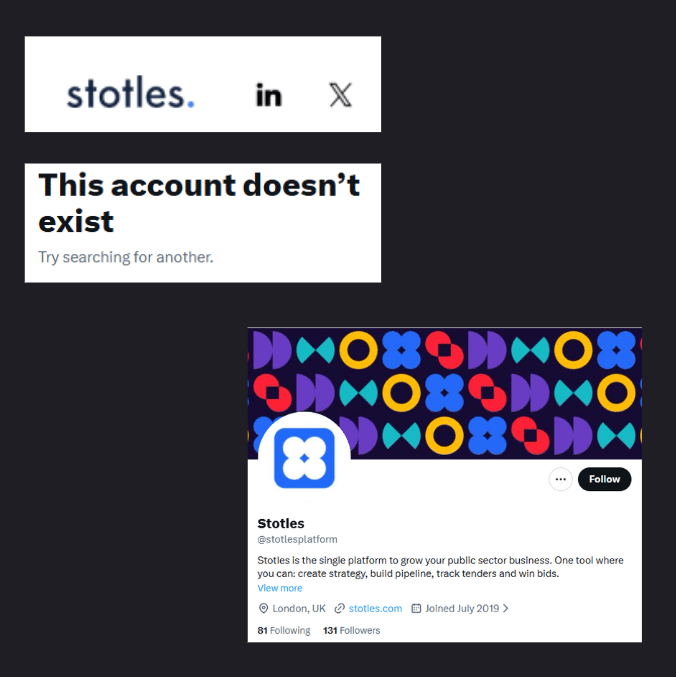
At first, we were fooled by a link to a disabled X account, found on their Help Page. But searching for their account manually, we found the correct Stotles account, which has 131 followers.
Since their last post was in 2024, the content here will not be analyzed further, since we look at content in the last 3 months. Minimal presence on X weakens visibility without significantly harming the core business.
The fact that we had to search in different parts to find the last and correct account of Stotles could drive away people who are looking for a more up-to-date with socials platform. It’s good practice to link every channel you have on every page and post. It’s OK if you are not active at the moment, but it should be easier for people to find you on social media.
The lack of Instagram, TikTok, or Facebook could be a missed opportunity. Even if B2G can seem stiff from the outside, we need to remember that people who buy your product have an account on one of those socials. You’ll never know who might see your content after hours and choose you.
It doesn’t mean that you need to be on TikTok if you can’t sustain a platform-adequete content. But Instagram is still safe for businesses, even in 2026. Sure, Facebook’s dying for consumer use, but a business page costs nothing to set up.
Your company’s social media doesn’t define your product. It’s a free tool capture the right people. And if you start to have more engagement, you can dedicate more time and resources to one platform. Social channels function as support and credibility tools rather than primary growth drivers.
Stotles’ Top-Performing Social Media Content
Now, for this section, we’ll have a look at their top 3 posts from LinkedIn and YouTube, in the last 3 months, as of January 2026.
LinkedIn
In the last 3 months, Stotles’ best posts on LinkedIn are:
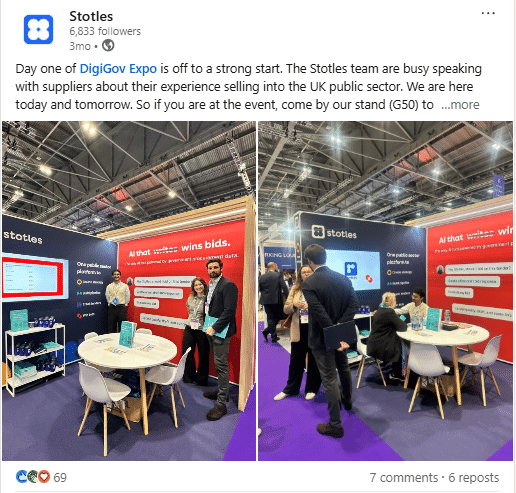
A post from DigiGov Expo, with 69 reactions, 7 comments, and 6 reposts.
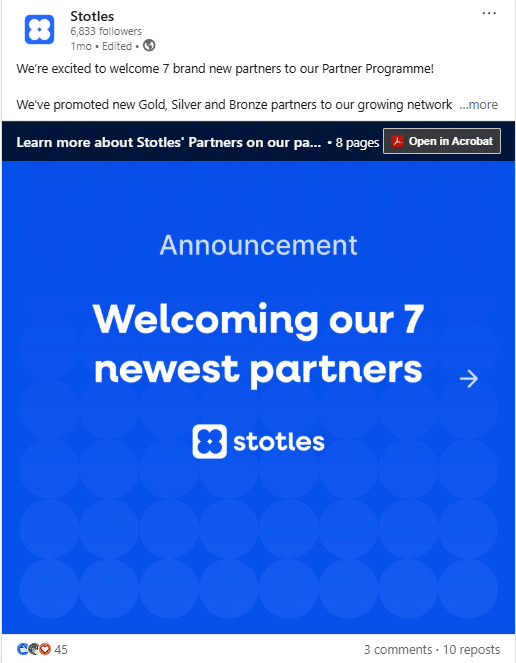
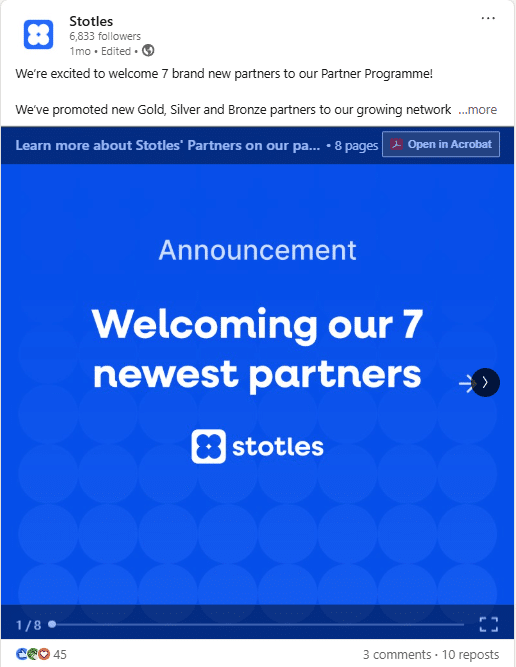
A post about welcoming their 7 new partners, with 45 reactions, 3 comments, and 10 reposts.
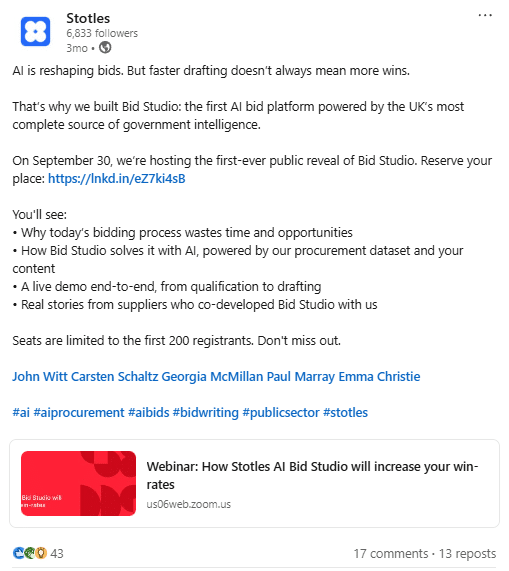
A post about How Stotles AI Bid Studio will increase your win-rates webinar, with 43 reactions, 17 comments, and 13 reposts. This is one of the few posts that use hashtags, like: #ai, #aiprocurement, #aibids, #bidwriting, #publicsector, and #stotles.
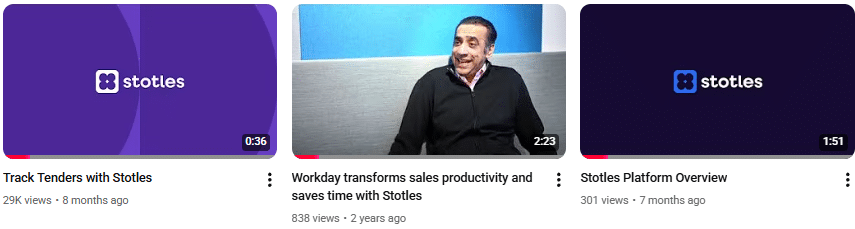
Stotles Platform Overview – a 1-minute and 50-second video that gained 298 views, 3 likes, 0 comments
Shorter videos perform better than the longer ones. This is Stotels’ sign to start making Shorts, if they want to grow their YouTube community.
Engagement patterns show that credibility and usefulness consistently outperform creativity alone. Content tied to real-world activity performs best because it signals momentum and trust. Short-form videos deliver value efficiently, even without strong community interaction.
Stotles’ Sales Funnel from Social Media
Let’s trace the path from a LinkedIn post to an actual conversion. Stotles puts in their LinkedIn posts links to webinars or reports.
For the webinars, you are redirected either to a Zoom page or a LinkedIn Event page, where you can register. This requires your email address, since the name, company, job title, and country information are provided by your LinkedIn account.
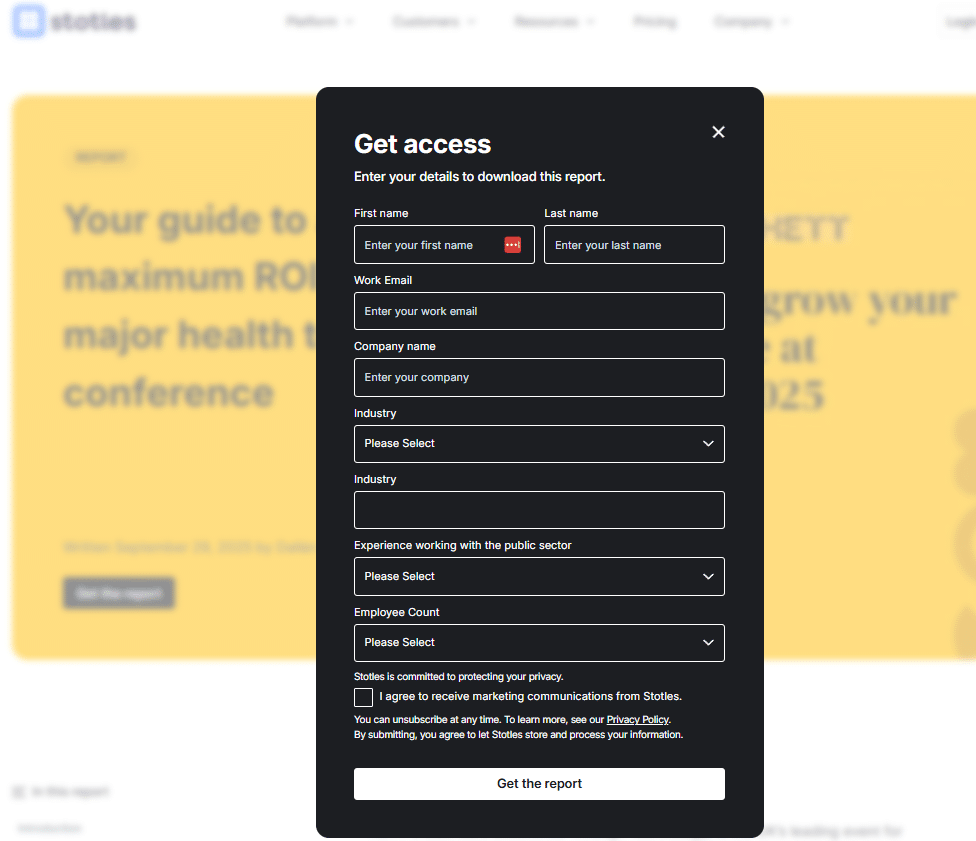
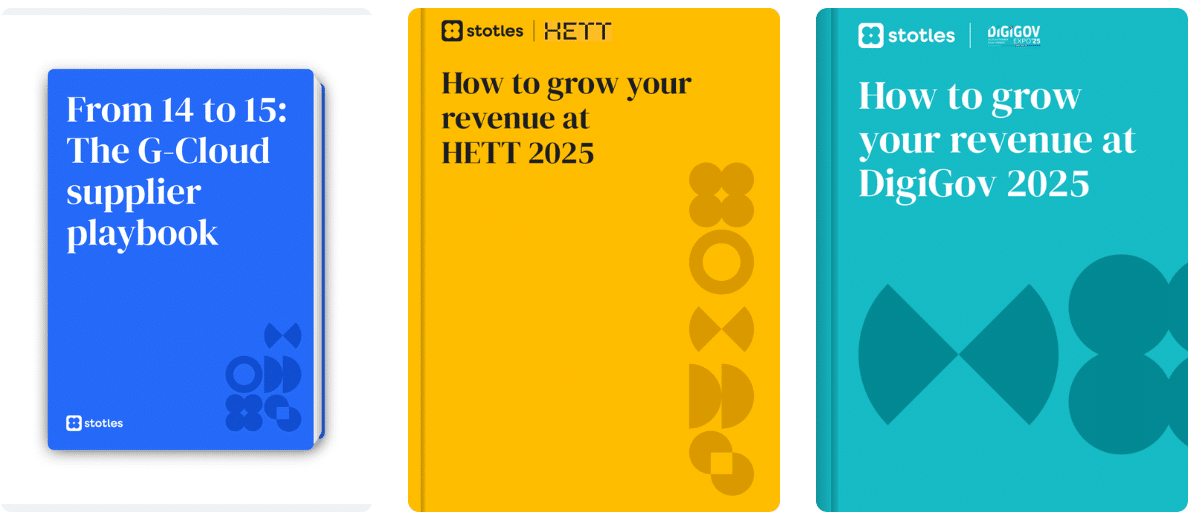
For the reports, you are redirected to their website. To download the reports, fill out a form that requests your name, work email, company name, industry, experience working with the public sector, and employee count. You can check the box if you want to receive marketing communications from Stotles. This is the only way you can subscribe to their newsletter.
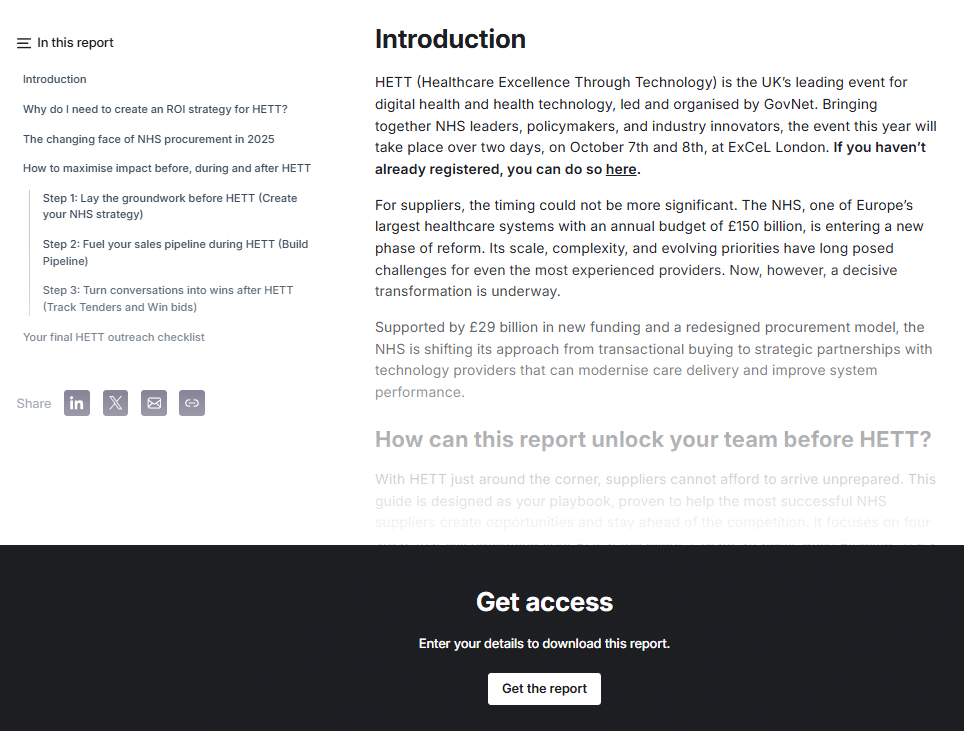
To decide if the report is actually worth your contact info, you can see a preview of the introduction and the table of contents. If you click on any other subchapters, it will jump to the footer of the site.
On their YouTube video description, you will find the link to their homepage. Stotles captures intent effectively but leaves re-engagement and long-term nurturing largely untapped.
Stotles’ Paid Advertising Strategy
Now, for Stotels’ paid advertising strategy, we’re looking at LinkedIn, YouTube, and Google ads.
LinkedIn
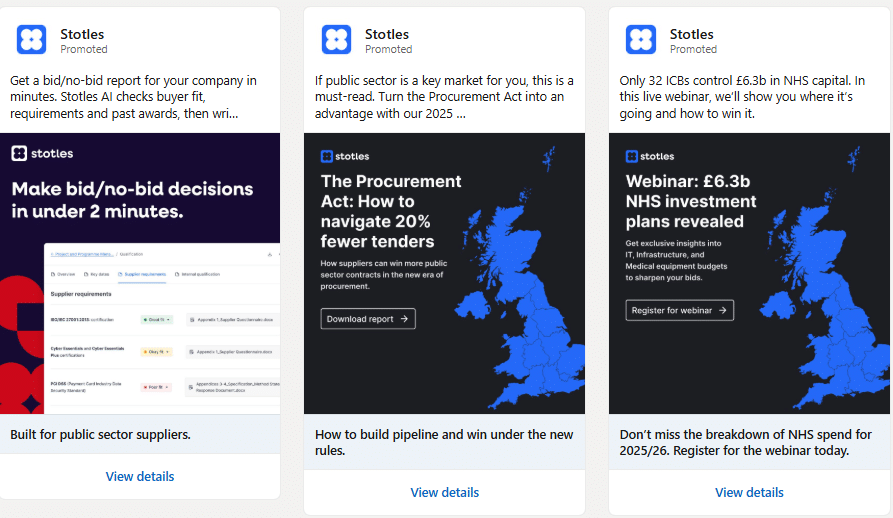
Stotles has 104 ads running on LinkedIn as of January 2026. They will not use the posts from their page for the ads.
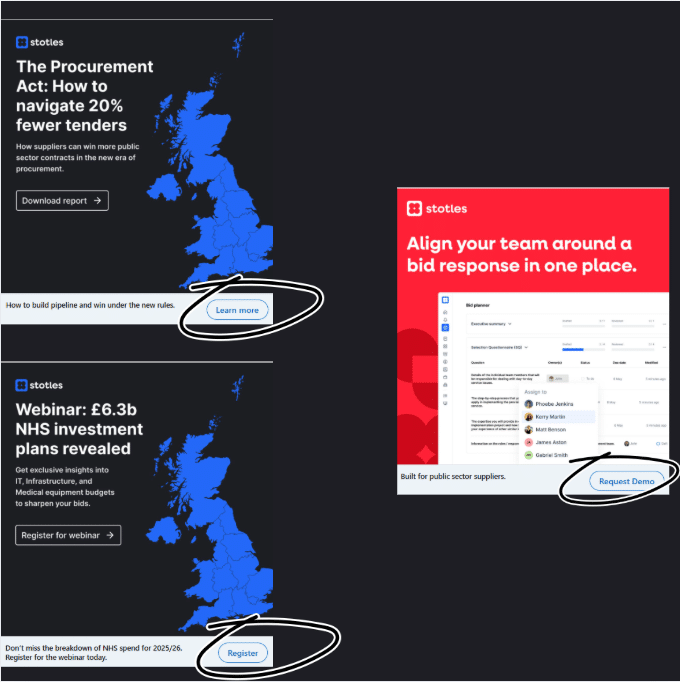
They will use bright red and dark blue for visuals, which creates a coherent brand image. They use single-image ads, with multiple variants on some.
Their CTA button of the ad is different, based on what they’re promoting: Register for a webinar, Request demo to contact the sales team, or Learn More for a report.
Their copy is short and straightforward, using phrases like:
Get a bid/no-bid report for your company in minutes. Stotles AI checks buyer fit, requirements and past awards, then writes a clear go/no-go with risks and next steps.
If public sector is a key market for you, this is a must-read. Turn the Procurement Act into an advantage with our 2025 guide.
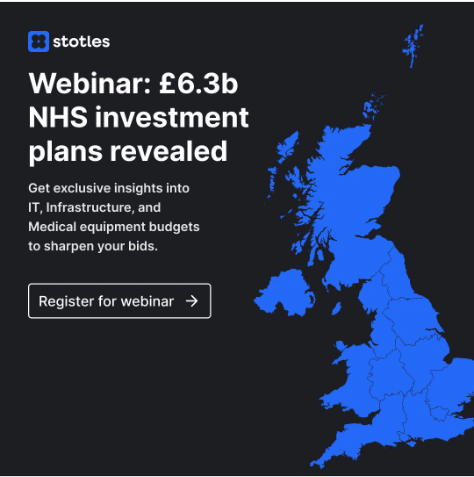
Only 32 ICBs control £6.3b in NHS capital. In this live webinar, we’ll show you where it’s going and how to win it.
Align your company on one bid workspace. Assign owners, set due dates and track progress to a clean, final response.
YouTube Ads
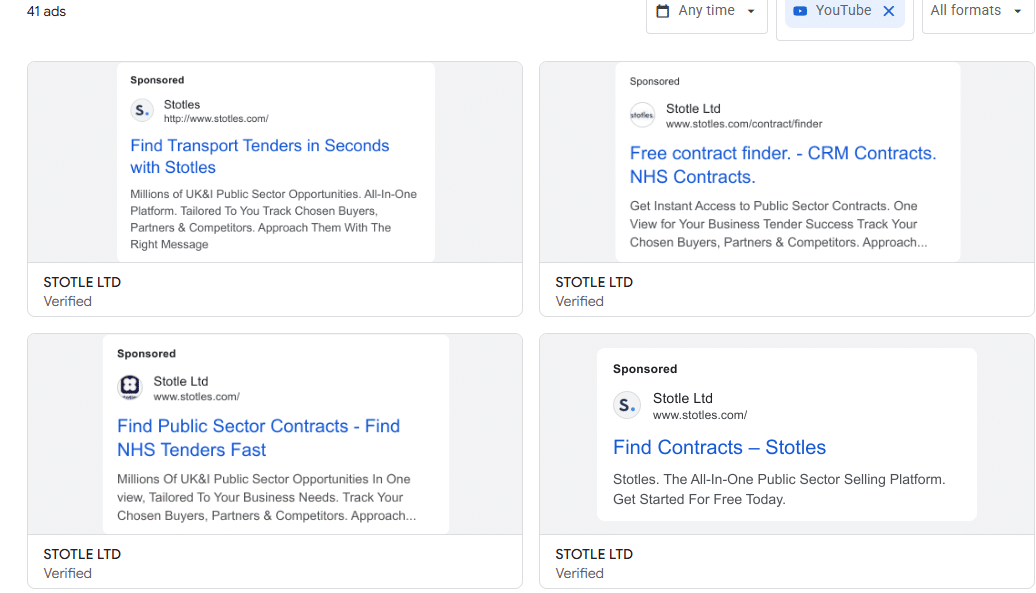
As of January 2026, Stotles has 41 ads running on YouTube. Right now, most of their ads have a text format (see below).
Google Ads
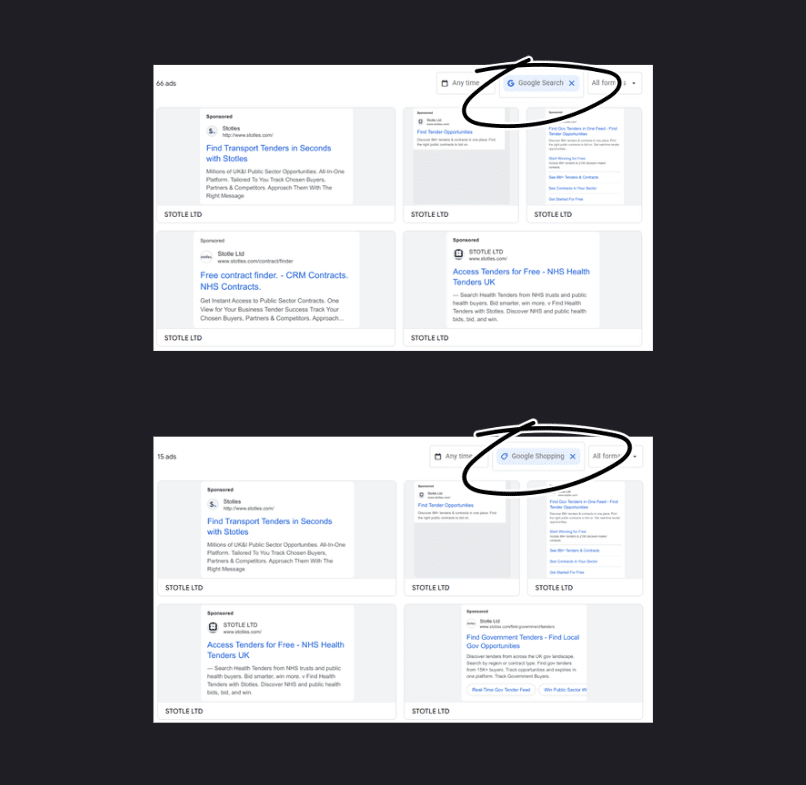
Stotles is not running any ads on Google Maps or Google Play. They rely on Google Shopping, with 15 ads, and Google Search, with 66 ads, as of January 2026. Just like on YouTube, they are using the text format for their ads.
Paid media is used as a precision tool for demand capture (buyers already searching for a solution), not experimentation or storytelling. For LinkedIn, problem-first messaging fits the market, even if it limits creative differentiation. YouTube is treated as a performance channel rather than a brand-building one. Search advertising reinforces visibility at the moment of intent, not before it.
Stotles’ Reviews and Social Proof
Here we will analyze Stotles’ reviews on specific sites like G2, Capterra, Trustpilot, and Glassdoor. Reviews can show underlying problems and how they manage the bad reviews.
We couldn’t find reviews on G2 or TrustPilot, but other sites provide reviews on Stotles.
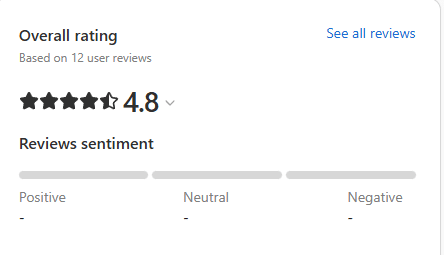
On Capterra, they have a 4.8/5 stars rating.
For Features, they have a 4.3/5 stars rating, with Content Management feature being the highest rating ( 5/5), and Vendor Management the lowest (2/5).
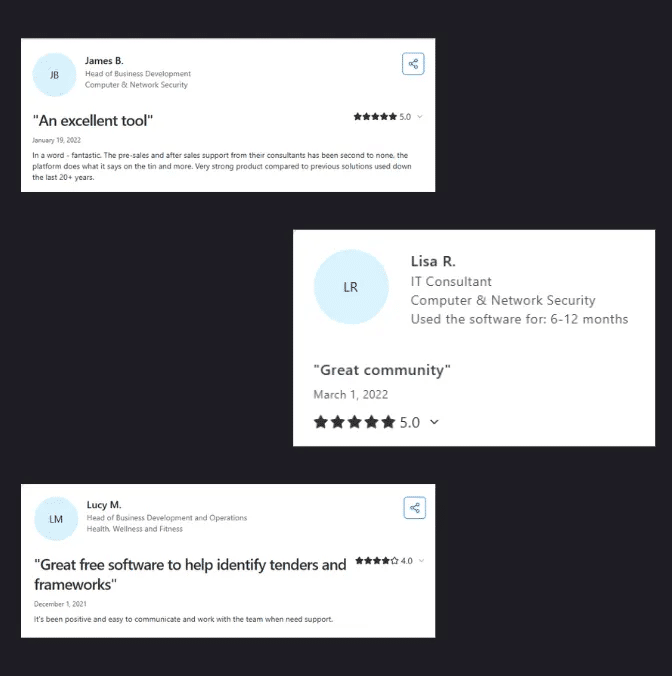
The only negative comments we found on reviews are about ease of use. Users complained about the interface not being so easy to use. On the other hand, we have many comments that praise the community and customer service.
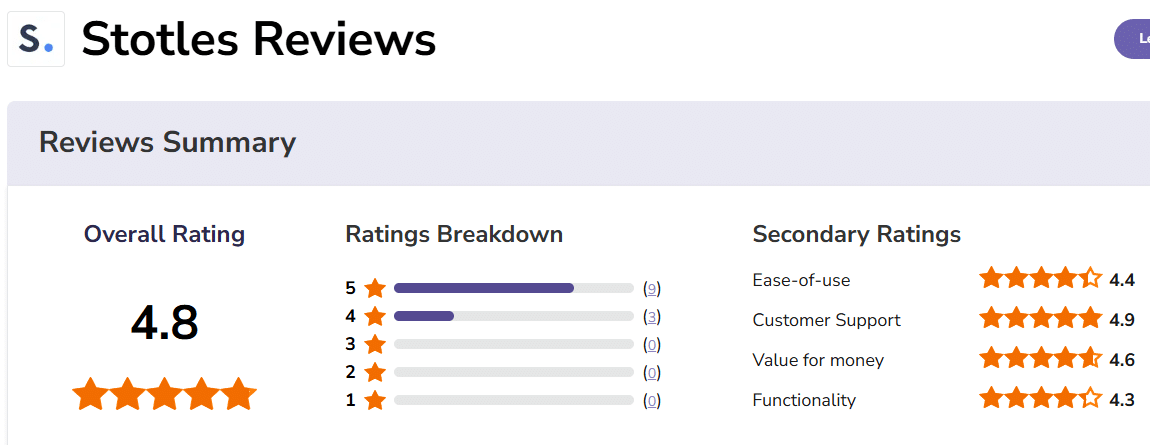
On Software Advice, they have a 4.8/5 stars rating, with Customer Support being the most liked (4.9/5), and Functionality being the lowest (4.3).
People here need more hands-on tools, like enabling credentials management for procurement platforms, solutions to be linked directly into your account, tracking international opportunities, and the links don’t work really well. Since these are old reviews, we can only hope and assume that they resolved these problems by now.
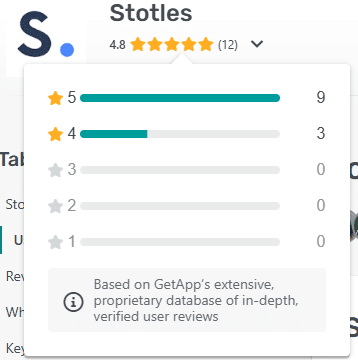
On Get App, Stotles has a 4.8/5 stars rating and a likelihood to recommend having an 8.75/10 rating.
As for their key features, the highest scored with a 5/5 rating is for Sales teams/organizations, and the lowest is Vendor Management, with a 2/5 rating.
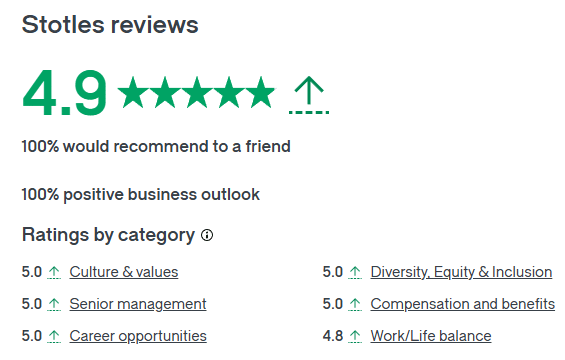
With a high score on Glassdoor, Stotles has a 4.9/5 rating, with 100% would recommend the company to a friend, and a 100% positive business outlook. The only category that was rated 4.8 instead of 5 is Work/Life balance one.
The only negative comments here are about the direction that can change quite aggressively and the classic start-up environment stress, which is not for everyone.
You can find testimonials on their website, like this one below, which will send you to a new page with a short description and an embedded YouTube video from their channel.
Good reviews validate the product, while small usability critiques highlight where refinement, not reinvention, is needed.
Stotles’ Content Marketing and Demand Generation
Except for those discussed at Differentiators and unique assets, Stotles has other types of content on their Resource Hub: blog posts and Industry reports.
The B2B buying journey has fundamentally shifted. A 2025 research shows buyers consume 3-7 pieces of content before ever speaking with sales, with 80% of all B2B sales interactions now happening through digital channels. This makes Stotles’ content strategy directly impactful to pipeline development. Each article, report, or video becomes a digital sales asset working 24/7.
As you could guess, the reports are also gated through a form, which requires name, work email, company name, and an experience working with the public sector drop-down. You can see a preview of the introduction, when it was written and by whom, but that’s it. As of January 2026, they have published 30 reports, which can be filtered by industry, topic, and content type.
They don’t have a regular posting schedule for their blog posts. There are 3 posts in January 2026, and only 1 for November 2025, October, and September, then a couple in June, and so on. You can see in the preview when it was written and by whom.
The table of contents is on the left side of the article, followed by social media sharing buttons for LinkedIn, X, email, and copy link. The articles have at least 1.8k words each, with headings, subheadings, spreadsheets, and links to their app.
Stotles’ Content Distribution and Amplification Strategy
Creating content is half the battle. Getting it seen is the other half. Stotles creates: blog posts (1,800+ words, infrequent), industry reports (gated, used for lead gen), webinars (live and recorded), videos (tutorials, testimonials, explainers), glossary pages (SEO-driven), and event listings (curated, regularly updated).
That’s a decent content library. But how are they distributing it? Some of them are promoted on the company and the founders’ social media pages. Some of them are backlinked in their site’s content, shared in the newsletter, or promoted through ads.
Content repurposing is close to zero. This is the biggest missed opportunity. One webinar can become:
Blog post summarizing key points
10 LinkedIn posts with individual insights
Twitter thread with main takeaways
YouTube video (full webinar)
YouTube Shorts (key moments)
Podcast episode (audio version)
Email series (one email per topic covered)
Infographic (visual summary)
SlideShare deck (presentation format)
They’re probably creating each piece of content once and using it once. That’s leaving 90% of the value on the table. Creating content is hard. Distributing it is easier but often ignored. Stotles is spending 90% of their effort on creation, 10% on distribution. It should be closer to 50/50 or even 40/60.
💡 Steal This: Audit your content not by output, but by how often it gets reused. If a piece can’t be repurposed, it’s probably not strategic enough.
If they distributed their existing content more, they’d get more value from what they’ve already created before making anything new.
Modern tools make this easier than ever. Ahrefs’ 2025 research shows marketers using AI publish 42% more content (17 articles monthly vs. 12), yet 95% of B2B decision-makers still prioritize thought leadership quality over quantity. The opportunity is strategically repurposing existing high-quality content across multiple formats and channels to maximize each piece’s impact.
Stotles’ SEO Performance and Organic Reach
The glossary is their SEO workhorse. Every public sector term gets a dedicated page. Each page links to related terms. This is textbook hub-and-spoke SEO. There is one main glossary page linking to dozens of specific term pages, each of which could rank for searches.
Someone searching “what is OJEU notice” or “CPV codes explained” lands on Stotles’ glossary, sees the product, and some percentage converts. This works because:
These searches have a clear intent (learning about public sector processes)
The traffic is qualified (only people in or exploring this space search these terms)
The pages are evergreen (definitions don’t change much)
The blog exists, but posting is inconsistent. This kills SEO momentum. Google rewards sites that publish regularly. If you’re sporadic, you’re not building topical authority. Consistency is key.
The articles are 1.8k words and well structured (H2s, H3s, internal links). That’s good. But without consistent publishing, they’re not accumulating the backlinks and social signals that drive rankings.
Content volume is OK, but its strategic impact is constrained by limited lifecycle thinking. Without systematic amplification, much of Stotles’ content value dissipates after first publication.
Content Marketing Institute’s 2025 study of over 1,000 B2B marketers found that 74% credit content marketing with generating more demand and leads, and 46% are increasing their content budgets. Stotles’ inconsistent publishing schedule means they’re underinvesting in a channel where competitors are doubling down.
Stotles’ Marketing and Sales Funnel Stages
Moving on to Stotles’ marketing and sales funnel stages: TOFU, MOFU, and BOFU. Stotles have a standard B2B SaaS funnel.
Top of Funnel (Awareness)
They’re relying heavily on:
SEO through their glossary (smart, passive traffic)
LinkedIn ads (104 running as of January 2026)
Events and webinars (good for targeted reach)
Word of mouth from big-name clients
What’s missing? Consistent organic social content, founder thought leadership, and presence on multiple platforms. You probably won’t see them, unless you’re actively searching for public sector procurement tools or you see their ads.
Middle of Funnel (Consideration)
Here’s where things actually click:
Free plans let you test before committing
Stotles University videos educate and build trust
Webinars and reports (gated) capture emails
Case studies and client testimonials
Their Where to meet buyers event list adds value beyond the product
The report download forms are standard (name, email, company, experience level, employee count). The webinar registration goes through Zoom or LinkedIn Events, which is a quick and low friction option, since LinkedIn pre-fills your info.
Social proof with specific metrics (1.4M+ tenders, 200k+ documents)
The sales team gets involved for Growth plans and above. Free users can self-serve, which reduces friction for smaller teams testing the waters.
Post-Purchase (Retention)
Help Center with categorized resources
AI chat support (bottom left corner, not the usual right side)
Stotles Playbooks for ongoing education
Customer Success tiers that scale with your needs
Partner network for services they don’t provide
If you have a similar company, pay attention to this part. It’s important what happens AFTER you download a report or register for a webinar. There are some tactics, like follow-up emails or drip campaigns, that are worth considering. You need to stay top-of-mind for people who visit and leave. Organic or paid, it doesn’t matter. It’s important to be present on social media and know your paid advertising game.
Their funnel converts well, but only if you already search for a product like theirs. They’re not creating demand, but capturing existing demand. The funnel is functional and logical, but optimized more for efficiency than scale. Awareness relies heavily on intent-based channels rather than proactive brand discovery. Education brings curiosity and consideration in a complex buying environment. Clear conversion paths reduce friction at the most sensitive decision point. Retention is reinforced by depth rather than aggressive upselling.
Stotles’ Future Plans and Growth Indicators
In the absence of recent funding rounds, job listings and product updates offer the clearest signals of where Stotles is heading.
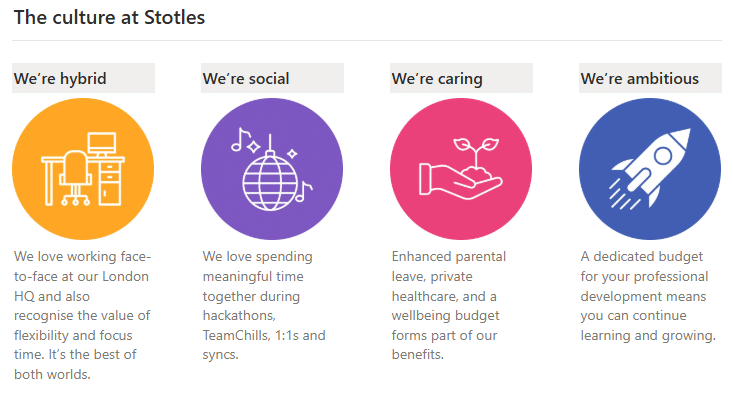
Their Career page will send you to an external Notion link. Here, you will find a short description of what it is like to be a Stotler, pictures with their team, and a message from their founders: Carsten, John, and Taj.
There are external links to their Mission & Values, Hybrid Working Policy, Benefits & Perks, and Equality, Diversity & Inclusion pages. You can see the list of their top-tier VCs and Angels. At the bottom of the pages, you will find press releases about Stotles and a link to their Open Positions page, which is not accessible at the moment.
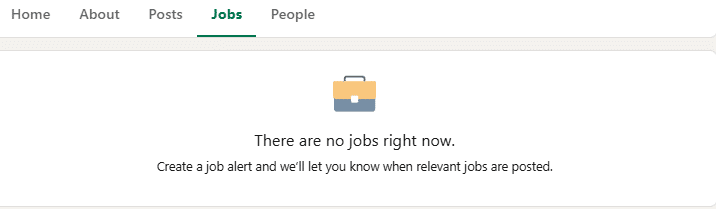
To see if they have some positions open or if it’s just a broken link, we checked their LinkedIn jobs, but it’s nothing there.
The last funding news is from May 2025, where Stotles raised $13 million in Series A, to help suppliers succeed in the new age of government efficiency. Usually, after funding, you can see a lot of job openings that are filled in pretty soon, so that makes sense, since we are in January 2026.
As we said, at the Service and Product Breakdown, new features are promised for the Growth and Expert plans. That could mean they put all the funding resources into product development, which is a pretty standard move after a funding round.
Stotles’ trajectory suggests disciplined, product-led growth rather than rapid market expansion.
Inspiration Points: What Stotles does right
We’ve seen it all. Stotle’s social media, ads, content, and everything in between. This is what’s actually working. Let this list inspire you, even if you are a similar B2G company, a rising SaaS, or just interested in marketing tactics that work:
1. They’ve nailed product-led growth
Starting with a free plan removes the biggest barrier in B2B sales: the commitment. You can test Stotles without talking to anyone or without a demo. By the time you’re ready to upgrade, you’re already hooked on the value. This is how you compete with established players: make it stupid easy to start.
ProductLed’s 2025 study analyzed 446 B2B SaaS companies and confirms this approach works: companies with self-serve revenue capabilities consistently outperform their counterparts across virtually every metric, with conversion rates 25.9% higher than companies without self-serve options.
2. The glossary is an SEO masterclass
Every public sector term gets its own page. Each page links to related terms. People searching for definitions land on Stotles’ site, see the product, and some percentage converts. It’s evergreen content that works 24/7. Low effort, high return.
3. They’re building an industry hub
The partner network is brilliant. Stotles knows they can’t be everything, so they verify partners who fill those gaps. This keeps customers in the Stotles universe even when they need services outside the platform. It’s also a revenue opportunity if they negotiate referral fees.
4. The “Where to meet buyers” event list is pure value-add
This shift focuses from Stotles, the product, to Stotles, the community hub. They are helping their customers succeed. You can subscribe to updates, filter by buyer type and topic, and see attendee counts. This makes Stotles the helpful expert, not just another vendor. And when you’re at those events looking for buyers, you remember who helped you find them.
5. Transparent pricing (mostly)
Showing pricing upfront, with plan comparisons, feature breakdowns, and customer success tiers, builds trust. The only hidden price is Expert plans, which makes sense, because enterprise deals need custom pricing. But for everyone else, you know what you’re getting into before you click anything.
6. They’re using AI where it matters
AI bid summaries, AI chat support, and AI-driven qualification. They’re not slapping AI-powered on everything for marketing points. They’re using it to solve actual pain points: reading through massive tender documents, answering support questions, and figuring out if you should bid.
7. The brand positioning is crystal clear
They’re not trying to be innovative, disruptive, or revolutionary. They’re solving a specific, painful problem for a specific audience. When your positioning is this tight, marketing gets easier because you know exactly who you’re talking to and what they care about.
8. Social proof is strategic
They’re showing us big client names. They’re showing 1.4M+ tenders, 200k+ documents, 210k+ contacts, 15k+ organizations. Those numbers tell you the platform is comprehensive and that other people trust it. That’s more convincing than a generic 5-star review.
9. Customer success is productized
Silver, Gold, Platinum tiers with clear descriptions of what you get. Most companies hide this or make it vague. Stotles tells you upfront: light touch, proactive support, or enterprise-grade partnership. You can decide if you need hand-holding or if you’re fine with self-service. No surprises.
10. They’re not overselling
The copy is straightforward. The promises are realistic (results shouldn’t take a year with a 1-month plan shown). The pain points are specific (navigating endless applications, portals, and spreadsheets). They’re talking to people who already know the problem exists. They assume you already know procurement is a nightmare. They’re not trying to convince you it’s painful. That builds trust.
If analyzing how companies like Stotles build trust, structure their funnel, and grow in complex markets sparked ideas for your own business, you don’t have to figure out the next steps alone. Milk and Cookies Studio works with teams facing similar challenges, turning clarity into strategy, and strategy into measurable growth.
Frequently Asked Questions
1. What is Stotles and who is it built for?
Stotles is a UK-based B2G SaaS platform designed for companies selling to the public sector. It centralizes public procurement data: tenders, buyer contacts, past awards, and documents, into one system, helping sales and bid teams find opportunities earlier and win government contracts more efficiently.
2. How does Stotles differentiate itself from other public procurement tools?
Stotles focuses on workflow clarity rather than feature overload. By separating Sales Studio (pipeline and market strategy) from Bid Studio (tender execution), it reduces adoption friction and supports expansion across teams. Its biggest advantage is consolidating fragmented UK procurement data into a single, usable source.
3. Is Stotles a CRM replacement?
No. Stotles complements your CRM rather than replacing it. It handles opportunity discovery, qualification, and bid workflows specific to public sector sales, while your CRM remains the system of record for relationships and deal tracking.
4. Does Stotles offer a free plan or trial?
Yes. Stotles uses a product-led growth model with free plans for both Sales Studio and Bid Studio. You can explore core features without a credit card, then upgrade when you need advanced capabilities, lowering friction at the top of the funnel.
5. How effective is Stotles’ SEO and content strategy?
Their strongest SEO asset is a deeply niche public sector glossary that captures high-intent, evergreen searches. This hub-and-spoke approach outperforms generic blogging by attracting qualified buyers already researching procurement concepts tied directly to the product.
6. What role does content play in their demand generation strategy?
Content is used primarily for education and trust-building rather than aggressive lead capture. Webinars, reports, and Stotles University support buyers through complex decisions, though inconsistent gating and limited content repurposing reduce overall impact.
7. How does Stotles approach paid advertising?
Paid ads focus on demand capture, not brand storytelling. Messaging is problem-first, clear, and conservative, well-suited to risk-averse public sector audiences. LinkedIn and search ads perform the heavy lifting, while YouTube is treated as a performance channel.
8. How strong is Stotles’ social proof and reputation?
Stotles holds consistently high ratings (around 4.8/5) across review platforms like Capterra and Software Advice. Customers highlight strong support and data value, while usability is the most common critique, suggesting refinement needs, not fundamental issues.
9. What can other B2B or SaaS companies learn from Stotles’ marketing strategy?
Stotles shows that in conservative markets, trust, usefulness, and consistency outperform bold experimentation. Product-led growth, deep SEO assets, partnerships, and clear positioning matter more than constant content output or flashy branding.
*Please note that if we do not get clear details and accurate info, you might not get a reply from us!
Nice to meet you, amazing human! Fill out this super short form and start your journey!
Welcome to our cozy data-driven digital marketing studio for bold B2B tech companies.
Your journey starts with you filling in our contact form. It’s a very short form. #PinkyPromise. It only takes you 45 seconds to fill it in, but it helps us a lot to understand who you are, what your challenges are and if we are the right partner to help you.
We don’t want to waste your time. So… a big thank you in advance for your effort.
Please don’t hesitate to reach out with questions or if you would like to discuss any of your challenges or ideas in depth.
You can contact us using this form on the right or you can send us an email at hello (at) milkandcookies (dot) studio.
We will reach out to you as soon as possible. Usually no more than a couple of hours.