Marketing Spotlight: Mapping Flare’s Marketing and Sales Tactics
In this article, we put Flare in the “Marketing Spotlight” as we take a closer look at how their sales and marketing strategies work and what sets them apart (in November 2025).
Article summary
Share
TL;DR: Conclusions and Key Takeaways
🎀 This section gives you the main insights without all the details. It’s the stuff you need to remember, whether you’re reading this now or 6 months from now. We made this for people who want to get the core message fast.
Flare is a big name in the cybersecurity space. They focus on threat exposure management with a platform that scans the clear and dark web 24/7 to catch early risk. Their solution replaces multiple tools, and it has a 30-minute setup.
Expansion is shown by the $30M funding from November 2025, and hiring across product, engineering, and AI roles indicates platform expansion and feature development ahead.
They stand out with an education-driven marketing approach, offering free expert-led trainings and a thriving Discord community, while leaning heavily on LinkedIn and YouTube for outreach. Discord community and peer education create organic referrals and low-cost lead generation. Webinars convert at 56% average (DemandSage 2025), with 73% becoming qualified leads.
Their sales and marketing tactics show thought leadership through webinars, reports, and detailed customer stories that build trust without aggressive selling. Although their organic social media presence on LinkedIn is strong, they skip paid ads, which could limit their reach in a competitive space.
Flare’s focus on community, education, and speed to value shows how cybersecurity companies can connect authentically with buyers while delivering real solutions in an increasingly risky digital world.
📝 A quick note before you start reading: The data and analysis in this article are valid as of the time we wrote it. We don’t know when you’ll be reading this, maybe next week, maybe six months from now, and things might have changed since we looked at this company’s marketing strategy and sales approach. Still, the insights and lessons here stay useful, even if the numbers or tactics have evolved a bit.
Every security team’s nightmare is the morning when you discover your organization’s credentials circulating on underground forums, and you had no idea.
Credential theft exploded by 800% in the first half of 2025. The average time between credential exposure and a ransomware attack? Two days. That’s your entire window between exposure and catastrophe.
At Milk and Cookies, we’ve watched cybersecurity teams struggle against an increasingly sophisticated threat landscape. Attackers now leverage automation and AI, moving faster than traditional security measures can handle. Hoping nothing bad happens isn’t a strategy anymore.
This reality created the threat of exposure management. Organizations can’t sit around waiting for attacks. They need eyes on where their data shows up across the clear web, dark web, and underground threat actor communities, before cybercriminals turn it into weapons.
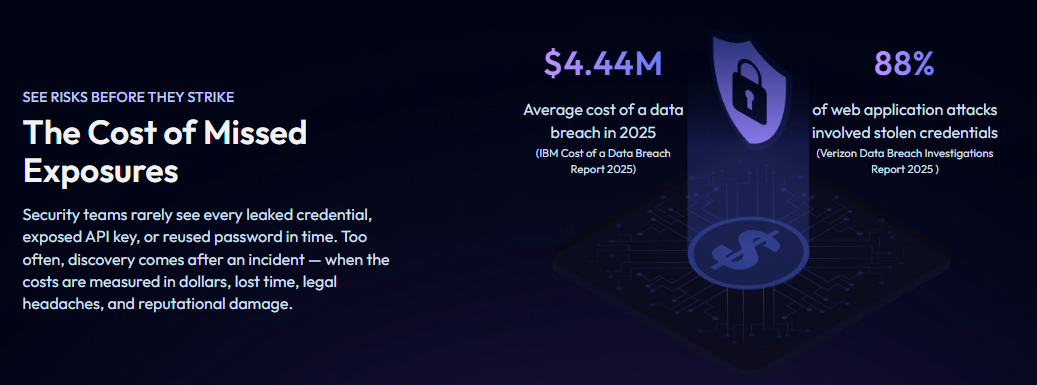
Flare platform promises to stop the attacks at the source by monitoring threat exposure around the clock. But with compromised credentials involved in 80% of security breaches and credential-based attacks surging 68% in 2025, the market is crowded with solutions making similar promises.
Let’s see how they choose to market themselves and how they add value in an overcrowded cybersecurity space.
Understanding Flare, the company
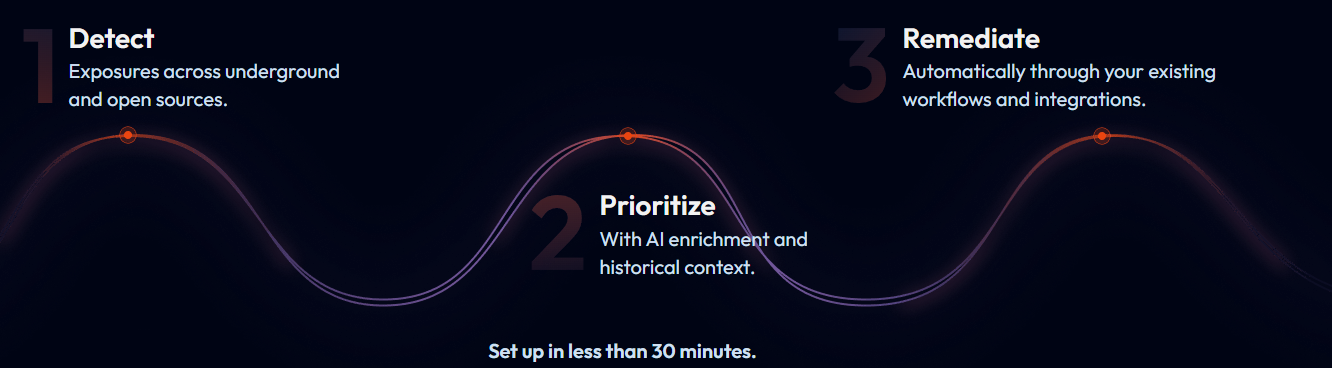
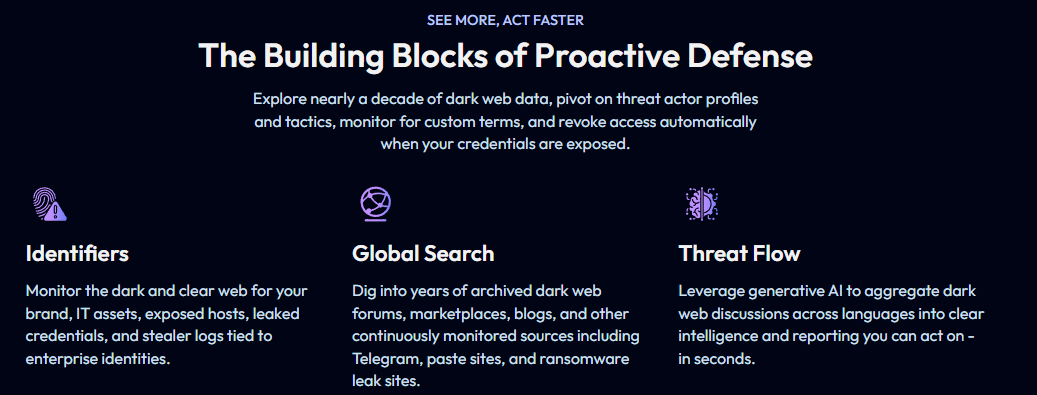
Flare is a threat exposure management platform designed to help organizations proactively detect, prioritize, and neutralize exposures that threat actors commonly exploit. Their platform automatically scans the clear and the dark web, as well as prominent threat actor communities 24/7 to discover unknown events, prioritize risks, and deliver actionable intelligence you can use instantly to improve security.
Flare integrates into a security program in 30 minutes and often replaces several SaaS and open source tools. They specialize in: Dark Web, External Threat Intelligence, Data Analysis, Web Crawling, CTI, Darknet, Intelligence, cybersecurity, Big Data, Fraud, Dark Web Monitoring, and Cyber Threat Intelligence.
Three red-teamers working in financial services founded the company in 2017 after repeatedly encountering the same problem: security teams lacked visibility into data that attackers were already exploiting, and existing intelligence tools generated alerts that rarely led to meaningful action. Flare’s headquarters are in Montreal, Quebec, Canada, and they have 101-250 employees and 138 associated members.
Red-teamers are security professionals who simulate real-world cyber and physical attacks against an organization to test its defenses and identify vulnerabilities.
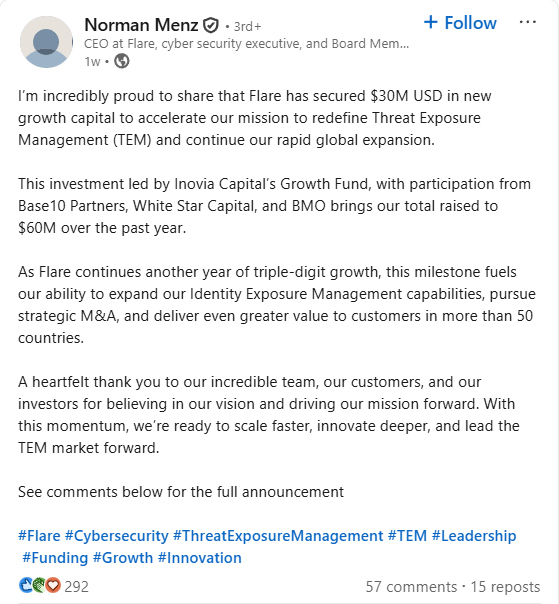
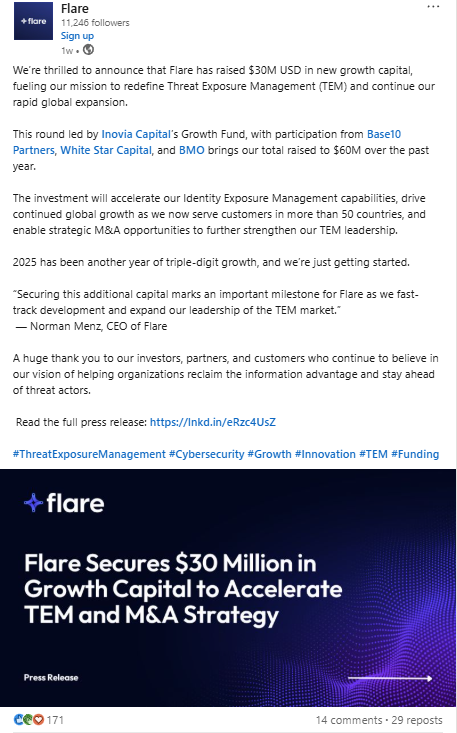
Flare has secured an additional USD $30 million in capital to accelerate growth and innovation. The round includes a $15 million Series B extension led by Inovia Capital’s Growth Fund, with participation from Base10 Partners and White Star Capital, plus $15 million in debt financing from BMO. This brings Flare’s total funding to $60 million over the past year. Flare will use the funding to advance its Identity Exposure Management capabilities within its TEM platform and to pursue strategic M&A opportunities.
Brand Promise Analysis
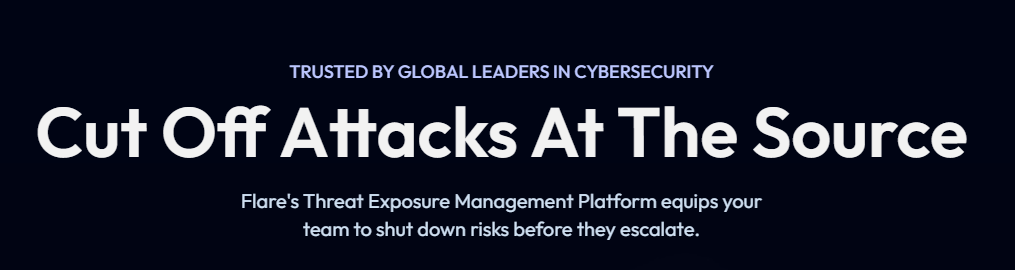
Trusted by global leaders in cybersecurity, Flare promises to cut off attacks at the source.
With nearly a decade of data collection and real-time monitoring across underground sources, Flare ensures no defender is left in the dark.
Flare’s Identity Exposure Management solution integrates with Entra ID to automatically detect, validate, and remediate exposed accounts. With a quick setup and clear, actionable steps, and continuous monitoring of dark and clear web sources with context and automated alerts, Flare turns exposures into manageable risks.
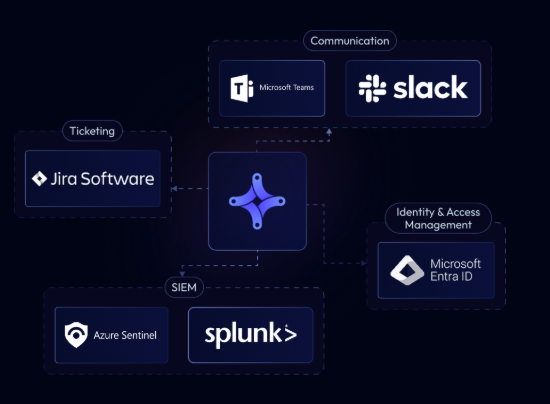
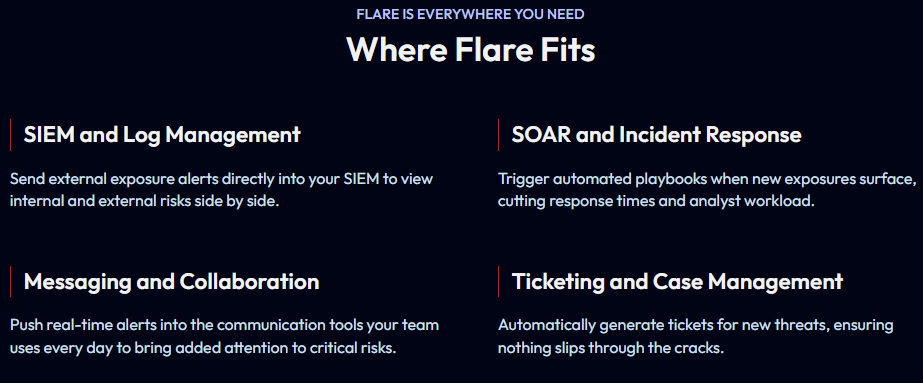
Their platform consolidates workflows by replacing multiple point solutions and integrating directly with existing ticketing systems, SIEM platforms, and SOAR tools. This consolidation matters because security teams are drowning in tools that don’t communicate with each other.
A SIEM (Security Information and Event Management) platform is a software solution that collects and analyzes security data from various sources across an organization’s IT infrastructure in real time.
SOAR tools, or Security Orchestration, Automation, and Response platforms, integrate and automate cybersecurity incident response by unifying security tools, automating repetitive tasks, and creating standardized workflows or “playbooks”. These platforms help security teams handle a large volume of alerts more efficiently, reducing response times and analyst workload.
Service and Product Breakdown
The Flare platform shows you when your organization’s data, credentials, or infrastructure appear where they shouldn’t, and helps your team resolve it automatically so it doesn’t become a bigger problem.
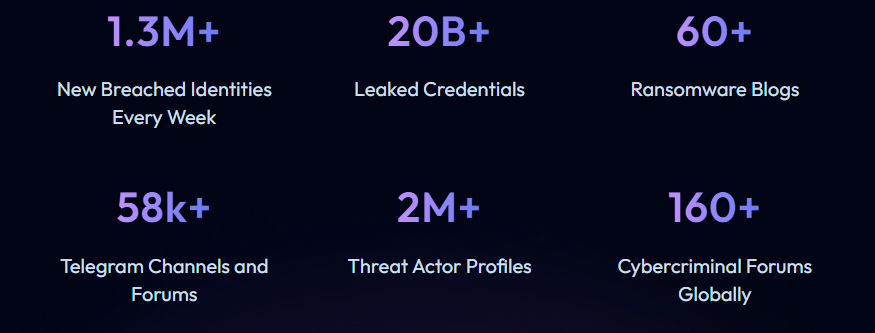
Teams can automatically identify and revoke leaked or reused credentials through Flare’s extensive data coverage and integrations like Microsoft Entra ID. The system monitors over 58k Telegram channels and hundreds of dark web forums for fraud schemes and abuse targeting your products. It detects and facilitates the takedown of lookalike domains and applications impersonating your brand. The platform also identifies third parties and vendors that have exposed your organization’s data during security incidents.
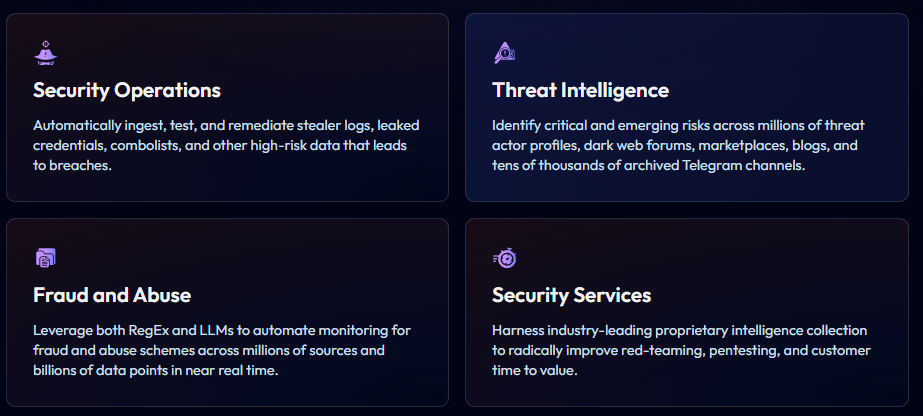
Built specifically for the daily realities of SecOps teams, CTI analysts, fraud prevention teams, and security service providers, Flare addresses practical operational needs rather than theoretical security concepts.
SecOps teams, or Security Operations teams, are collaborative groups that integrate IT security and operations to protect an organization’s digital assets. Their primary responsibilities include monitoring networks, endpoints, and applications for threats, responding to security incidents, and implementing measures to prevent future attacks.
CTI (Cyber Threat Intelligence) analysts are security professionals who monitor and analyze cyber threat data to provide organizations with actionable intelligence. Their work helps in understanding threats, their motives, and their methods, which informs security decisions, supports operational teams, and reduces risk.
They offer seamless integration with Microsoft Entra ID, Azure Sentinel, Microsoft Teams, Splunk, Slack, and Jira. You can correlate external exposures with internal signals, accelerate incident response, and stop account takeovers at scale. With Python and Go SDKs, robust documentation, and hands-on support, integration is seamless and flexible enough to support any workflow.
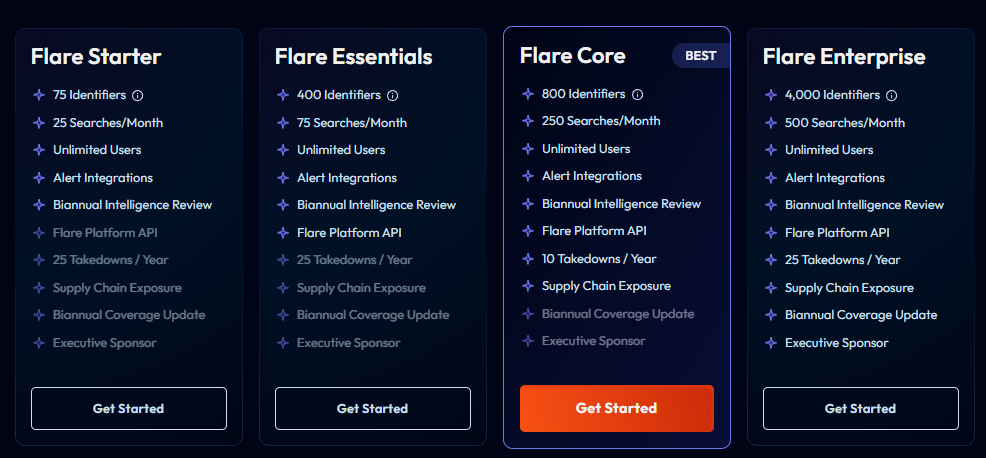
They offer 4 price tiers: Starter, Essentials, Core, and Enterprise. Whether you’re just getting started or scaling global coverage, power your security program with Flare’s industry-leading cybercrime dataset and plans tailored to teams of all sizes.
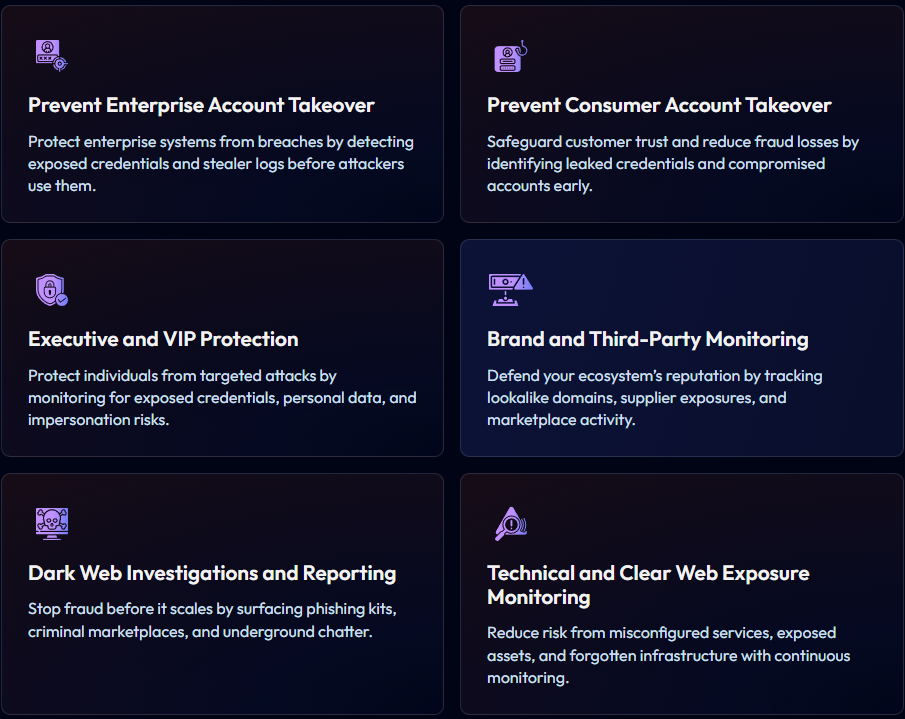
Their product is used in Finance, Banking & Fintech, Technology, Software & SaaS, Ecommerce, Retail & Hospitality, and in the Government & Law Enforcement space. They will prevent enterprise account takeover, offer dark web fraud & abuse monitoring, investigations & reporting, executive & VIP protection, and identity exposure management.
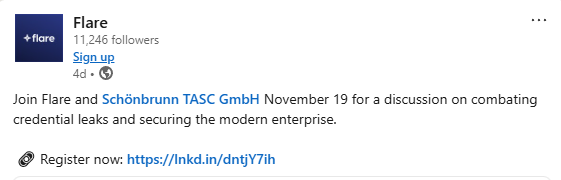
Flare Academy is the hub for studying active threats and modern frameworks reshaping cybersecurity today, with virtual trainings, original research from Flare’s experts, and a Discord where industry practitioners share and discuss the latest threat intel.
The trainings are led by the Flare research team, meant to bring you up to speed on today’s evolving threat landscape.
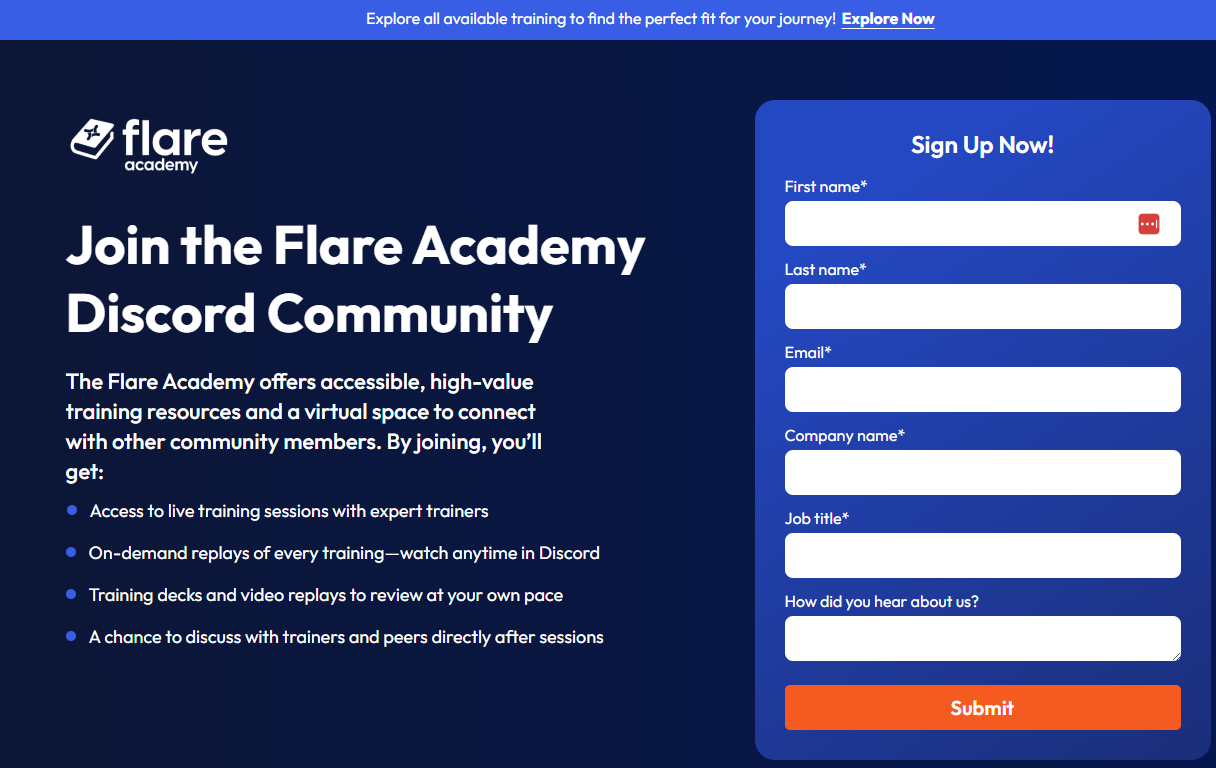
You can join the Flare Academy Discord Community if you fill out a form.
The copy explains the benefits of joining their community, like access to live training sessions with experts, on-demand training replays, training decks, and a community that’s waiting for you after sessions.
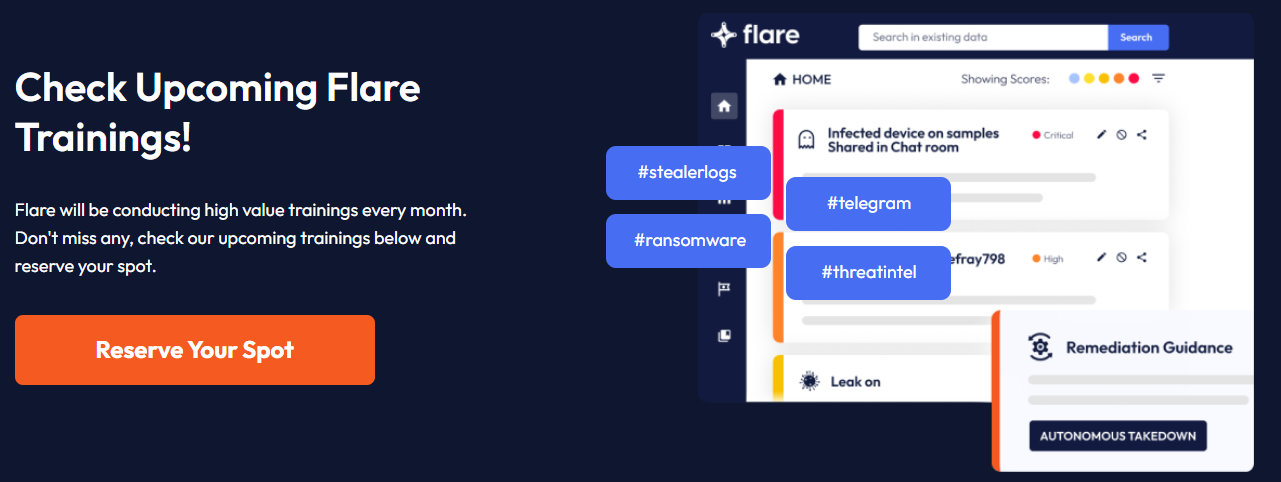
Flare conducts high-value trainings every month, but clicking the Reserve Your Spot or Explore Now buttons redirects to nowhere at this moment.
Flare Academy trainings are free, researcher-led sessions that break down active threats, attacker tactics, and modern security frameworks, with practical takeaways you can use right away.
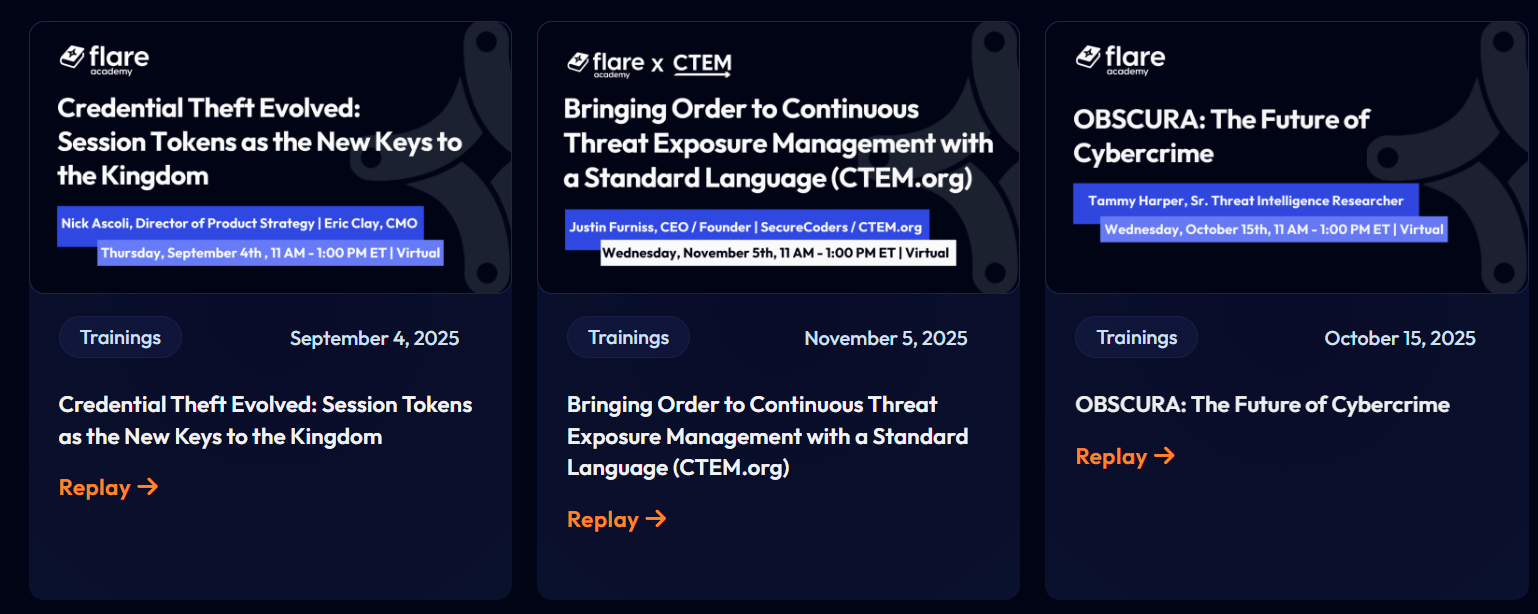
Each training covers real-world risks, with guidance on remediation and response. Scrolling this page, you’ll find past sessions. It appears that they hold at least one training per month.
Recent research shows a fundamental pivot in SaaS content, moving past traditional blog posts toward in-depth educational resources that provide actionable guidance. Today’s SaaS buyers are actively seeking more than just surface-level information; they demand detailed PDFs, helpful templates, and engaging mini-courses that walk them through practical steps they can apply immediately (42DM, July 2025). This shift is highly strategic, as educational resources, such as free courses and resource hubs, are found to be remarkably effective for conversions (Marketer Milk, August 2025). By creating an online academy that shares specifics about use cases through a mix of free and premium content, companies can effectively establish themselves as indispensable industry experts (SaaSStorm, February 2025).
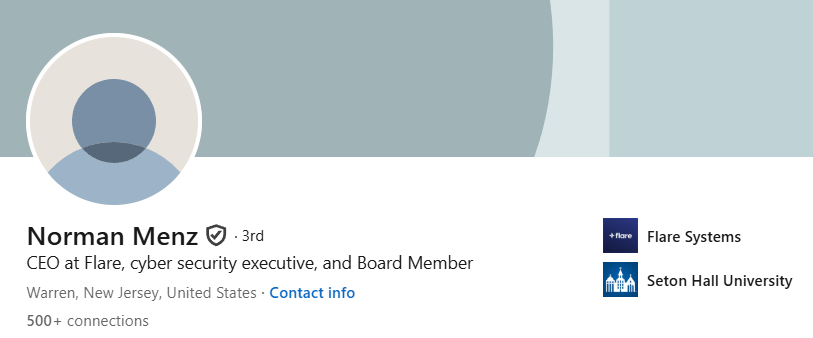
Flare’s CEO, Norman Menz, has 2k followers on LinkedIn. In the last year, he posted 7 times. He reposted Flare’s page content most of the time, along with some thoughts.
His latest post about $30M funding led by Inovia Capital’s Growth Fund has 292 reactions, 57 comments, and 15 reposts.
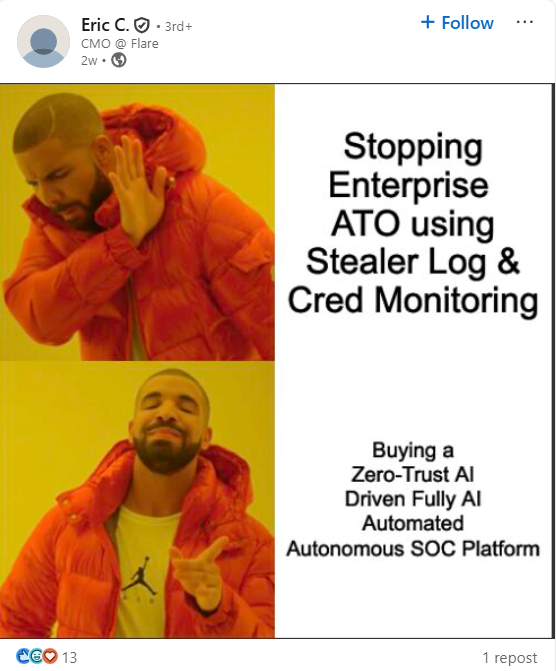
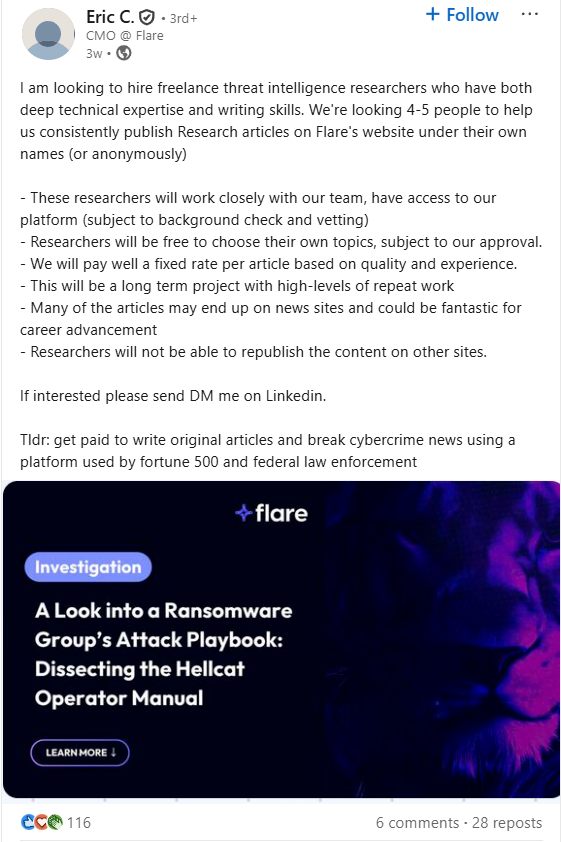
Flare’s CMO, Eric Clay, has 8.4k followers on LinkedIn. He posts original content once per week. The engagement varies a lot, from posts that have 20 reactions, to posts that have over 100.
Compared to the CEO, the CMO doesn’t use hashtags at all in his posts.
The 2025 Edelman Trust Barometer (January 2025) found that CEOs who aren’t visible and communicating directly with audiences leave a massive trust gap unfilled precisely when transparency matters most.
The study revealed 78% of business decision-makers are more likely to trust companies whose leadership maintains an authentic social media presence. When competitors’ executives actively engage while yours remain silent, you’re falling behind in the trust race and missing direct access to decision-makers.
Executive invisibility on LinkedIn is now interpreted as being disconnected from modern business practices and out of touch with audience expectations. In cybersecurity specifically, where trust is the most important thing, leadership visibility directly impacts prospect confidence.
Social Media Strategy
LinkedIn
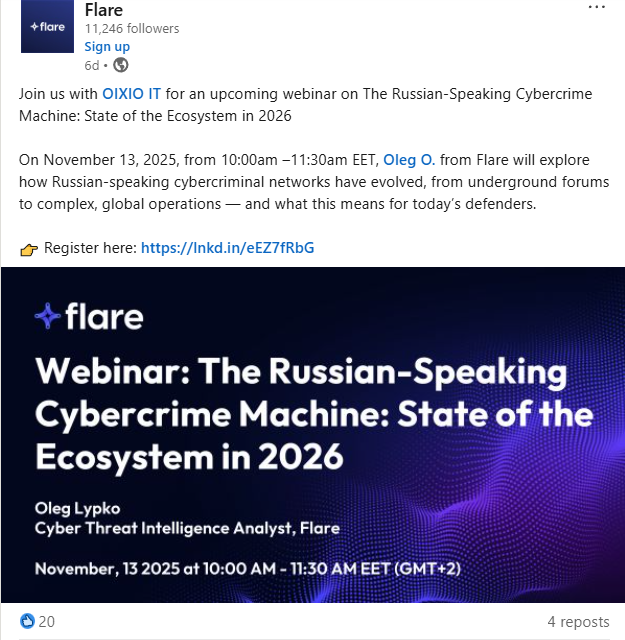
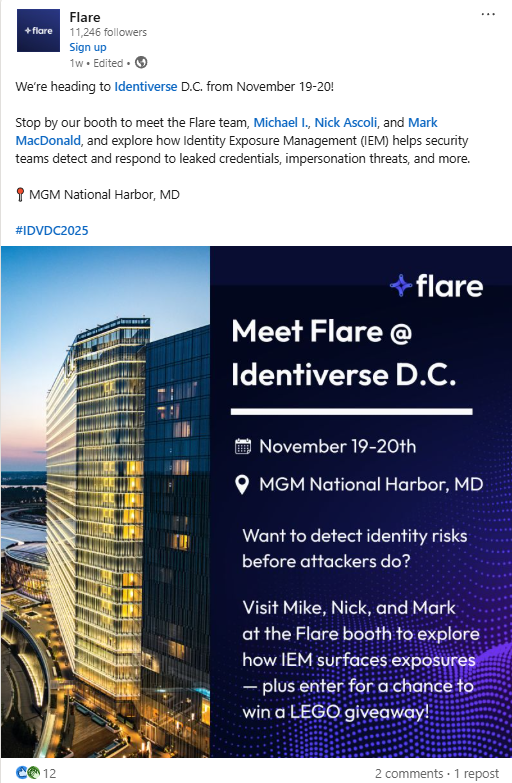
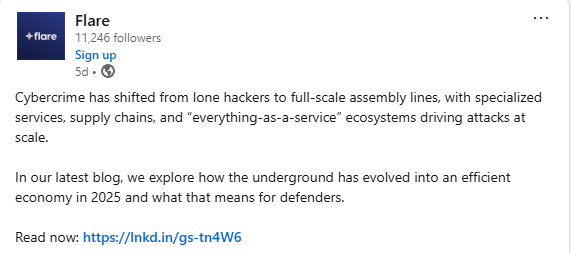
Flare’s LinkedIn page has 11k followers. Last week, they posted 10 times, which is a lot compared to other SaaS companies. The engagement is on the modest side, with 10-20 reactions on average. But some posts have over 100 reactions.
Content focuses primarily on resources (webinars and guides), recent partnerships, and industry events.
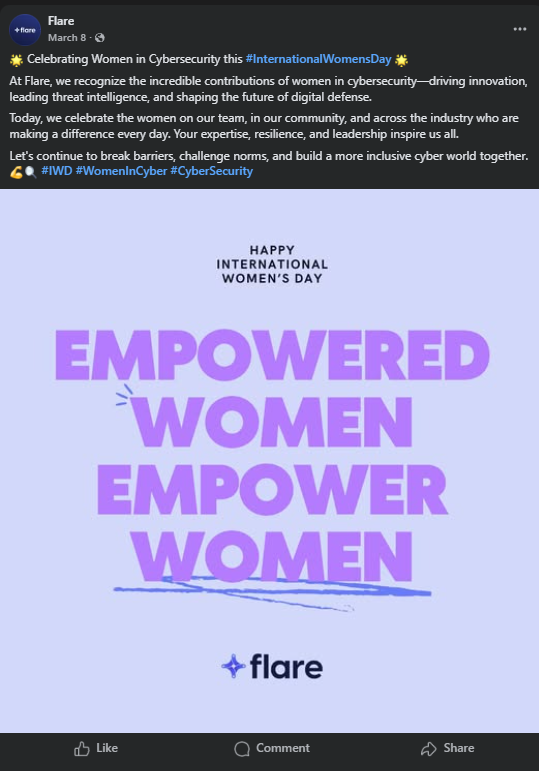
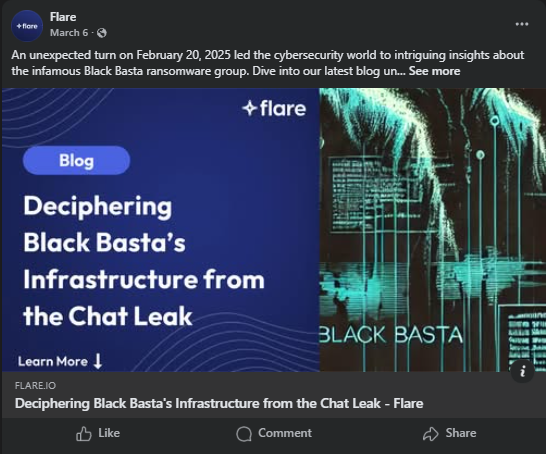
Their Facebook page has only 79 followers. Their latest posts are from March 2025, and before these, from December 2024. They have no engagements on their posts.
YouTube
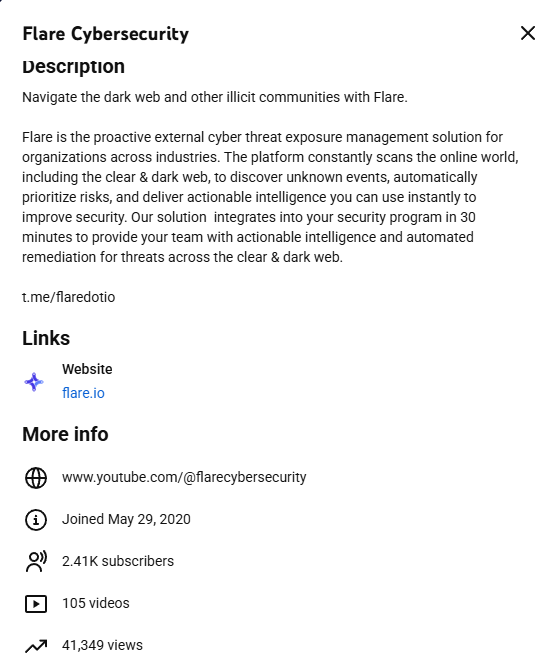
Their YouTube account has 2.4k subscribers, with 105 videos posted that gained 41.3k views. They have long-form videos, shorts, and lives. 7 playlists are waiting for you: Flare Academy, Jason Haddix for Flare, Flare Threat Spotlights, Flare Conferences, Flare Cyber Security Focus, Flare Events, and Flare Webinars.
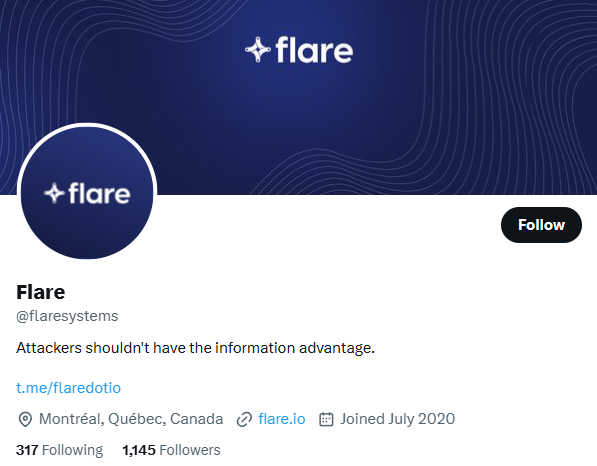
They do have an X (formerly Twitter) account, with 1.1k followers, but with no content, and no Instagram or TikTok account.
LinkedIn is the preferred social media platform for cybersecurity management platforms due to its inherent professional focus, and this strategy is generally appropriate for B2B companies like those targeting Flare.io’s Ideal Customer Profile (ICP).
However, a well-rounded strategy also dictates that content should maintain a presence on other channels, particularly for video and specialized content.
While LinkedIn remains the undisputed leader for B2B cybersecurity marketing due to its audience and features, a holistic 2025 strategy for Flare.io’s ICP demands a multi-channel approach. LinkedIn is for thought leadership and lead generation, but video content on YouTube is critical for product demonstrations and education, and private community channels are essential for building deep relationships and trust.
In the video description, you’ll find links to resources and a CTA to engage with their content.
For cybersecurity platforms operating in a highly risk-averse B2B environment, engagement is now the primary visible signal of trust and content credibility. Studies confirm that B2B buyers complete over 70% of their research before speaking to sales, relying heavily on peer-validated content to form an opinion.
When expert material receives significant shares and comments on professional platforms, it establishes the provider as a true thought leader and authoritative source. Engagement is essential for modern data-driven strategies. Marketers are moving beyond simple MQLs (marketing qualified leads) to tracking account engagement scores across the entire buying group, interpreting high social interaction as a strong buyer intent signal.
This attention to engagement metrics directly impacts marketing ROI; high interaction maximizes organic reach by securing algorithmic prioritization, ensuring critical updates, like zero-day alerts, break through the noise and reach the ICP without a corresponding increase in paid media spend
Sales Funnel from Social Media
LinkedIn
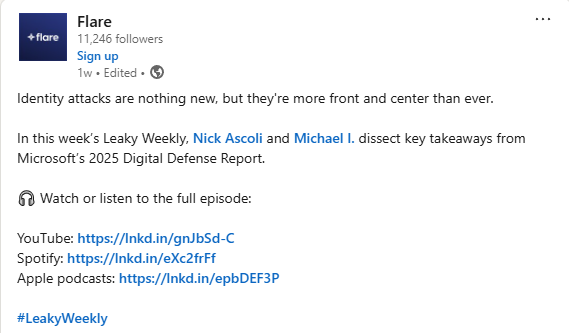
They post a lot about their resources: guides, articles, research, webinars, and Flare Academy. Links to each of them are provided in copy, with CTAs like: Register Now, Read Now, and Watch and listen to the full episode.
Youtube
Just like on LinkedIn, the links to resources are provided in the video description.
For complex B2B sales like a cybersecurity platform, the goal isn’t just clicks; it’s qualified interest. If your post promises a technical report, a direct link to that report meets a high-intent user need, which validates the post’s value despite the external link. This is preferable to forcing a visit to a generic, low-conversion landing page.
While general content strategies advise using Link in bio to maintain organic reach, specialized 2025 cybersecurity reports show that a direct, ungated link to a crucial technical resource is often preferred by security professionals, prioritizing user experience and immediate knowledge transfer over platform preference.
Reviews and Social Proof
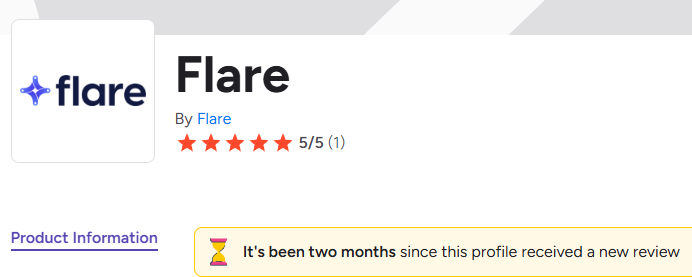
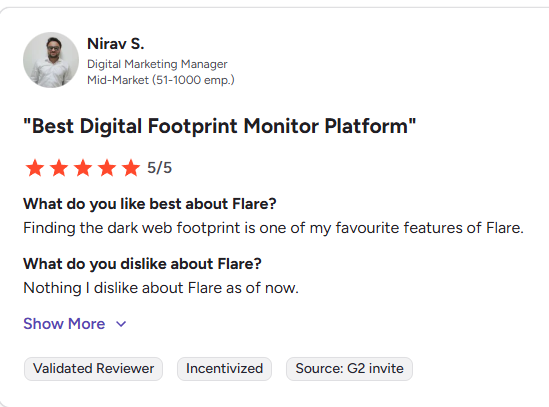
On G2, they have 1 review from 2023 and a 5/5 stars rating.
We couldn’t find any reviews on other platforms like Capterra or Trustpilot.
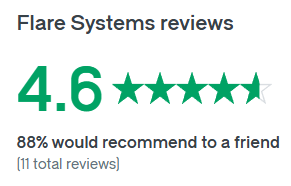
On Glassdoor, they have a 4.6/5 stars rating from 12 reviews. Employees are saying that the workplace is a wonderful experience, with only 1 complaint about small salaries.
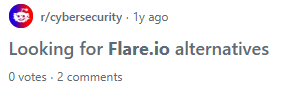
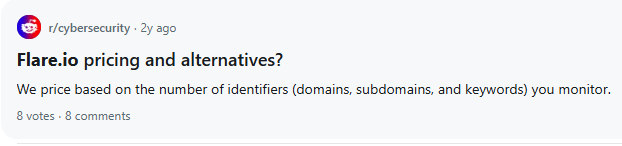
On Reddit, people are asking for Flare alternatives.
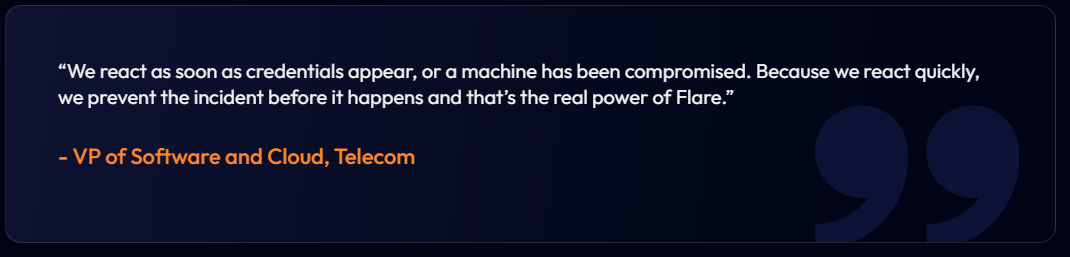
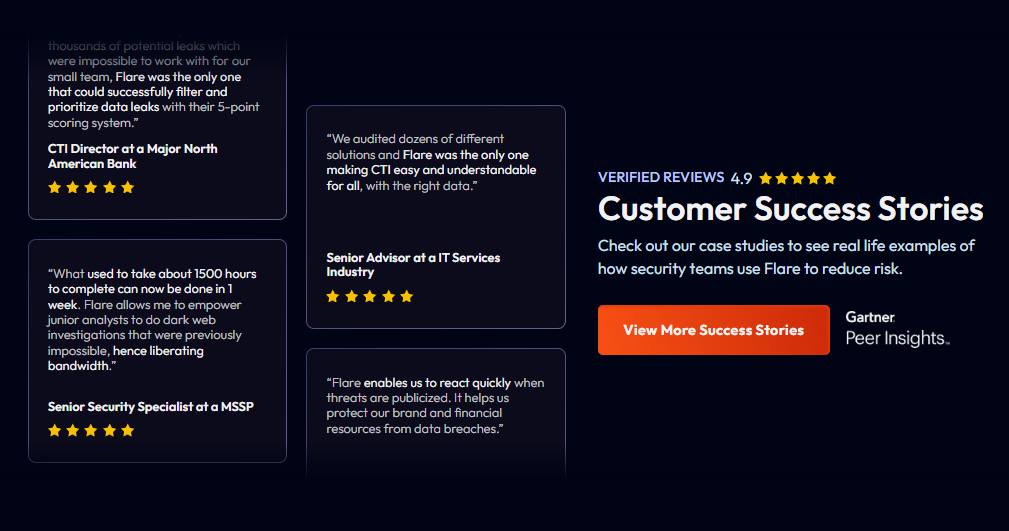
On their website, you can find customer testimonials across multiple pages, like Platform Overview, Company, or Partner’s page.
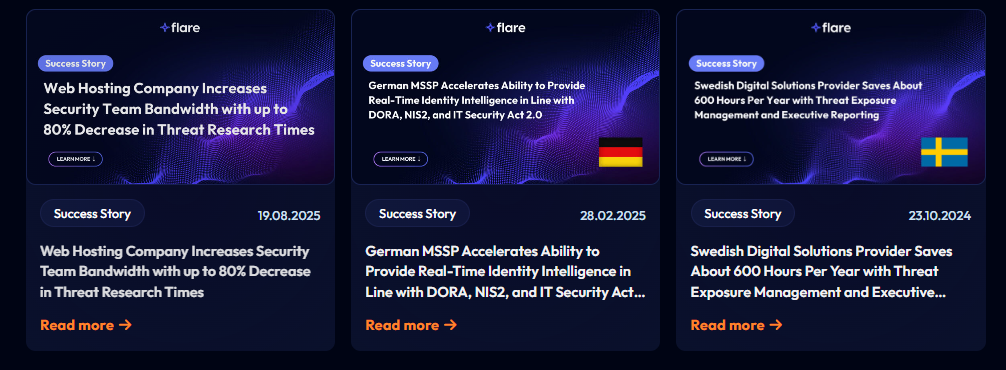
On the Partner page is featured a banner with customer success stories, leading to the Customer Success Stories page.
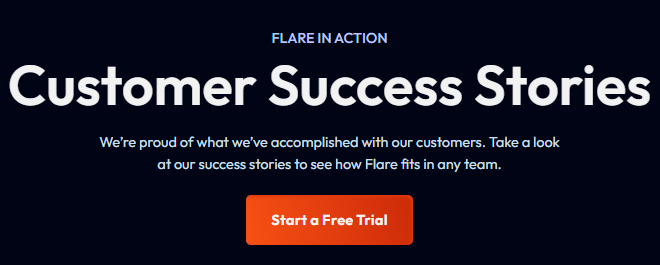
The Customer Success Stories page leads with a short description and a Start a Free Trial button.
If you’re used to simple quotes for testimonials, Flare changes it up. You will receive a full article from each featured customer.
Click it, and you will see the same structure for the articles. Date stamp and reading time are shown at the beginning of the article. Social media share buttons are available at the top and the bottom of the page.
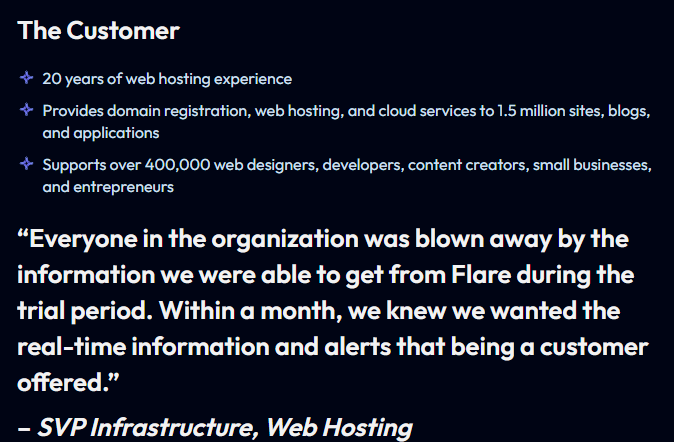
They give a bullet point description of the customer and a quote from them.
The article’s body will explain how they helped the client, with the following structure:
Implementation: Easy Onboarding with Near-Immediate ROI
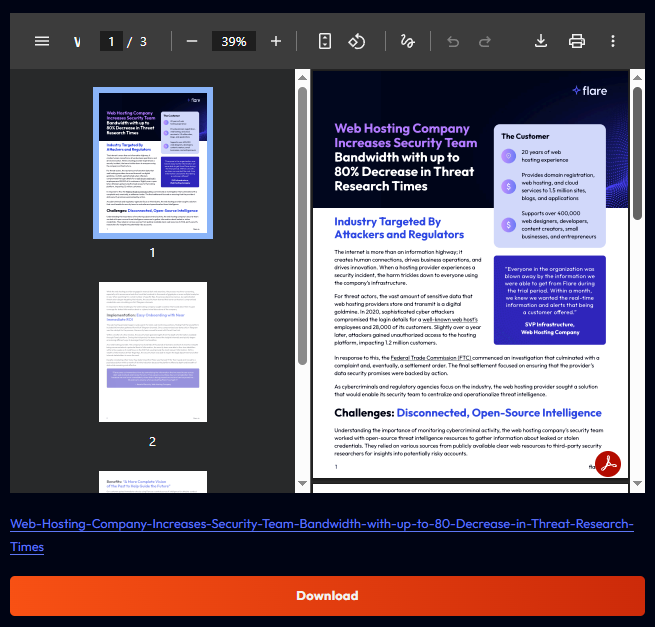
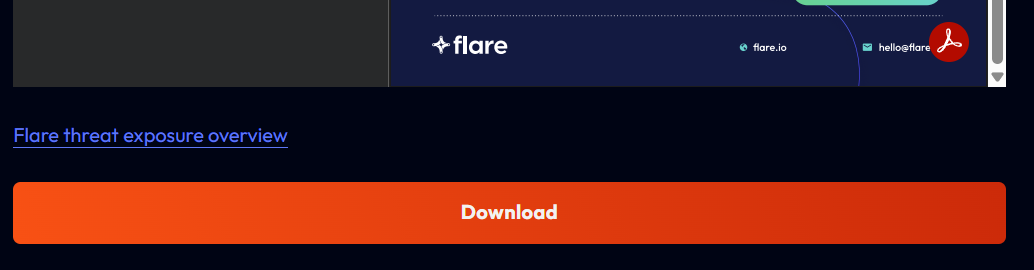
At the end of the article, you will find a PDF downloadable version of the article, along with a hyperlink and a Download button.
The platform faces a classic B2B social proof challenge on third-party sites. While their 5/5 G2 rating is positive, the single 2023 review and the absence of reviews on other major platforms like Capterra and Trustpilot signal a gap.
In the current B2B landscape, the recency relevance of feedback is critical, and a lack of reviews is interpreted by both buyers and AI search models as a potential signal of business decline or outdated offerings (Big Room Creative, 2025).
Instead of relying on simple quotes, Flare provides full, detailed customer success stories across its site. This approach is highly validated by B2B research, as 73% of decision-makers are heavily influenced by in-depth case studies, and 72% identify more strongly with stories that focus on the customer’s journey, from identifying challenges to achieving clear ROI (Content Marketing Institute/Edelman, 2025).
Paid Advertising Strategy
No evidence of active paid advertising campaigns appears on LinkedIn or Facebook. Flare relies exclusively on organic reach, a strategy that 2025 studies indicate has declined by up to 47% for B2B lead generation, fundamentally limiting their ability to scale qualified lead generation and achieve consistent pipeline targets.
Without paid advertising, Flare cannot precisely target specific decision-makers (CISOs, CIOs, security directors) at high-value target accounts, missing opportunities for advanced Account-Based Marketing (ABM) essential for high-ticket cybersecurity sales.
They’re missing the speed and data clarity required for full-funnel optimization. 2025 research confirms organic social media proves slow for conversion, while paid advertising provides immediate ROI tracking and A/B testing capabilities crucial for optimizing conversion rates.
According to LinkedIn’s 2025 B2B Marketing Benchmarks Report, companies in the cybersecurity sector running paid campaigns alongside organic content see 3.2x higher conversion rates and 58% lower cost-per-qualified-lead compared to organic-only strategies. The study found that paid social advertising allows precise targeting of job titles, seniorities, and companies actively researching security solutions, capabilities impossible through organic reach alone.
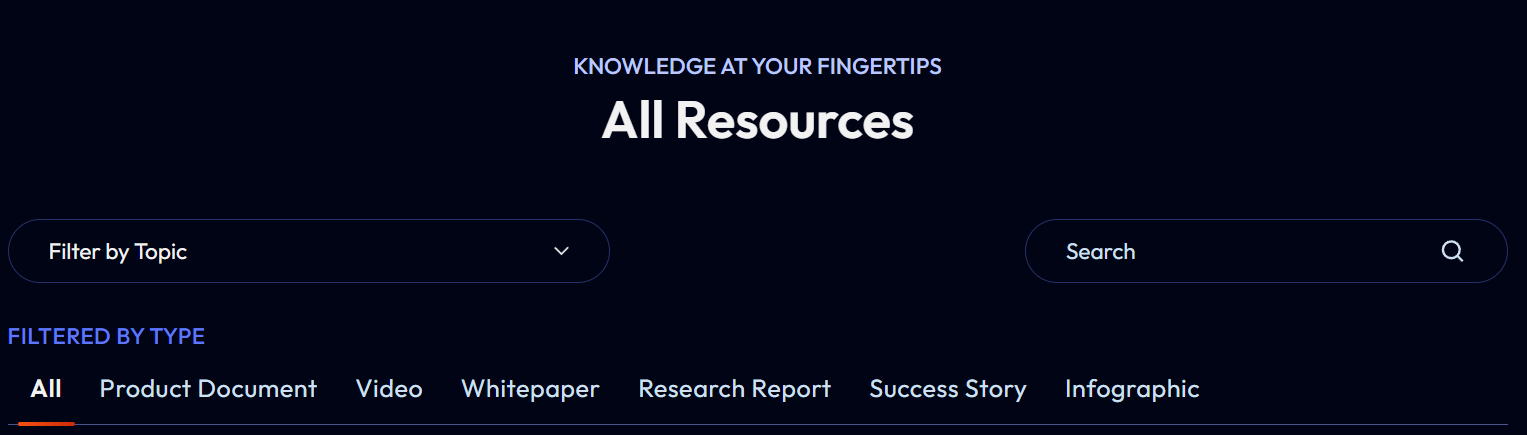
In the Flare’s Academy Resource Center, you will find in-depth cybersecurity research, customer success stories, and threat intelligence reports. Here, you can get a clear analysis and practical context on emerging threats, including ransomware, identity exposure, and the underground economies driving cybercrime.
All resources can be filtered by topic, type, or manually searched for a term. The topics are: Cyber Threats, Dark Web, Dark Web Insider, E-commerce and Retail, Financial Institutions, Flare Platform Updates, Ransomware, and Software & SaaS.
As for the type of content, you’ll find documents, videos, whitepapers, research reports, success stories, and infographics.
Within the Product Document section, users can access and download a PDF version of the product description. This document is structured like a detailed manual, offering the convenience of both immediate online reading and offline storage.
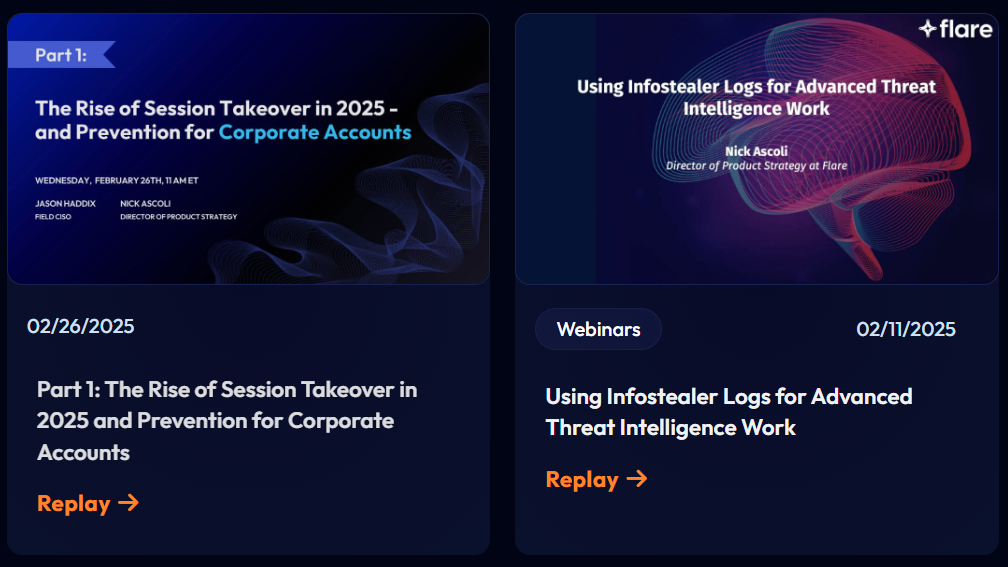
The products within this category are listed together but differentiated by a filtering mechanism. Items offering dedicated educational content are visually segmented via a “Webinars” button.
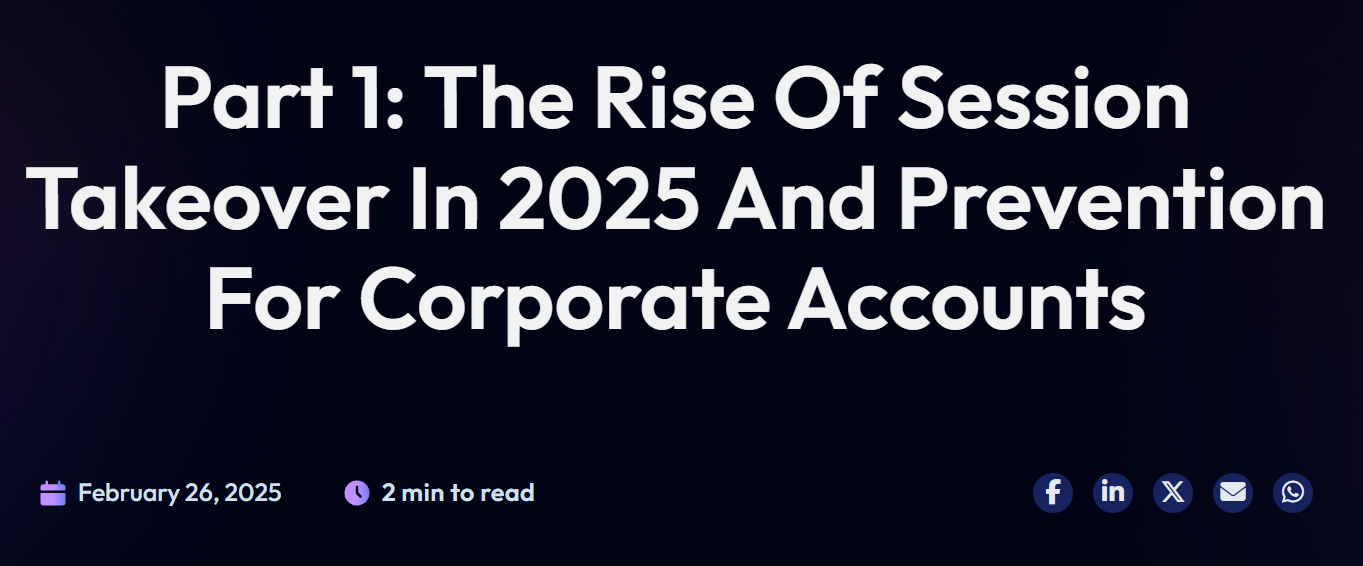
The Rise of Session Takeover in 2025 and Prevention for Corporate Accounts event and Using Infostealer Logs for Advanced Threat Intelligence Work webinar are the only ones from 2025. In 2024, they had much more content in this section.
Click it, and you’ll see a short description of the program and topics covered, along with an embedded YouTube video. Like on any other website page, social media sharing buttons are at the top and the bottom.
At the bottom of the page, we can see the newsletter subscription form.
Clutter-free version of the related posts banner is at the bottom of this page. You can’t see thumbnails of other articles. Instead, you need to click the View All button to see them.
Marketing and Sales Funnel Stages
Flare builds awareness through educational content on LinkedIn, YouTube videos, Flare Academy trainings, and industry event participation. They highlight thought leadership through research reports and webinars, establishing expertise in threat exposure management. Heavy reliance on SEO and organic content drives initial discovery.
Gated content, including whitepapers and case studies, moves prospects from awareness to serious consideration. Email marketing nurtures leads through the funnel, and email remains the top-performing channel for B2B conversion in 2025.
Demo requests and direct sales conversations close deals. Integration capabilities and the 30-minute setup promise serve as key differentiators during this critical stage. Peer referrals and detailed use cases provide the validation buyers need.
Customer success pages serve dual purposes in both the decision and retention stages. Post-sale, the Discord community becomes critical, an organic tactic generating high-quality, low-cost new leads through referrals and building ongoing engagement that reduces churn.
Future Plans and Growth Indicators
Combining the recent funding with their recruitment strategy, we can see that there is room for Flare to grow.
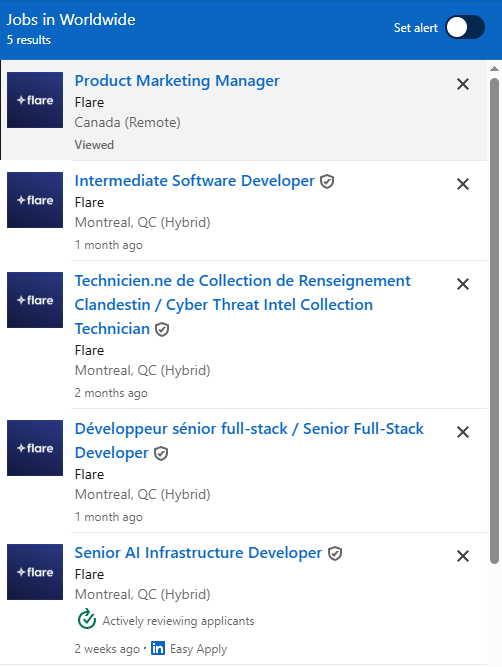
As for hiring, they focus more on scaling product development, technical intelligence, and marketing leadership. Their available posts can be found on their LinkedIn page and their Career page.
On LinkedIn, they have 5 positions currently posted: Product Marketing Manager, Intermediate Software Developer, Cyber Threat Intel Collection Technician, Senior Full-Stack Developer, and Senior AI Infrastructure Developer.
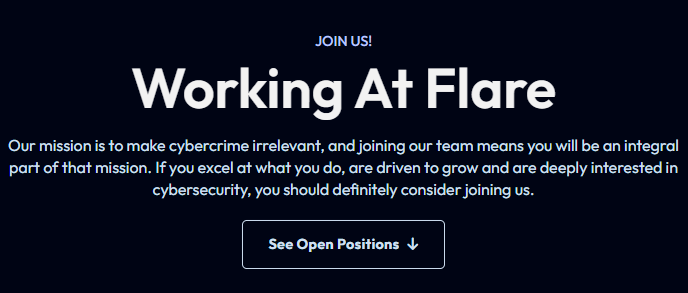
Even more open positions are found on their Career page.
Company description is provided, along with their values, transformed into Leadership Principles: clear, tangible behaviors that guide how every Flarian leads, every day.
By their book, leaders:
are customer-obsessed
take ownership and deliver results
grow as cybersecurity experts
are fanatically ethical
hire and grow the best people
are candid & transparent
are humble
embrace diversity
learn relentlessly
are sharp and effective at scale
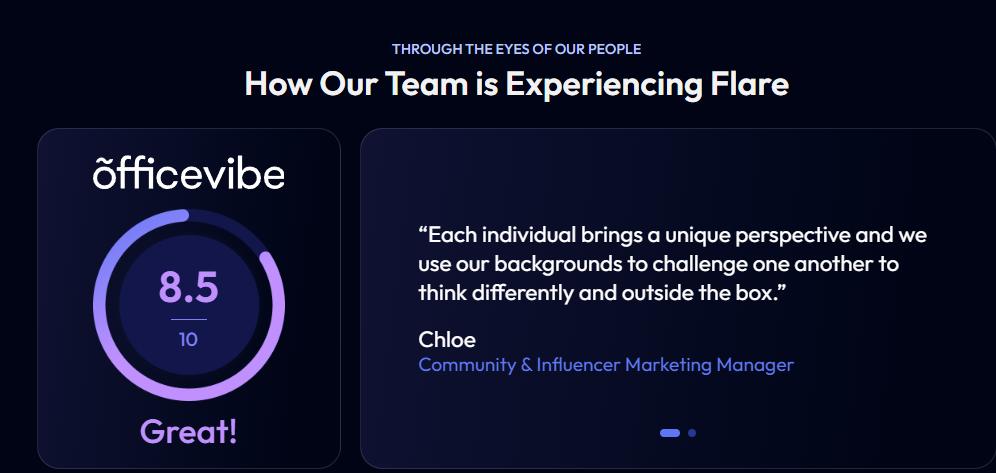
Current internal employee satisfaction is high, reflected by an 8.5/10 rating on Officevibe.
They look for people who are driven to excel, ready to take ownership, adaptable, and willing to move fast.
At the end of each job description, they encourage diversity in the workplace.
In November 2025, Flare secured $30 million, split between Series B funding led by Inovia Capital’s Growth Fund and debt financing from BMO. This brings the total funding to $60 million over the past year. The capital will accelerate growth, drive innovation, and fund strategic acquisitions. Flare is positioning itself as a rising star in the cybersecurity domain with clear ambitions for continued expansion.
Inspiration Points
Flare builds a genuine community by offering free, researcher-created resources and fostering a Discord community for practitioners. They’re building relationships, not just leads. People don’t want content alone. They want conversations with peers facing identical problems. Create spaces where your audience can connect.
The 30-minute integration promise directly addresses a major pain point. When typical implementations take months, speed becomes a genuine differentiator. Speed to value matters as much as the value itself; acknowledge and solve this explicitly.
Flare’s content strategy prioritizes education about threat exposure generally over hard-selling specific features. This approach builds authority and trust, positioning them as experts invested in solving industry problems rather than just vendors pushing products.
By maintaining presence across written content, video, live training, and community discussion, Flare meets different learning preferences and engagement styles. The ecosystem creates multiple entry points and touchpoints throughout the buyer journey.
FAQ
1. What does Flare do?
Flare is a threat exposure management platform that empowers organizations to proactively detect, prioritize, and mitigate the types of exposures commonly exploited by threat actors. Their platform automatically scans the clear & dark web, as well as prominent threat actor communities 24/7 to discover unknown events, prioritize risks, and deliver actionable intelligence you can use instantly to improve security.
2. How does Flare differentiate itself?
Flare promises rapid integration, replacing multiple tools with one consolidated platform. Their academy provides extensive educational resources, and their Discord channel builds a community of practitioners with shared challenges. The combination of quick setup, comprehensive data coverage, and community support creates meaningful differentiation.
3. What’s Flare’s marketing approach?
Flare focuses heavily on educational content, especially through Flare Academy. Their marketing educates the market about threat exposure management rather than aggressively selling features. This thought leadership approach builds trust and positions them as category experts.
Their strengths are educational content quality, community building through Discord, quick integration promise, and thought leadership positioning represent their strongest marketing assets.
4. Are Flare active on social media platforms?
Limited G2 reviews severely limit social proof, zero paid advertising restricts scaling opportunities, and minimal CEO visibility creates a leadership trust gap. Inconsistent webinar production in 2025 compared to 2024 suggests potential resource constraints affecting content output.
5. Who is Flare best suited for? Flare is ideal for security operations (SecOps) teams, CTI analysts, fraud teams, and security service providers in industries like finance, banking, SaaS, ecommerce, and government. Any organization that needs continuous monitoring of the clear and dark web for credential leaks, fraud schemes, and brand impersonation can benefit from Flare’s threat exposure management platform.
6. How quickly can Flare be deployed and integrated with existing tools? Flare can typically be integrated into an existing security program in about 30 minutes. It connects with tools like Microsoft Entra ID, SIEM and SOAR platforms, ticketing tools, and collaboration apps, allowing teams to correlate external exposures with internal signals and fold Flare into current workflows with minimal friction.
*Please note that if we do not get clear details and accurate info, you might not get a reply from us!
Nice to meet you, amazing human! Fill out this super short form and start your journey!
Welcome to our cozy data-driven digital marketing studio for bold B2B tech companies.
Your journey starts with you filling in our contact form. It’s a very short form. #PinkyPromise. It only takes you 45 seconds to fill it in, but it helps us a lot to understand who you are, what your challenges are and if we are the right partner to help you.
We don’t want to waste your time. So… a big thank you in advance for your effort.
Please don’t hesitate to reach out with questions or if you would like to discuss any of your challenges or ideas in depth.
You can contact us using this form on the right or you can send us an email at hello (at) milkandcookies (dot) studio.
We will reach out to you as soon as possible. Usually no more than a couple of hours.