Launching a tech product isn’t just about unveiling something new; it’s about making a splash that resonates with tech-savvy audiences, generates buzz, and drives adoption. Unlike traditional product launches, tech launches demand a nuanced understanding of technical audiences, intricate buying cycles, and the art of communicating innovation effectively.
Think of it as orchestrating a symphony where every instrument, from marketing to engineering, plays in harmony to captivate your audience and achieve measurable business results. This guide provides a battle-tested checklist and plan to ensure your tech product launch hits all the right notes.
Key Takeaways for a Successful Tech Product Launch
Launching a tech product demands more than just innovation; it requires a strategic, customer-centric approach. By focusing on clear value communication, thorough market validation, and continuous optimization, you can significantly increase your chances of success. Remember, the most effective launches are those that not only introduce a new product but also establish a lasting connection with the target audience. Take these insights, adapt them to your unique context, and transform your next product launch into a resounding success.

What is tech product launch marketing
Tech product launch marketing is a specialized field within marketing, focusing on introducing technology products to the market for maximum impact and adoption. Unlike traditional product launches that often rely on conventional advertising, tech product launches require a deep understanding of technical audiences, intricate buying cycles, and the specific challenges of communicating innovation effectively.
The core of effective tech product launch marketing is its phased approach. You’re not just announcing a product; you’re managing a detailed campaign that generates excitement, educates your target market, and achieves measurable business results. This process typically takes 6-12 months, starting with confirming there’s a market need and continuing through improvements after the launch.
What makes marketing product launch strategies different in the tech industry is the focus on showing value through solid evidence, not just emotional appeals. Your audience includes technical experts, purchasing departments, and end-users who need proof of ROI, security, and how well the product fits with their current systems. This means your product launch checklist must have technical documents, security certifications, and guides for integrating the product, along with standard marketing materials.
The complexity of tech products also means you need to carefully divide your audience into groups. You’re marketing to technical people who care about the details, business people focused on cost savings, and users who want something easy to use. Each group needs specific messages, different types of content, and unique ways to be engaged within your overall launch plan. For example, a technical evaluator might appreciate a whitepaper detailing the product’s architecture, while a business stakeholder would be more interested in a case study demonstrating its impact on revenue growth.
Now that you understand the essence of tech product launch marketing, let’s dive into the essential steps you need to take to ensure a successful launch.
Product launch checklist: Essential steps for tech companies
A detailed product launch checklist is your essential guide, making sure nothing important is missed during the busy time before launch. Based on looking at many successful tech launches, here’s a proven plan to follow.
Pre-Launch Phase (8-12 weeks before launch):
Begin by confirming your market and studying your competition. You need real data on the size of the market, what problems customers have, and how you compare to others before you spend money on launch activities. Talk to at least 20 customers and study the strategies of three main competitors. This research will directly shape your messaging and how you plan to enter the market.
Your checklist for new product launch must include making sure the technology is ready. Plan thorough testing, security checks, and performance tests. If you’re launching a SaaS product, make sure your system can handle ten times the number of users you expect at the start. Document all APIs, create guides for integrating the product, and prepare resources for technical support.
Creating content is a big job that many teams don’t realize. You’ll need product demos, success stories, technical documents, materials to help sales, and resources to guide customers when they start using the product. Start early, because good content often needs several revisions and approvals.
Launch Phase (Launch week and immediate aftermath):
Your product launch checklist template should include plans for watching what happens in real-time. Set up dashboards to track website visits, demo requests, trial sign-ups, and social media activity. Assign team members to watch each channel and have a plan for dealing with technical problems or PR issues.
Announce your product on all planned channels at the same time. This includes press releases, social media campaigns, emails to current customers, and reaching out to industry analysts. Getting the timing right is key – spreading it out will reduce the impact. For example, schedule your press release to coincide with your launch event and social media blitz.
Post-Launch Phase (First 30 days):
Your launch checklist continues after the launch day. Collect feedback from early users, watch the number and type of support tickets, and track how many trial users become paying customers. This information will help you quickly improve the product and plan future launches.
Review performance with all involved teams each week during the first month. Analyze what’s working, find any problems in your sales process, and quickly change your messaging, pricing, or product features based on what the market tells you.
With your checklist in hand, it’s time to develop a robust product marketing launch plan. This plan will serve as your roadmap, guiding your decisions and ensuring alignment across all teams.
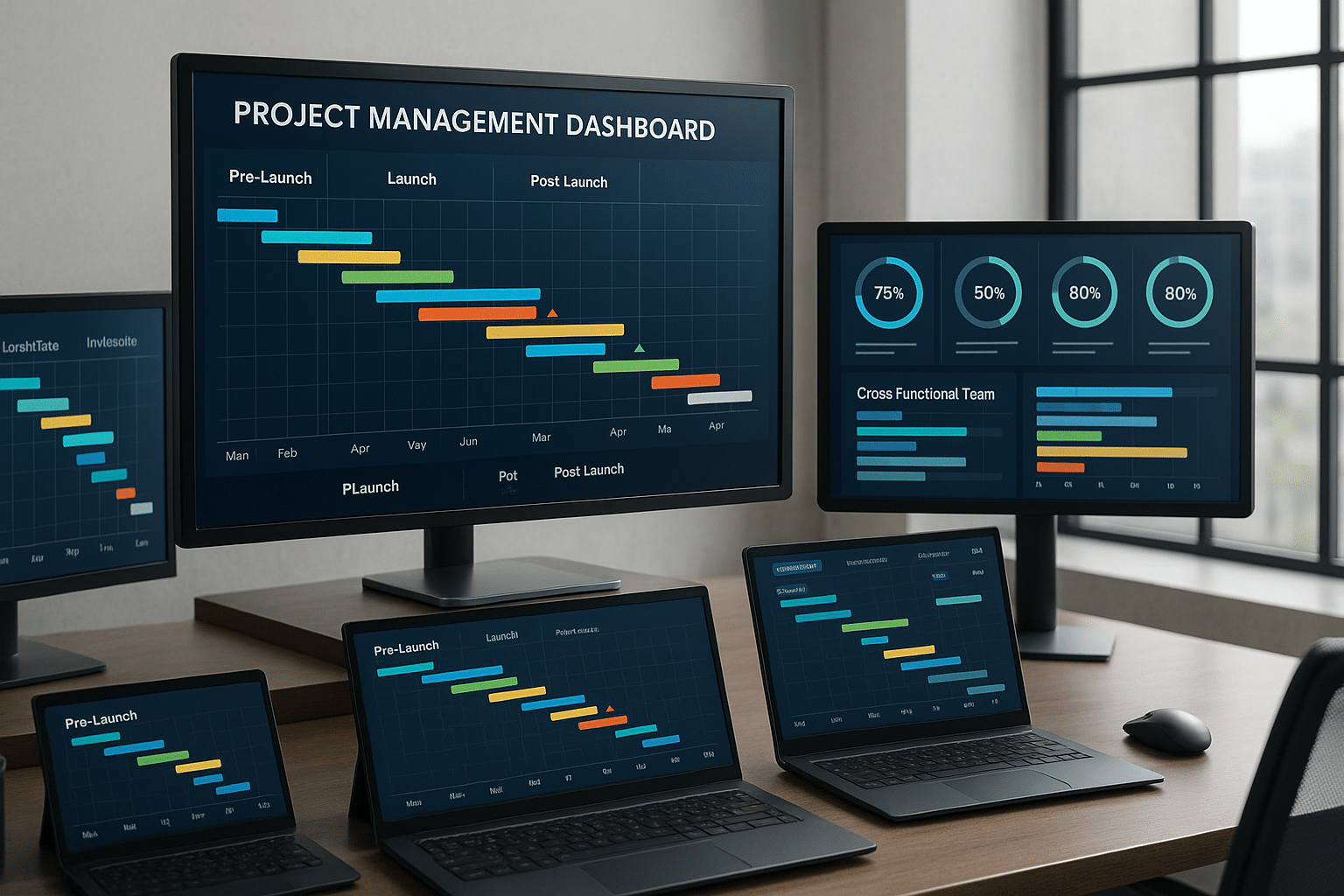
Product marketing launch plan development
Creating a strong product marketing launch plan means thinking strategically about how the product’s features connect with market needs and business goals. Your plan is the main guide for making all decisions about how to carry out the launch.
Start with a clear statement of value that explains exactly how your product solves customer problems better than other options. This isn’t just marketing talk, it’s the basis for every decision you make about positioning, pricing, and how to reach your audience. Your value statement should be something you can test and measure, with specific numbers that show the impact on customers. For instance, instead of saying “improves efficiency,” quantify it with “reduces processing time by 30%.”
Your marketing launch plan must clearly define who your ideal customer is. Create detailed profiles of buyers that include not just basic information, but also what technology they prefer, how they make purchasing decisions, and how they measure success. If you’re selling to other businesses, map out the entire buying team, understand how each person evaluates options, and what information they need at each stage. For example, the CFO will likely focus on ROI, while the IT director will be concerned with integration and security.
Deciding how to reach your audience is a key part of your sample product launch marketing plan. Tech products often need a mix of direct sales, partnerships, and digital marketing. Think about how well each method reaches your target audience, what resources it needs to succeed, and how long it will take to see results. A direct sales team might be crucial for landing large enterprise clients, while digital marketing could be more effective for reaching smaller businesses. When considering your overall strategy, it’s also important to understand the differences between approaches like ABM vs Inbound Marketing to determine which strategy is best for your B2B growth.
| Launch Phase | Primary Objectives | Key Activities | Success Metrics |
|---|---|---|---|
| Pre-Launch | Build awareness and anticipation | Content creation, analyst briefings, beta testing | Email signups, demo requests, media mentions |
| Launch | Drive initial adoption | Press releases, events, sales enablement | Trial signups, qualified leads, revenue |
| Post-Launch | Optimize and scale | Customer success, case studies, expansion | Customer retention, expansion revenue, NPS |
When planning your launch, think carefully about how your pricing fits with your market position, what competitors charge, and how customers see the value of your product. Test different pricing during your beta phase to see what customers are willing to pay and how sensitive they are to price changes in different market segments. Consider offering tiered pricing with different feature sets to cater to various customer needs and budgets.
Before you unleash your product on the world, ensure it’s truly ready. A product readiness checklist is your final safeguard against launching a product that doesn’t meet the high standards of tech customers.
Product readiness checklist for tech launches
Your product readiness checklist is the final check before you introduce your product to the market. It makes sure your product meets the standards for quality, security, and performance that tech customers expect. This isn’t just about fixing bugs – it’s about providing a complete solution that customers can easily use and get value from right away.
Technical readiness includes more than just the main functions. Your product must perform consistently under normal use, fit smoothly with common business systems, and have good monitoring and troubleshooting features. Run tests that push the product to its limits to see how it handles high usage, and record performance data that sales teams can confidently share with potential customers. For example, document the product’s response time under different load conditions and its ability to handle concurrent users.
Checking security and compliance is a must for launch readiness. Complete security audits, tests to find weaknesses, and get certifications that are important to your target market. For business software, this usually includes SOC 2 Type II, ISO 27001, and specific certifications like HIPAA or PCI DSS. Document your security setup and create reports that purchasing teams need. Make sure your security measures are clearly communicated to customers to build trust and confidence.
Your product launching timeline must include time to create thorough documentation. This includes user guides, API documentation, tutorials for integration, and troubleshooting tips. Good documentation helps customers succeed and reduces the need for support. Create video guides for complicated tasks and make sure all documents are easy to find in your customer portal. Consider using a platform like Zendesk or HelpScout to manage your knowledge base and support documentation.
Getting your support system ready is often forgotten until the launch day creates unexpected demand. Set up a system for handling support tickets, create articles for common problems, and train your support team on the details of the product. Have a plan for dealing with urgent issues and make sure engineers are available to quickly fix problems during the first few weeks after launch. Implement a system for tracking and categorizing support requests to identify areas for product improvement and documentation updates.
Making sure new users can quickly succeed with your product is key. Create standard onboarding steps, test them with beta users, and measure how long it takes for users to see value. Successful tech products let customers see real results within the first week of using them. Offer personalized onboarding sessions and provide interactive tutorials to guide new users through the initial setup process.
With your product primed and ready, it’s time to announce it to the world. Crafting a compelling announcement strategy is crucial for capturing attention and generating initial excitement.
New product announcement strategies
To make a new product announcement effectively in the tech world, you need to know how technical people get information and make decisions. Your announcement should not just create excitement, but also educate your market and build trust with technical experts.
Your product launch press release should highlight real value and measurable benefits, not just marketing promises. Technical audiences want specific numbers: how much better the performance is, how much money they’ll save, how much time they’ll save, or what new things they can do. Include quotes from customers that show real business impact, and provide technical details that experts need to make an initial judgment. For example, instead of saying “enhanced security,” specify the encryption standards and compliance certifications.
Getting industry analysts involved is important for announcing tech products. Informing key analysts like Gartner, Forrester, or specialized research firms before you announce it publicly helps build credibility. Prepare detailed information that includes how you compare to competitors, your position in the market, and your future plans. What analysts say can greatly influence business buying decisions. Offer exclusive briefings and provide them with early access to the product for review.
Product launch social media plans for tech products should focus on teaching and showing how the product works, rather than just promoting it. Share technical details, diagrams of how it’s built, and examples of how it can be used to help potential customers understand what it can do. LinkedIn is great for reaching business people and managers in tech, while Twitter is good for talking with technical communities in real-time. Share code samples, technical tutorials, and diagrams that demonstrate your product’s capabilities.
Sharing your expertise can make your announcement more effective by showing your team knows the industry well. Publish technical blog posts, join industry podcasts, and speak at relevant conferences. This builds long-term trust that lasts beyond the product launch. Create a content calendar that aligns with your launch timeline and focuses on addressing key customer pain points and technical challenges.
To amplify your announcement and create a memorable experience, consider planning a product launch event. A well-executed event can generate significant buzz and drive early adoption.
Product launch event planning and execution
Careful product launch event planning turns your product introduction into an event people remember, which leads to real business results. In the tech industry, good launch events combine showing off the product with teaching people about it, so they understand both the technology and how it can be used in their business.
The type of event you choose depends on how complex your product is, who you’re trying to reach, and what you want to achieve. If your product is very technical and needs to be demonstrated, in-person events allow for hands-on demos and detailed technical talks. Virtual events are great for reaching people around the world and can include interactive things like live coding, Q&A sessions, and smaller groups to discuss specific uses. Consider a hybrid approach that combines the best of both in-person and virtual events to maximize reach and engagement.
Your product launch event should include both a product demonstration and educational content that addresses real problems customers have. Structure your event to include stories of customer success, technical explanations, and interactive demos. Leave plenty of time for questions and answers, since technical people often have specific questions about how to implement the product that general presentations don’t cover. Incorporate live polls and surveys to gather feedback and tailor the event content to the audience’s interests.
Who you choose to speak at your event greatly affects how credible it is and how many people attend. Include customers who can talk about their real experiences using the product, technical experts who can answer complex questions, and industry leaders who can provide context about the market. Customer speakers are especially valuable because they provide independent confirmation that your product works well. Prepare your speakers with clear talking points and provide them with support to create engaging presentations.
The technology for virtual or hybrid events needs careful planning and testing. Use professional streaming platforms that allow for interactive features like polls, chat, and breakout sessions. Thoroughly test everything with all speakers, check internet speeds, and have backup systems ready for important parts. Technical audiences won’t accept virtual events that are poorly done. Use a platform like Zoom, Webex, or Hopin to host your virtual event and ensure a seamless experience for attendees.
Launching campaigns around your event should start 4-6 weeks before the event. Create a series of emails that create excitement, announce speakers, and provide useful content before the event. Use social media to share behind-the-scenes content, interviews with speakers, and technical previews to get people interested. Use targeted advertising on platforms like LinkedIn and Twitter to reach your ideal audience and drive registrations.
Following up after the event is a great chance to turn interest into sales. Provide recordings of the event, presentation slides, and other resources to everyone who attended. Divide your follow-up based on how interested people were and what they said they wanted during the event. People who were very engaged should be contacted directly by sales, while others should receive more technical content. Use marketing automation to nurture leads and track their engagement with your content.
In today’s digital landscape, a robust digital marketing strategy is essential for reaching your target audience. Let’s explore the digital marketing tactics that are most effective for tech product launches.
Digital marketing strategies for tech product launches
Digital marketing for tech product launches needs a smart plan that combines technical education with generating demand. Content marketing is the base of good launching campaigns for tech products. Create complete libraries of resources that include technical whitepapers, guides to how it’s built, case studies of how it’s been used, and calculators to show ROI. This content should answer specific questions that come up when people are considering the product, positioning your company as a reliable advisor, not just another seller. Develop content that addresses each stage of the buyer’s journey, from awareness to consideration to decision.
Search engine optimization for tech products means focusing on searches that show people are really interested in solving specific technical problems and finding certain types of solutions. Target specific, detailed keywords that reflect how your potential customers actually search for solutions. For example, instead of just targeting “data analytics platform,” optimize for “real-time data analytics for financial services compliance” if that’s what your product does specifically. Use tools like SEMrush and Ahrefs to identify relevant keywords and track your search engine rankings.
Product launch social media plans should focus on technical communities and professional networks where your audience is active. LinkedIn is great for reaching business decision-makers and technical managers, while platforms like GitHub, Stack Overflow, and Reddit are used by technical people who implement the solutions. Share code examples, technical tutorials, and diagrams of how your solution is built to show what your product can do. Engage with relevant communities and participate in discussions to build relationships and establish your expertise.
Email marketing for tech launches needs to be carefully divided based on job title, company size, what technology they use, and how they’ve interacted with you before. Create different email paths for technical experts who need detailed specifications and business people who care about ROI and timelines. Personalize emails to include relevant use cases and technical examples, not just their name. Use marketing automation to segment your audience and deliver targeted messages based on their behavior and interests.
Your marketing launch plan should include account-based marketing for valuable potential customers. Create custom content, targeted ads, and personalized outreach for key accounts. This works well for complex B2B tech products with long sales cycles and many people involved in the decision. Identify key stakeholders within each target account and tailor your messaging to address their specific needs and concerns. Understanding the benefits of Account Based Marketing can further boost ROI and efficiency for your campaigns.
Marketing automation platforms allow you to score leads and nurture them based on their behavior. Use progressive profiling to gather information about their technical needs, timelines, and decision-making process. Use this data to deliver content that’s more relevant and identify when they’re ready to talk to sales. Implement lead scoring rules based on engagement with your content and website to prioritize sales outreach.
Effective timeline management is crucial for keeping your launch on track. Let’s explore how to create and manage a realistic timeline that coordinates all aspects of your tech product launch.
Timeline management for successful tech launches
Good timeline management for tech launches means balancing the complexity of building the product with the need to get to market at the right time and stay ahead of competitors. Your product launching timeline is the main tool for coordinating engineering, marketing, sales, and support teams around common goals and deadlines.
Start by setting your target launch date and then working backward to identify all the important steps and what depends on them. Tech product launches usually need 12-16 weeks of marketing preparation, assuming the product is finished. This time is for creating content, training sales, informing analysts, and preparing the market. Use project management software like Asana or Jira to create a detailed timeline and track progress.
Launch readiness checks should happen regularly throughout your timeline, not just at the end. Schedule reviews every two weeks to check progress in all areas: product development, marketing, sales, and support. These reviews will help you spot potential delays early and take action to prevent them. Assign owners to each task and hold them accountable for meeting deadlines.
Your product marketing launch plan timeline must consider things outside your control. Informing industry analysts needs 4-6 weeks of advance notice, major publications book their schedules months in advance, and speaking opportunities at conferences have set deadlines. Identify these external deadlines early and plan your internal timeline around them. Create a dependency chart to visualize the relationships between different tasks and external milestones.
| Timeline Phase | Duration | Key Milestones | Critical Dependencies |
|---|---|---|---|
| Pre-Launch Preparation | 12-16 weeks | Content creation, sales training, beta testing | Product feature freeze, competitive analysis |
| Launch Execution | 2-4 weeks | Announcement, events, media outreach | PR coordination, technical support readiness |
| Post-Launch Optimization | 8-12 weeks | Performance analysis, iteration, scaling | Customer feedback, sales performance data |
Managing risk in your timeline means identifying possible problems and creating backup plans. Common risks include delays in product development, announcements from competitors, market timing issues, and not having enough resources. Create alternative plans for each major risk, including changing the timeline and adjusting launch strategies. For example, if a key feature is delayed, consider launching with a subset of features and releasing the delayed feature in a subsequent update.
Communication plans make sure everyone involved stays informed as the timeline moves forward. Set up weekly status updates, plans for dealing with timeline risks, and who has the authority to make changes to the timeline. Clear communication prevents small delays from becoming major problems. Use a communication platform like Slack or Microsoft Teams to facilitate real-time communication and collaboration.
Once your product is launched, it’s crucial to measure its performance and identify areas for improvement. A comprehensive analytics system will provide valuable insights for optimizing your launch strategy.
Measuring and optimizing launch performance
Measuring marketing product launch performance needs a complete analytics system that tracks early signs, conversion rates, and long-term business impact. Your measurement plan should provide useful information that allows you to make changes in real-time and plan future launches.
Set baseline numbers before your launch to measure the impact accurately. Key performance indicators should include awareness metrics (website traffic, social media activity, media mentions), engagement metrics (demo requests, content downloads, webinar attendance), and conversion metrics (trial signups, qualified leads, closed deals). Track these numbers daily during the first month after launch to spot trends and find ways to improve. Use analytics tools like Google Analytics, Mixpanel, and HubSpot to track your key performance indicators.
Customer acquisition cost (CAC) and lifetime value (LTV) are important long-term metrics for tech product launches. Calculate CAC by channel to see which ways of getting customers are most efficient. Watch how LTV develops over time to see how customers acquired during the launch compare to those acquired through other channels. The LTV:CAC ratio should be higher than 3:1 for sustainable growth. Implement a customer relationship management (CRM) system to track customer interactions and calculate LTV accurately.
Launch readiness metrics should include operational indicators like the number of support tickets, response times, and how quickly issues are resolved. Spikes in support activity often point to product problems, missing documentation, or onboarding issues that need immediate attention. Monitor customer satisfaction scores and Net Promoter Scores from early users to measure how well the product fits the market. Use a customer support platform like Zendesk or Intercom to track support metrics and gather customer feedback.
Your product marketing launch plan should include specific ways to connect marketing activities to business results. Use UTM parameters, unique landing pages, and campaign-specific phone numbers to track which activities drive the best leads. Multi-touch attribution models give a more accurate picture than last-click attribution for complex B2B buying processes. Implement a marketing attribution tool like Bizible or Marketo Measure to track the impact of your marketing activities on revenue.
Watching what competitors do helps you understand how your launch is affecting the market compared to them. Track how often you’re mentioned in industry publications, social media mentions compared to competitors, and if you’re included in analyst reports. This information helps you adjust your positioning and find opportunities to increase your presence in the market. Use social listening tools like Brandwatch or Mention to track competitor activity and identify trends.
Improving performance should be ongoing, not just something you do occasionally. Use A/B testing for important conversion points like landing pages, email subject lines, and call-to-action buttons. Use heat mapping tools to see how visitors interact with your product pages and make changes based on how users behave. Review your performance weekly to make sure you’re maximizing results during the important launch period. Use A/B testing tools like Optimizely or VWO to continuously improve your website and marketing campaigns.
Even with meticulous planning, tech product launches can present unique challenges. Being aware of these common pitfalls and having solutions in place can significantly increase your chances of success.
Common tech product launch challenges and solutions
Tech product launches have specific challenges because of the complexity of the products, how technical buyers behave, and how quickly the market changes. Knowing these challenges and having proven solutions will greatly increase your chances of a successful launch.
Challenge: Technical complexity overwhelming prospects
Many tech products solve complex problems but struggle to explain their value simply. Potential customers get lost in technical details and don’t understand the business benefits. Solution: Create a communication plan that starts with the business results and then reveals technical details as needed. Create summaries for executives, technical deep dives, and guides for implementation for different audiences. Use comparisons and visual aids to explain complex ideas. For example, use an analogy to explain a complex algorithm or create a diagram to illustrate the product’s architecture.
Challenge: Long sales cycles delaying revenue recognition
Selling tech to businesses often takes 6-12 months from the first contact to closing the deal, which makes it hard to measure launch success quickly. Solution: Identify early signs that predict eventual sales, such as completing a technical evaluation, requests for a proof-of-concept, and more people within the target account getting involved. Track progress through defined sales stages, not just closed deals. Implement a sales methodology like MEDDIC or Challenger Sale to improve sales effectiveness and shorten sales cycles.
Challenge: Competitive market saturation
Many tech areas have many established companies, which makes it hard to stand out. Solution: Focus on specific uses or market segments where you can be clearly better. Create detailed comparisons that highlight your unique advantages. Create content that helps potential customers understand the important differences between solutions. Develop a unique selling proposition (USP) that clearly differentiates your product from the competition.
Challenge: Internal team alignment and coordination
Tech launches need coordination between engineering, product management, marketing, sales, and support teams, which all have different priorities and timelines. Solution: Create a launch steering committee with people from each area. Create common goals that align all teams. Have regular meetings with clear agendas and action items. Use a project management tool to track progress and ensure everyone is on the same page.
Challenge: Insufficient customer feedback during development
Many tech companies build products without enough input from customers and only realize they’re not aligned with the market after the launch. Solution: Get continuous feedback from customers throughout development. Have regular meetings with customer advisory boards, beta testing programs, and user research sessions. Create processes to ensure customer feedback influences product decisions. Implement a feedback management system to collect, analyze, and prioritize customer feedback.
Your tech product launch marketing strategy should expect these challenges and have plans to reduce their impact in your product launch checklist. Regular launch readiness checks help spot potential problems before they become critical. Success comes from careful planning, continuous improvement, and staying focused on customer value throughout the launch. Regularly review your launch plan and make adjustments as needed based on market conditions and customer feedback.
Launching a tech product is a complex undertaking, but by following this comprehensive checklist and plan, you’ll be well-equipped to navigate the challenges and achieve a successful launch. Remember to stay agile, adapt to market feedback, and always prioritize customer value. Now, let’s address some frequently asked questions to further clarify key aspects of tech product launch marketing.
Frequently Asked Questions
1. How long should a tech product launch timeline be?
A comprehensive tech product launch timeline typically spans 12-16 weeks from launch preparation to post-launch optimization. This includes 8-12 weeks of pre-launch preparation, 2-4 weeks of launch execution, and 4-8 weeks of post-launch analysis and optimization. The exact duration depends on the complexity of the product and the target market.
2. What’s the most critical element of a product launch checklist?
Market validation and customer feedback integration represent the most critical elements. Without clear evidence that your product solves real customer problems better than alternatives, even perfect execution of other checklist items won’t drive success. Conduct thorough market research and beta testing to validate your product’s value proposition.
3. How do you measure tech product launch success?
Success metrics should include leading indicators (demo requests, trial signups), conversion metrics (qualified leads, closed deals), and long-term indicators (customer retention, expansion revenue). Track customer acquisition cost and lifetime value to assess sustainable growth potential. Use a combination of quantitative and qualitative data to get a complete picture of launch performance.
4. What budget should be allocated for a tech product launch?
Launch budgets typically range from 15-25% of first-year revenue projections for the product. This includes marketing activities, events, content creation, sales enablement, and support infrastructure. B2B enterprise products often require higher investment due to longer sales cycles. Allocate budget based on your specific goals and target market.
5. How important are industry analysts for tech product launches?
Industry analysts significantly influence enterprise buying decisions. Briefing key analysts 4-6 weeks before launch helps establish credibility and can result in favorable mentions in research reports that prospects reference during evaluation processes. Identify key analysts in your target market and build relationships with them.
6. Should tech product launches focus on features or benefits?
Successful tech launches balance both, starting with business benefits and supporting them with technical capabilities. Lead with outcomes that matter to business stakeholders, then provide technical details that satisfy evaluators and implementers. Tailor your messaging to different audience segments based on their needs and interests.
7. What’s the biggest mistake companies make in tech product launches?
The most common mistake is launching without sufficient customer validation and market research. Companies often assume they understand customer needs without conducting thorough interviews and testing with real prospects. Invest in thorough market research and customer feedback to avoid this mistake.
8. How do you handle competitive responses during a launch?
Prepare competitive response strategies before launch, including battle cards, differentiation messaging, and customer retention tactics. Monitor competitor activities closely and be ready to adjust positioning or accelerate feature releases if necessary. Stay agile and adapt your strategy based on market dynamics.
9. What role does content marketing play in tech product launches?
Content marketing serves as the foundation for tech launches, educating prospects about problems, solutions, and implementation approaches. Create comprehensive resource libraries that address questions throughout the buyer’s journey, from awareness to implementation. Develop a content calendar that aligns with your launch timeline and focuses on addressing key customer pain points.
10. How do you maintain momentum after the initial launch period?
Sustain momentum through continuous optimization, customer success story development, feature updates, and expansion into adjacent market segments. Implement systematic feedback collection and product iteration based on real customer usage patterns and requests. Focus on building long-term relationships with customers and continuously improving your product.
Key Takeaways for a Successful Tech Product Launch
Launching a tech product demands more than just innovation; it requires a strategic, customer-centric approach. By focusing on clear value communication, thorough market validation, and continuous optimization, you can significantly increase your chances of success. Remember, the most effective launches are those that not only introduce a new product but also establish a lasting connection with the target audience. Take these insights, adapt them to your unique context, and transform your next product launch into a resounding success.