TL;DR: Conclusions and Key Takeaways
🎀 This section gives you the main insights without all the details. It’s the stuff you need to remember, whether you’re reading this now or in 6 months. We made this for people who want to get the core message fast.
In this article, we discuss how Toggl scaled to $32.8M in revenue with an outstanding 123% YoY growth, all while remaining 100% bootstrapped and independent. Below is a full marketing strategy breakdown with actionable tactics for B2B SaaS companies who want to outsmart, rather than outspend, the competition.
Toggl turned its marketing into a high-efficiency engine where interactive tools become automated pre-selling machines, and boring productivity data is transformed into viral, gamified content that builds brand recall without the need for massive venture capital.
They cracked 5 things most SaaS companies get wrong:
- Utility-first acquisition: They capture high-intent users by offering free SEO magnets (like timesheet templates) that solve immediate pain points before ever asking for a signup.
- Pattern-interrupt branding: By swapping dry corporate “synergy” speak for relatable memes and humor, they build faster trust with millennial decision-makers than a whitepaper ever could.
- Gamified lead qualification: Interactive tools like the Investigation Unit have a 10–25% conversion rate by turning the realization of lost revenue into an engaging mystery game.
- Ruthless capital efficiency: Toggl ignores low-ROI social platforms to double down on high-intent competitor conquesting (like targeting Clockify alternatives).
- Frictionless “split-model” scaling: An automated self-service funnel handles small teams (achieving a 64% activation rate), while human sales efforts are reserved exclusively for Enterprise deals.
Toggl outsmarted the giants by being more useful, more relatable, and more efficient with every dollar.
📝 A quick note before you start reading: The data and analysis in this article are valid as of the time we wrote it. We don’t know when you’ll be reading this, maybe next week, maybe six months from now, and things might have changed since we looked at this company’s marketing and sales approach. Still, the insights and lessons here stay useful, even if the numbers or tactics have evolved a bit.
Here’s the thing every manager secretly knows: you have no idea where your team’s time actually goes. And finding out usually means becoming the office’s most hated person: the one who sends those friendly reminders to fill out your timesheet emails that everyone ignores until Friday at 4:58 PM.
You’re stuck between two bad options: either accept that hours are vanishing into the void (along with your profitability), or turn into Big Brother with invasive tracking that kills morale. Monthly reports arrive weeks late, spreadsheets have mysterious gaps, and billable hours leak through your fingers like you’re trying to hold water.
Which brings us to why we’re looking at Toggl. At Milk and Cookies Studio, we don’t waste time on tools that solve one problem by creating 3 others. We track companies that actually understand the assignment: make work better without making people miserable.
Toggl’s pitch is simple: time tracking shouldn’t suck. They’ve built a suite of tools that actually work the way you work, not the other way around. No week-long implementation nightmares, no training manuals thicker than a phone book, no synergy optimization workshops. Just… track your time and get useful data.
This Estonian company, founded in 2006 by Alari Aho and Krister Haav, is a masterclass in the power of independence. Let’s talk numbers: Toggl hit $32.8M in revenue in 2024, more than doubling their 2023 results. That’s 123% year-over-year growth. For context, most bootstrapped SaaS companies are happy with 20% growth. Toggl is growing 6x faster than that, without venture capital strings attached. They’re doing this entirely on their own dime, which makes it even more impressive (and worth studying).
So what separates Toggl from the dozens of productivity tools launched every year? Their marketing strategy looks less like a corporate manual and more like a high-energy, self-aware ecosystem. They’ve turned boring ROI calculators into a gamified Investigation Unit, swapped dry product updates for viral-style memes that speak directly to the millennial manager, and built a content hub that acts as an automated pre-selling machine. Meanwhile, their founders remain focused on product-led growth while their marketing team uses pop-culture heists and interactive mystery games to drive a better user activation rate.
Curious how they turned a saturated productivity market into a $32M bootstrapped success story? Let’s break down Toggl’s marketing and sales strategy, tactic by tactic.
Understanding Toggl
Established in 2006 by Alari Aho and Krister Haav in Tallinn, Estonia, Toggl is a suite of productivity tools built entirely on a self-funded, bootstrapped foundation without external venture capital.
Users can track time, manage projects, and optimize workflows. Toggl has expanded beyond its core product into a suite of tools that provide workflow solutions for freelancers, agencies, and SaaS teams.
Toggl Track remains the company’s core product, while the rest of their suite has evolved: Toggl Hire is now closed, Toggl Plan has been rebranded as Focus, and Toggl Work has launched as their latest innovation. Because the company is powered by product revenue rather than investor capital, it maintains the strategic independence to pivot and update its tools purely based on market needs.
Toggl’s Brand Promise Analysis
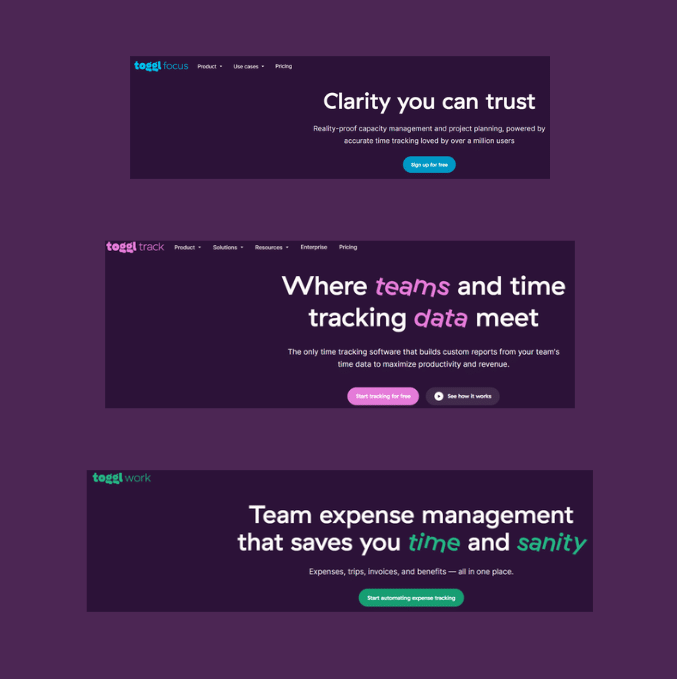
Across its three core products, Track, Focus, and Work, Toggl promises efficiency, clarity, and a much-needed dose of sanity for anyone whose calendar feels like a losing game of Tetris.

Trusted by industry giants like Amazon, Square, and LinkedIn, Toggl Track is built for seamless integration, promising 100% user adoption across your entire team.
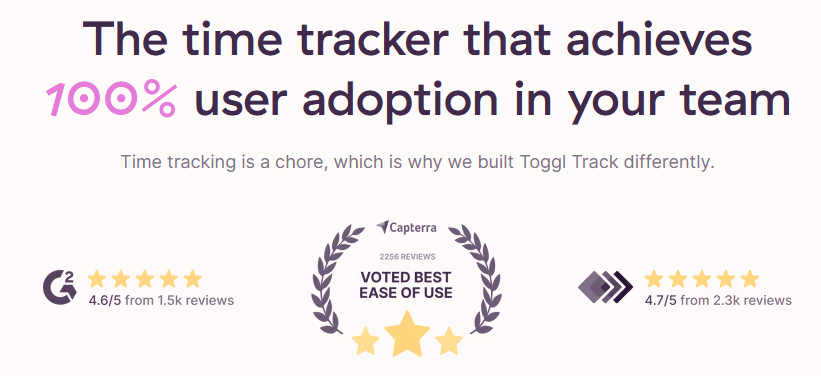
With Toggl Track, you can track your time with over 100 integrations. Case studies are presented with eye-catching headlines:
- 80 hours saved monthly
- 100% time tracking adoption in a team of 500+
- 6x team growth while maintaining work-life balance.
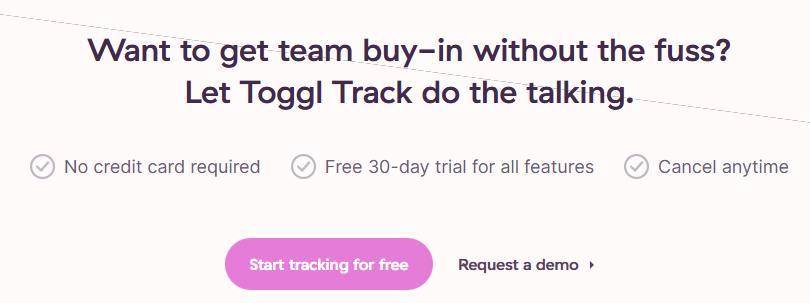
You can start tracking for free, no credit card required. You have a free 30-day trial for all features, and you can cancel anytime. Sounds good.
Toggl Plan has leveled up to Toggl Focus. They’ve helped millions love time tracking, so they’re using a trusted foundation to fix broken planning. You could say that great planning comes with great time tracking.
With Focus, you’re promised clarity on what’s today and what’s next. The plans are connected to your reality, and they create balanced workloads.
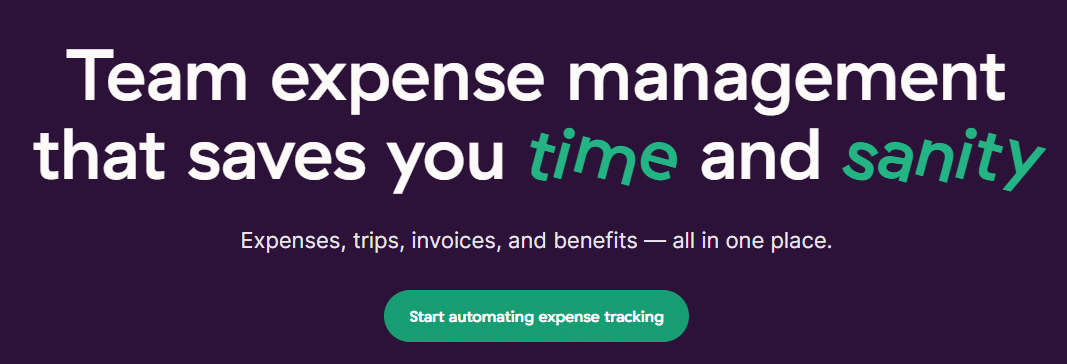
Toggl Work promises expenses, trips, invoices, and benefits, all in one place, in seconds. With this, you can reduce expense processing time by 80%, give employees a clear picture of their benefits, and add expenses to invoices instantly.
Toggl’s Service and Product Breakdown
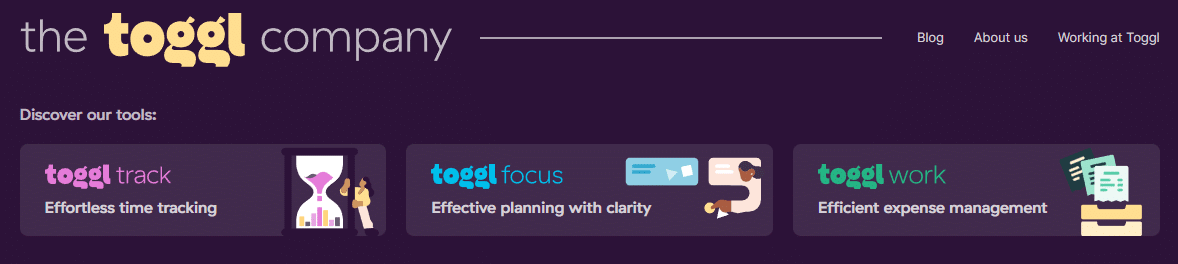
Take a look at the footer to explore their productivity tools: Track for time management, Focus (formerly Toggl Plan) for visual planning, and Work, their latest solution for team operations.
Toggl Track
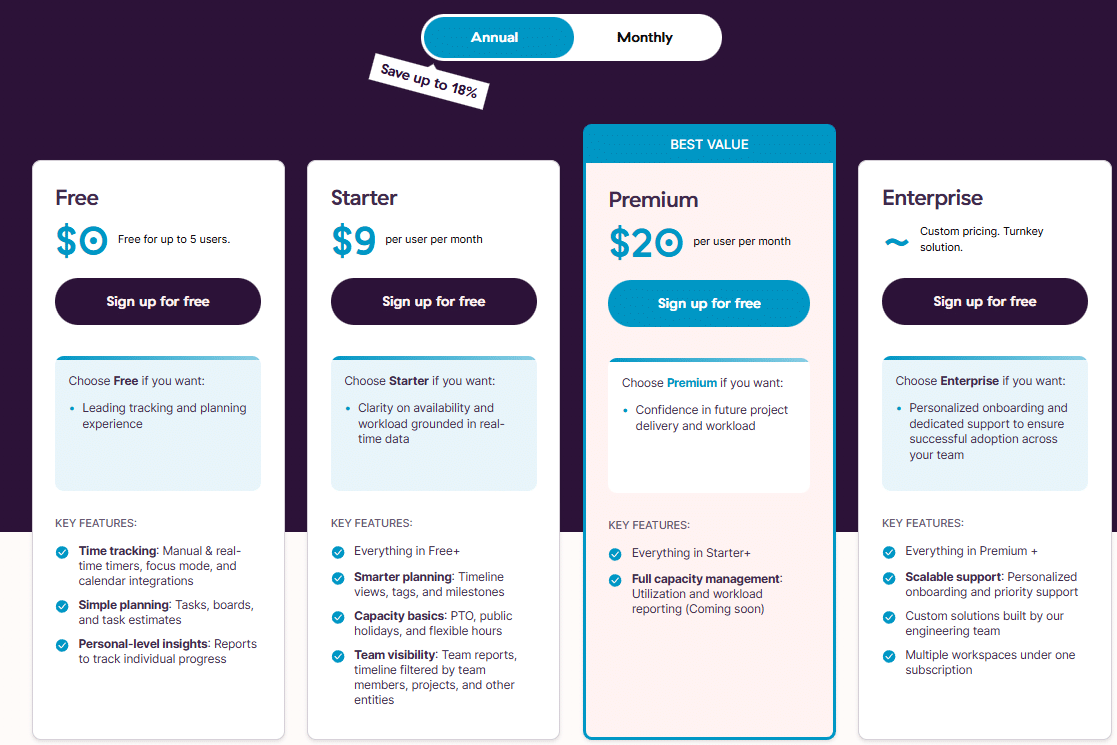
They offer 4 tiers: Free, Starter, Premium, and Enterprise. You can choose between annual and monthly billing. For the Free plan, you need to sign up. For the Starter plan and the Premium plan, you can start with a 30-day trial. The first one starts at 9$, and the second at 18$ per user per month. For the Enterprise plan, you’ll need to book a demo.
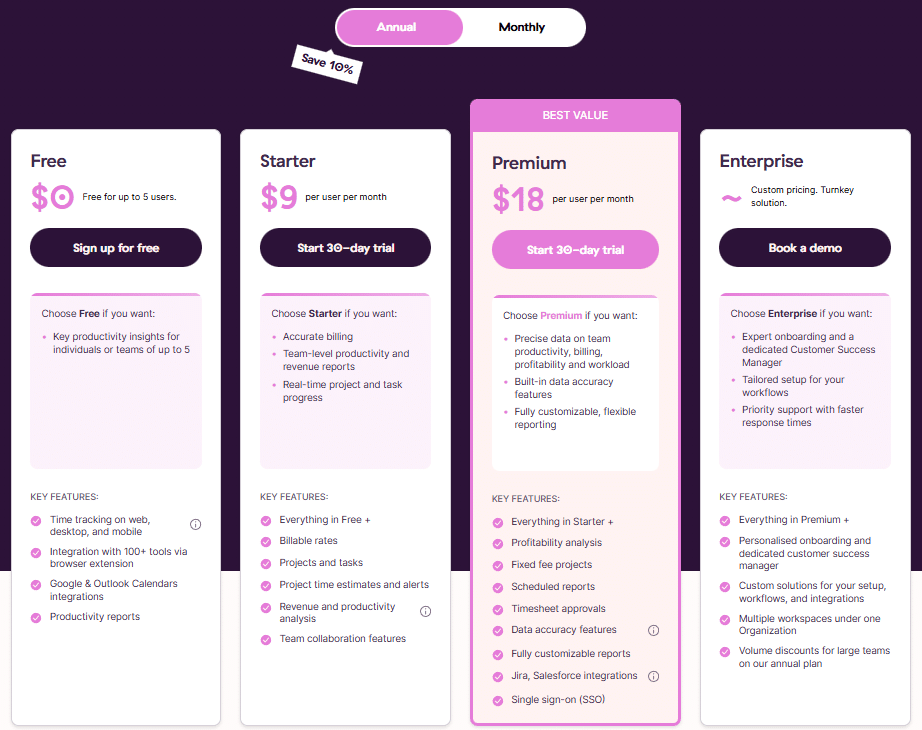
Unsure which option is right for you? Click Compare Plans to find your fit.
Toggl Track offers dedicated apps for both mobile and desktop, supporting both Mac and Windows users. For larger organizations (teams of 20+ people), you can request a personalized demo to see exactly how the platform can scale to meet your specific tracking goals.
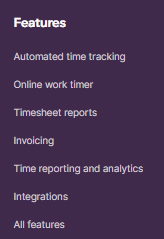
Toggl Track has these features: automated time tracking, online work timer, timesheet reports, invoicing, time reporting and analytics, and integrations.
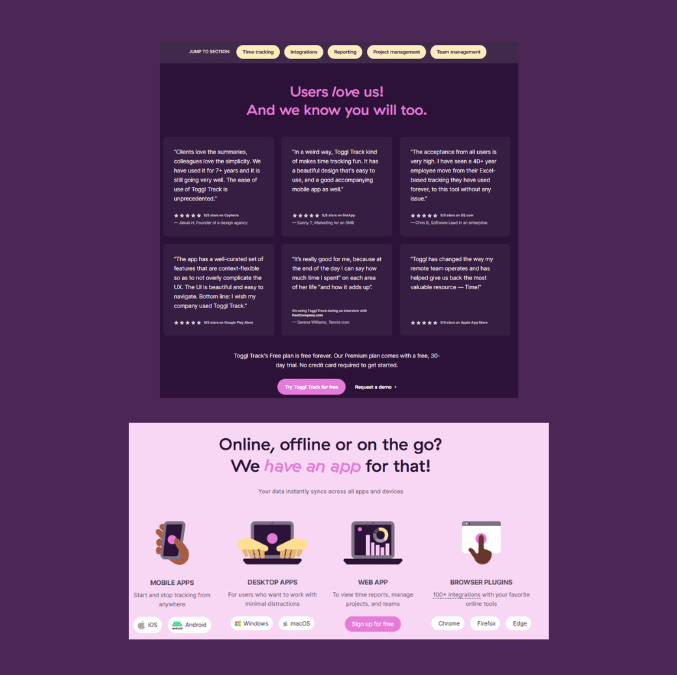
Among the feature descriptions, you will find testimonials and different options. They have mobile apps for iOS and Android, desktop apps for Windows and macOS, a web app, and browser plugins for Chrome, Firefox, and Edge.
The pricing system is the same as Toggl Track, with Free, Starter, Premium, and Enterprise Plan. The Starter pack costs 9$ per user per month, and the Premium pack costs 20$ per user per month.
The Toggl Focus features are: the Kanban board, the Calendar planner, and the Online Gantt chart.
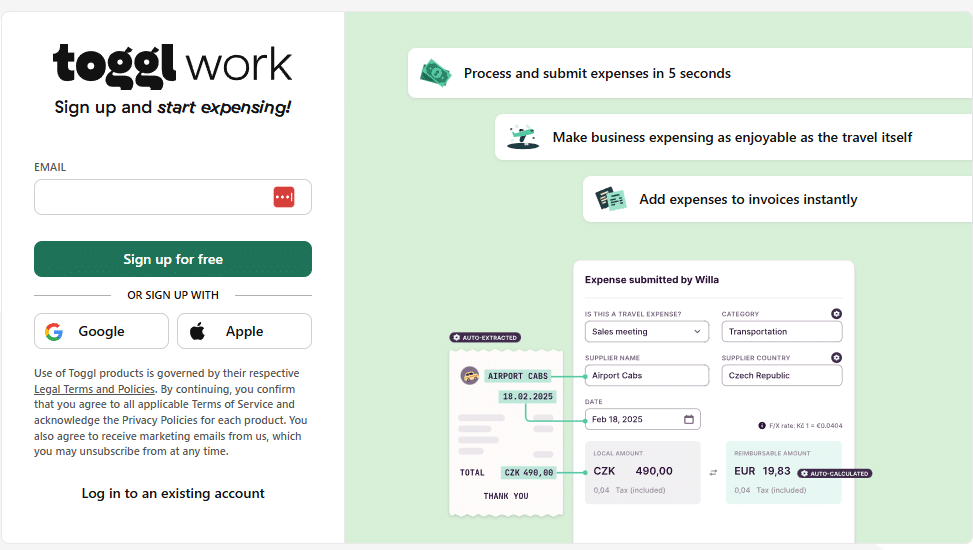
This page doesn’t offer a price plan. If you click the Sign Up button, you’re redirected to a page where you can connect via email, Gmail, or Apple Account.
Toggl’s pricing and partner architecture reflect a classic product-led growth strategy built for efficiency: transparent, self-service pricing with no credit card required, free trials, and easy cancellation that removes friction and lets users experience value quickly without sales involvement, ideal for a relatively simple tool like time tracking, where you can see the benefits within minutes.
The only exception is the Enterprise tier, which shifts to a demo-based, sales-assisted motion. This deliberate split model keeps small and mid-sized customers low-touch while reserving human effort for high-value deals where the return justifies the cost.
December 2025 data shows that 87% of SaaS companies now offer some form of free trial or freemium model, with PLG companies growing 30-40% faster than traditional sales-led companies and achieving 50-70% lower customer acquisition costs. Product-led SaaS companies using AI-powered onboarding achieve 64% average activation rates versus the 25% SaaS standard baseline.
Toggl’s Differentiators and Unique Assets
On this page, you can find case studies, best-practice guides, courses, and an ROI calculator. The timeline design allows you to view updates in chronological order.
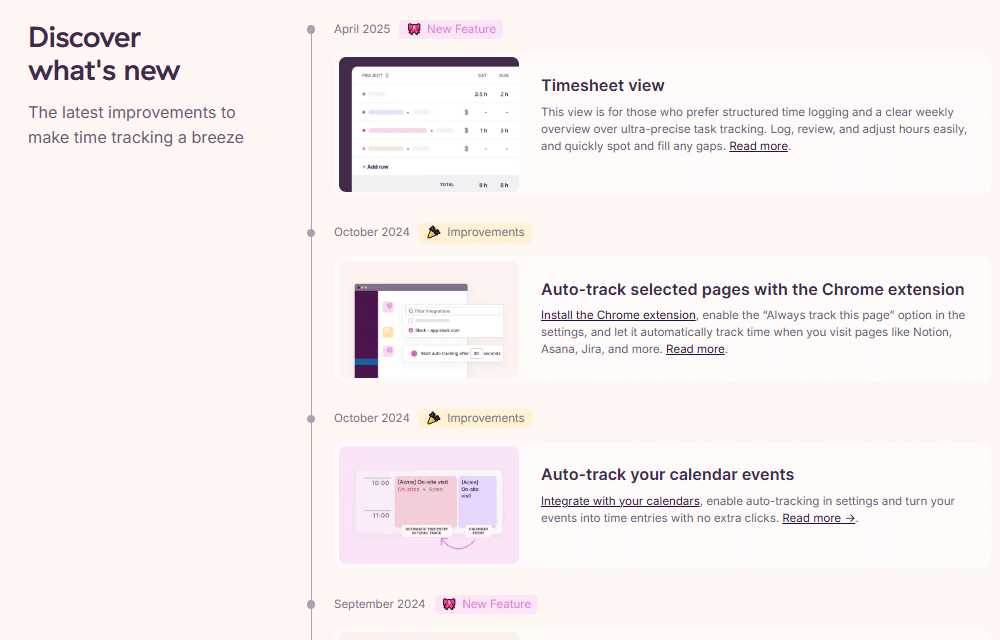
Explore the updates through our user-friendly guides, featuring step-by-step screenshots to help you master each feature.
The ROI Calculator lets you measure lost time and potential savings. Just enter the number of team members, average hourly salary, average hourly billable rate, time spent tracking per employee, and the weekly missing billable hours.
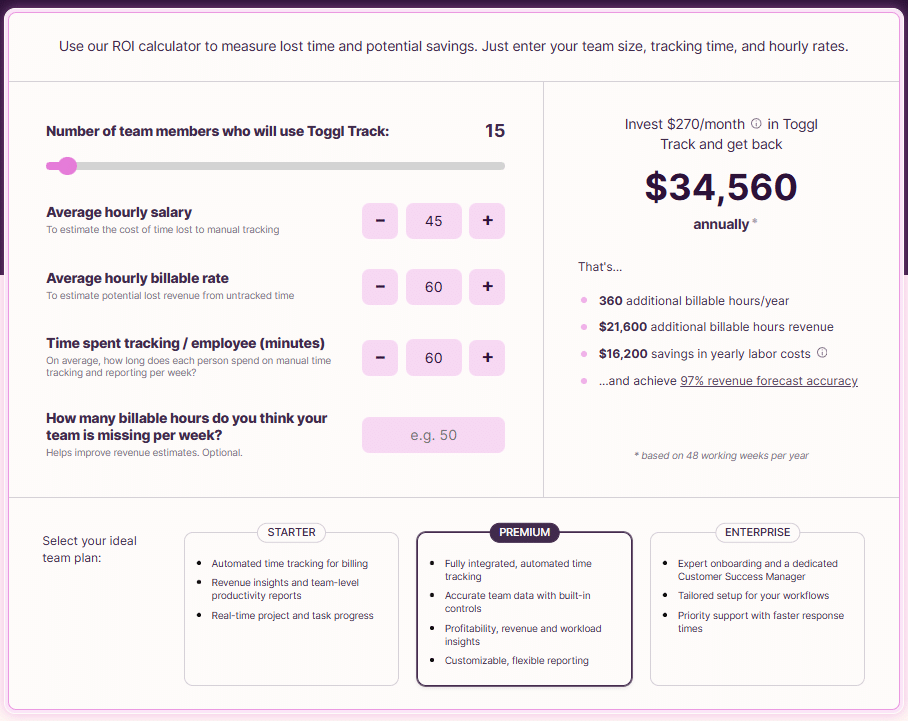
Traditional lead magnets see 2-5% conversion rates. Interactive calculators convert at 10-25% because they provide personalized value immediately. Every person who uses their calculator is:
- Self-qualifying (they have a team, know their costs)
- Priming themselves on lost revenue (loss aversion bias)
- Getting a personalized savings number to justify the purchase to their boss
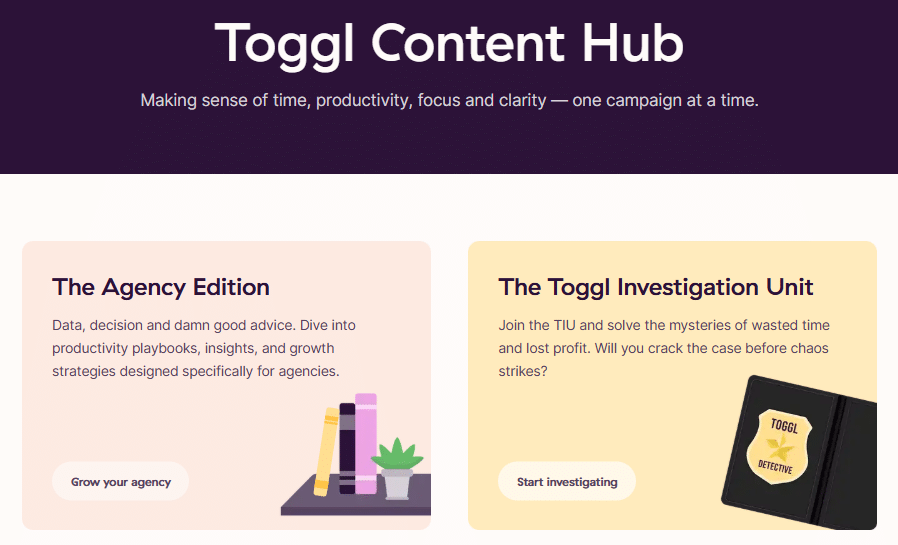
Toggl’s Content Hub is divided into The Agency Edition and The Toggl Investigation Unit.
The Agency Edition is a collection of YouTube videos and playbooks where you can find their best ideas, research, and resources on growth, leadership, and productivity.
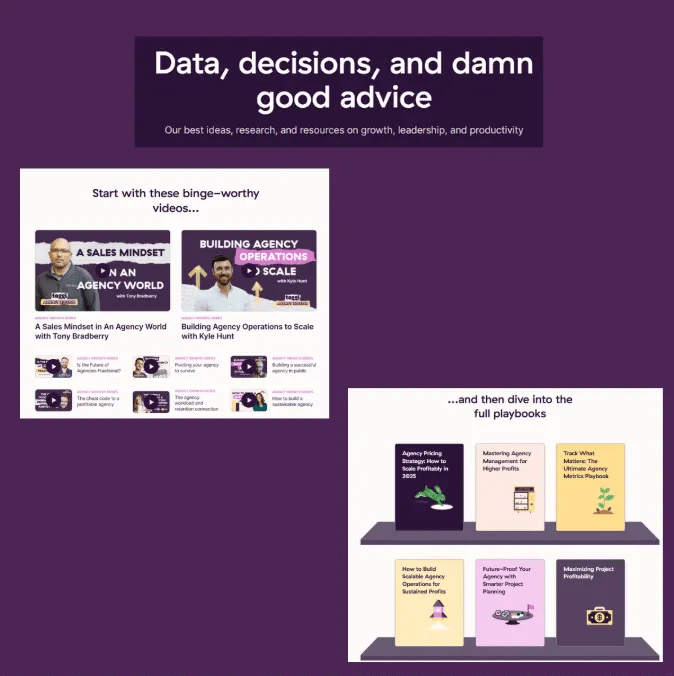
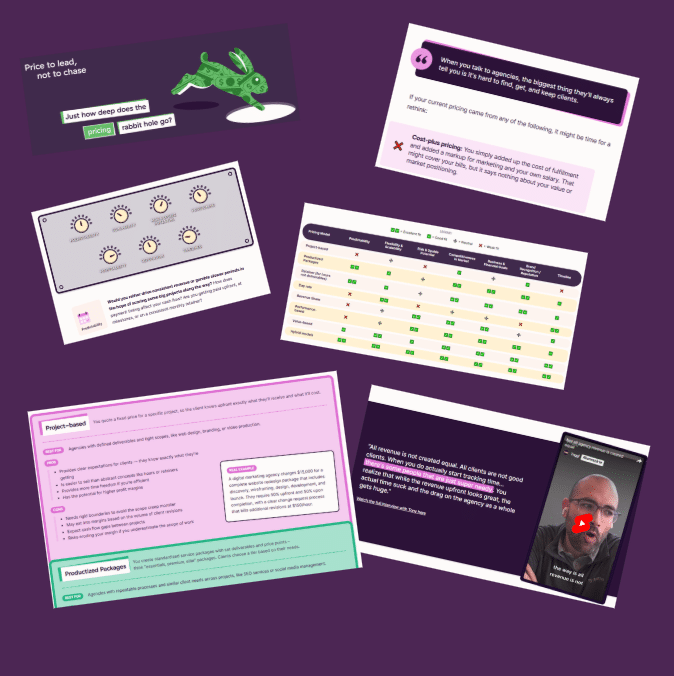
The Playbooks are free, full of insights, and visually appealing.
Meet the Investigation Unit, a fun way to master Toggl Track. Most teams waste time “investigating” lost hours and low profits after the damage is already done. They give you the magnifying glass before the chaos hits. It turns the realization that you’re losing money into a mystery game where you’re the detective hunting down your own lack of focus. Once the case is closed, you can book a debrief, run your numbers through the ROI calculator, or check out their video guides.
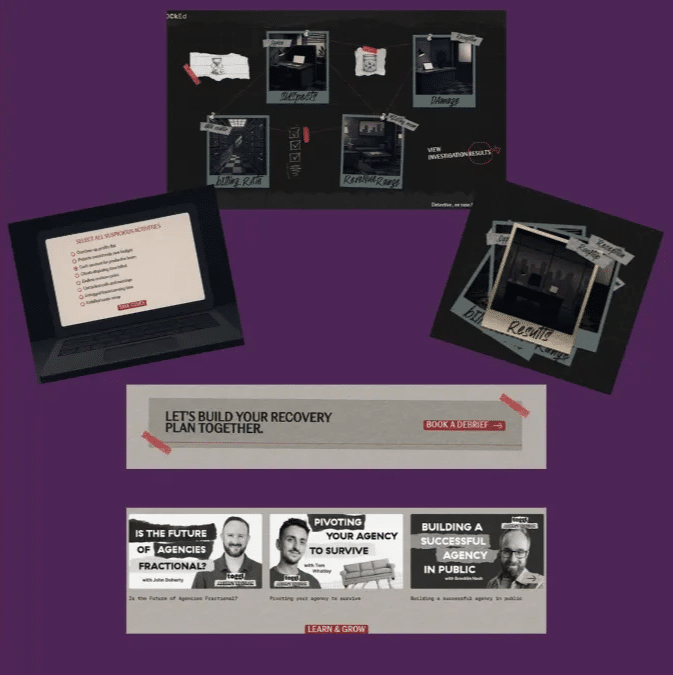
💡 Steal this: Gamify lead magnets for 10-25% conversions.
Toggl’s content hub leans into gamification with its Investigation Unit concept to stand out in a category that’s often seen as dull and interchangeable, turning something as routine as a productivity or ROI calculator into an interactive mystery-style experience that creates memorable brand touchpoints and encourages organic sharing.
Instead of relying on traditional, increasingly ignored lead magnets like whitepapers or e-books, this approach delivers the same underlying value: insights into lost time and revenue impact, but wraps it in entertainment, making users far more willing to engage and share their details because the experience feels fun and voluntary rather than transactional.
Research published in August 2025 shows that gamified lead magnets regularly outperform standard forms, with some campaigns seeing conversion rates jump as high as 35%, and engagement increases of 100-150%. A 2025 HubSpot study reveals that gamified campaigns have increased customer retention by 47%.
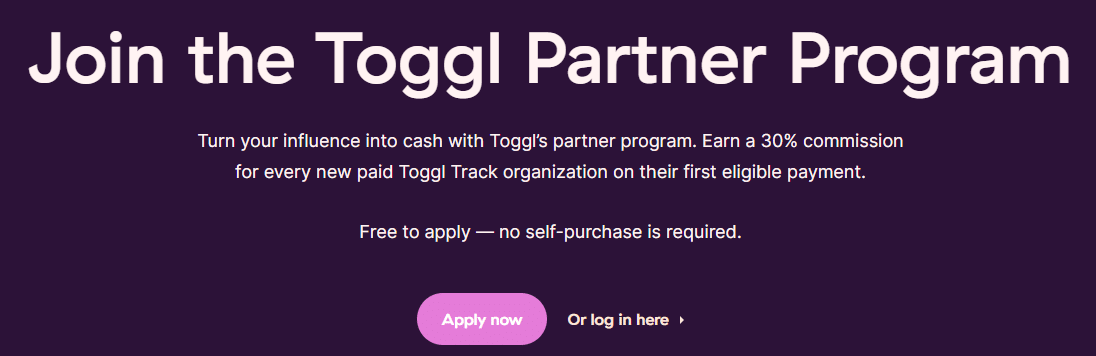
If you’re looking to turn your influence into a nice side hustle, check out the Toggl Partner Program. They’re offering a 30% commission on the first payment for every new organization you bring their way. The best part? It’s completely free to join, and you don’t even have to be a Toggl user to sign up.
The application is pretty straightforward: you’ll start with a basic form for your contact info, then answer a few quick questions about your brand and audience. They just want to get a feel for how you plan to collaborate and why you think your community would love the tool.
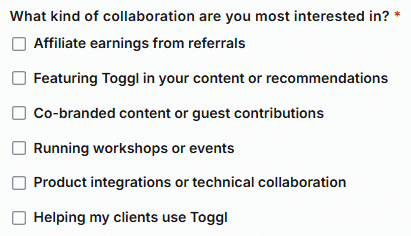
Reasons for you to join Toggl’s partner program?
- 30% commission
- 10% discount on annual plans
- tiered program
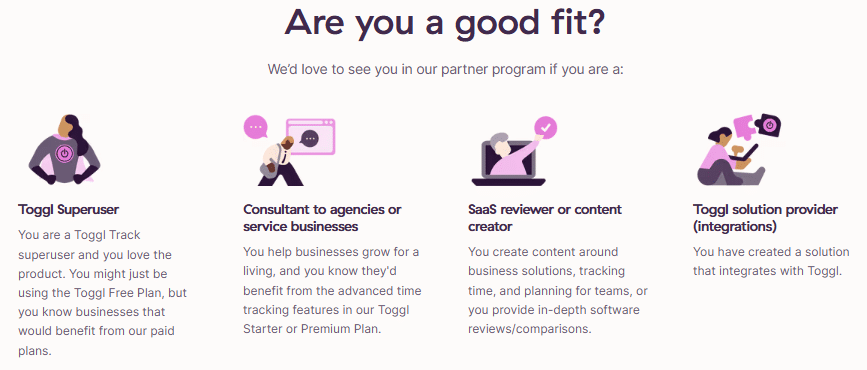
The partner program is clever in its simplicity: pay consultants and productivity influencers 30% commission to recommend Toggl. Boom: instant sales team with zero overhead. No salaries, no benefits, no office space. Just performance-based payouts that only happen when money comes in. The tiered structure keeps partners motivated to hunt bigger deals, which means Toggl gets serious revenue without hiring a single SDR (sales development representative).
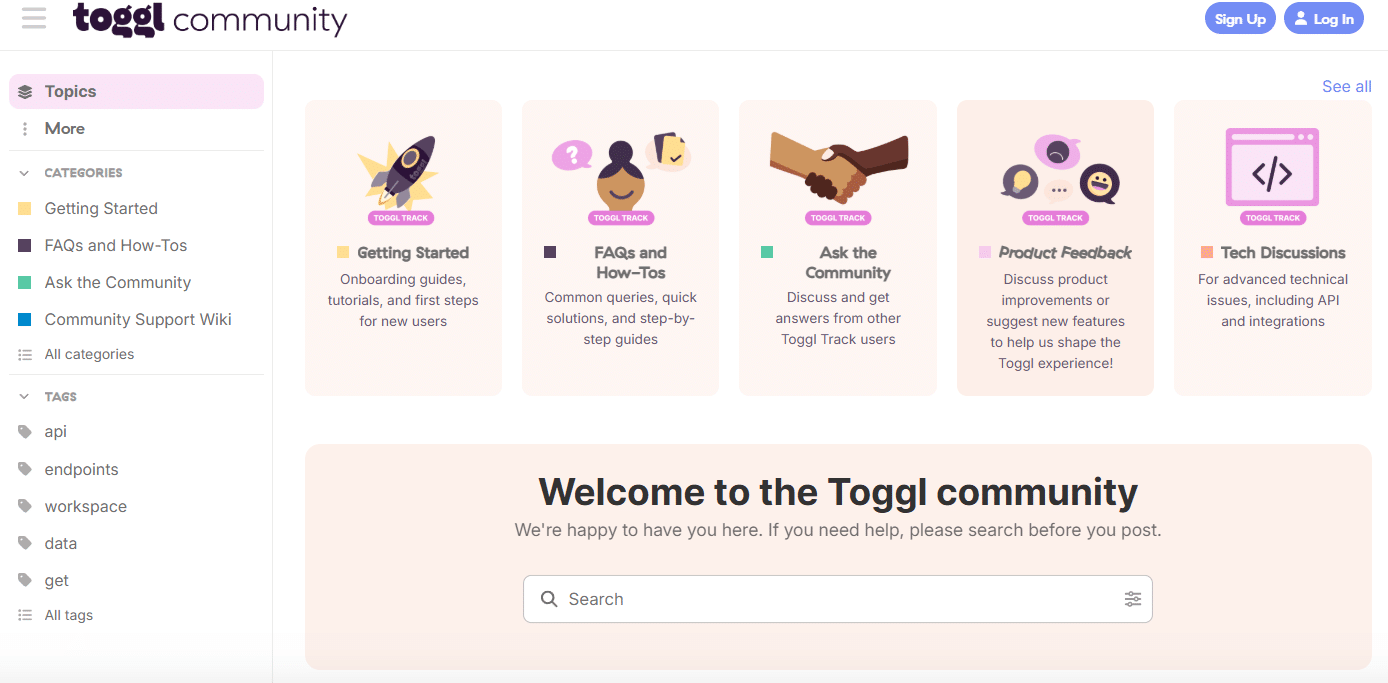
On this page you’ll find:
- onboarding guides, tutorials, and first steps for new users
- FAQs and How-tos
- discussions with other Toggl Track users
- product feedback
- tech discussions for advanced technical issues, including API and integrations
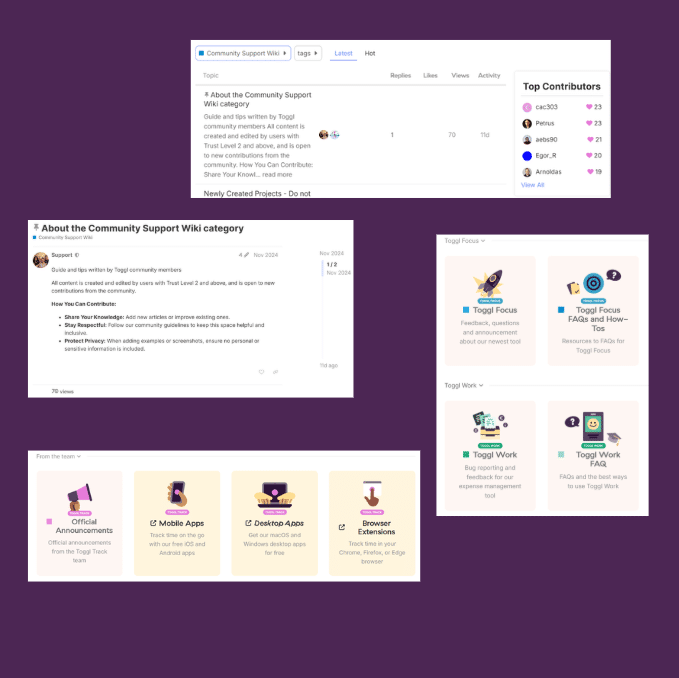
Although Toggl Track is their main product, you can also find information about Toggl Focus and Work.
On this page, you’ll find useful articles about working from home. You can learn how to start working from home, how to make your remote team more effective, more about remote culture, hiring from home, tools of the trade, personal productivity, remote management, and health & connection.
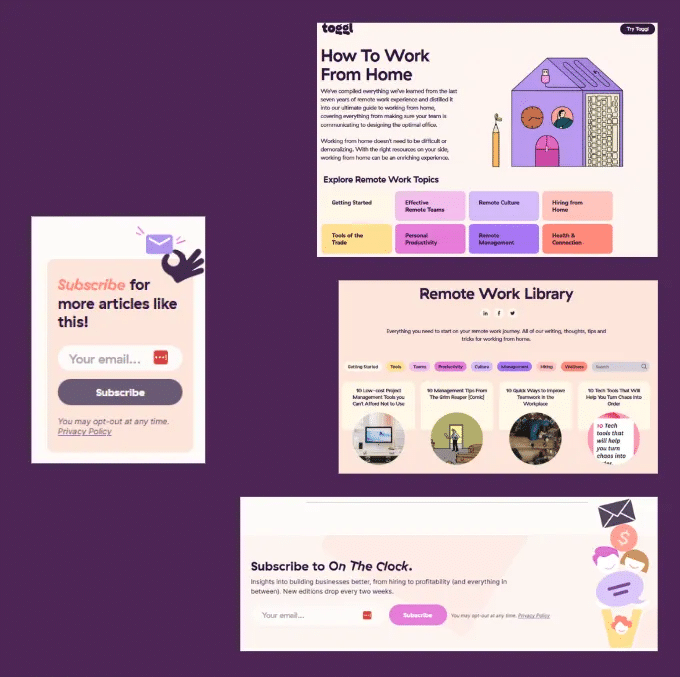
The articles are shareable on LinkedIn, Facebook, and X. In these long articles, you will find at the top and bottom of the article the subscribe button for their newsletter.
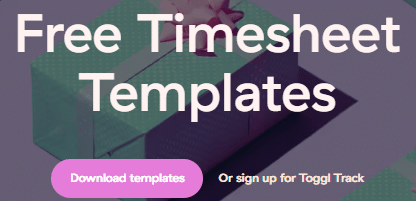
Here you can download for free Toggl’s printable timesheet templates to track daily, weekly, biweekly, and monthly total hours worked. Most of these templates can be used with Excel, Word, PDF & Google Sheets. If you are tired of manual timesheets, you can use the timesheet app. In the template’s footer, you will find a link to Toggl Track.

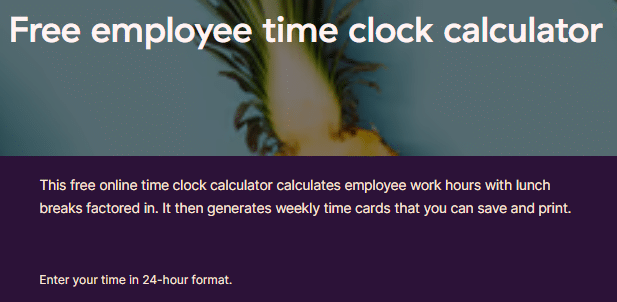
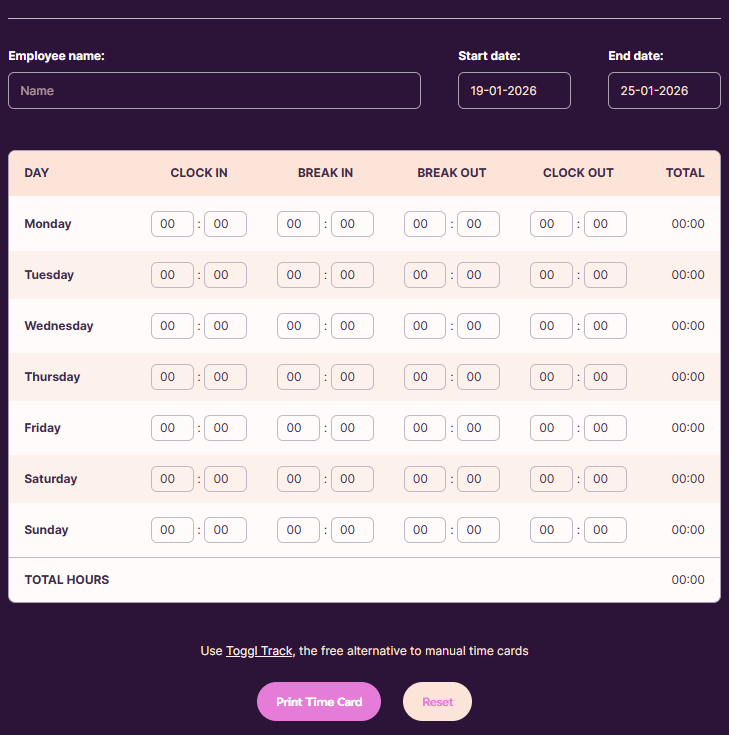
This is a free employee time clock calculator that generates weekly time cards that you can save and print. Just like their templates, they are promoting Toggl Track as the free alternative to manual time cards.
Free templates and calculators act as powerful bottom-funnel SEO magnets, targeting high-intent searches like “timesheet template” or “time card calculator” where users already feel the pain of manual tracking and are actively looking for a solution.
By offering genuinely useful tools that rank organically, Toggl captures this demand at the exact moment of need, then smartly introduces calls to action that position their software as the easier, long-term alternative, solving the immediate problem while naturally guiding users toward the permanent fix.
At the same time, these resources function as a freemium on-ramp: they teach the basics of time-tracking in a familiar, low-commitment format, so when users move to Toggl’s automated platform, the learning curve feels smaller and adoption friction drops.
Toggl Hire was another tool, but they retired from recruitment so they could focus on building new tools to help your business. New signups are no longer accepted, but existing users can still log in to the platform.
Toggl’s Leadership Presence Analysis
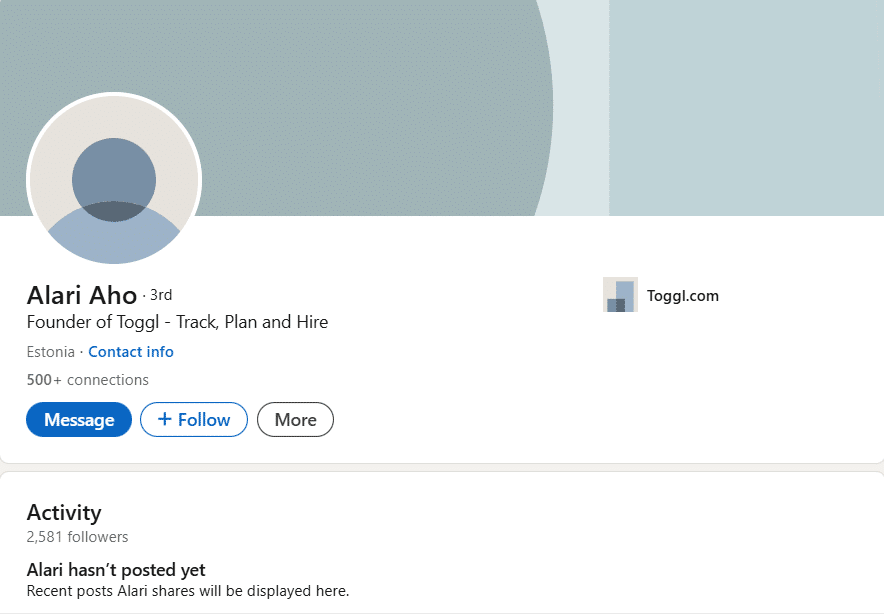
Alari Aho, co-founder
Alari Aho has a solid base of 2.5k followers on LinkedIn. His profile has mostly gone quiet, with this last update posted over 4 years ago.
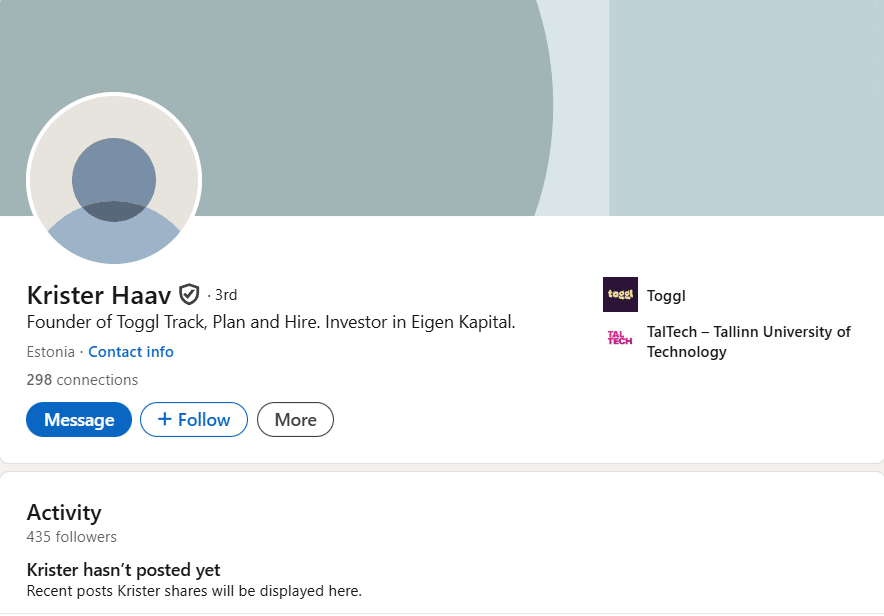
Krister Haav, co-founder
Krister Haav has 425 followers on LinkedIn, but he has yet to share his first post or any updates on the platform.
Elizabeth Thorn, Head of Marketing
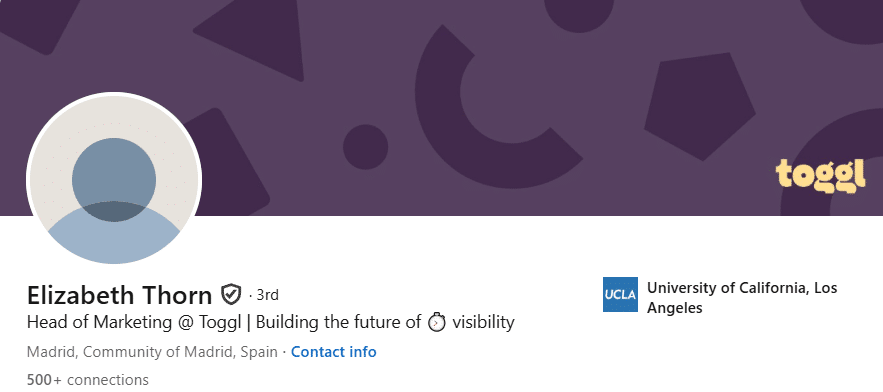
Elizabeth Thorn has 1.5k followers on LinkedIn. She checks in a few times a month, pulling in an average of 25 reactions and 5 comments per post. Her style leans toward long-form, thoughtful content where she often shares Toggl’s updates, adding her own insights and making sure to tag the company to keep them part of the conversation.
She’s probably the mastermind behind all Toggl’s memes and puns.

Co-founders Alari Aho and Krister Haav are basically ghosts on LinkedIn. Aho last posted four years ago. Haav has never posted. At first glance, this looks like a red flag: where are the thought leaders? The founder content?
But there’s a different way to look at it: they’re busy building the actual product instead of polishing a personal brand. For a bootstrapped company, skipping LinkedIn fame might actually be the good move. They’ve left the marketing and memes to Elizabeth Thorn, freeing them up to focus on the grit of the business. As it turns out, sometimes the most effective founder content strategy for a bootstrapped company is simply not having one at all.
Toggl’s Social Media Strategy
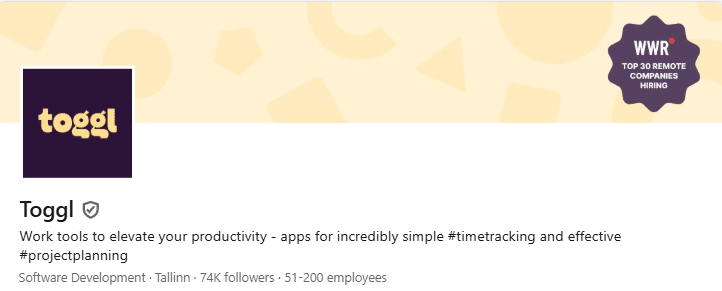
Toggl’s LinkedIn page has 74k followers. Toggl Hire, Toggl Plan, and Toggl Track are featured in the Products tab.
Visually, they’re incredibly consistent. Every image, video, and GIF stays true to its signature purple color scheme. However, they’re playing it pretty low-key on the content front, with only 8 posts over the last 3 months. These updates range from direct product spotlights to more lighthearted, humorous takes, though the engagement remains fairly quiet. Most posts see around 20 reactions and only a handful of comments or shares.
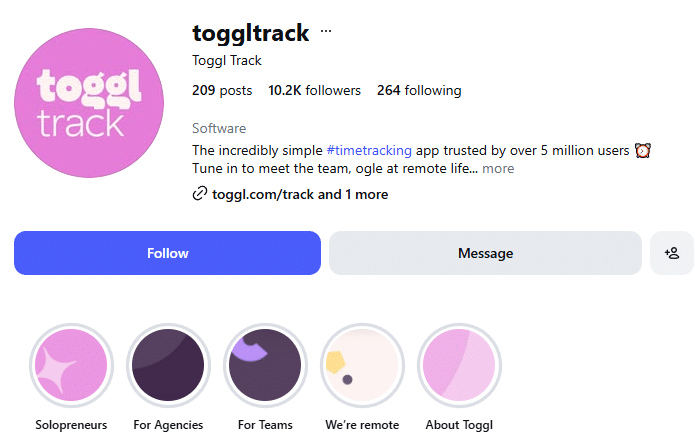
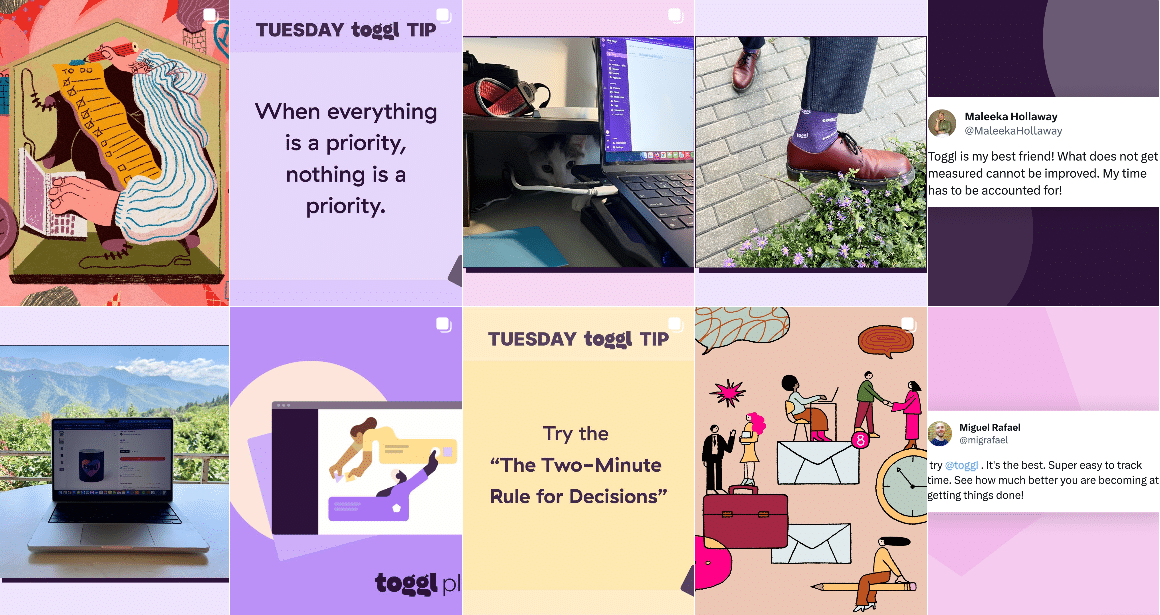
On Instagram, Toggl has a following of 10.2k, all greeted by a grid that strictly adheres to their signature pink-and-purple aesthetic. However, the account is currently gathering digital dust. Despite having links for Toggl Track and Plan right in the bio, they haven’t shared a new post since November 2023, which is nearly 2 and a half years ago.
X (formerly Twitter)
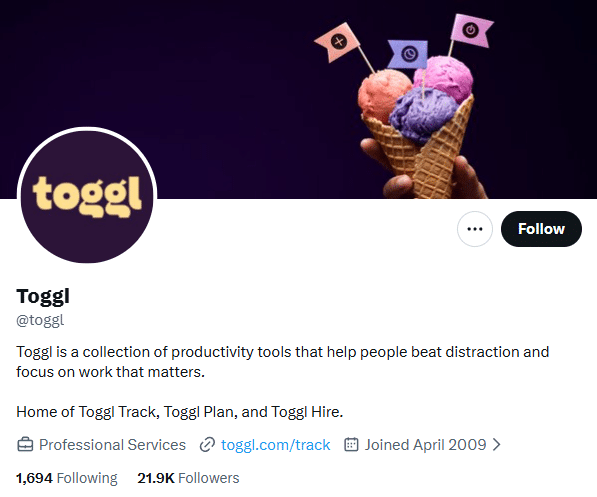
On X, Toggl has built a following of 21.9k, though the account has been quiet since May 2025. When they were active, their strategy was a mix of original posts and shares, usually centered around short-form video content and direct links to their products. Even with a decent reach, averaging around 1.5k views per post, the actual conversation was pretty thin, typically earning just a few likes and almost no comments.
Youtube
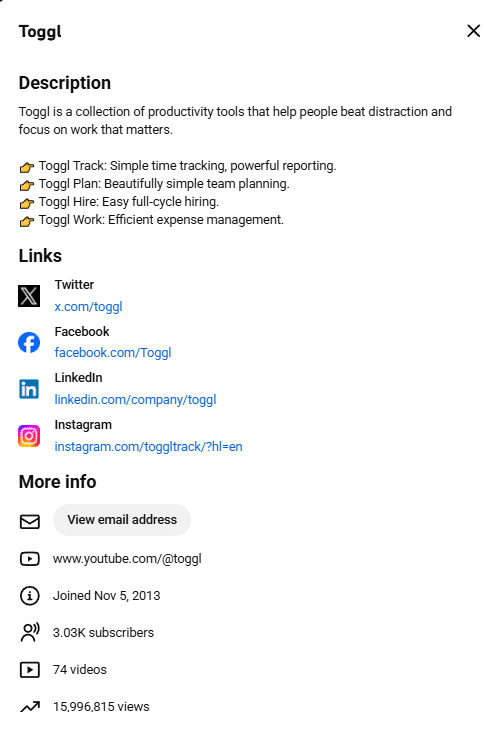
On YouTube, they have 3.03k subscribers, 74 videos, and 15 million views. To keep things organized, they’ve curated their library into 4 playlists:
- The Hiring Standard
- Toggl Track: Agency Edition
- Toggl Analytics
- Toggl Track Tips
Their content strategy is a balanced mix of formats, using long-form videos for detailed explanations and product walkthroughs, alongside YouTube Shorts to capture quick attention and stay relevant in the mobile-first snackable content era.
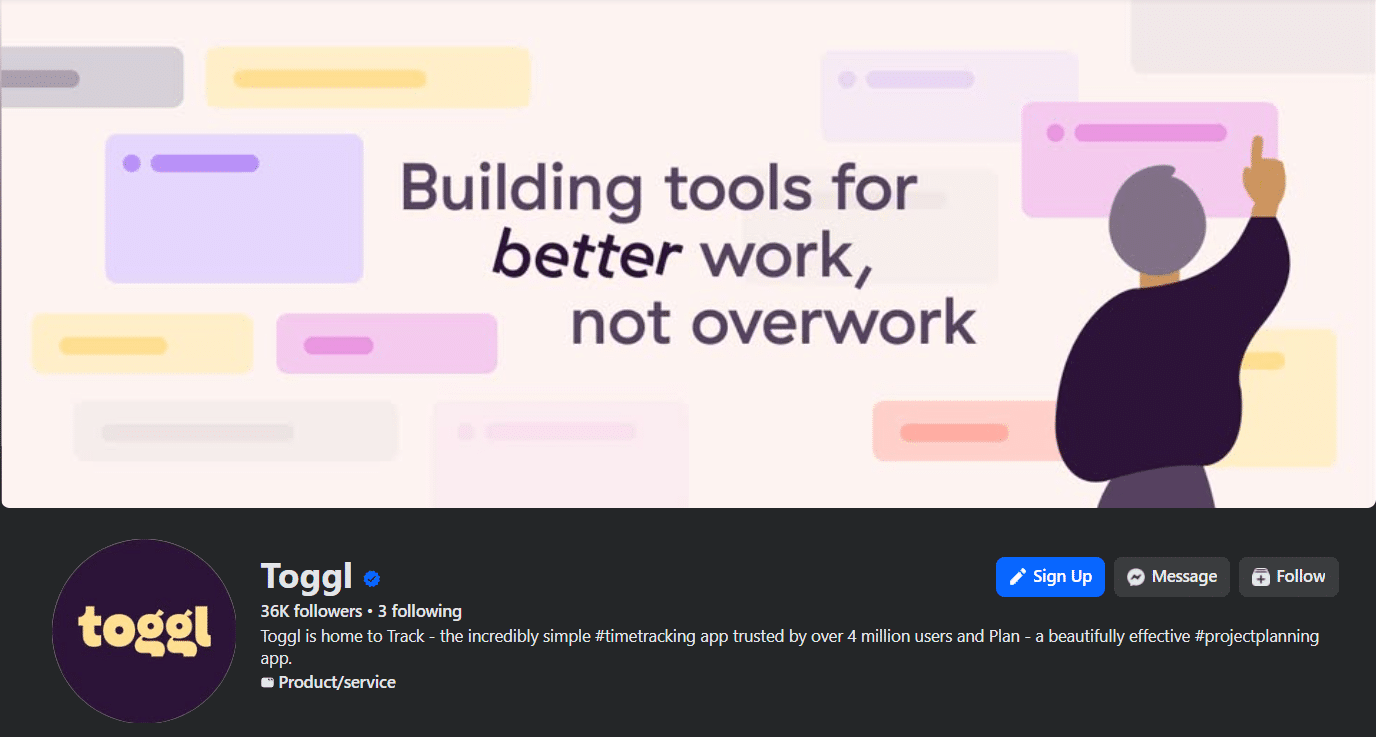
Toggl’s Facebook presence, followed by 36k people, has been stuck in time since November 2023. Back when the lights were still on, their feed was a steady mix of product news, video clips, and event updates, all wrapped in that same consistent brand color palette found on their other socials.
Most posts struggled to gain traction, usually bottoming out at just 1 or 2 likes with virtually no comments or shares. Interestingly, they’ve also locked down the reviews section, though you can still see where other users have mentioned the brand.
GitHub
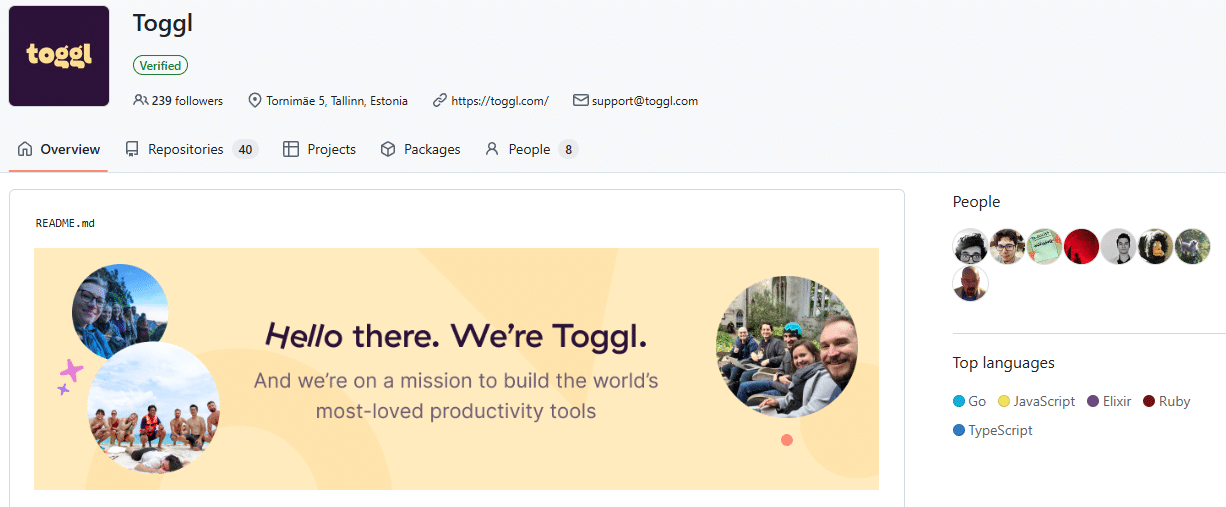
On GitHub, they have 239 followers. Here you will find a short description about Toggl, what it’s like to work here, a list of repositories, top languages used (Go, JavaScript, Elixir, Ruby, TypeScript), and team members. Currently, there is no project on this page.
Conclusions
Toggl essentially realized that its ideal customers aren’t scrolling Instagram pr Facebook for productivity hacks. They’re on LinkedIn, likely while on the clock. It’s a strategic pivot that just makes sense.
Toggl’s target buyers (agency owners and managers of large teams with actual budgets) live on LinkedIn. When you’re a bootstrapped company, every minute counts. You can’t afford to shout into a void. You have to go where the money is.
Without a massive venture capital safety net, Toggl has to be strict with its resources, doubling down only where the ROI is clearest. LinkedIn provides access to qualified leads with real purchasing power, whereas platforms like Facebook and Instagram offer poor returns for the effort. More importantly, LinkedIn captures users when they’re already in a “work mode” mindset. They are far more likely to invest in a time-tracking tool when they’re thinking about their business than when they’re looking for entertainment.
HubSpot’s research from May 2025 sustains this theory: LinkedIn is 277% more effective for lead generation than Facebook and X, generating 80% of all B2B leads from social media. LinkedIn users spend an average of 2-3 minutes engaging with business content compared to 30-45 seconds on other social platforms, with an average cost per lead of $55-$75 on LinkedIn versus $25-$45 on Facebook.
Toggl’s Top-Performing Content
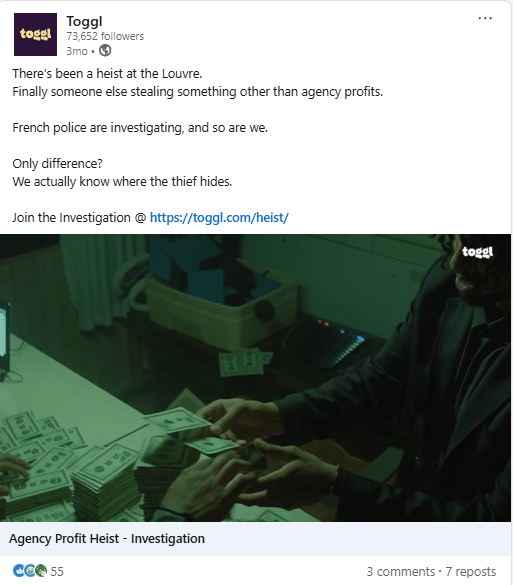
- Their take on the Louvre heist – 55 reactions, 3 comments, and 7 reposts.
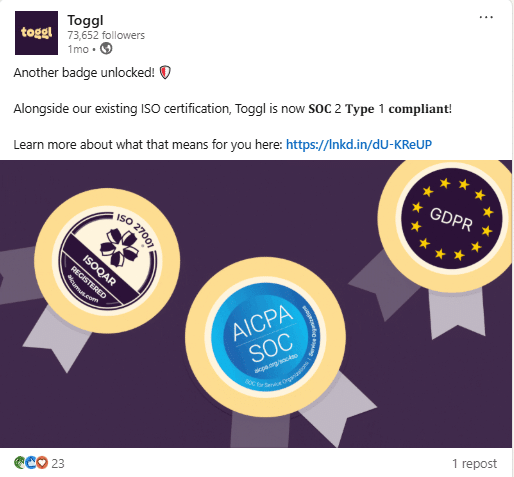
2. Product update about SOC 2 Type 1 compliance – 23 reactions and 1 repost.
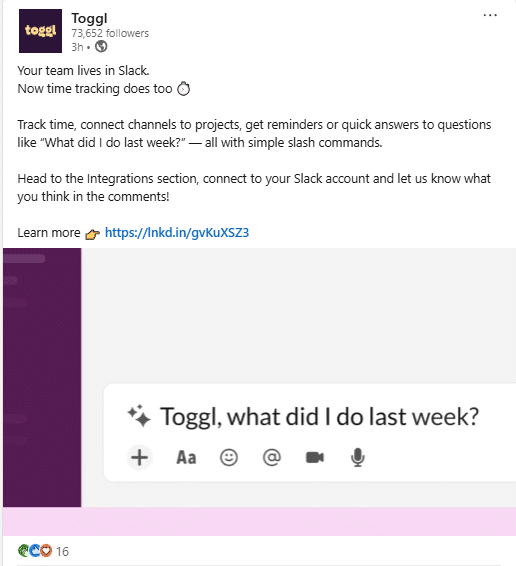
3. Product update about Slack integration video – 16 reactions.
Worth noting: their Louvre heist meme got 55 reactions while their SOC 2 compliance announcement got 23. The dumpster fire gif wins again. Turns out millennials in management positions respond better to pop culture references than corporate-speak. Who knew?

YouTube
Long-form videos
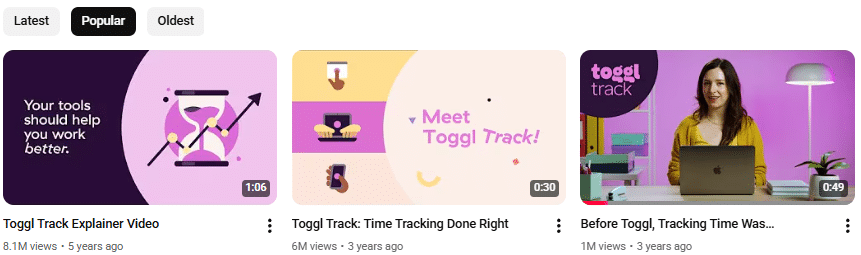
- Toggl Track Explainer Video – 8.1 million views, 241 likes, and 10 comments.
- Toggl Track: Time Tracking Done Right – 6 million views, 35 likes, and 2 comments,
- Before Toggl, Tracking Time Was… – 1 million views, 46 likes, and 7 comments.
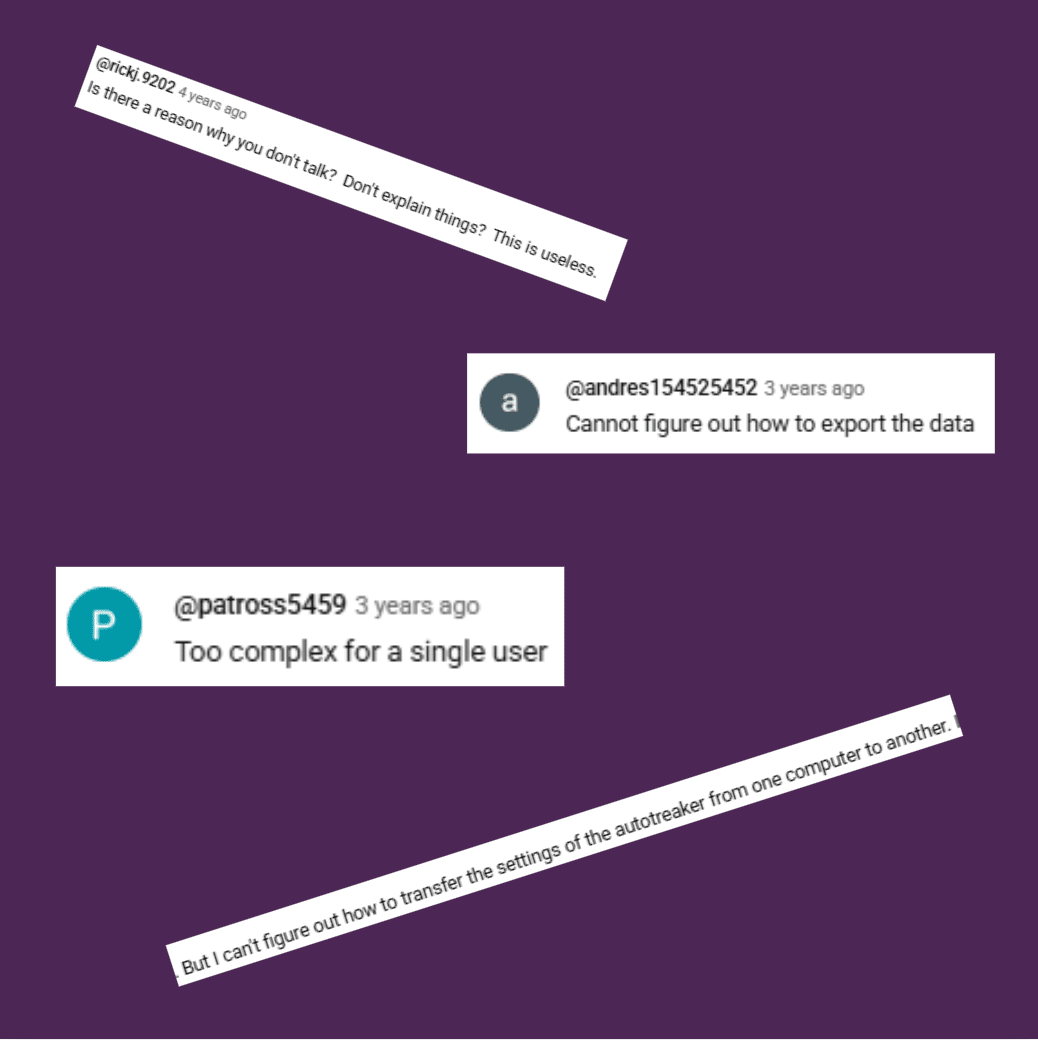
Each of these 3 videos focuses on Toggl Track, with the descriptions consistently featuring a direct link to the product. However, the comment sections tell a bit of a different story: they’re filled with users complaining about the platform’s user-friendliness. These critiques are now 3 to 4 years old, and while Toggl’s team hopped in to reply to some, many others were left completely unanswered.
Shorts
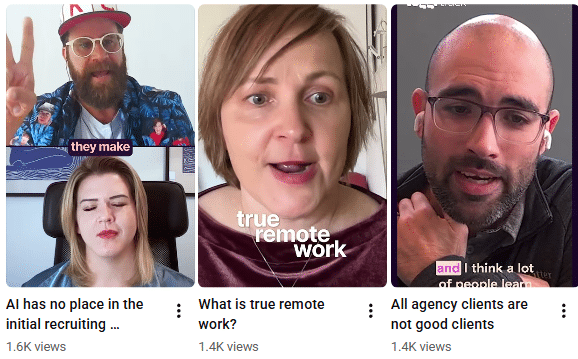
- AI has no place in the initial recruiting process? – 1.6k views, 5 likes (video about Toggl Hire)
- What is true remote work? – 1.4k views, 4 likes (video about Toggl Hire)
- All agency clients are not good clients – 1.4k views, 4 likes
The first 2 videos focus on Toggl Hire, while the third shifts the spotlight to Toggl Track. All 3 follow a consistent format: they take snippets from what look like webinars and layer them with helpful captions and infographics to drive the point home.
When handled correctly, YouTube videos act as evergreen SEO assets. For smaller teams, content repurposing is the ultimate efficiency hack. A single high-quality video can be sliced and diced into a social ad, a website demo, or a featured piece in an email drip campaign.
💡Steal this: Repurpose evergreen YouTube explainers into ads/emails for multi-channel SEO without new creation.
Toggl’s Paid Advertising Strategy
LinkedIn Ads
As of January 2026, Toggl is running 358 ads on LinkedIn, with a heavy focus on pushing their Playbook and ROI calculator.

What’s interesting is their vibe: they aren’t afraid to use memes to get attention. While we can’t see the exact metrics, the copy is genuinely funny and full of the kind of humor that hits perfectly for millennials.
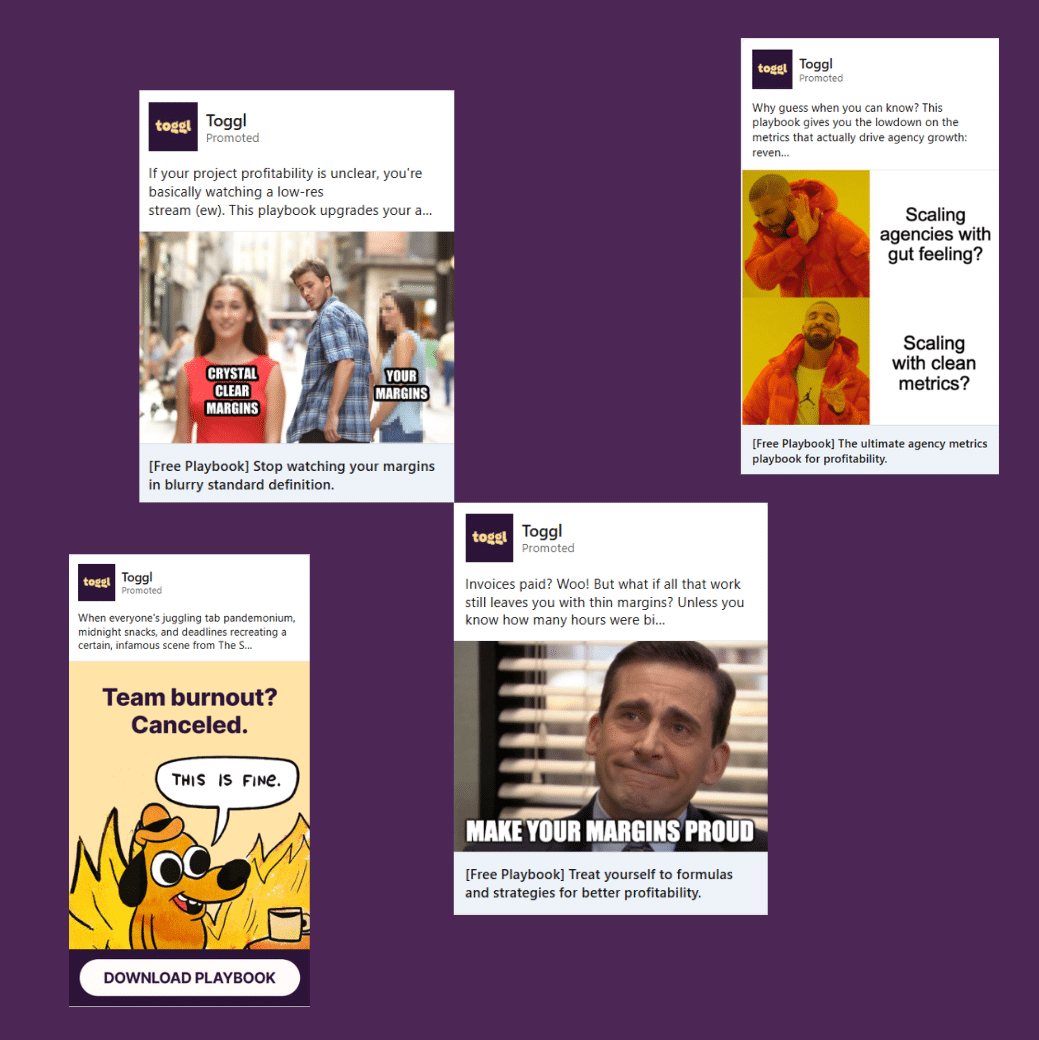
We can’t see the metrics for these ads. The copy used is funny. They are using phrases and images that will make any true millennial smile.
They’re reaching the 30-to-45-year-olds who are now sitting in those management seats. These decision-makers have a low tolerance for corporate-speak and gravitate toward brands that actually feel human and culturally literate.
Let’s be real: LinkedIn feeds are a cluttered and sometimes just a boring mess. Memes act as a pattern interrupt. They stop the mindless scroll way better than a standard product screenshot ever could. Even if someone doesn’t sign up right that second, it builds brand recall. Later on, when they’re searching for a time-tracking tool, Toggl is the one that sticks in their head, making them way more likely to click.
YouTube Ads
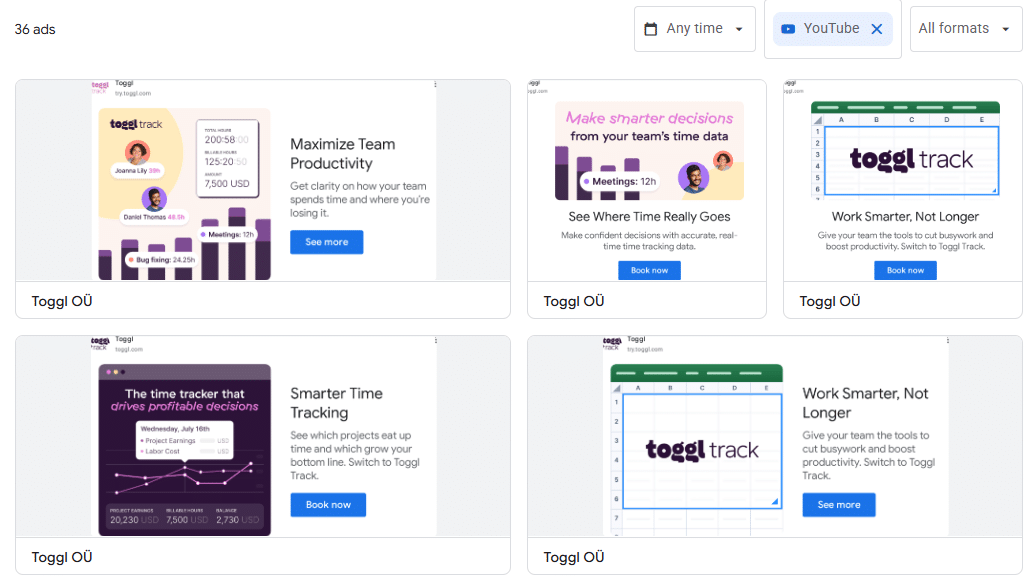
On YouTube, they’re running 36 ads, with the vast majority of that budget being funneled into Toggl Track. Unlike the playful, meme-heavy approach they take on LinkedIn, their YouTube strategy is much more direct and results-oriented. They lean heavily on high-intent, direct messaging designed to catch people who are actively looking for a solution to their workplace chaos.
You’ll see them using punchy, benefit-driven hooks like:
- Maximize Team Productivity (a direct appeal to the efficiency-obsessed manager)
- Work Smarter, Not Longer (playing on the classic desire for better work-life balance through organization)
- Track work hours with Toggl Track (clear, literal branding for someone who just needs a tool that works)
- Improve Your Team’s Output (focusing on the bottom-line results that business owners care about most)
This shift in tone is likely intentional. While LinkedIn is where they build brand cool and use humor to stop the scroll, YouTube is where they capture intent. People go to YouTube to learn how to do things or fix problems, so Toggl meets them there with clear, authoritative phrases that promise an immediate solution to their time-management headaches.
Google Ads
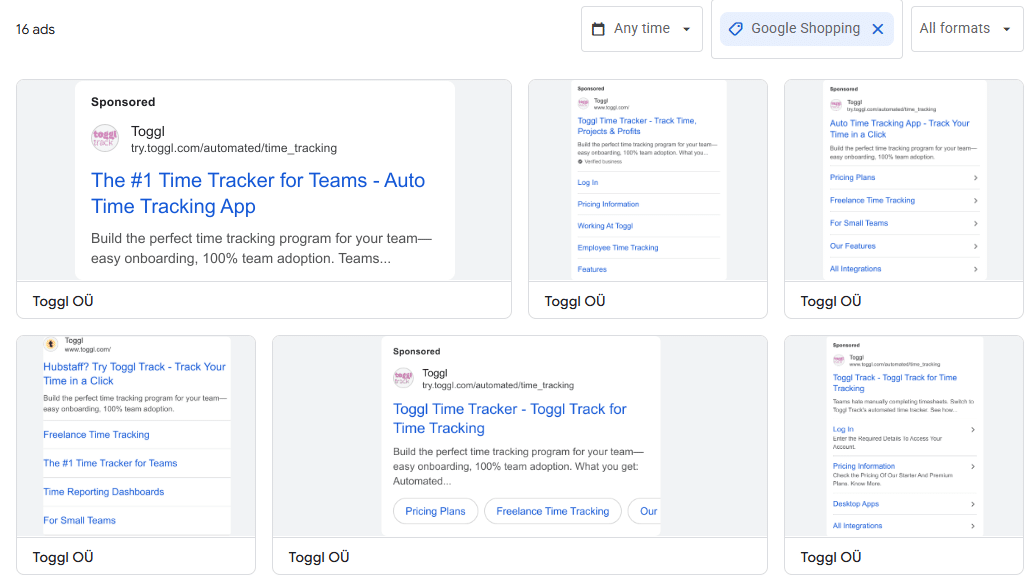
Toggl is also making a play in the Google Shopping space with 16 active ads, which is an interesting move for a software company. Since Google Shopping is a highly visual, bottom-of-the-funnel platform, they are using this space to capture users who are in the final stages of their search and ready to pull the trigger on a new tool.
To stand out in a crowded marketplace, they rely on high-authority, feature-rich headlines that get straight to the point:
- The #1 Time Tracker for Teams – Auto Time Tracking App (positions them as the market leader right out of the gate, using social proof and number one status to build immediate trust with a potential buyer)
- Employee Task Tracking App – Free Automated Time Tracker (by leading with the word “Free”, they lower the barrier to entry for small business owners, while “Automated” promises a hands-off experience for busy managers)
- Track work hours with Toggl Track (their “bread and butter” headline; simple, clear, and perfectly aligned with the core search intent of someone looking for a digital timesheet)
- Time Tracking Web Extension (targets a specific use case, appealing to the user who doesn’t want another bulky software installation and instead prefers a lightweight tool that lives right in their browser)
By diversifying these headlines, Toggl ensures they are visible to several different types of potential buyers: from the manager looking for a pro enterprise solution, to the freelancer looking for a quick, free browser plugin. It’s a complete catch-all strategy designed to dominate the search results page.
Toggl isn’t playing defense on Google Search, with approximately 200 active ads. This is where their pay-per-click (PPC) strategy gets aggressive, specifically targeting users who are either already looking for their competitors or are ready to invest in a serious solution.
Their headlines are the best in competitor conquesting and value-driven messaging:
- Clockify? Try Toggl Track – Book a Demo & The Clockify Alternative – Toggl Track for Time Tracking. These are classic conquest ads. By bidding on their biggest competitor’s name, Toggl is essentially intercepting potential customers at the exact moment they are considering a rival. They position Toggl Track not just as a choice, but as the better alternative, immediately offering a “demo” to prove their superior value.
- Track Your Time in a Click – Up to 20% Increase in Profits. This headline moves away from features and focuses entirely on the bottom line. The promise is a powerful psychological hook. For a business owner, that makes the software an investment rather than an expense.
- Toggl Track Pricing & Plans. This targets high-intent searchers, like the people who are already past the “what is this?” phase and are now asking “how much does it cost?”. By having a dedicated ad for pricing, Toggl ensures they control the narrative around its cost before the user even clicks.
- Time Tracking Invoicing Tool. This is a utility-first headline. It targets the specific pain point of administrative overhead by highlighting that Toggl helps you get paid by integrating invoicing into the workflow.
With 200 variations running, Toggl is likely using Dynamic Search Ads, which allow Google to automatically swap these headlines based on exactly what a user types into the search bar. This ensures that whether someone is looking for “free tracking”, “Clockify reviews”, or “how to increase agency profits”, Toggl has a custom-tailored answer waiting for them at the top of the page.
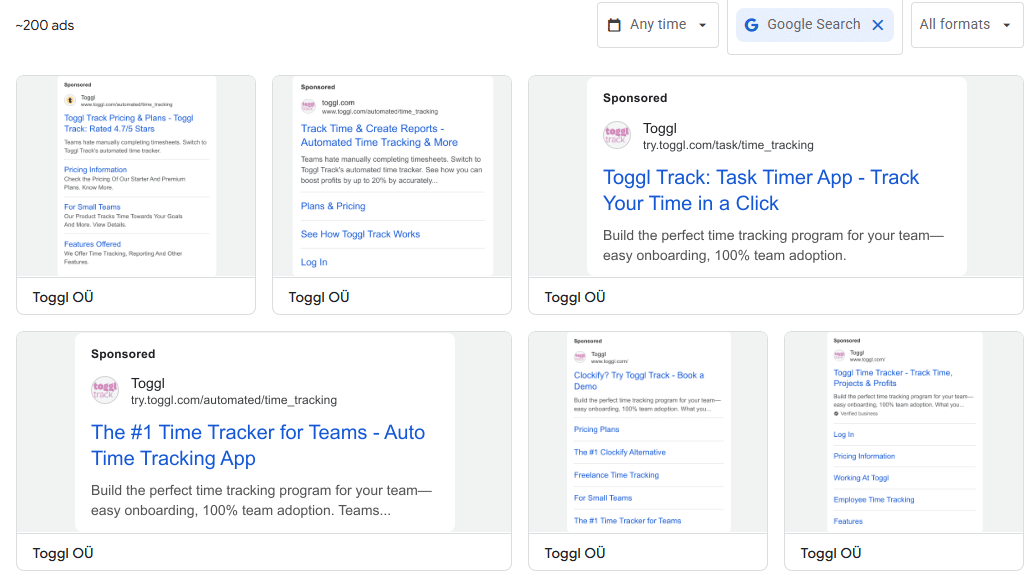
As of January 2026, Toggl has opted out of Meta, Google Maps, and Google Play ads entirely. Instead, they’ve gone all-in on Google Search, and the logic is simple: it’s the most direct path to the bottom of the funnel. By bidding on terms like “time-tracking tool” or “Clockify alternative”, Toggl is catching users who are already feeling the pain of a problem and are actively looking for a solution.
This competitor-conquest strategy is particularly brilliant for a bootstrapped company. When Toggl targets someone searching for a rival, they aren’t paying to educate the customer on why time tracking matters, because the customer already knows. They’re simply paying to convert them. It’s a strict, budget-efficient way to intercept ready-to-buy prospects without the high cost of building brand awareness from scratch.
This search-heavy approach works perfectly with their LinkedIn strategy. While LinkedIn builds long-term credibility through playbooks and ROI calculators, Google Search captures the existing demand. It’s a balanced funnel: LinkedIn nurtures the maybe later crowd, and Google Search closes the right now crowd.
The data backs up this move, too. According to WordStream’s September 2025 benchmarks, average Google Ads conversion rates have climbed to 7.52%, with most industries seeing improved performance despite rising costs. Furthermore, a June 2025 study shows that optimized B2B campaigns focusing on high-intent queries, exactly like the ones Toggl is running, consistently outperform the standard 3.04% conversion average by a wide margin.
Toggl’s Sales Funnel from Social Media
Toggl’s sales funnel from social media prioritizes LinkedIn for B2B lead generation while minimizing activity on consumer platforms, channeling modest posts into product signups via links, memes, and evergreen video repurposing.
On LinkedIn, Toggl drives top-funnel awareness with purple-themed images, gifs, and funny/commercial product posts (8 in the last 3 months to 74k followers), funneling to middle-funnel playbooks/ROI calculators via 358 ads featuring memes like Louvre heist references. Modest engagement (20 reactions max) converts via bio/product tab links to Track/Focus trials, targeting teams of 20+ for demos and capturing 80% of B2B social leads where pros spend 2-3 minutes on content.
Instagram serves a minimal funnel role with 10.2k followers and consistent pink-purple visuals, but inactivity since November 2023 (pre-2026) limits it to static bio links for Toggl Track/Plan. No active sales push; it acts as a dormant asset for organic discovery rather than direct conversions, reflecting resource focus on higher-ROI B2B channels.
X supports mid-funnel nurturing with 21.9k followers through short videos, original posts, and reposts linking to products, achieving 1.5k views but few comments. Links drive to Track features or updates, positioning Toggl for impulse clicks from productivity seekers, though sparse activity prioritizes efficiency over volume.
YouTube excels at top-to-bottom funnel with 3k subscribers, 15M views across 74 videos/Shorts (e.g., 8.1M-view Track explainer linking to signups), playlists like Agency Edition repurposed into ads/emails. Long-form demos build consideration, Shorts (1.4k-1.6k views on Hire/Track) nurture desire, and descriptions funnel to trials, using evergreen SEO for sustained conversions.
Facebook offers almost no funnel impact, with 36k followers inactive since November 2023, past posts on updates/videos garnering 1-2 likes and no shares/comments. Closed reviews limit social proof. Toggl shifted from consumer entertainment scrolling to pro channels, avoiding poor ROI.
GitHub provides technical bottom-funnel validation for Enterprise devs with 239 followers, showcasing repos in Go/JavaScript/Elixir, team bios, and work culture. No projects active, but it attracts advanced users via API/integration discussions, indirectly supporting Track’s 100+ integrations and sales to engineering-heavy teams.
Toggl’s Reviews and Social Proof
Capterra
Toggl Track: 4.7 stars
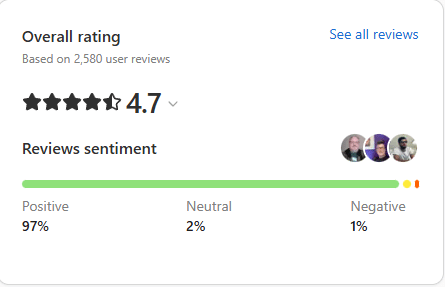
People say that Toggl has time tracking features and an intuitive and accessible interface, but they are complaining about cumbersome manual time entry. The reviews are mostly from small businesses, 18% of them from Creative & Design, 17% from Administrative, 15% from Consulting, 12% from IT & Software Development. 86% of the people are using Toggl Track daily for time tracking, remote work, and time & expense. The top industry that uses this product is Marketing & Advertising.
Toggl Plan: 4.6 stars
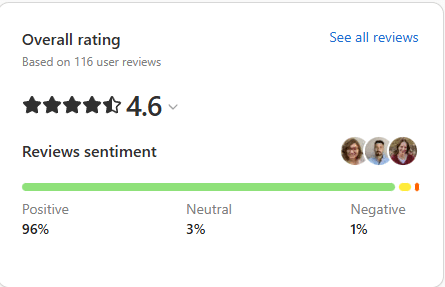
Toggl Plan’s standout feature is its Gantt/Timeline View, which holds a perfect 5-star rating from users. Beyond the visuals, the platform scores high on the essentials: it earned 4.6 stars for value for money and an impressive 4.7 stars for customer service. When it comes to the feature set, users remain very satisfied, giving it a solid 4.2-star overall rating.
Toggl Hire: 4.5 stars

Features & Functionality have 4.5 stars. The highest-ranked is the Candidate Management feature, with 4.7 stars, and the lowest is the Reporting/Analytics, with only 3 stars. It earned 4.2 stars for Value for money and only 3.9 stars for Ease of use.
G2
Toggl Track: 4.6 stars
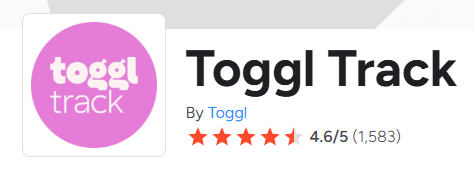
Users love Toggl Track for its simplicity, reporting features, and time-saving automation. On the flip side, some find the task management and feature set too limited, while others cite pricing and occasional clocking glitches as drawbacks.
Toggl Plan: 4.2 stars
Toggl Plan offers smooth collaboration and high learning efficiency, making team sharing and task creation a breeze. However, users often face a steep initial learning curve, limited advanced features, and occasional glitches within the board views.
Toggl Hire: 4.7 stars
Toggl Hire is reportedly simple and easy to use. The most praised feature is the Candidate Management. Users reported problems like technical issues, slow performance, and slow loading time.
Trustpilot
Toggl Track: 2.5 stars

Toggl Track has yet to address recent negative feedback, leaving several critical issues hanging. Users are primarily frustrated by sudden, seemingly untested feature changes and a lack of responsive support. Complaints also highlight an overly aggressive sales approach and concerns regarding personal data. Toggl Plan and Hire currently have no reviews on Trustpilot.
Software Advice:
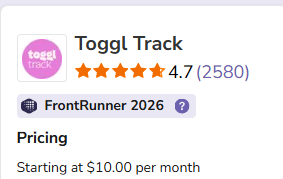
Track: 4.7 stars
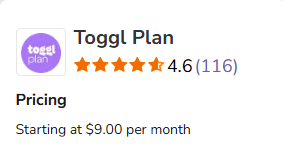
Plan: 4.6 stars
Hire: 4.5 stars
Get App:
Track: 4.7 stars
Plan: 4.6 stars
Hire: 4.5 stars
On GetApp, Toggl’s user base shows a clear industry split: Computer Software companies are the primary users of Toggl Hire and Plan, while Marketing and Advertising agencies gravitate toward Toggl Track. Across all 3 products, the typical customer is a small business looking for lean, efficient tools.
While general satisfaction is high, a small segment of users has flagged inconsistencies in support. Specifically, some report difficulty accessing live help or getting timely resolutions when dealing with complex, technical issues, suggesting that while the self-service tools are great, the human support can sometimes struggle to keep pace with more complicated requests.
Google Play:
Track: 4.8 stars
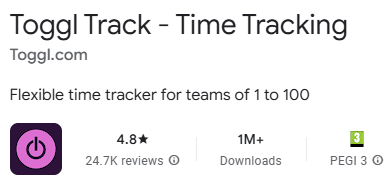
Focus and Plan have no reviews yet, as of January 2026.
App Store (Apple)
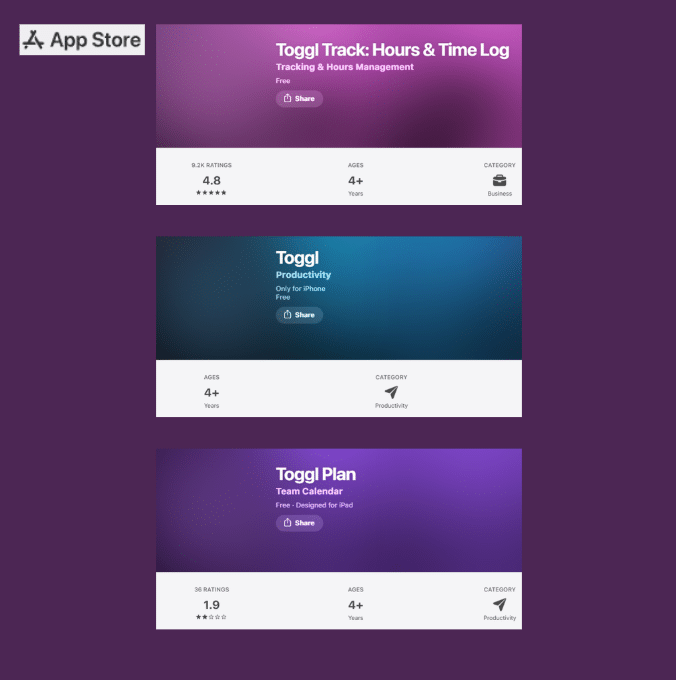
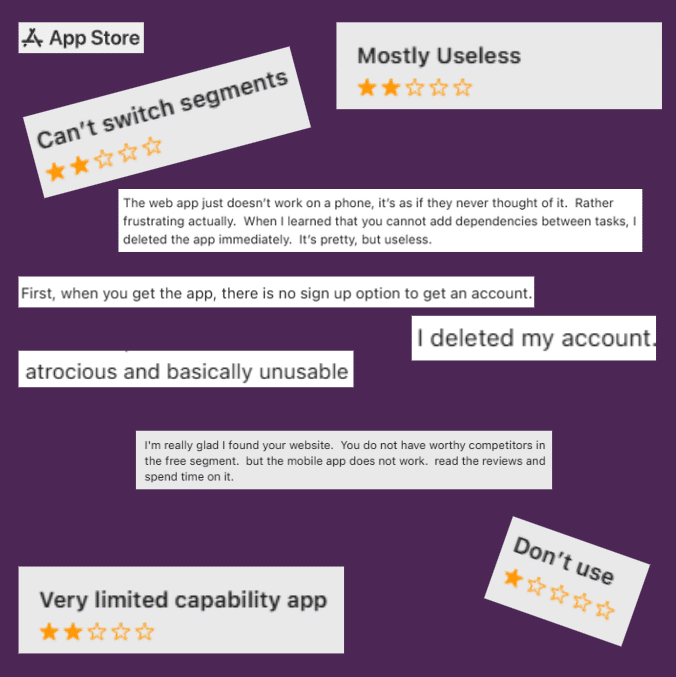
While Toggl Track continues to shine with a near-perfect 4.8-star rating, Toggl Plan has struggled, bottoming out at just 1.9 stars on the App Store. Their newest evolution, Toggl Focus, is still too new to have any public reviews. Although there are old news, below you can find some of the recurring complaints from users:
Glassdoor: 4.5 stars, with 93% would recommend to a friend
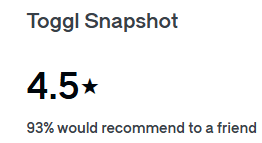
On Glassdoor, 81% of people approve of CEO Alari Aho. Toggl has 74% positive business outlook, and the lowest-ranked category is Career Opportunities (3.9 stars).
Toggl’s Content Marketing and Demand Generation
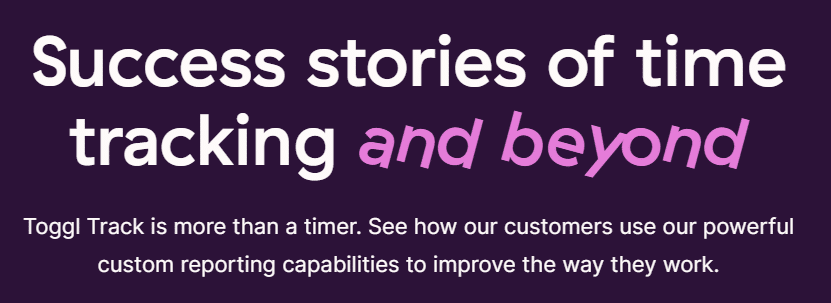
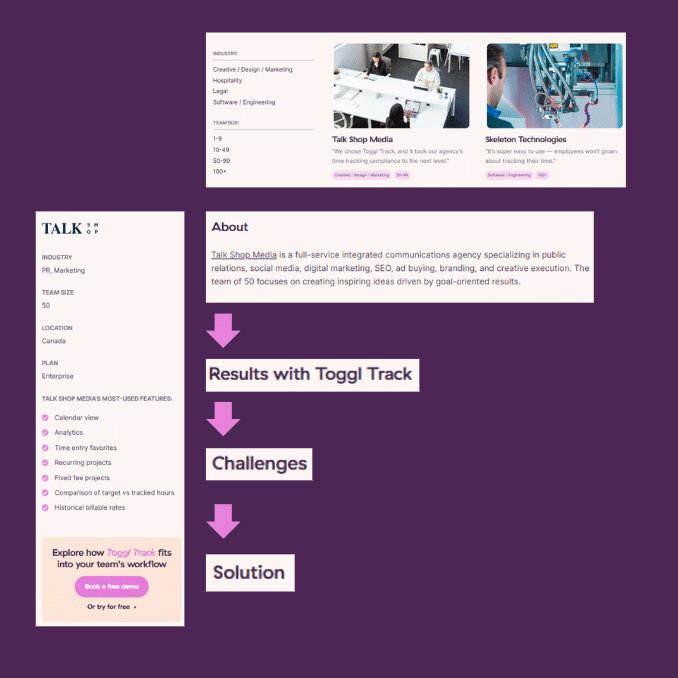
On this page, you can see how Toggl’s customers use their custom reporting capabilities to improve the way they work. You can filter it by industry (Creative/Design/Marketing, Hospitality, Legal, Software/Engineering) and by your team size.
In a case study, you’ll find more information about the customer, the Toggl plan used, and the most-used features. Here you can read more about the results achieved with Toggl Track, the challenges, and solutions.
Use Cases
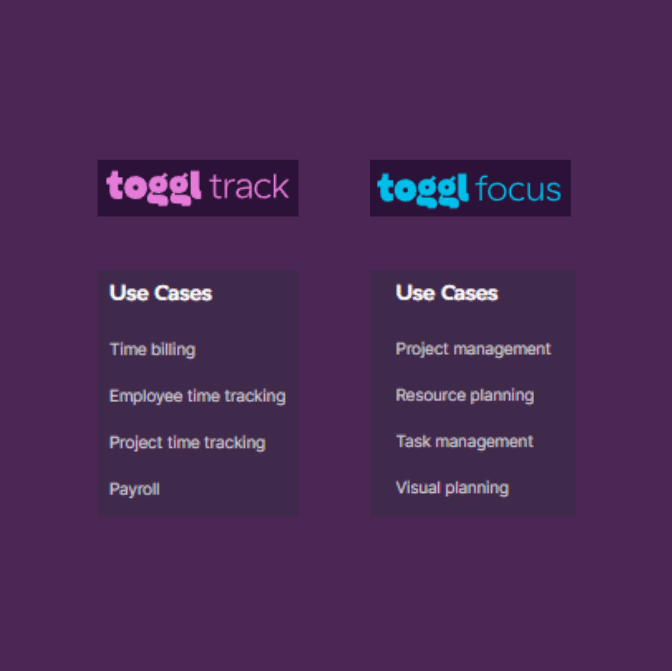
In the footer, you can find Toggl’s use cases. For Track, it will be time billing, employee time tracking, project time tracking, and payroll. For Focus, it will be project management, resource planning, task management, and visual planning.
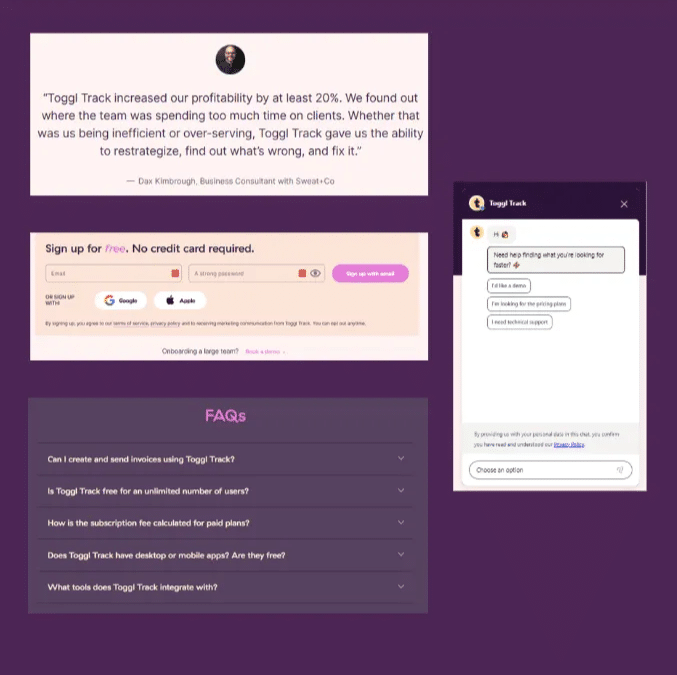
On every page, you’ll find product descriptions, client testimonials, the sign-up button, and an FAQs section.
Interestingly, the chat box only made an appearance on the employee time tracking page. It seems Toggl is being quite selective about where they offer live engagement, likely prioritizing that specific page because it’s a high-intent area where potential customers are most likely to have immediate, deal-breaking questions.
By keeping the chat restricted to that one section rather than site-wide, they’re effectively filtering for the most sales-ready traffic, ensuring their support or sales team isn’t spread too thin across casual browsers.
Toggl Track vs Clockify, Harvest, Hubstaff, and Timely
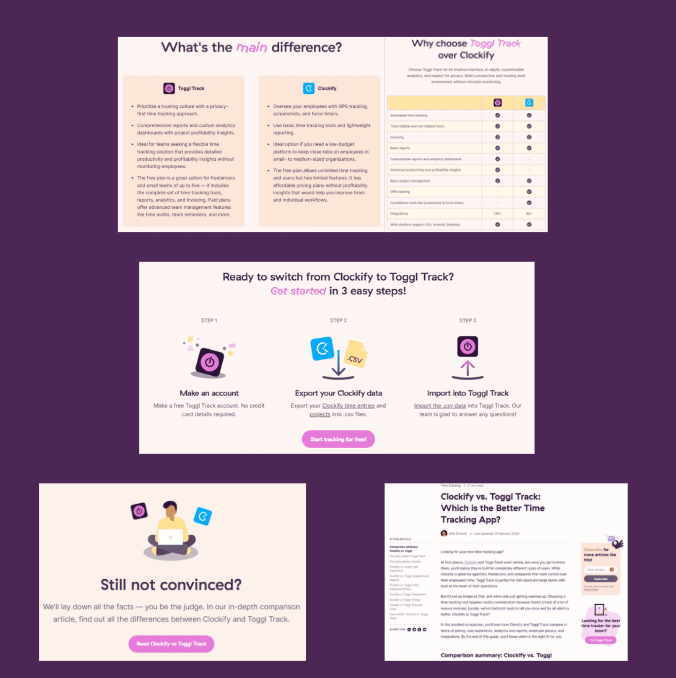
To drive conversions, Toggl populates every page with direct competitor comparisons, using a mix of feature spreadsheets, comparison screenshots, and social proof. These elements are strategically placed to dismantle any hesitation a buyer might have.
While Sign Up buttons are scattered throughout the page to capture immediate interest, Toggl also caters to the analytical buyer; tucked away at the bottom of the page is a link to an analysis comparing Toggl Track specifically against its top rivals.
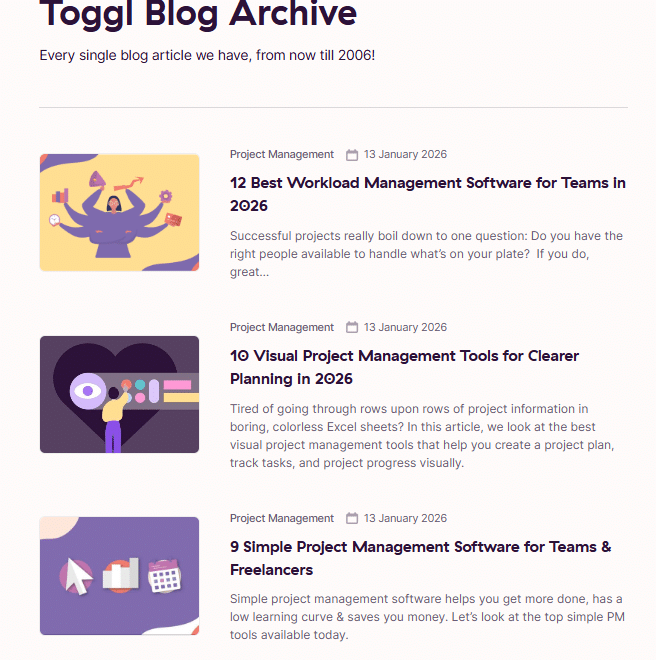
After a break from September 2025 to January 2026, Toggl’s Blog is alive and kicking. They posted once on the 8th of January and 8x on the 13th of January.
That posting pattern: radio silence for 4 months, then 8 articles in one day, tells a story. Either they’re batch-producing content (efficient but weird for readers), or they just onboarded a new writer.
On each article, you can see the author, the last updated, reading time, table of contents, social media sharing buttons, the newsletter subscribe button, and a get-to-know-the-author space at the bottom of the page.
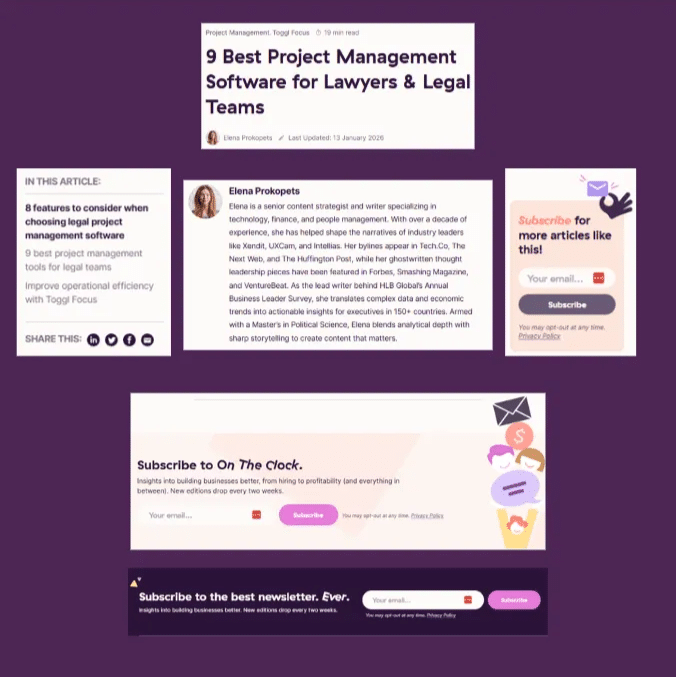
Their blog posts average 3,700 words, which makes their articles around 25 minutes to read. These are SEO monsters that rank for months (or years). Better to write one complete guide that dominates search results than pump out shallow posts every week that nobody reads.
💡 Steal this: Batch-produce bottom-funnel SEO (templates, playbooks) for organic high-intent capture and signups.
They also have a Help Page, a Media Toolkit (with downloadable logos, icons, and brand book), and a System page, where you can see the operational status.
Toggl’s Marketing and Sales Funnel Stages
Toggl’s marketing and sales funnel uses product-led growth (PLG) with transparent pricing, content hubs, and targeted ads to guide users from awareness to loyalty efficiently.
Top of the Funnel
Toggl attracts awareness through broad SEO magnets like free timesheet templates, timecard calculators, and the Work From Home Hub articles. Gamified Content Hub elements, such as the Investigation Unit and Agency Edition playbooks, draw in freelancers/agencies via fun, educational experiences that highlight time waste pains. LinkedIn memes and YouTube explainers (15M views) build brand recall without heavy spend, focusing B2B pros in productivity mindsets.
Middle of the Funnel
Users engage via Product Hub case studies (filterable by industry/team size), competitor comparisons (vs. Clockify/Harvest), and an ROI calculator that personalizes savings for self-qualification. Playbooks, blog posts (3.7k words with TOC), and partner program nurture consideration, priming loss aversion with metrics like 80 hours saved. LinkedIn ads promoting these assets and YouTube Shorts foster desire by demonstrating value in real workflows.
Bottom of the Funnel
Conversion happens smoothly with free trials, 30-day Premium access, and Compare Plans tables across Track/Focus sites. Google Ads targets high-intent “time tracking tool’ searches and “Clockify alternative”, while Enterprise demos handle high-value closes. Testimonials, features pages, and chat boxes remove friction for quick signups.
Retention
Post-signup, Toggle community offers onboarding guides, FAQs, feedback forums, and API discussions to boost daily use. Custom reporting, integrations (100+), and updates via timeline/Product Hub encourage expansion. Glassdoor’s 93% recommend rate and SOC 2 compliance sustain loyalty.
Toggl’s Future Plans and Growth Indicators
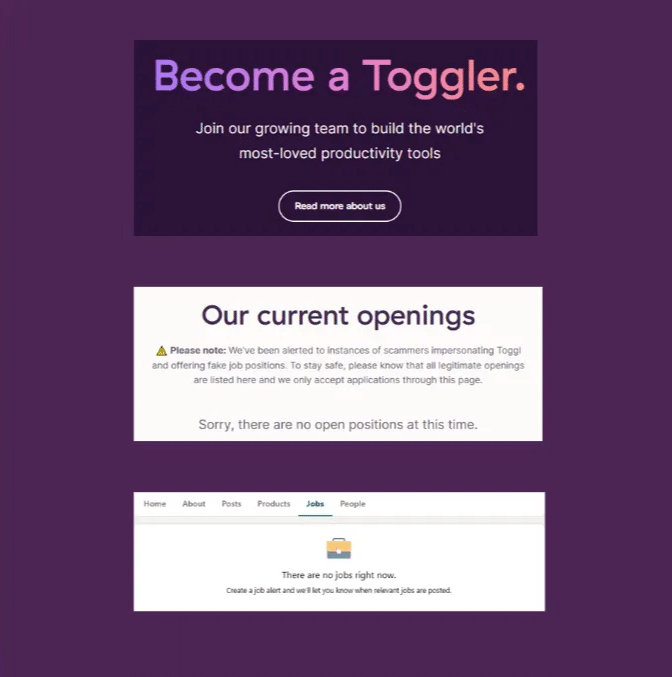
A company’s Career Page and LinkedIn Jobs tab are often more telling than a press release. They show exactly where a company is investing its energy. However, as of January 2026, Toggl’s hiring boards are quiet.
Toggl’s empty job board reflects a lean and mean bootstrapped philosophy. Rather than aggressive scaling, they are focused on internal consolidation, specifically the rollout of Toggl Focus, and are choosing to spend their surplus on high-intent search advertising rather than expanding their payroll.
As we saw with their 200+ Google Search ads, they are spending on customer acquisition rather than internal headcount. Also, we need to consider that their recent ISO certification shows a heavy investment in the boring but essential infrastructure needed to move up-market and land larger enterprise clients.
Inspiration Points
You don’t need a massive budget to steal these plays. Here are 10 ways you can apply the Toggl philosophy to your own growth strategy today:
- Build a tool, not a PDF. Replace your next eBook with an interactive calculator or template. It provides immediate value and captures SEO traffic from users looking for a quick fix.
- Gamify the “pain”. Transform the boring realization of losing money into a Revenue Leak Detective quiz to make the problem-solving process engaging rather than depressing.
- Use the “5-Minute Rule”. Audit your onboarding flow. If a user can’t reach an “aha” moment within 300 seconds of hitting your landing page, your friction is too high.
- Weaponize personality. Use creative positioning (like the Louvre Heist video) to signal that you understand your audience’s culture, breaking through the B2B noise.
- Use aggressive competitor conquesting. Don’t wait for G2 or Capterra. Build your own “Alternative to [Competitor]” pages that highlight your unique value.
- Create bottom-funnel SEO Magnets. Target users at their peak frustration by ranking for “free timesheet calculator” or “Excel template”, then offer your software as the permanent solution.
- Consider automated pre-selling. Design calculators that require users to input their own metrics (salary, team size). By the time they see the results, they’ve already sold themselves.
- Create evergreen content. Instead of a content treadmill, invest in one evergreen video and slice it into 20+ assets for LinkedIn, email, and your help center.
- **Abandon vanity channels if they don’t bring you buyers. (**especially if you’re bootstrapped) If they aren’t on Facebook or Instagram, stop posting for the sake of it. Reallocate those resources to the 1-2 channels where your buyers actually consume content.
- Use the split-funnel model. Protect your team’s time. Automate 99% of your sales for small accounts and remove the Talk to Sales button for anything below a high-value Enterprise tier.
The goal isn’t to copy them move-for-move, but to find that same balance: stop shouting into the void and start solving real problems for people who are already looking for a fix.
Frequently Asked Questions
- What is Toggl and its history? Toggl is a bootstrapped productivity tool suite founded in 2006 in Estonia by Alari Aho and Krister Haav, starting with time tracking and expanding to project management and workflows. It remains self-funded without major VC rounds, enabling strategic independence for frequent product updates like Toggl Plan to Focus. In 2024, it achieved $32.8M revenue, doubling from 2023 with 123% YoY growth, far exceeding bootstrapped SaaS medians.
- What products does Toggl offer? Toggl’s core is Toggl Track for time tracking, with Toggl Focus (evolved from Plan) for planning, and Toggl Work for expenses, trips, and invoices. Toggl Hire is closed to new users. These tools target freelancers, agencies, and SaaS teams, promising efficiency, clarity, and 100% team adoption.
- What are Toggl Track’s pricing plans? Toggl Track has the following plans: Free (signup required), Starter ($9/user/month), Premium ($18/user/month), and Enterprise (demo-based), with annual discounts and 30-day trials, with no credit card needed. Plans support mobile/desktop apps and features like automated tracking and 100+ integrations. This product-led growth reduces friction for quick value realization.
- How does Toggl differentiate from competitors? Toggl stands out with gamified content like the Investigation Unit, ROI calculator, and free templates/calculators as SEO tools. It uses memes and pop culture references, even in ads. They also have a partner program with 30% commissions.
- What is Toggl’s brand promise? Toggl promises efficiency, productivity, clarity, and sanity across Track, Focus, and Work, backed by case studies like 80 hours saved monthly and 100% adoption in 500+ teams. Features like Calendar View and Slack integration drive value. Free starts and easy cancellations support self-service PLG.
- What is Toggl’s leadership presence on social media? Co-founders Alari Aho and Krister Haav focus on product over publicity. Head of Marketing Elizabeth Thorn (1.5k followers on LinkedIn) posts regularly with memes/puns, reposting Toggl content. This bootstrapped approach prioritizes engineering ROI.
- What is Toggl’s social media strategy? Toggl focuses on LinkedIn, where they have 74k followers, but modest engagement. They are inactive on Instagram/Facebook since 2023, sporadic on X, and YouTube (3k subs, 15M views on explainer videos). Shift targets B2B leads where LinkedIn generates 80% social B2B leads, 277% more effective than others.
- What are Toggl’s top content assets? Standouts include Product Hub with case studies/ROI calculator, Content Hub’s Agency Edition playbooks and gamified Investigation Unit, timesheet templates, and YouTube videos like “Toggl Track Explainer” (8.1M views). These are repurposed for SEO and engagement.
- What is Toggl’s paid advertising strategy? As of January 2026, LinkedIn (358 ads) promotes playbooks/calculators with memes, YouTube (36 ads) pushes productivity phrases, Google (200+ search ads) targets “Clockify alternative” for high-intent conquest, and no Meta ads.