
Why do we do this series? Because we love a good challenge and want to help fellow marketers get inspired by companies that are doing things right and the right things. At the end of this article, we’ll share our favourite aspects of Data Axle’s marketing approach.
(PS: If you need help, wink-wink, send us a message. We have Milk & Cookies and good strategies).
📝 A quick note before you start reading:
The data and analysis in this article are valid as of the time we wrote it. We don’t know when you’ll be reading this, maybe next week, maybe six months from now, and things might have changed since we looked at this company’s marketing and sales approach. Still, the insights and lessons here stay useful, even if the numbers or tactics have evolved a bit.
Understanding the company
Data Axle, ex Infogroup, is a data provider, technology, and marketing services for B2B and B2C. As they say, Data Axle is recognized as “a data and marketing powerhouse”. The company was founded in 1972, and it is headquartered in Dallas, Texas, USA.
Among their specialisations, we can mention the following: Data, Data Services, Data Technology, CRM, CRM Integration, Real-Time Data, API, Integrations, Data Products, Marketing, Marketing Strategy, and many more.
On LinkedIn, the company has 1,412 associated members, among which the highest number of employees work in IT (265), followed by Sales (263). The marketing department has 165 employees.
Now that we have an idea about who they are and what they do, let’s move on and analyze their brand promise.
Brand Promise Analysis
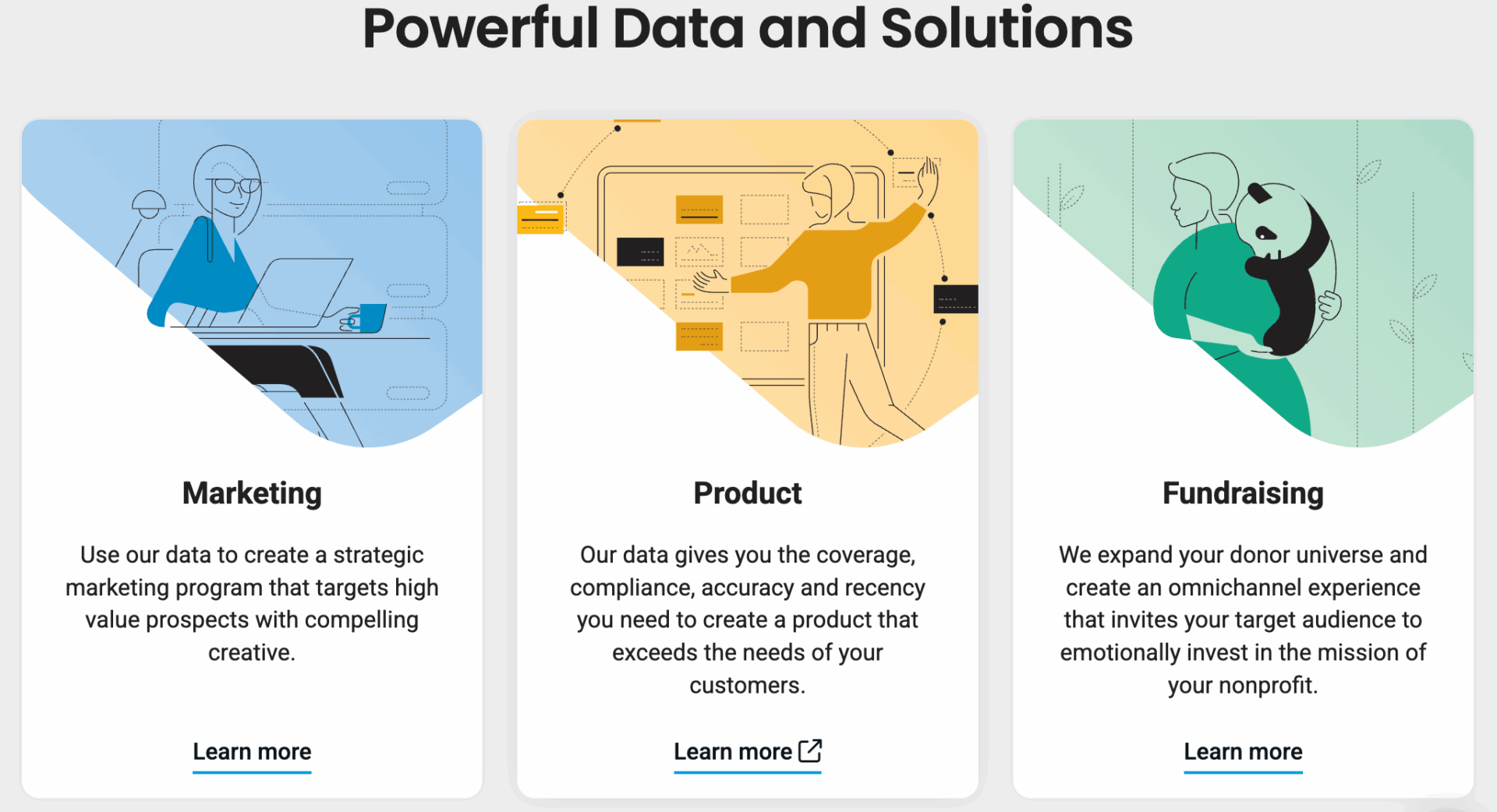
Their brand promise is really easy to see from this changing image that states: Data Axle powers: your marketing/product/fundraising.

Therefore, their brand promise is to help businesses with their data to:
- Create strategic marketing programs
- Create products that exceeds the need of your customers
- To expand the donor list and connect with your target audience.
More than that they mention the following: “Companies, from startups to Fortune 500, license our data to power search engines”.
Search engines require highly accurate and up-to-date data to function effectively. By Data Axle suggesting they meet this need implies a high level of data quality and technological expertise to handle large-scale data needs.
How do they differentiate themselves
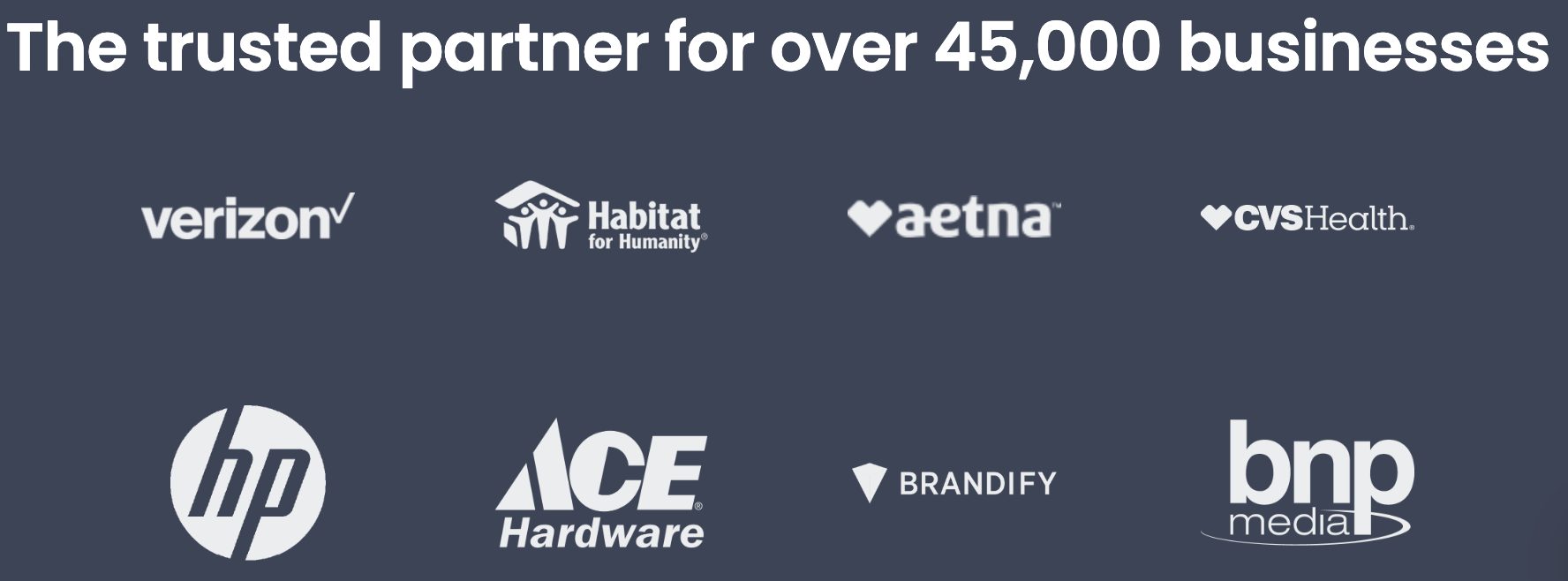
Data Axle mentions how many companies and individuals they have helped so far, which is an impressive number: over 45K.
Among their customers we can find big and important companies from different industries, such as IT, health, education, with the most known being HP, Aetna and CVS Health.
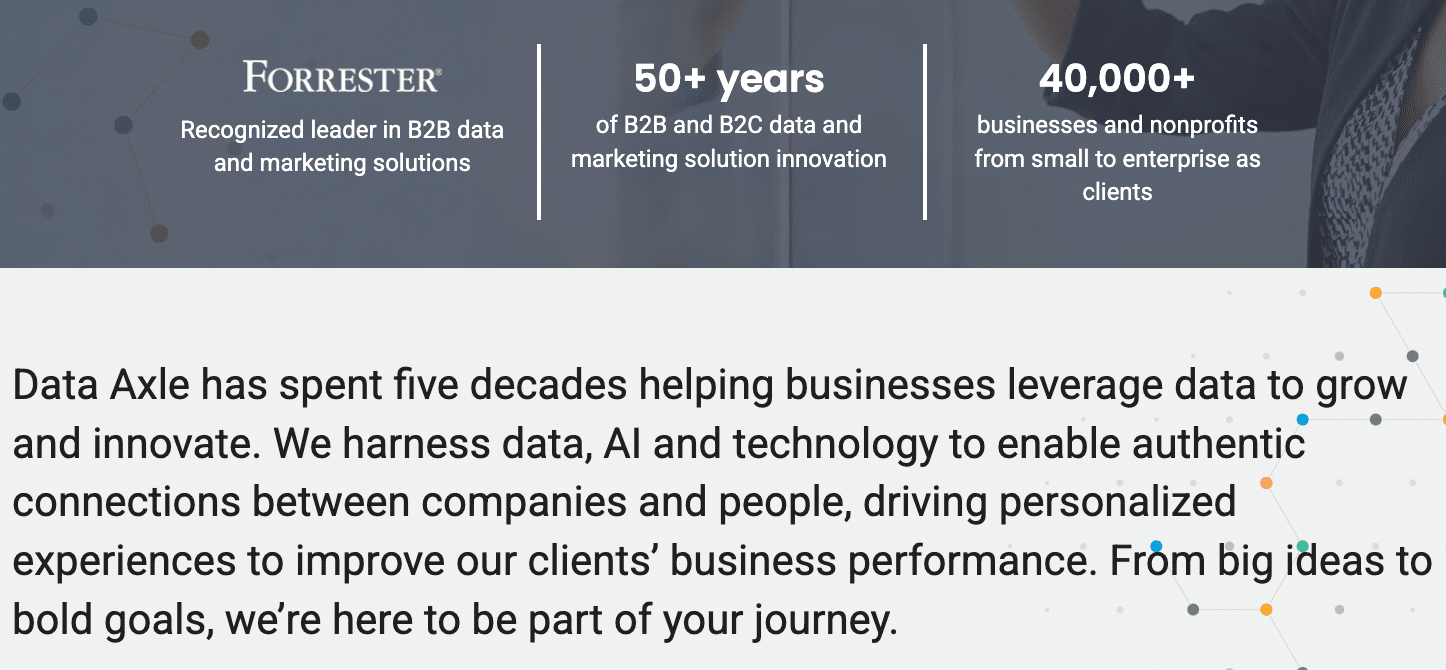
Moreover, they emphasize their expertise in over 50 years of work helping businesses grow and innovate, which can be a huge differentiator. Experience in innovation and growth can provide valuable insights and strategies for businesses.
They also highlight their commitment to data accuracy, and reliability with the statement we take reliability, accessibility, and accuracy seriously.
They put an accent on accuracy to show that Data Axle understands the importance of precise data. Inaccurate data can lead to misinformed decisions, which can have negative consequences for marketing campaigns.
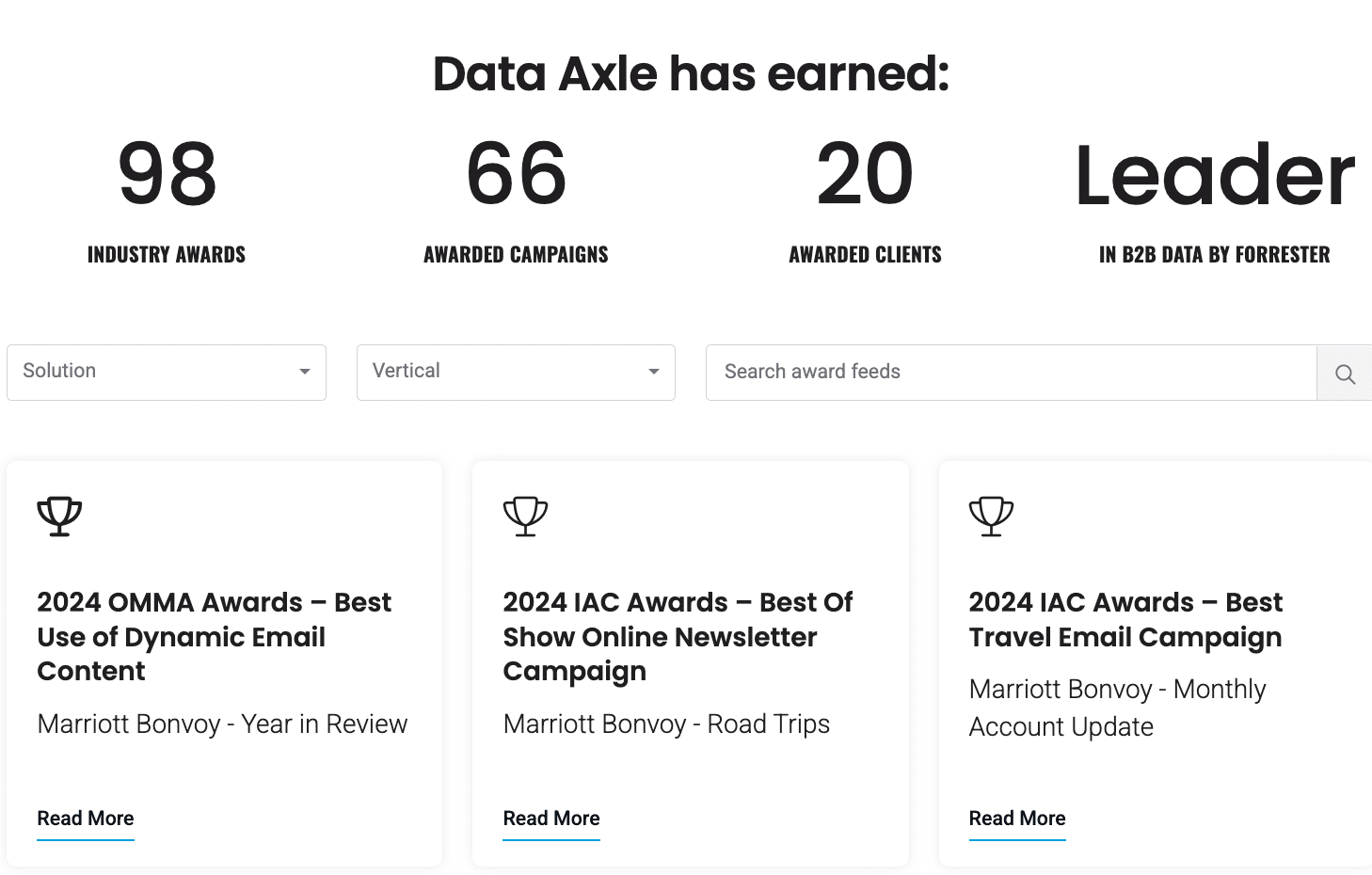
Moreover, in the Resource section they have a dedicated page for Recognition, where they post their awards.
Data Axle’s solutions and products
Data Axle helps companies and individuals by need and verticals. Their customers’ needs are the following: acquisition, intelligence, retention and data licensing.
What do they do?
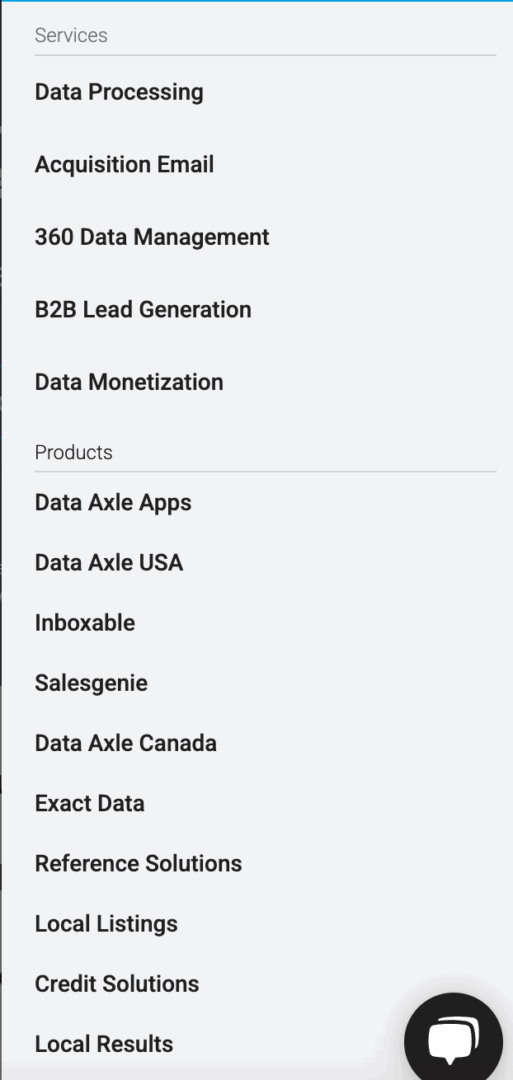
One of their Services mentioned at the bottom of the page is “The Axle Agency”. The Axle Agency is part of Data Axle and it’s focused on performance-driven marketing solutions. We like how they integrate data and marketing expertise. The agency model helps Data Axle maintain a strong position in the market, because this way they are offering complex services that go beyond data provision.
Social Media Strategy
In this section, we will analyze the social media presence of Data Axle’s C-level professionals and how the company is using social media channels to create demand and generate leads.
Data Axle’s Leadership
1. Andrew Frawley – CEO of Data Axle
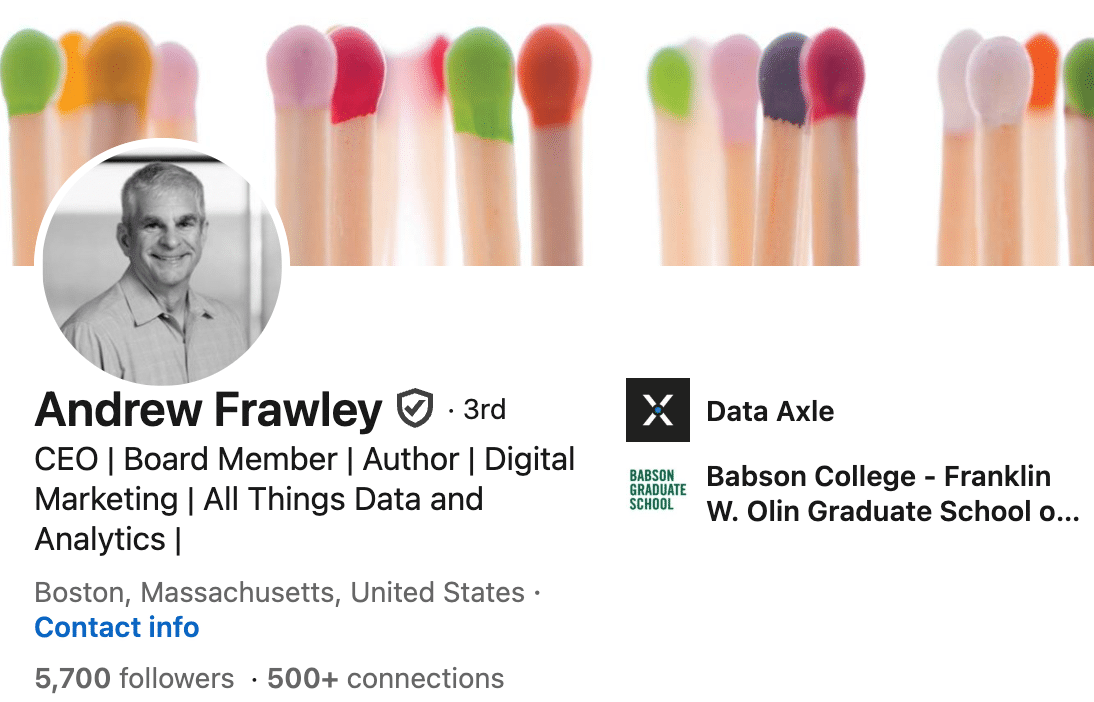
The CEO, Andrew Frawley, has 5,700 followers on LinkedIn. From a quick look, we can see that the CEO has both original posts and reposts, with the last being the more common one. The CEO reshares most of the company’s post to increase the visibility.
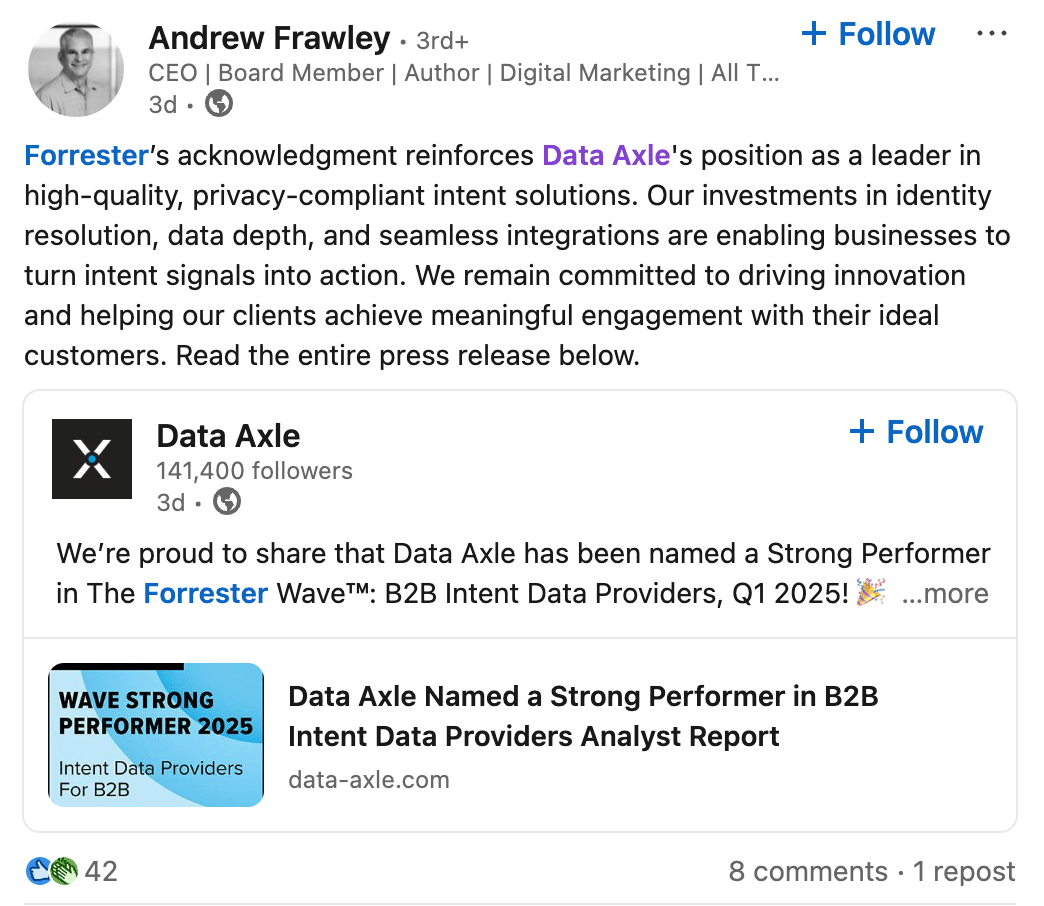
The CEO posts whenever the Data Axle has won a recognition and/or an award.
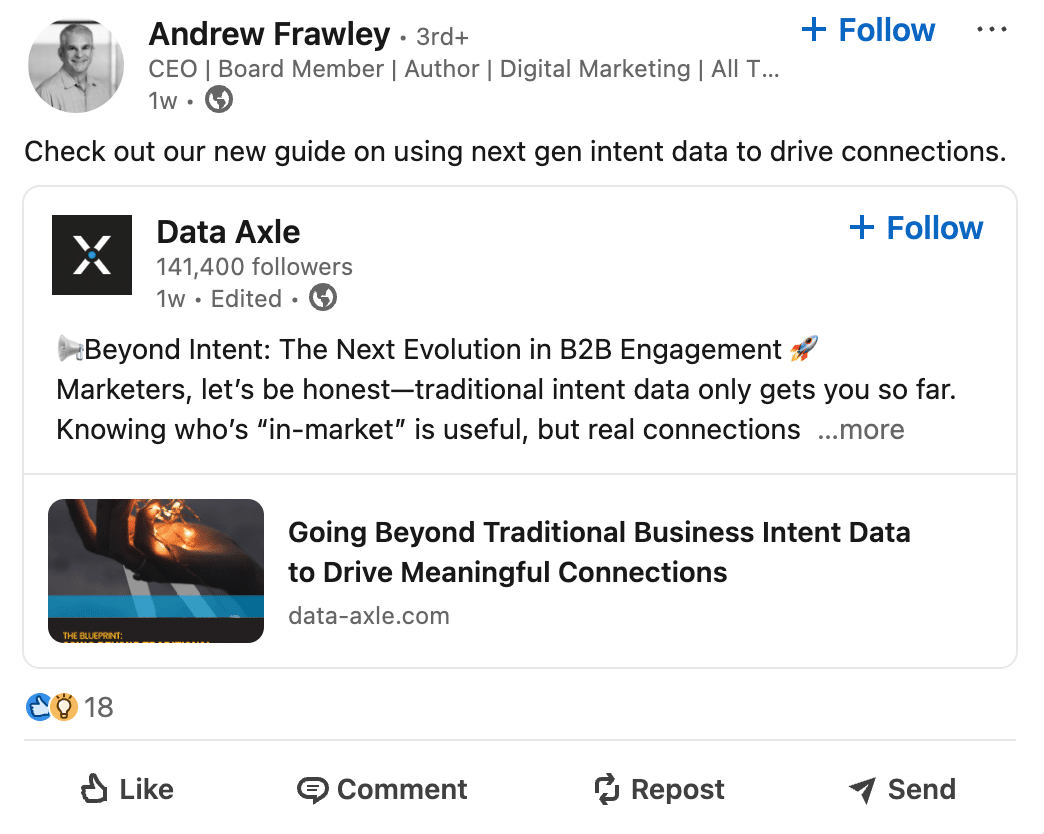
Sometimes the CEO promotes the marketing materials of Data Axle or their products. In this way, the CEO acts as a brand ambassador too.
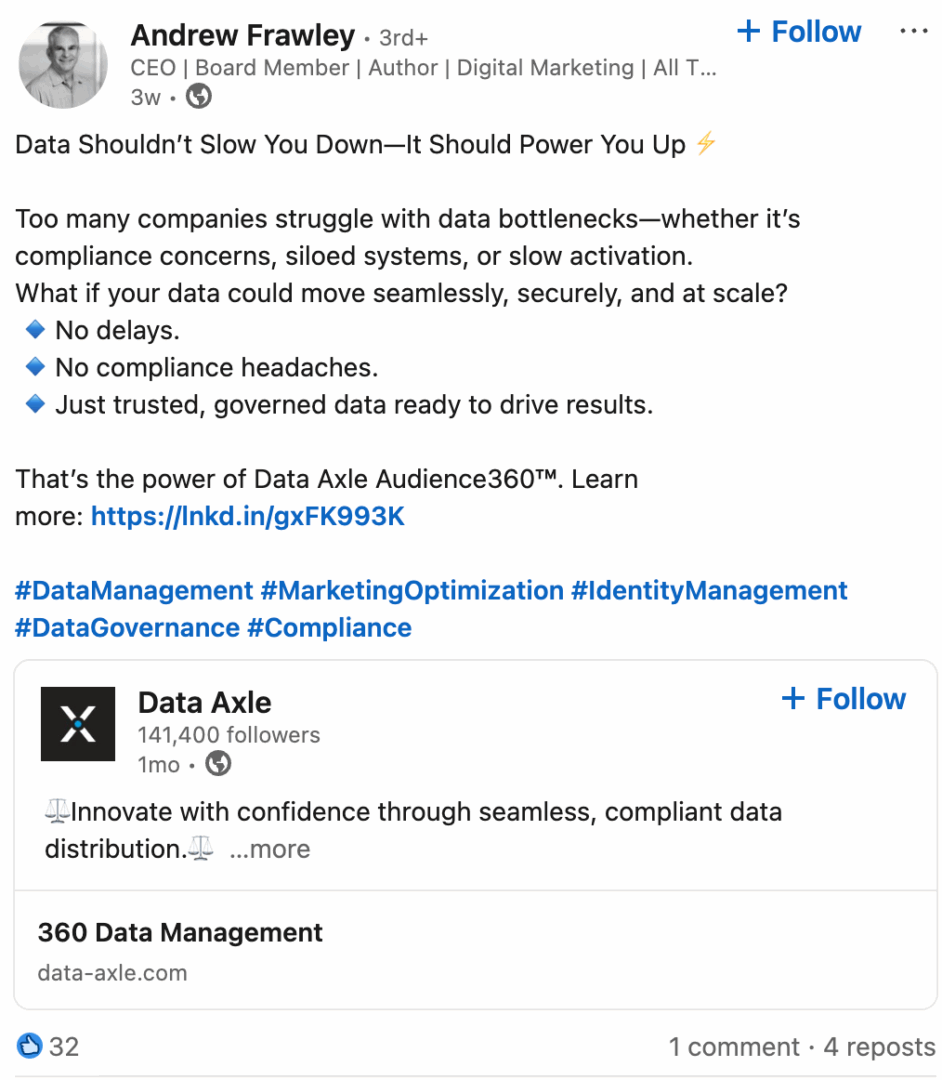
Moreover, Andrew Frawley posts about the company’s culture and the life of Data Axle. He even use specific hashtags for this pillar, like: #LifeatDataAxle #StrongerTogether #CultureofExcellence.

This post from above is his best-performing post, with 211 reactions. In general, the CEO’s posts typically receive fewer than 50 likes. Andrew Frawley sometimes responds to comments on his posts or likes some of them.
2. Kara Alvarez – Senior Vice President Marketing at Data Axle
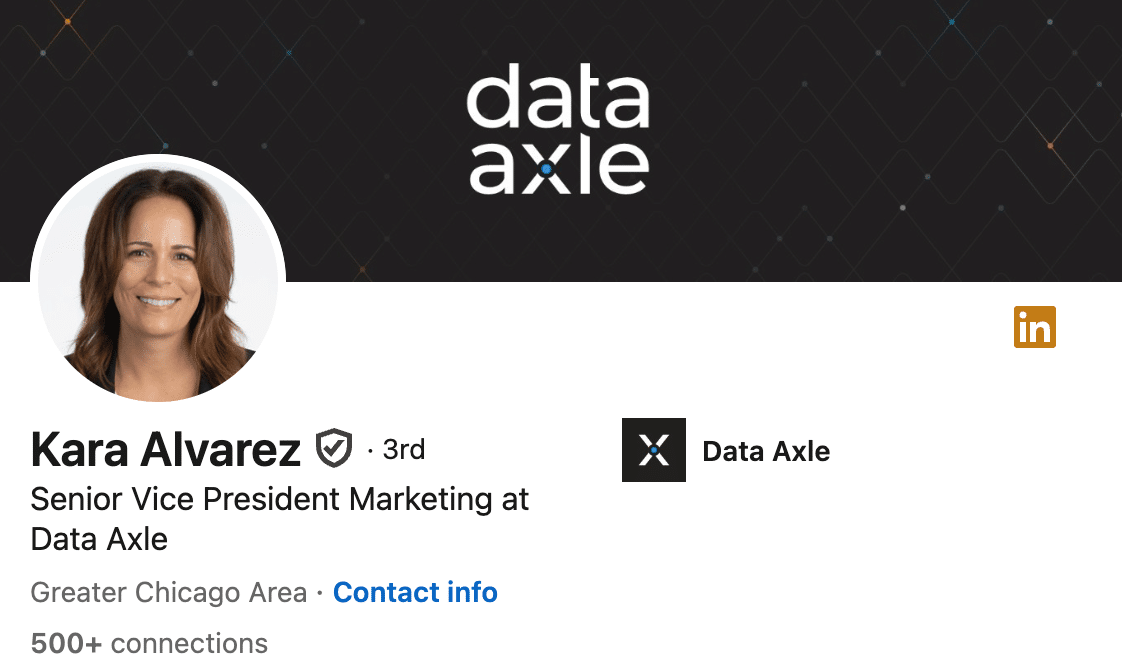
The VP of Marketing has 1,129 followers on LinkedIn. Unfortunately, the VP of Marketing has little to no original posts, most of her posts being reposts from Data Axle.
So, yes, the VP posts less than the CEO. But why is that (in general)? The CEO typically has a more important role in representing the company. They often use social media to share company news, thought leadership, and personal insights, which can be more extensive than what a VP might share. The VP of Marketing might focus more on specific marketing initiatives rather than overarching company strategies.
Next, we move on to the company’s social media presence.
Data Axle’s company presence

Again, on LinkedIn, Data Axle has 141K followers, with an average number of over 20 post per month. They often use text + image format, polls and text + video. Their engagement rate varies a lot. For example, when they share blog posts they either get a decent amount of reactions or extremely little reactions.
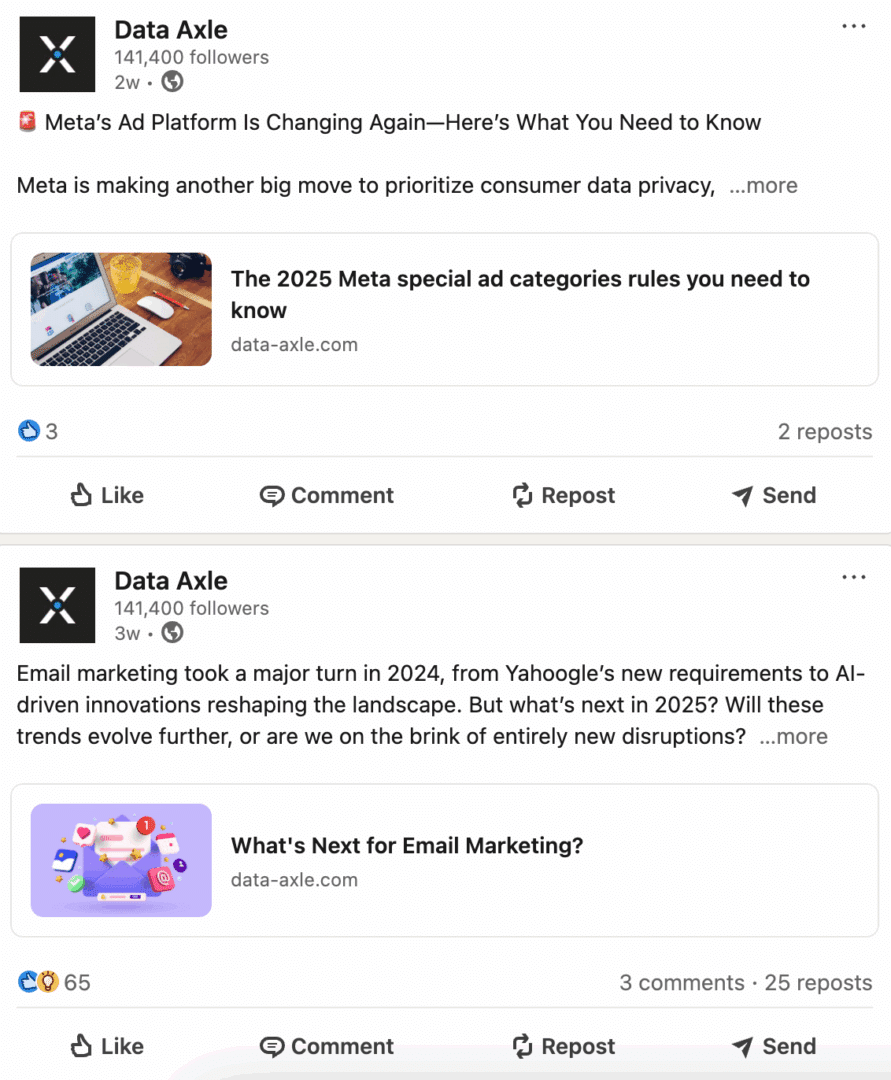
We have also noticed that they do not respond to the comments from their posts, but sometimes they respond with a like.
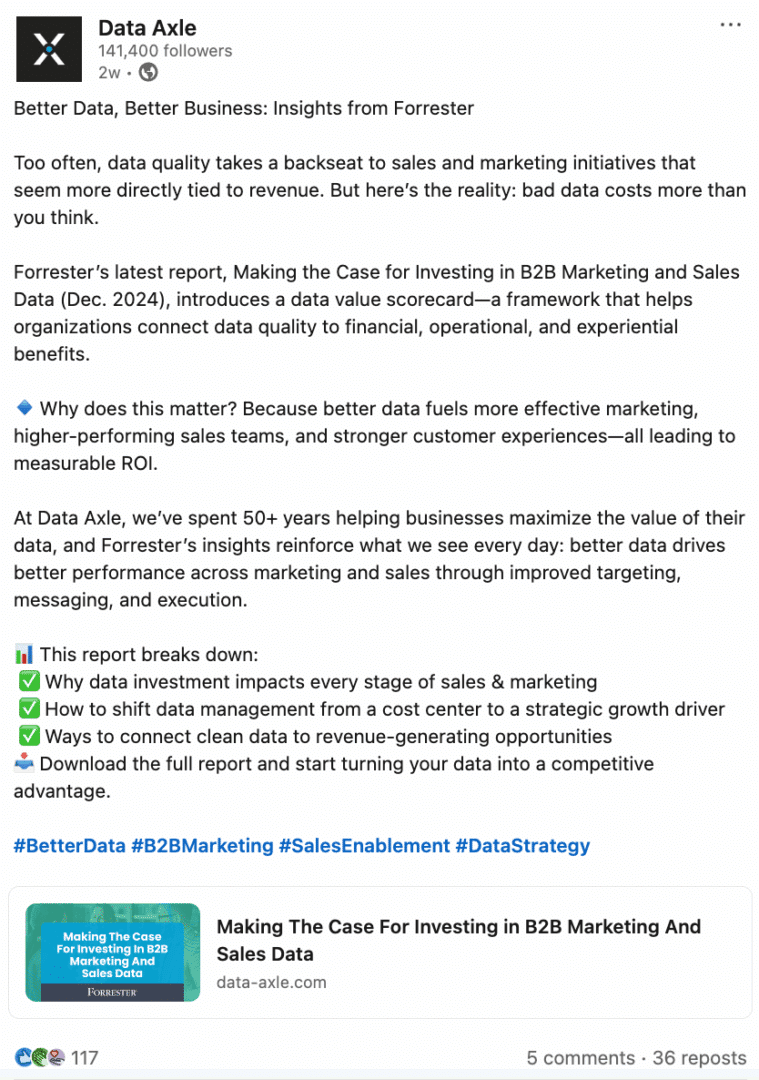
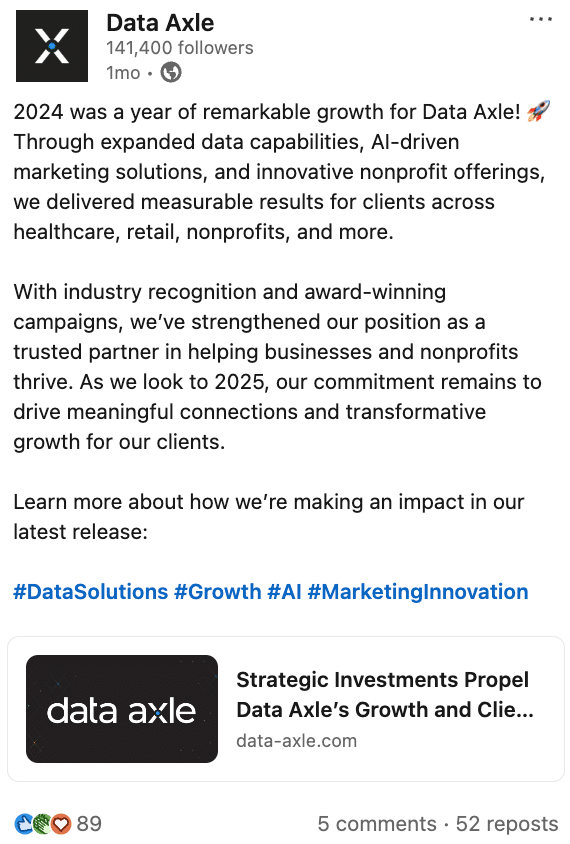
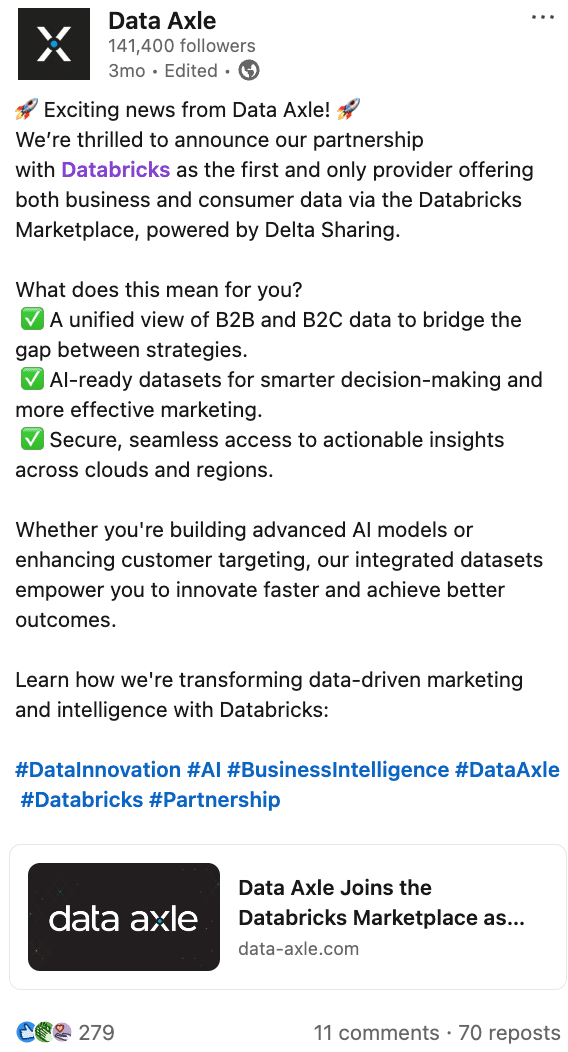
Their best performing posts are about: A Data Axle report about intent data, a blog post and a post announcing the partnership with Databricks.
What are their content pillars?
1. Authority and credibility building This content pillar is for creating content around Data Axle’s awards, recognitions and social proof and to establish credibility and authority. For this content pillar they use the #ForesterWave hashtag.
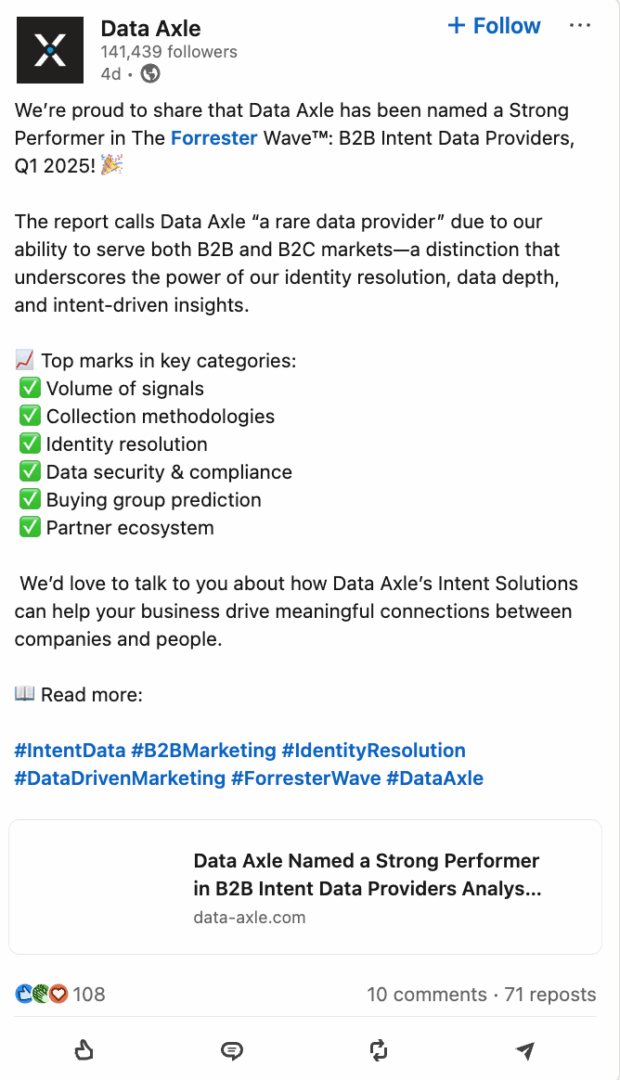
They emphasize their “rare” ability to serve both markets (B2B and B2C), differentiating themselves from competitors.
2. Data Axle Event-Based Marketing and Networking
They are participating in major industry events and therefore they decided to share some of them with us. Sometimes, the posts in this content pillar are presenting their new solutions.

They also gave us a specific contact (Sean Welsh) for scheduling meetings at the event, a direct lead generation strategy.
Another example:

3. Educational content
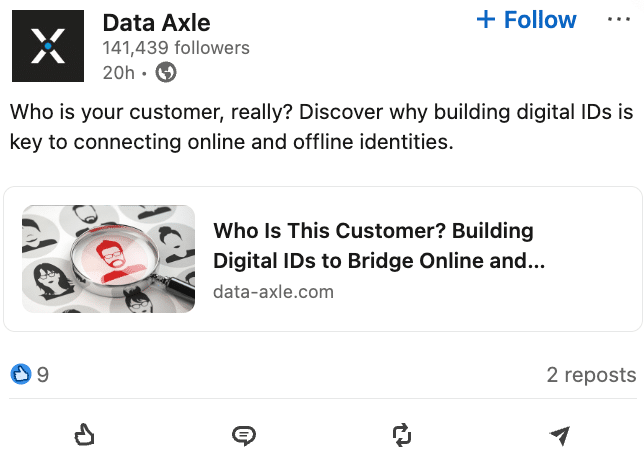
We have seen a lot of their posts belonging to this content pillar. They mostly share their blog articles or other assets from their resource center.
So, considering that they share many articles from their blog, it indicates they are investing a significant amount of time into creating content and establishing themselves as thought leaders in their industry. You will notice they even have a resource section called ‘Data Axle Thought Leadership’.

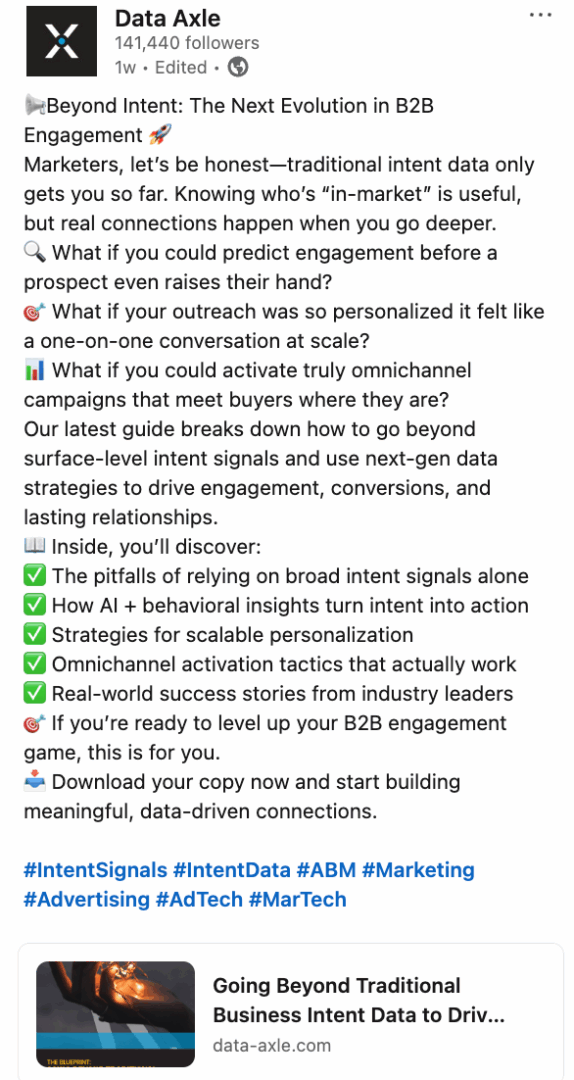
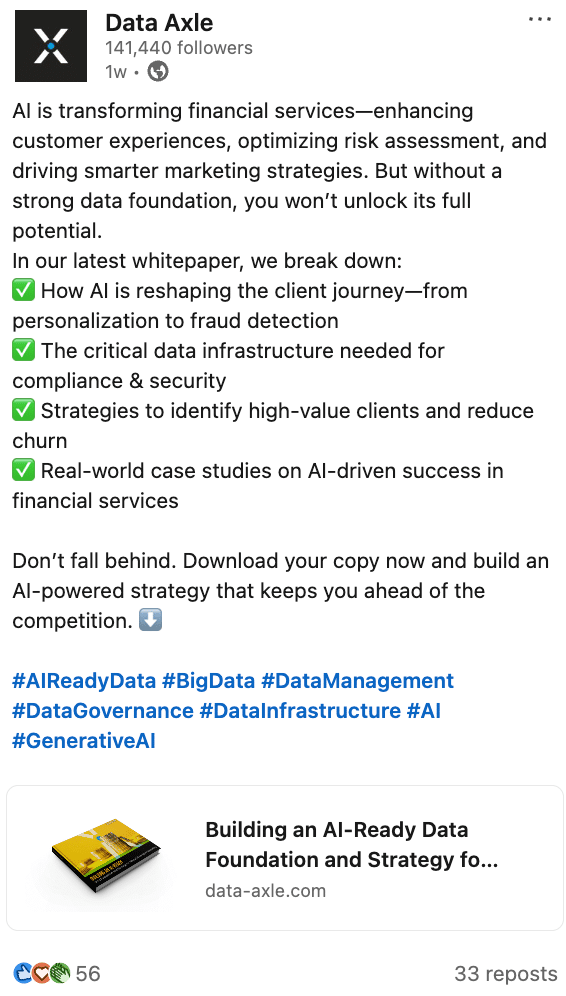
Sometimes Data Axles promotes its gated content on LinkedIn. For example, in the post below they are promoting a report: “Building an AI-ready data foundation and strategy for financial services marketing” which can be accessed by providing contact details. This post is mostly designed to generate leads, as the CTA mentions: “ Download your copy”.
4. Case studies

5. Promoting The Axle Agency
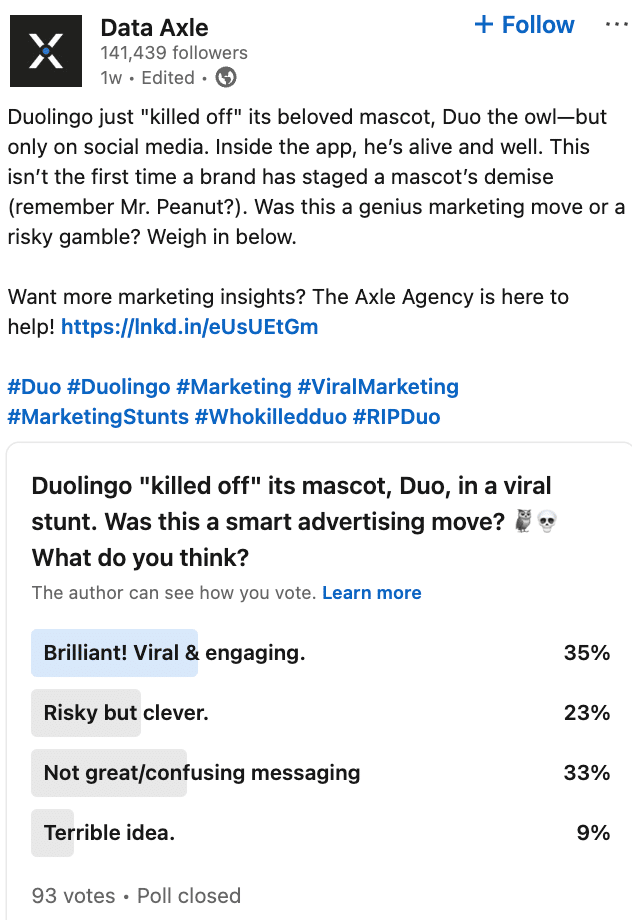
Although this content seems like it’s for entertaining the audience and creating engagement, it has a different purpose: promoting the Axle Agency. For example, in the post below, we can see that the CTA at the end encourages users to check their offers and how the agency can help them. If you want to know what the goal/purpose of a post is, check its CTA.
6. Entertainment
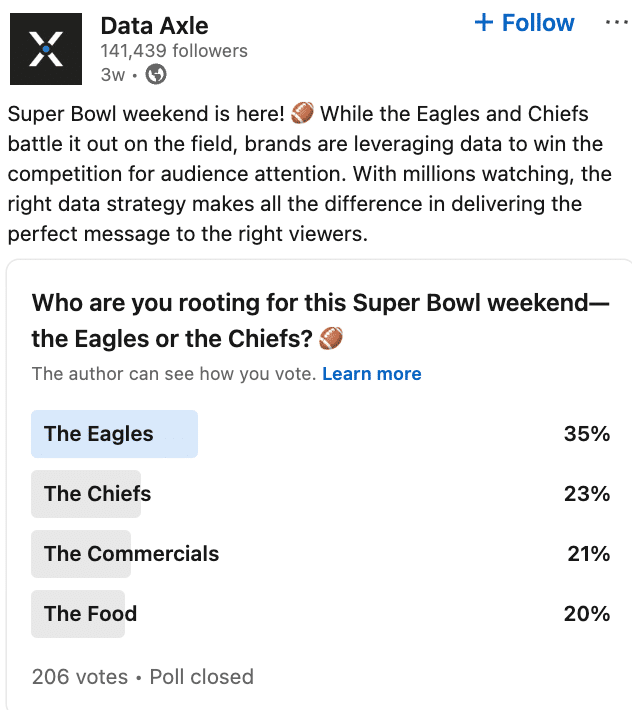
7. Data Axle’s services & products
This content pillar is dedicated to their services and products.
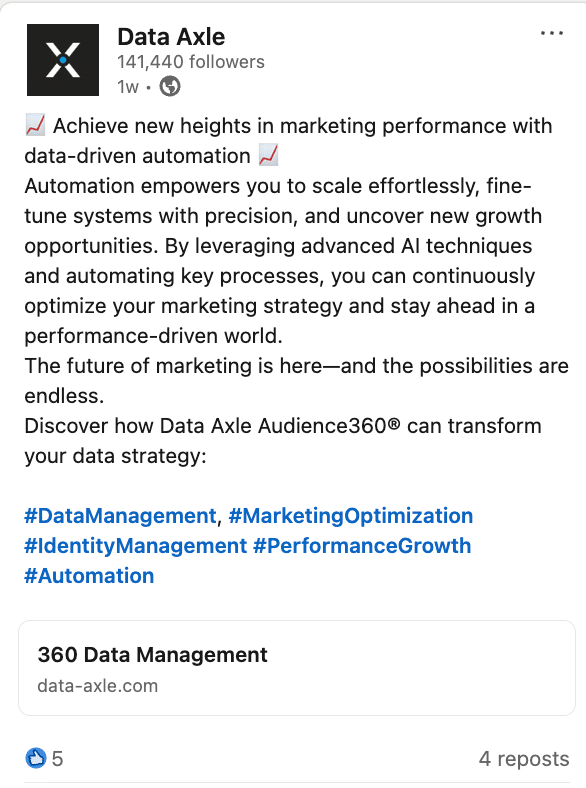
It directly promotes their “Audience360®” product as a solution to transform data strategy. The call to action encourages readers to “Discover how Data Axle Audience360® can transform your data strategy,” driving traffic to their website. The post description shows the value proposition of their solutions with statements like: “scale effortlessly,” “fine-tune systems with precision,” and “uncover new growth opportunities.”
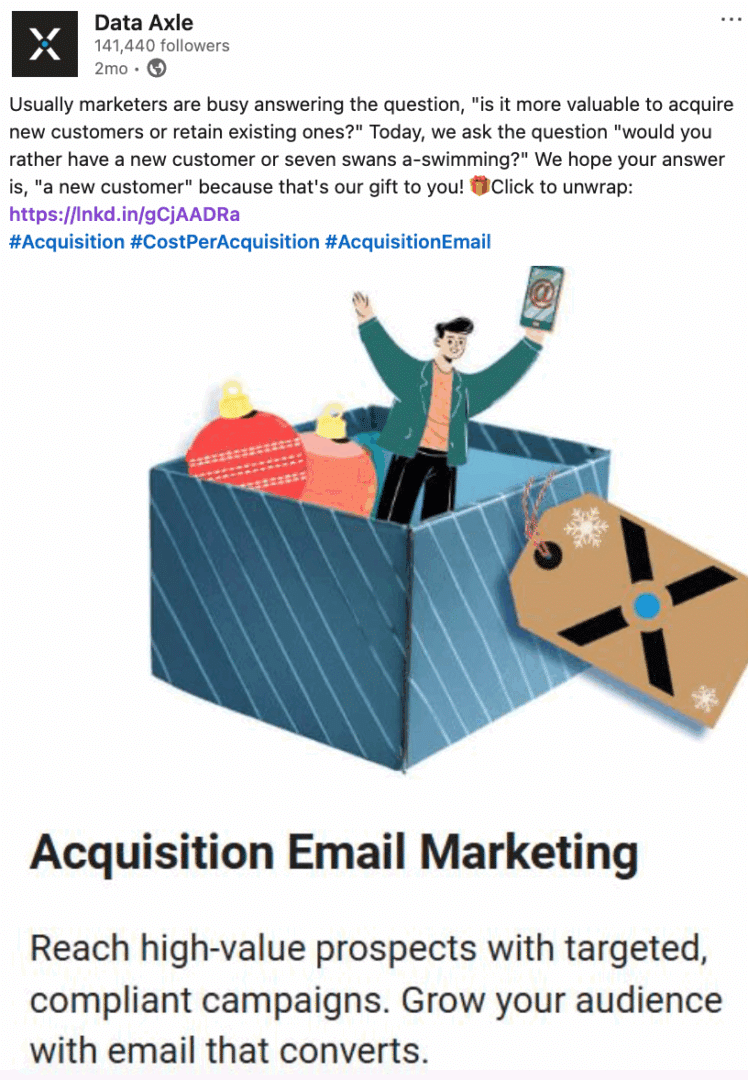
8. Industry curation and thought leadership
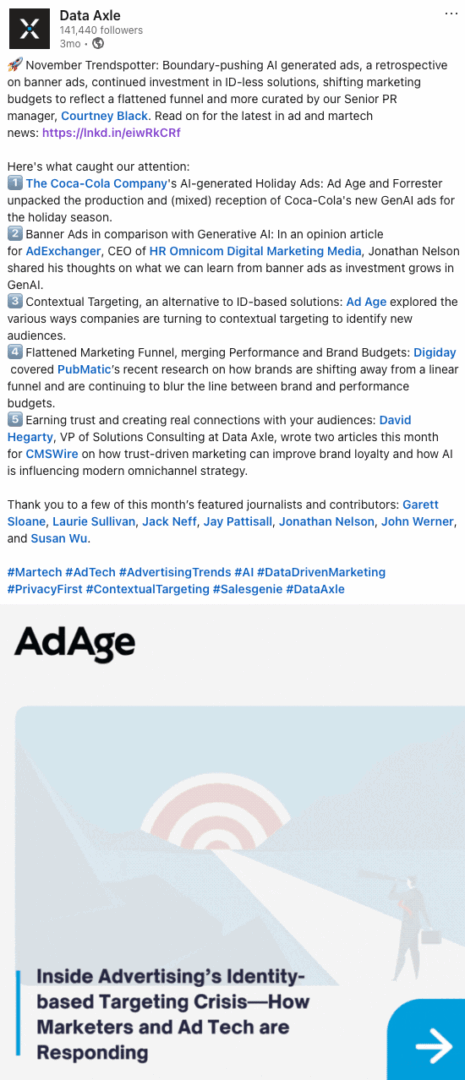
They provide a curated list of key trends and news in the advertising and marketing technology space. Why? They are seen as a valuable source of information for keeping up with industry developments.
They promote and share content from other industry sources (Ad Age, Forrester, AdExchanger, Digiday, CMSWire).
Overall marketing strategy
A primary focus is capturing leads through gated content, event promotion, and solution-oriented posts. They invest heavily in content that positions them as industry experts and thought leaders.
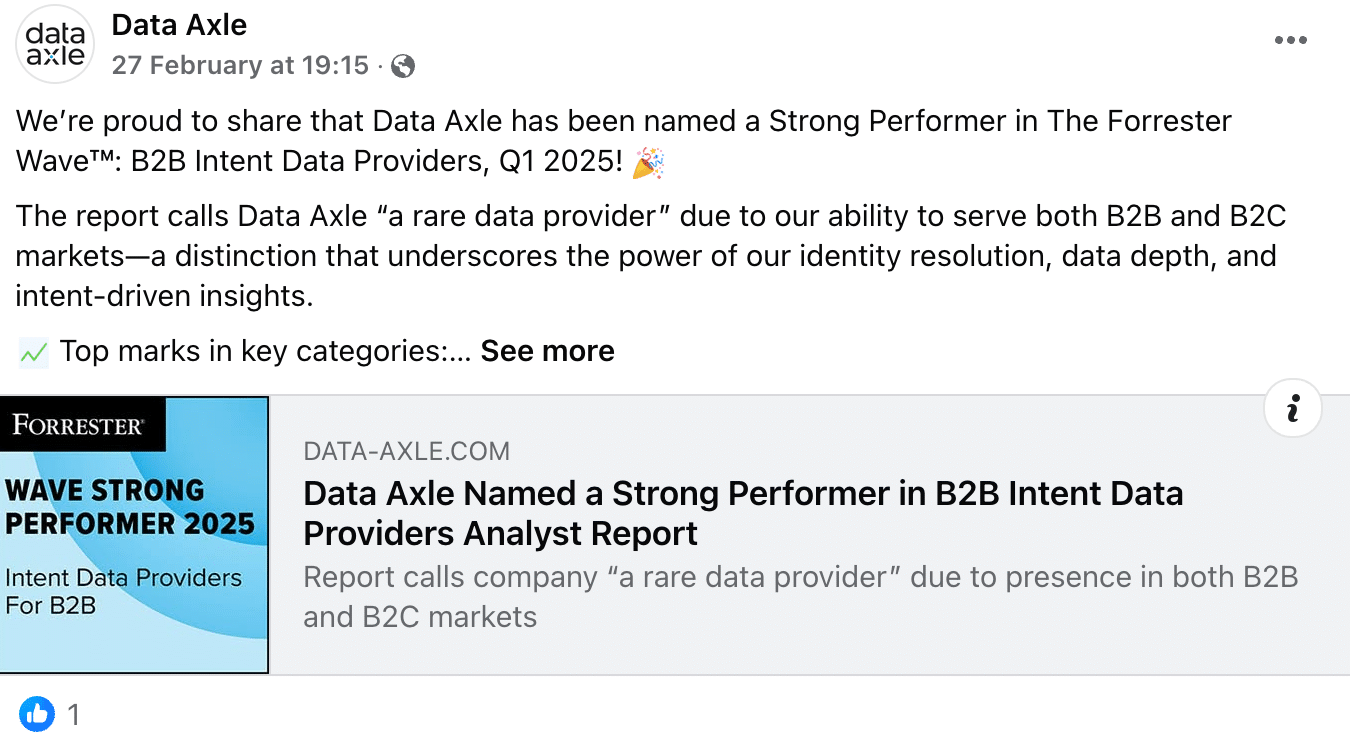
On Facebook they have 291 Likes and 377 followers, with an average of over 20 posts per month. They post the same content as on LinkedIn, which is a common practice. Most of the time they post education content, namely blog articles from their website. Sometimes they post case studies, events they participate at, or they promote their services. Their engagement is low to none, with some posts that have 0 reactions.
There are some posts that are Facebook original, like this one:

However, this is posted on LinkedIn and it has exactly the same description.
X (formerly Twitter)

They have 3K followers and 4K following on Twitter (in 2025). At first sight, we can see that the content here is different from LinkedIn and Facebook. It appears that Data Axle is posting almost daily on X. This indicates a consistent effort to maintain an active presence and engage with their audience.
They share insights on topics like data-driven automation, AI in financial services, and data quality, positioning themselves as experts.

They promote industry events like LiveRamp’s RampUp 2025 or other events, to show their involvement and encourage participation.

The number of likes and reshares varies across posts. Some posts receive higher engagement (e.g., the Duolingo mascot poll with 72 likes), while others have lower engagement (e.g., the Valentine’s Day tweet with 26 likes). The number of views is also quite low, rarely going over 40 views per post.
YouTube
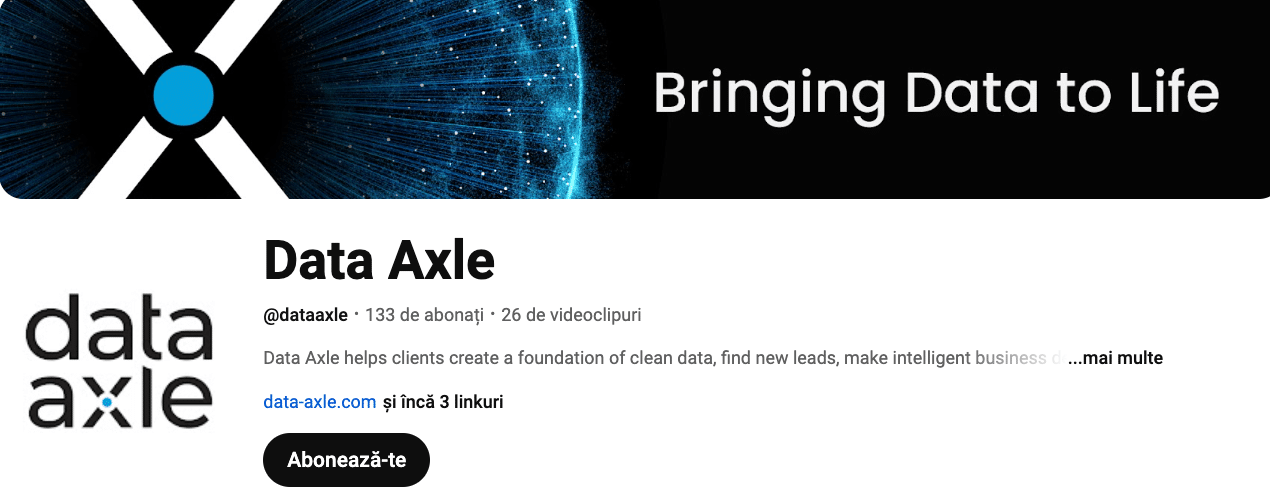
On YouTube Data Axle has 133 subscribers and 26 videos so far. As of 4 March 2025, they have 292.229 views in total.
They have 4 playlists:
- The future of customer acquisition.
- On-demand webinars for non-profits
- Data overviews
- On-demand webinars
The length of their videos varies, from 1 minute to a few hours.
Their post popular video is this one:
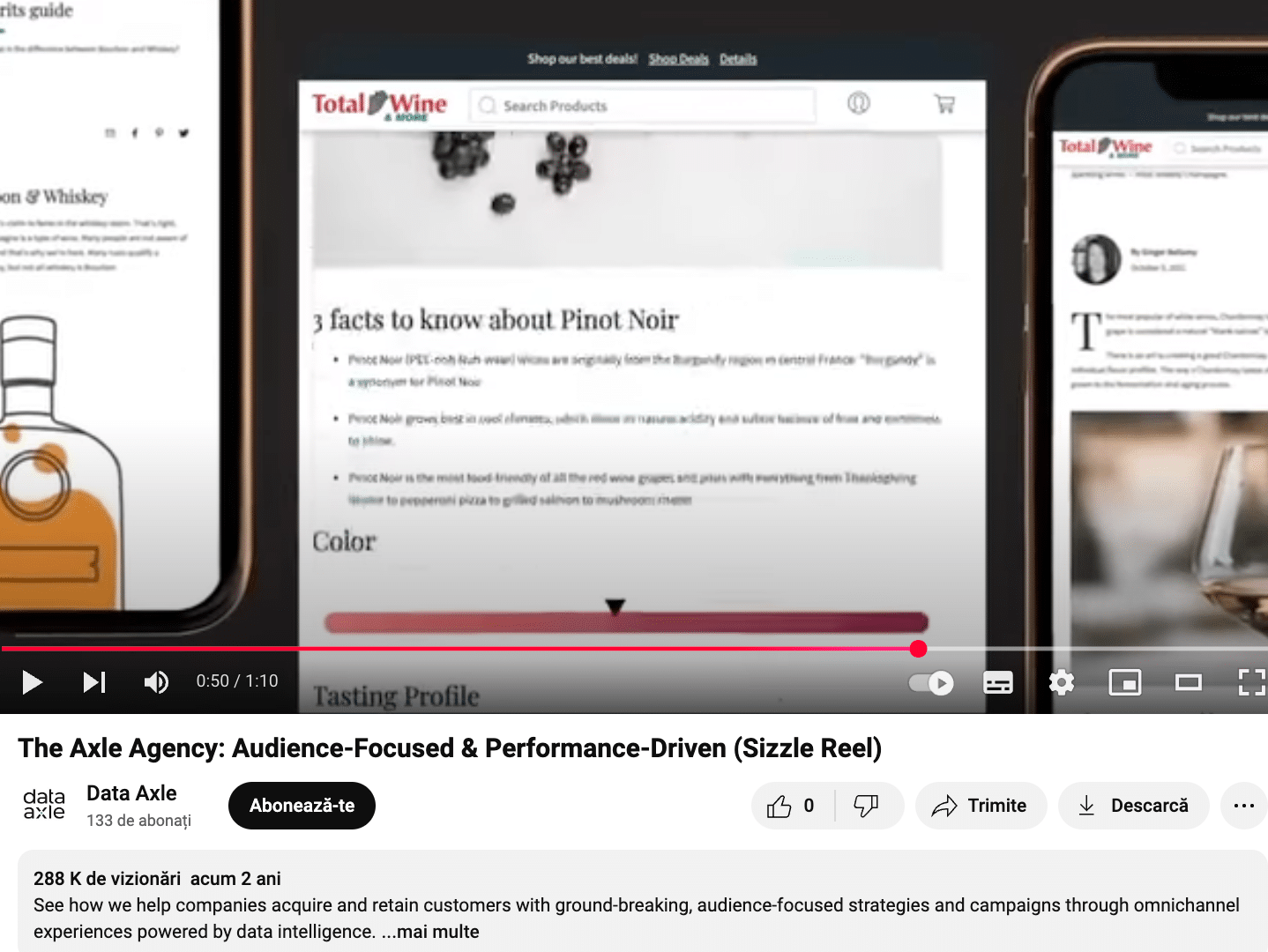
But in general, they have less than 100 views on a video. More than that, they do not post very often, with a frequency of one every few months.
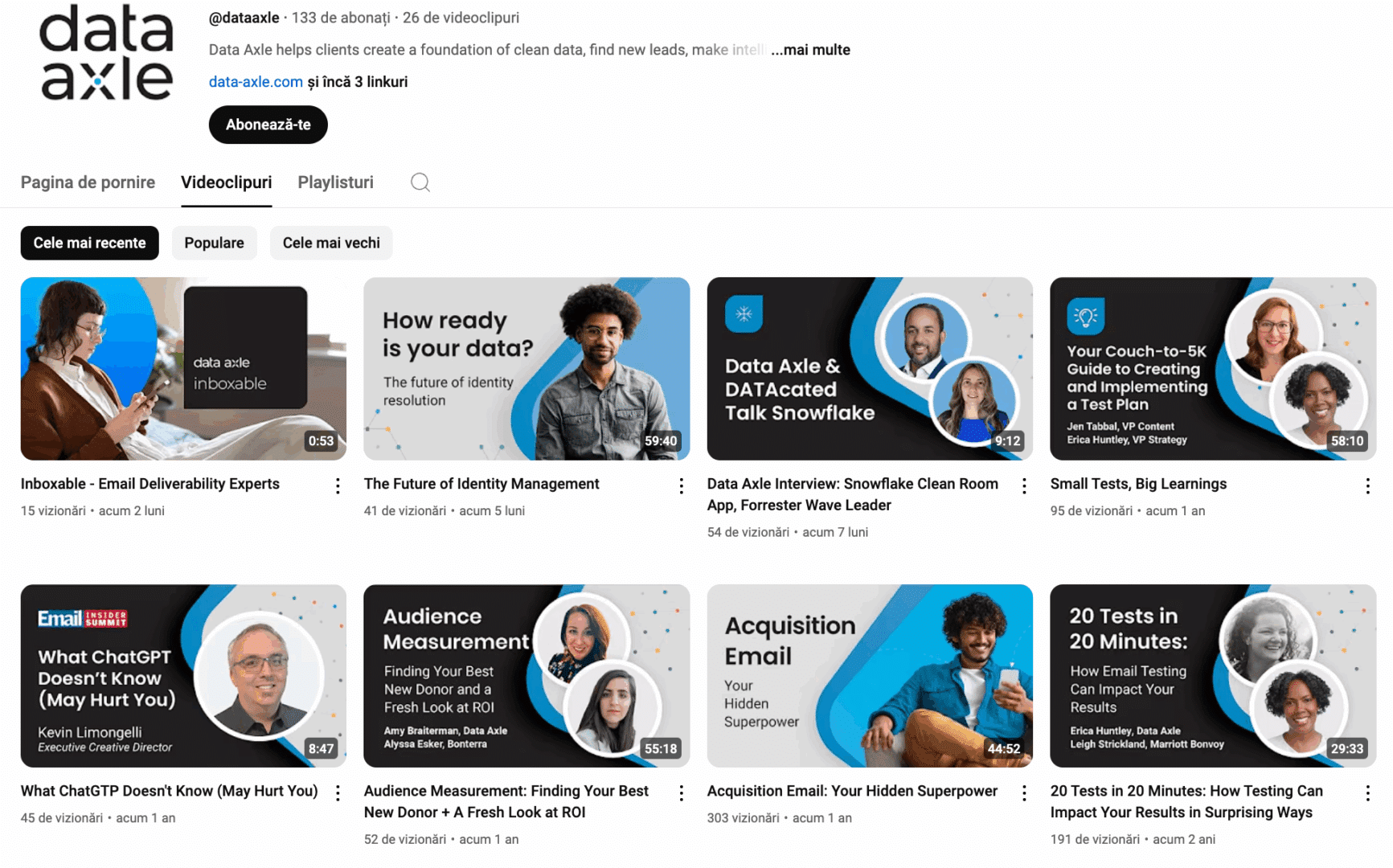
They have voiceover videos, but also a host who presents the content.
In general, in the description of their videos we will find the topics they will cover:
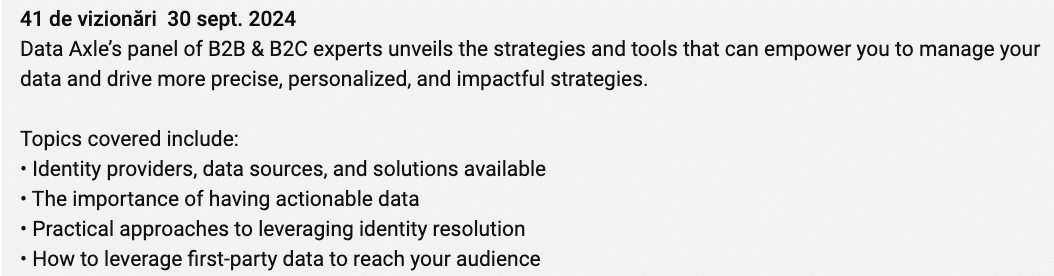
They also use different CTAs, such as a short sequence with “Contact us”, or “Contacts us for a demo”.

Social media strategy analysis
Goals:
- Show they know their stuff: They share expert knowledge (articles, reports) to build trust and credibility.
- Get potential customers: They want people to reach out and learn more about their products.
How they do it:
- Lots of posts: They post regularly on LinkedIn and Twitter to stay top-of-mind.
- Mix it up: They use different types of posts: text, images, videos, and polls, to keep things interesting.
- Share what’s new: They post about industry trends and news to show they’re in the loop.
- Helpful tips: They offer advice and insights on data and marketing.
- Show off their work: They share examples of how their products help businesses.
Now, we will start analyzing their content in more detail. We will have a look at Data Axle’s demand generation strategies, with a focus on their content marketing.
Demand Generation Strategy
Data Axle’s Blog
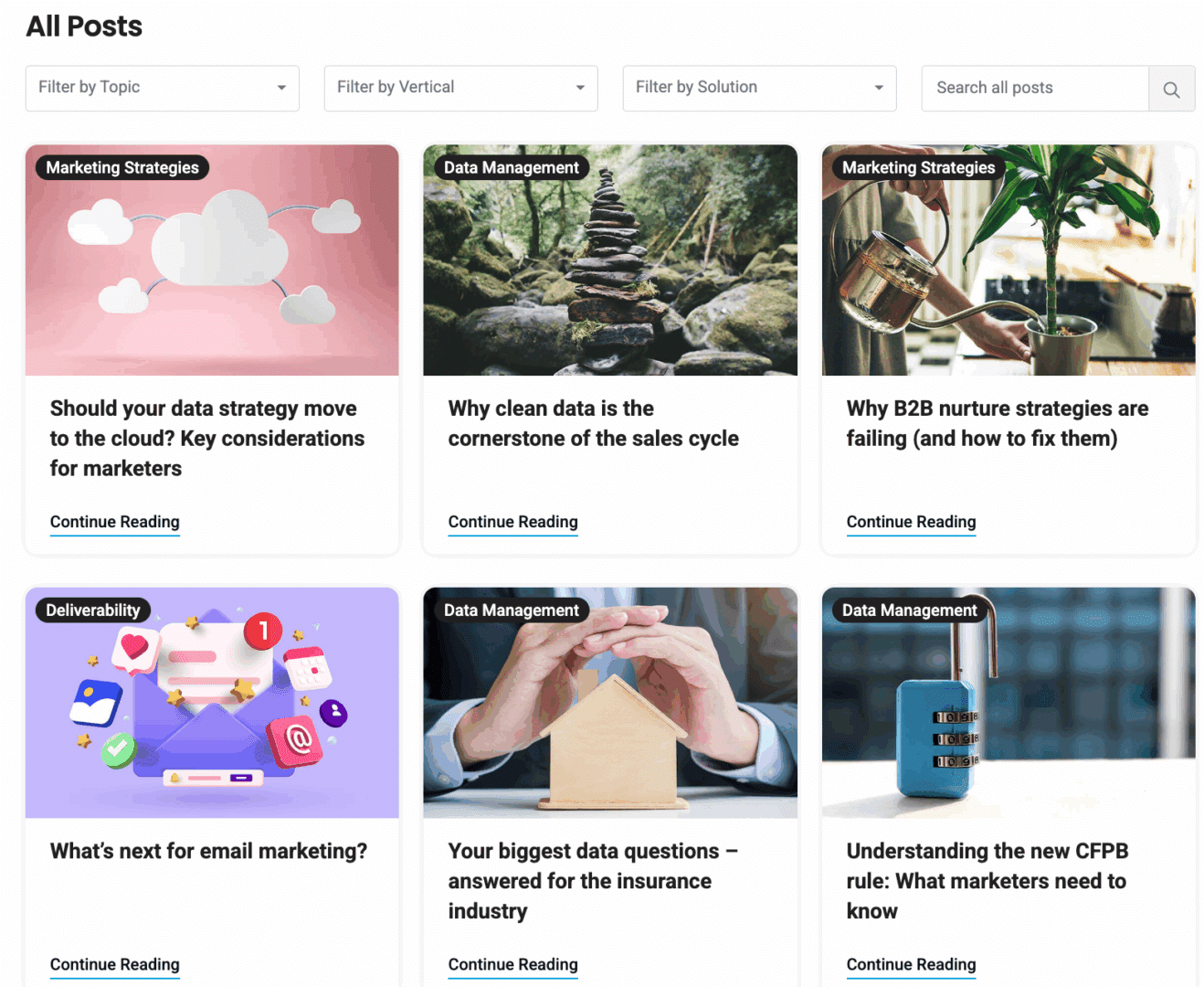
They have 22 topics, including data, AI and marketing. These topics are categorized within 4 solutions: Acquisition, Data Licensing, Intelligence and Retention.
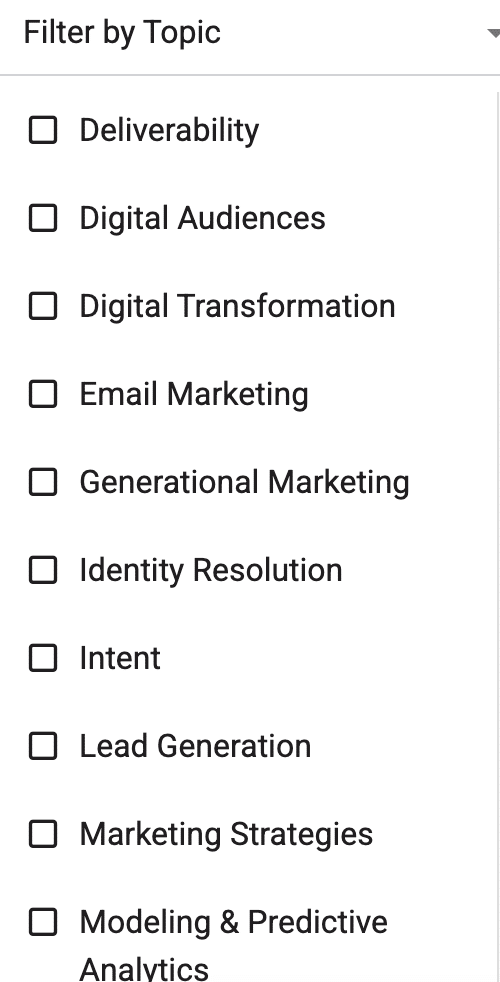
The majority of the articles focus on topics related to data management, data quality, data privacy, and how data can be used to improve various marketing strategies, such as email marketing and omnichannel marketing.
The blog is well-organized with categories and filters that makes it easy for readers to find content relevant to their interests.
Marketing goals
- Lead generation
- Thought Leadership
- Website Traffic
- SEO
They post around 4-5 blog posts per month. Their articles typically have around 1,000 words and on average, their articles include one Heading 1 and 4-6 Heading 2s. They do not include images in their content, except for the header image/cover image.
In some articles, they use backlinks to promote other blog posts:

They often include statistics in their posts and end the article with a call-to-action (CTA), such as:
- “We’d love to talk to you…”
- “Have a question? Get in touch.”
- “Want to learn more? Don’t be shy. Contact Us.”
Or they might include a sales pitch like: “With solutions like those offered by Data Axle, organizations can enjoy the best of both worlds: data that is both abundant and accurate.” Now let’s open an article and analyze it. We choose this one:
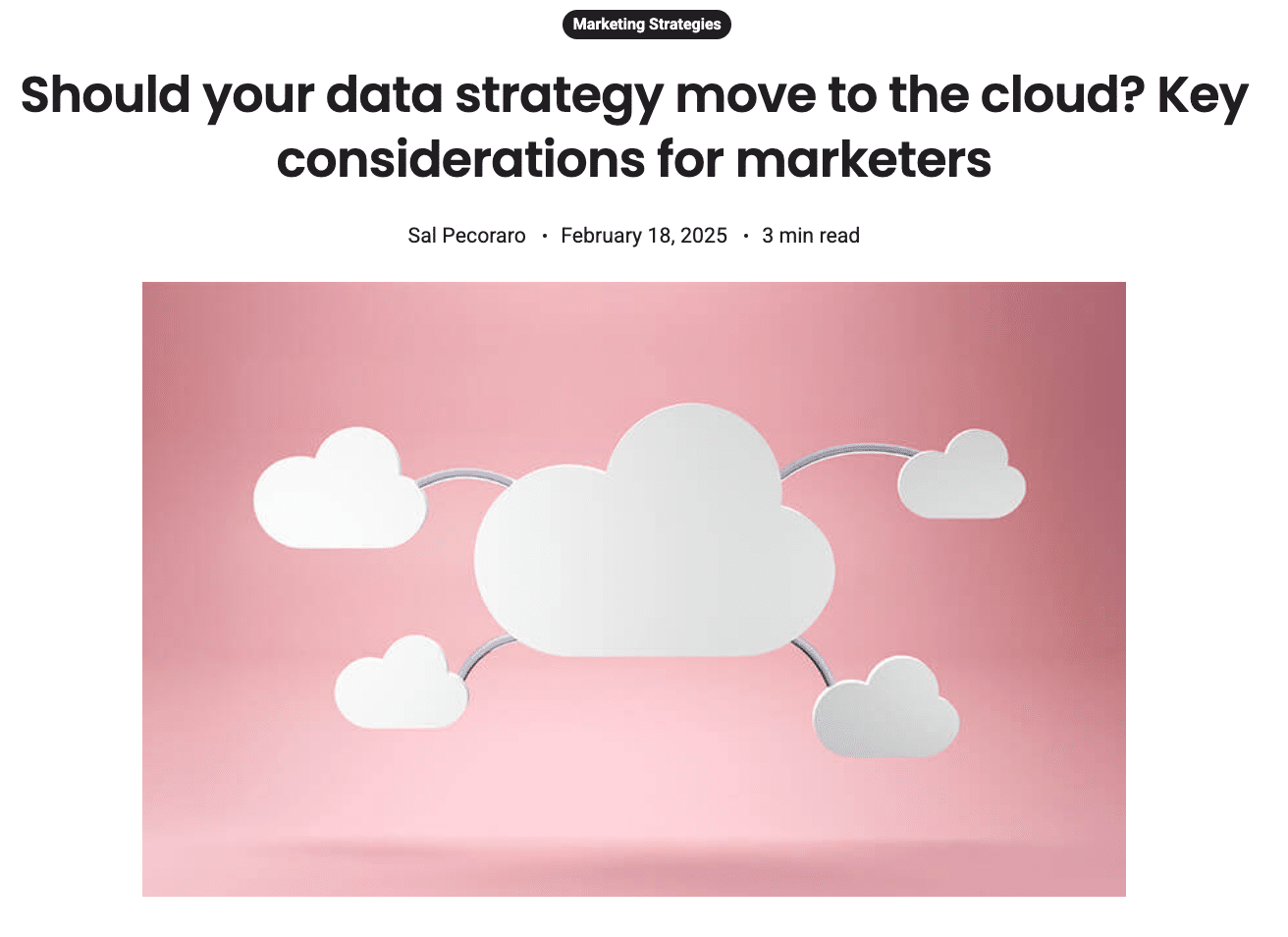
The article is well-written and easy to understand, even for those who may not be tech-savvy. The use of data and statistics (“402.74 million terabytes of data are created by consumers each day”) adds credibility and emphasizes the importance of data management. In general, Data Axle uses statistics in their content, which is a great tactic to ensure the reader that they know their stuff.
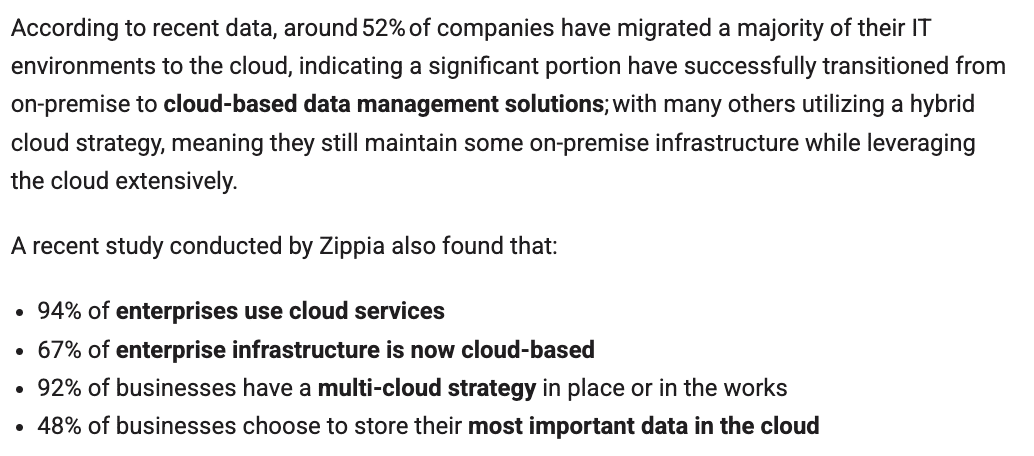
The article likely targets relevant keywords (e.g., “data strategy,” “cloud marketing,” “data management”) to improve search engine visibility.
At the bottom of the page, they promote their newsletter.

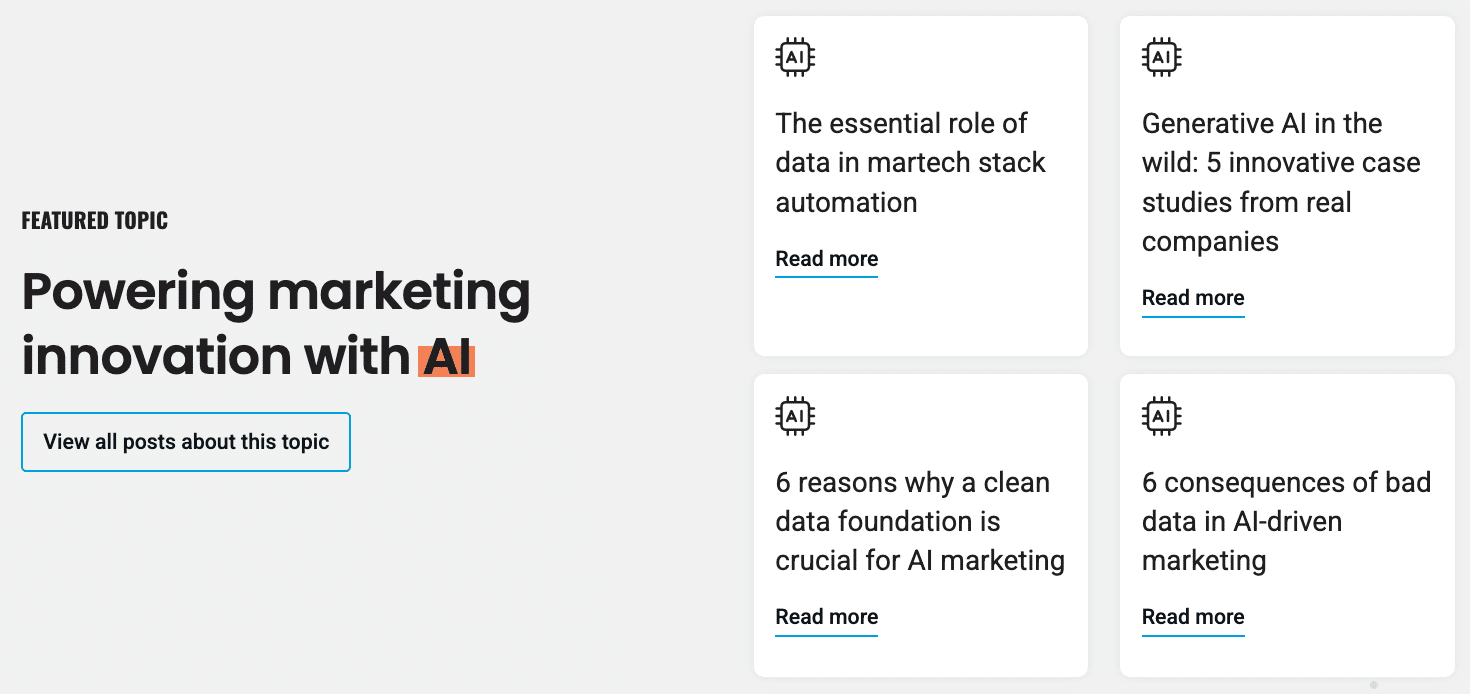
More than that, they have a section called “Featured Topic” promoting their marketing-AI services. In this section, they recommend some articles related to martech.
Data Axle Thought Leadership
This page serves as a central hub for their valuable content, including reports, whitepapers, and other resources. This demonstrates their expertise and provides valuable information to their target audience.
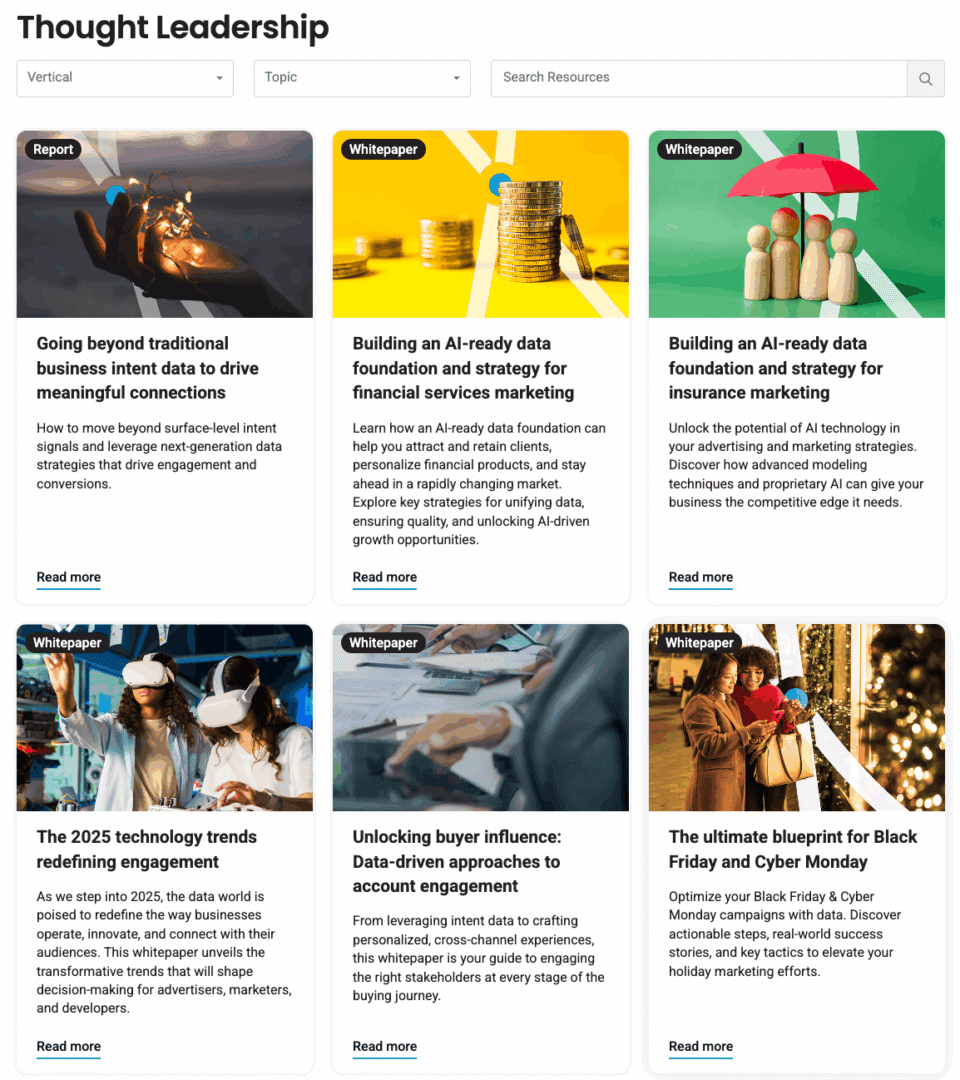
The titles and descriptions of the resources are clear, concise, and highlight the value proposition for the reader.
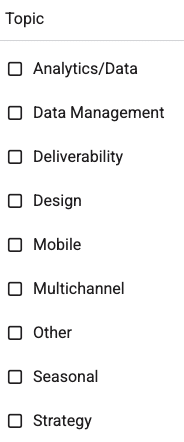
Again, the page is well-organized with categories and filters, making it easy for visitors to find relevant content. Here they have 9 topics and 7 verticals (industries), such as: Retail, Insurance, Financials Services, B2B Technology, Government.
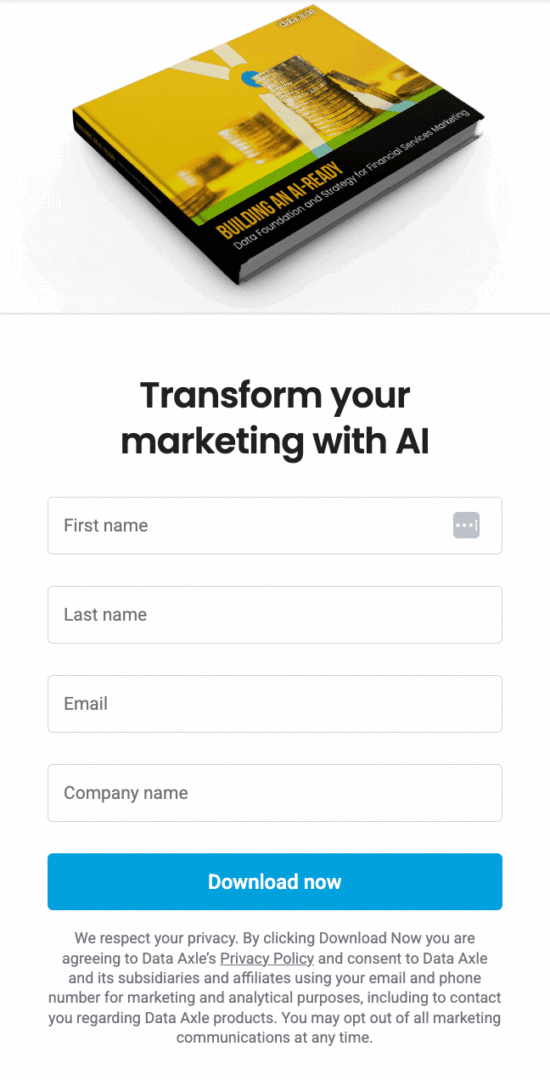
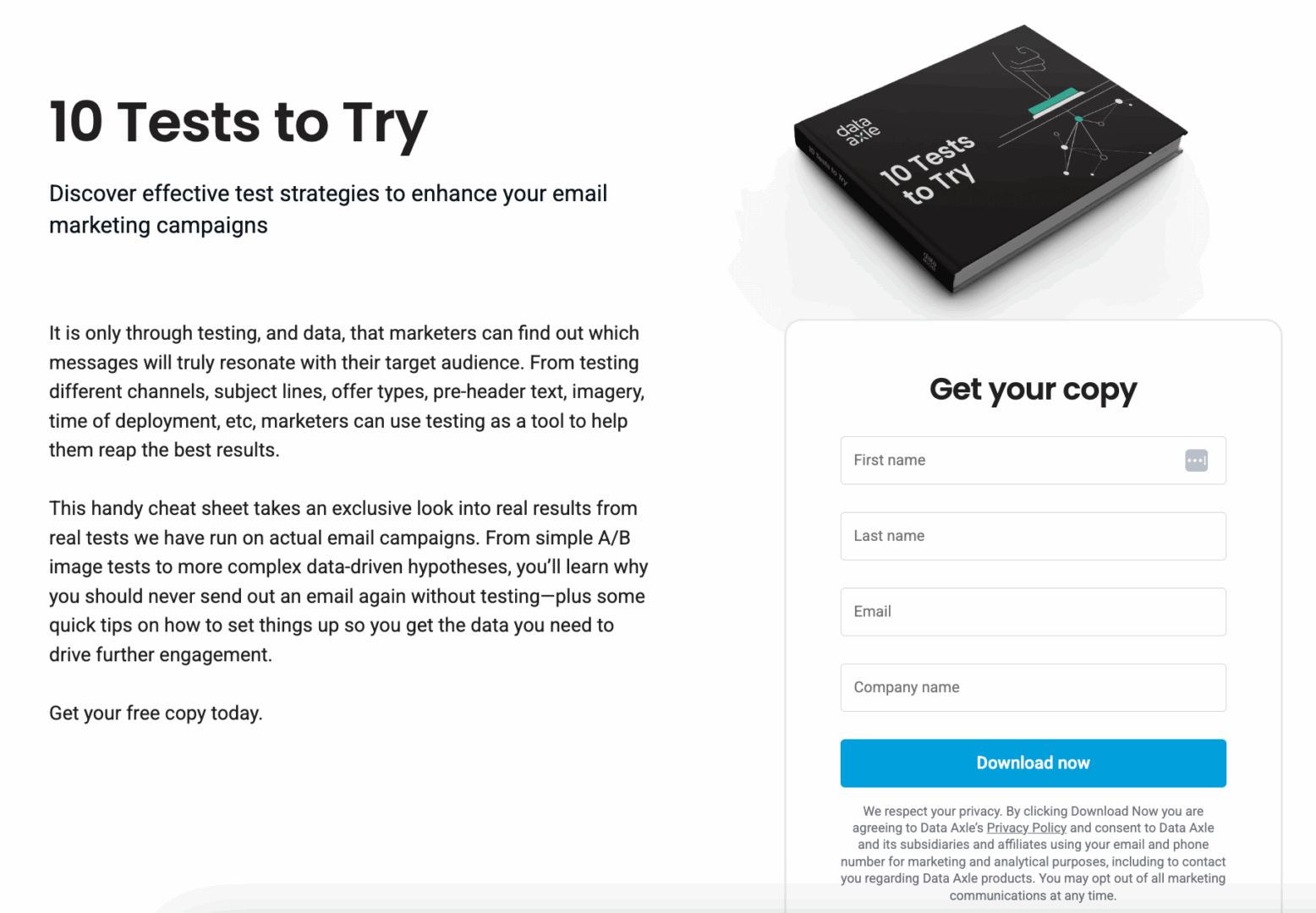
Their white-papers are gated content, and to read them or have access to them, the leads have to input their contact details: First name, Last name, Email and company name.
Each lead-magnet has a copy where they explain what the content is about and what benefits you can achieve by downloading a copy.
At the end of the copy we can find a CTA: “A strong CTA (“Stay ahead of the curve—download now…”) encourages immediate action.” or “Download your copy today. Gain the insights you need to create data-driven, high-impact engagement strategies that go beyond intent to deliver real results.”
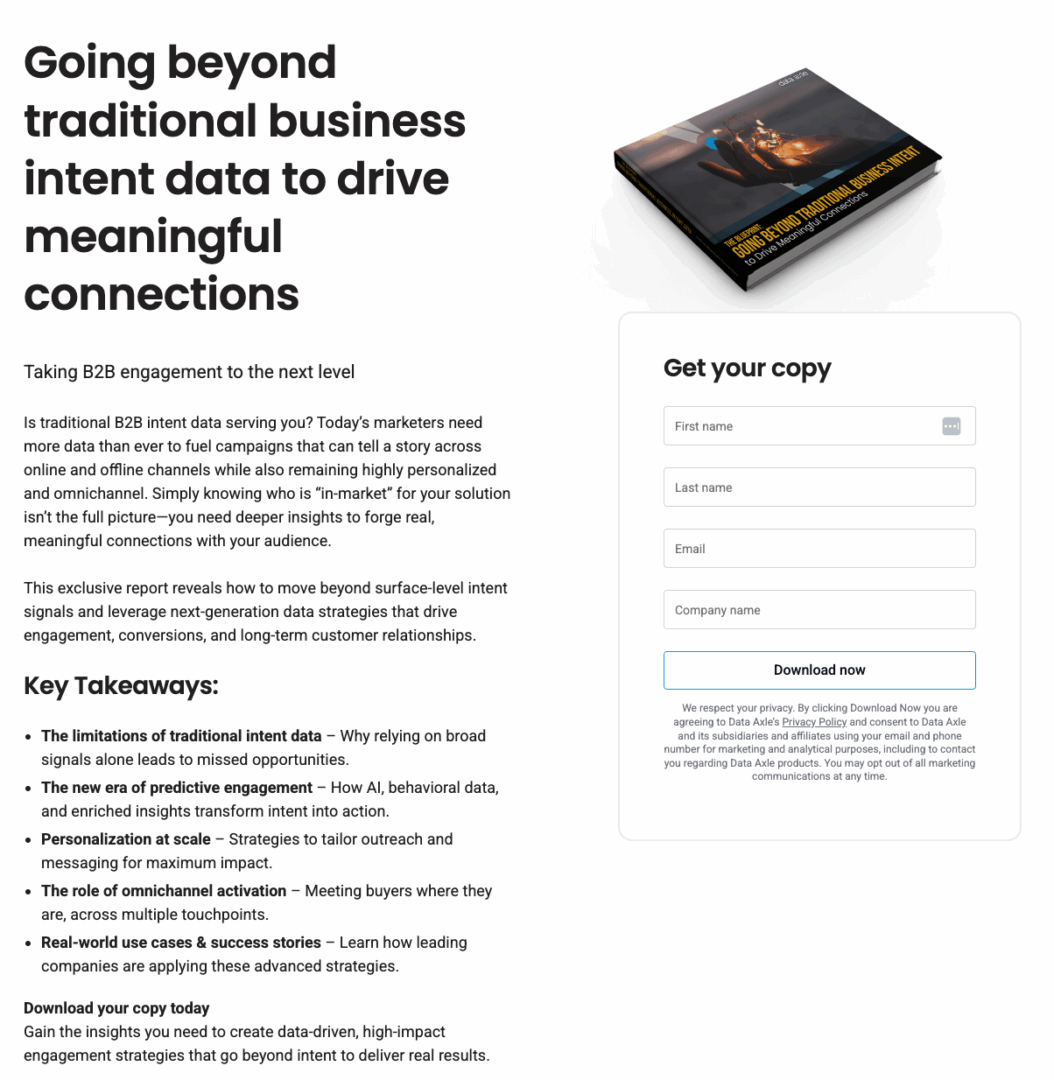
As we can see, under the “Download now” button they say exactly how they will use the collected information. By requiring visitors to provide their email and phone number to download the whitepaper, Data Axle captures valuable contact information for future marketing efforts.
Ask the expert
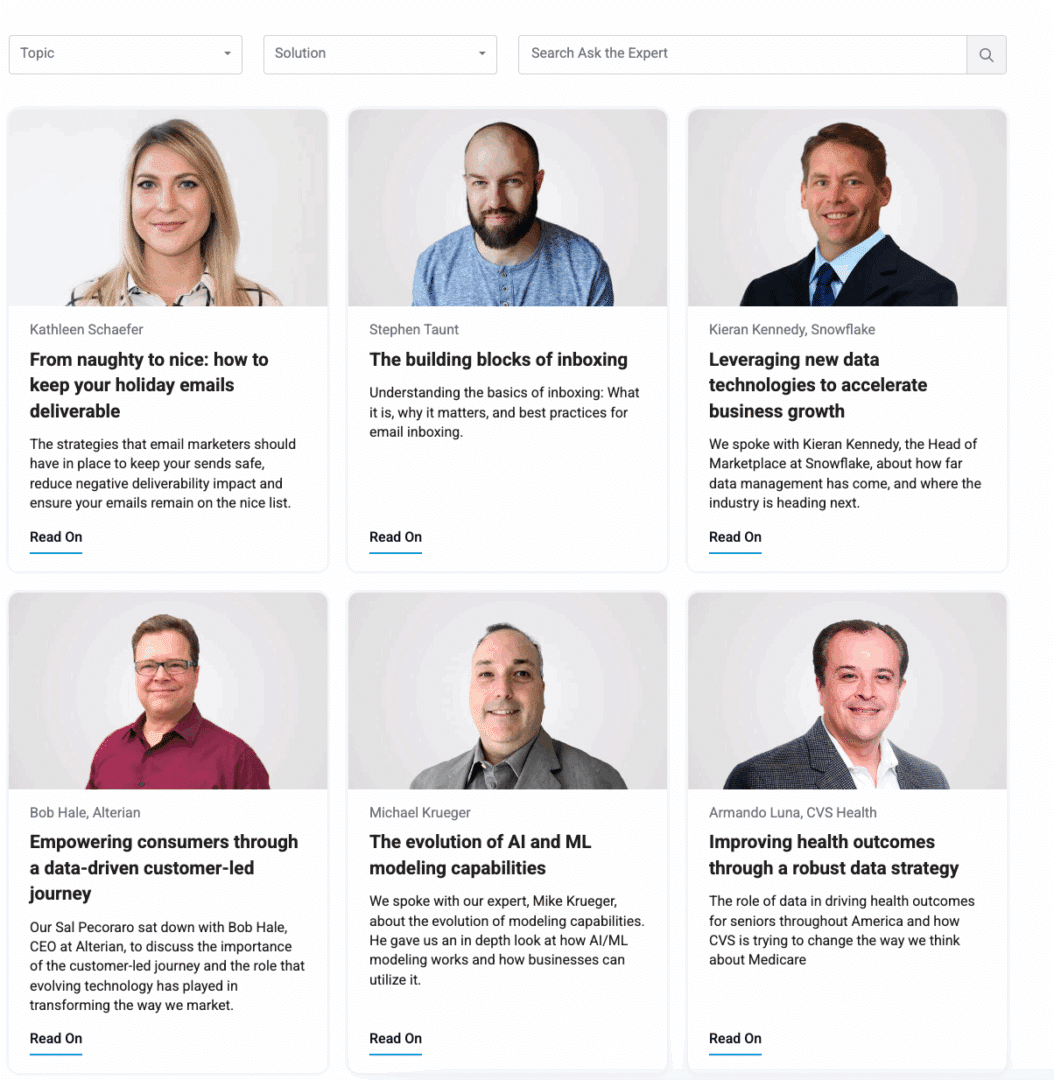
This “Ask the Expert” page on Data Axle’s website is a key component of their content marketing and thought leadership strategy.
Let’s analyze its purpose, target audience, and the underlying strategy.
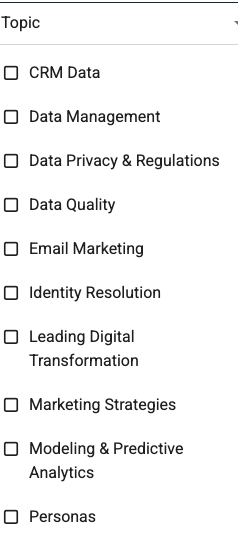
The topics they discuss are related to data quality, email marketing, marketing strategies, and many more.
It seems that they haven’t updated this section since 2023. The content is structured as an interview, with various lengths from 4 to 8 questions, where the experts are answering the questions related to one topic.
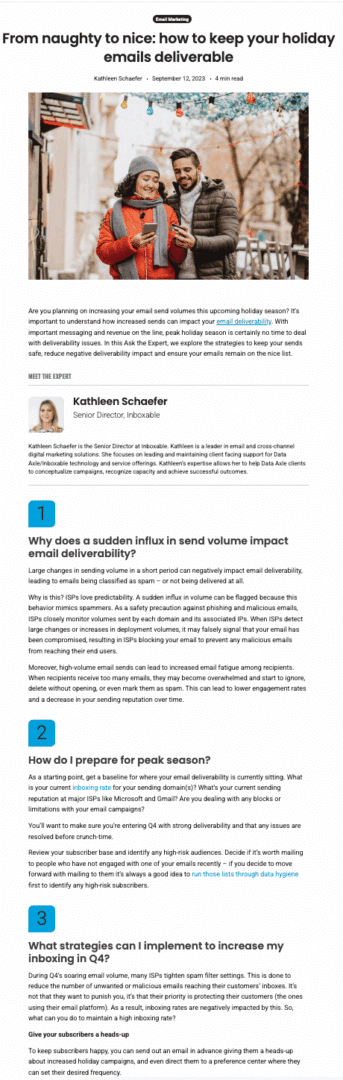
Interestingly, the experts are professionals and leaders from other companies, such as: Snowflake, Alterian, Inboxable, etc.
The content is primarily aimed at marketing professionals who are seeking to improve their strategies and stay informed about industry trends. While the page itself may not directly capture leads, it drives traffic to the website and exposes visitors to Data Axle’s expertise and solutions, potentially leading to future conversions.
At the end of the article, the guests are “allowed” to promote the company they belong to.
Case studies
The case study highlights Data Axle’s expertise in email marketing and data-driven strategies.
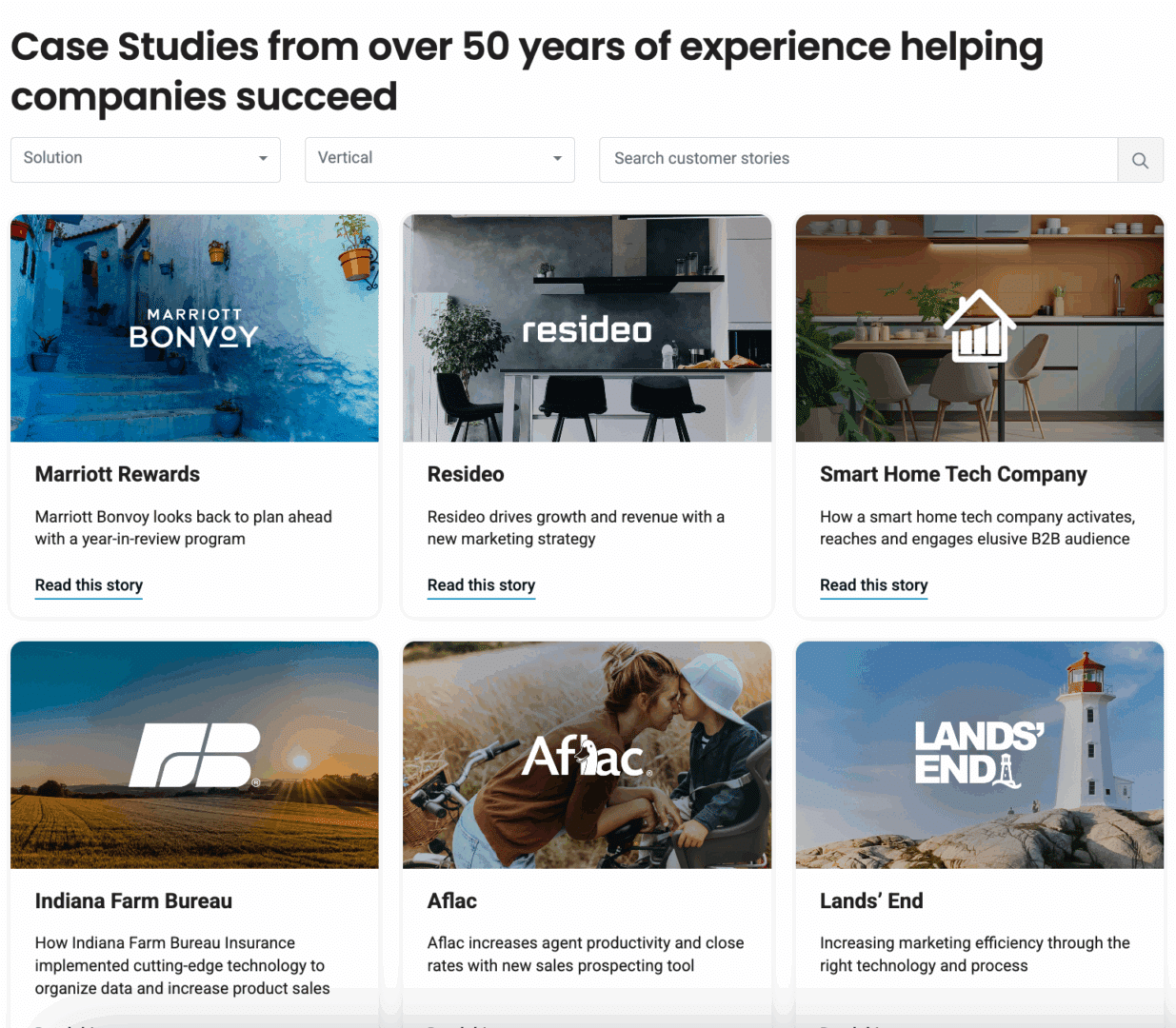
Data Axle’s case studies have the following structure:
- Headline
- Introduction
- Background / Challenge
- Solution
- Execution
- Results
- Testimonial
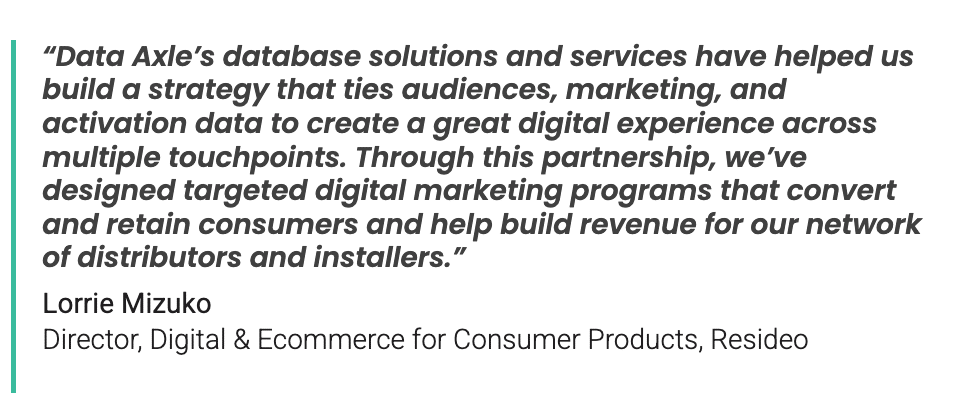
By mentioning the client’s name in a case study, it typically means that the client has given permission for their identity to be disclosed. Also, using the client’s name can really enhance the credibility of your case study. It shows that a company has trusted your services and achieved positive results.
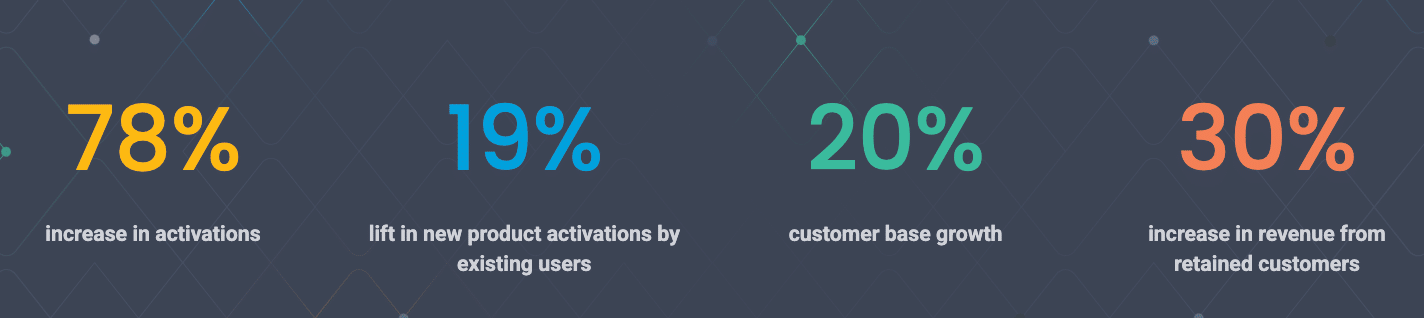
At the top of the page, they highlight their achievements:
News and Media
This “News & Media” page on Data Axle’s website serves as a hub for their press coverage and press releases, contributing to their overall marketing strategy.
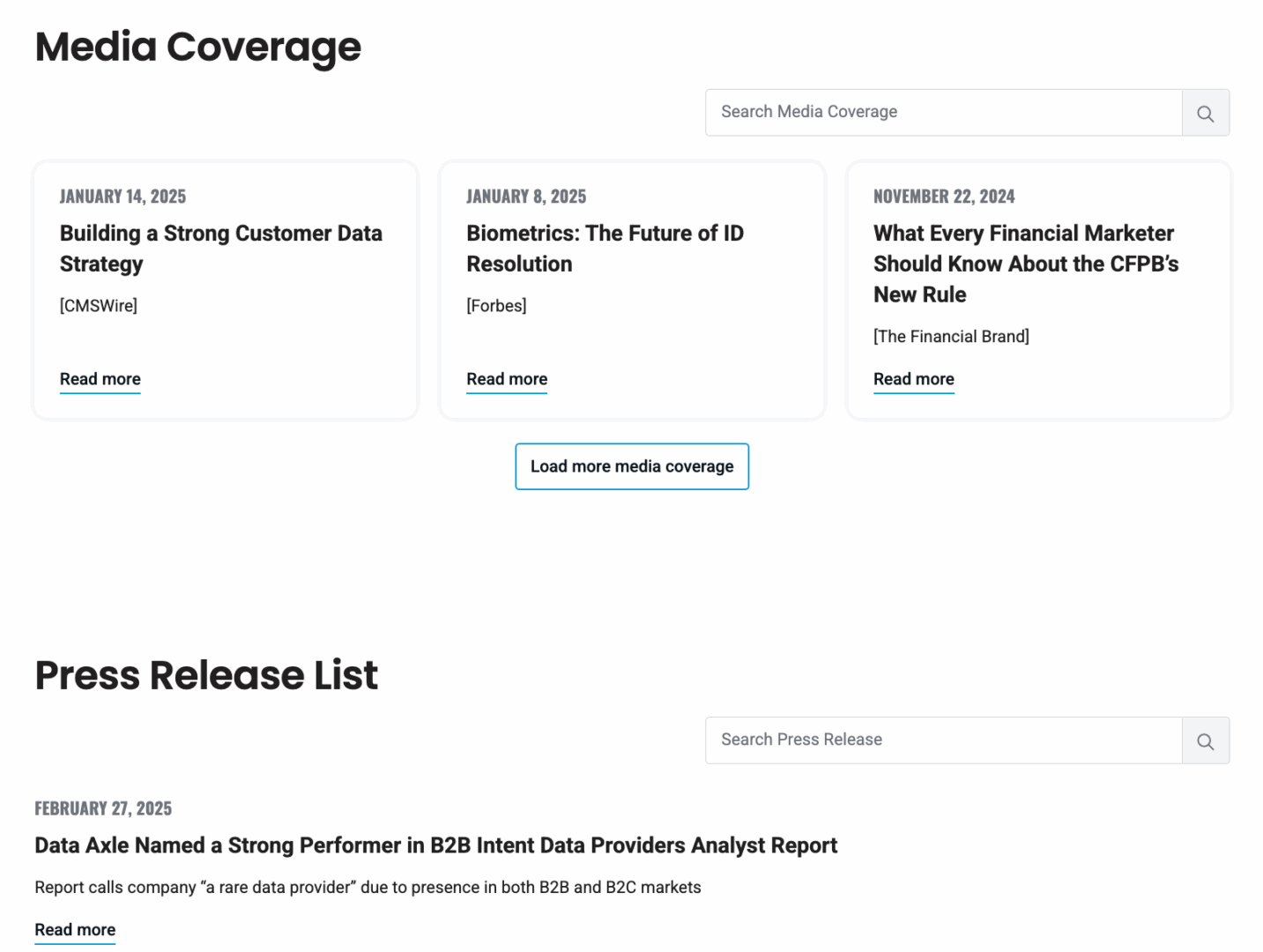
The page showcases Data Axle’s PR efforts and their success in securing media coverage.
The content keeps industry professionals informed about Data Axle’s latest developments and partnerships. Press releases about financial performance and strategic initiatives might target investors and stakeholders.
This works well for a content marketing strategy, as the press releases and media coverage might be used for content that can be shared on social media.
While there isn’t a direct CTA on this page, it encourages visitors to explore other resources and learn more about Data Axle.
Testimonials
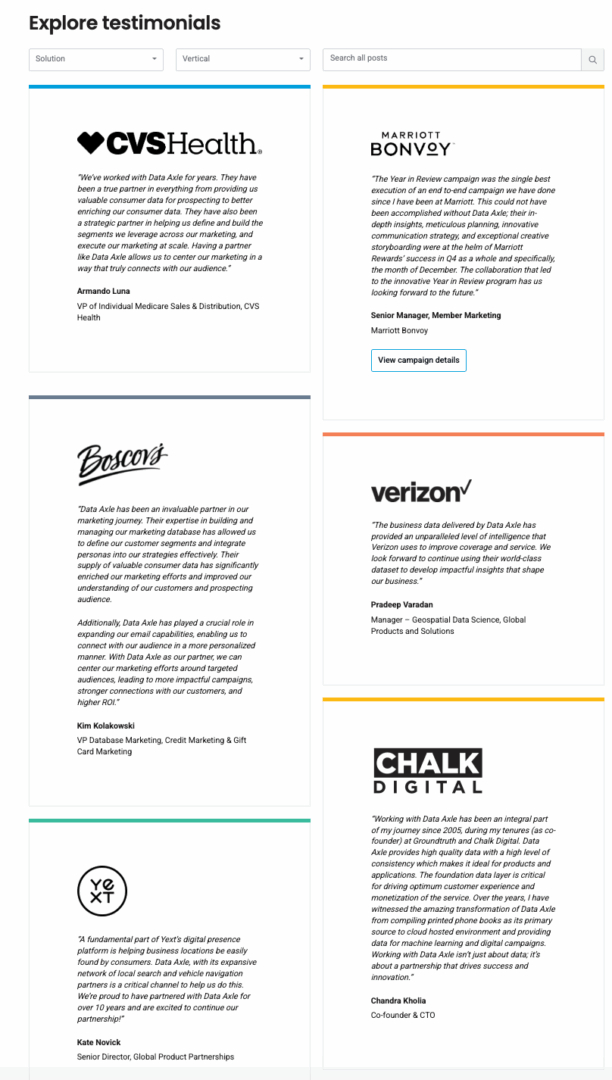
The purpose of this page appears to be a combination of showcasing Data Axle’s services and capabilities and providing testimonials from satisfied clients. The page also serves as a marketing tool to attract potential clients by demonstrating the company’s expertise and the success stories of its partnerships with major brands like CVS Health, Marriott, and Verizon.
Newsletter
Their newsletter is promoted in the Blog section at the end of each article.
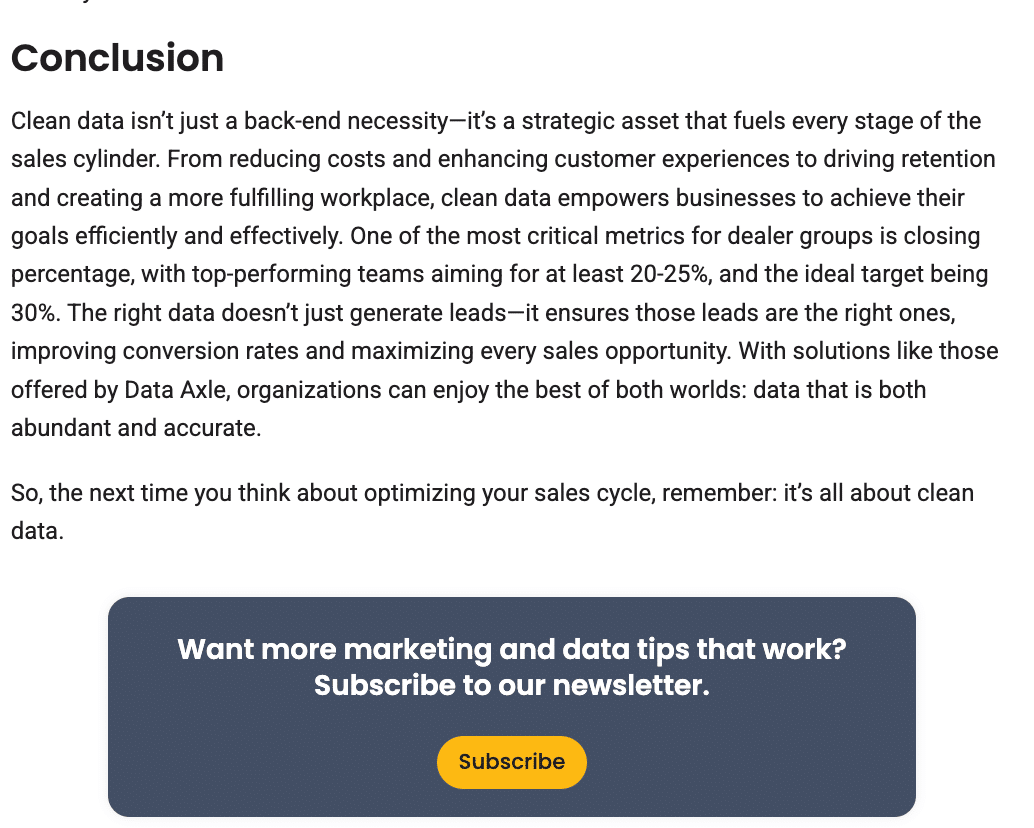
We like that their newsletter has a description, so that leads know what to expect. This way, those who subscribe are genuinely interested in the content, which can lead to higher engagement rates and a more targeted audience.
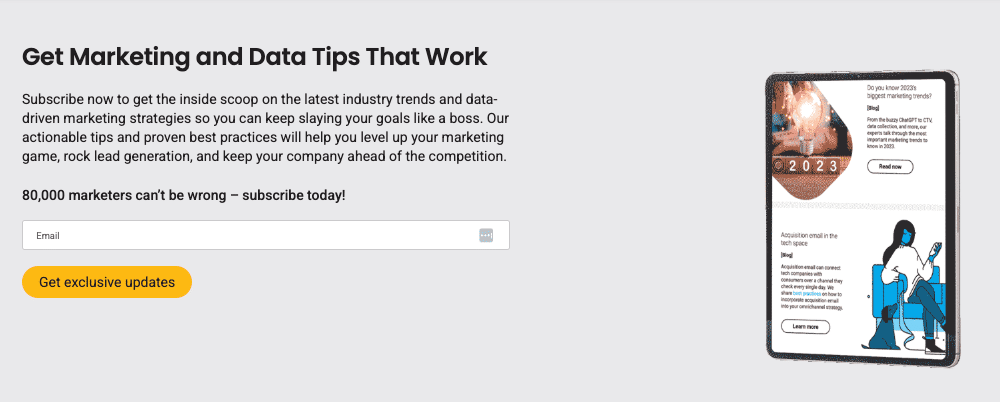
Benefits and value proposition is revealed by this statement: “Our actionable tips and proven best practices will help you level up your marketing game, rock lead generation, and keep your company ahead of the competition.”.
Social Proof
- “80,000 marketers can’t be wrong – subscribe today!”
- “Join over 80,000 satisfied subscribers and experience it for yourself.”
The mention of a large number of subscribers serves as social proof, encouraging potential subscribers by implying that many others have found value in the newsletter.
The CTA is straightforward: “Get exclusive updates”.
The newsletter can also be found at the bottom of the main page:

Lead generation
In this section we will analyze how they generate leads.
Let’s start with their main page, because we have noticed something which might be worth mentioning. The first CTAs buttons we see on their main page are sending the leads to their contact page “Contact us” and “Find out how”. They are prioritizing direct interaction, because, as you may know, is the most effective way to qualify leads and close deals.

On their “Contact us” page is a contact form which requires the following: First name, last name, email, company name, and the need.
They even have a special Box “Connect with an enterprise specialist”, with the purpose to facilitate direct communication with experienced professionals who can help with complex business needs.
Downloadables
To check what assets they have in this category, we are back at their thought leadership content. Their reports and white-paper are downloadable material, acting as a lead magnet.
As you can see, to access a white-paper the leads have to input their contact details.
Webinars
We haven’t noticed any webinars promoted on their website, however, we have seen that Data Axle promotes its webinars on LinkedIn.
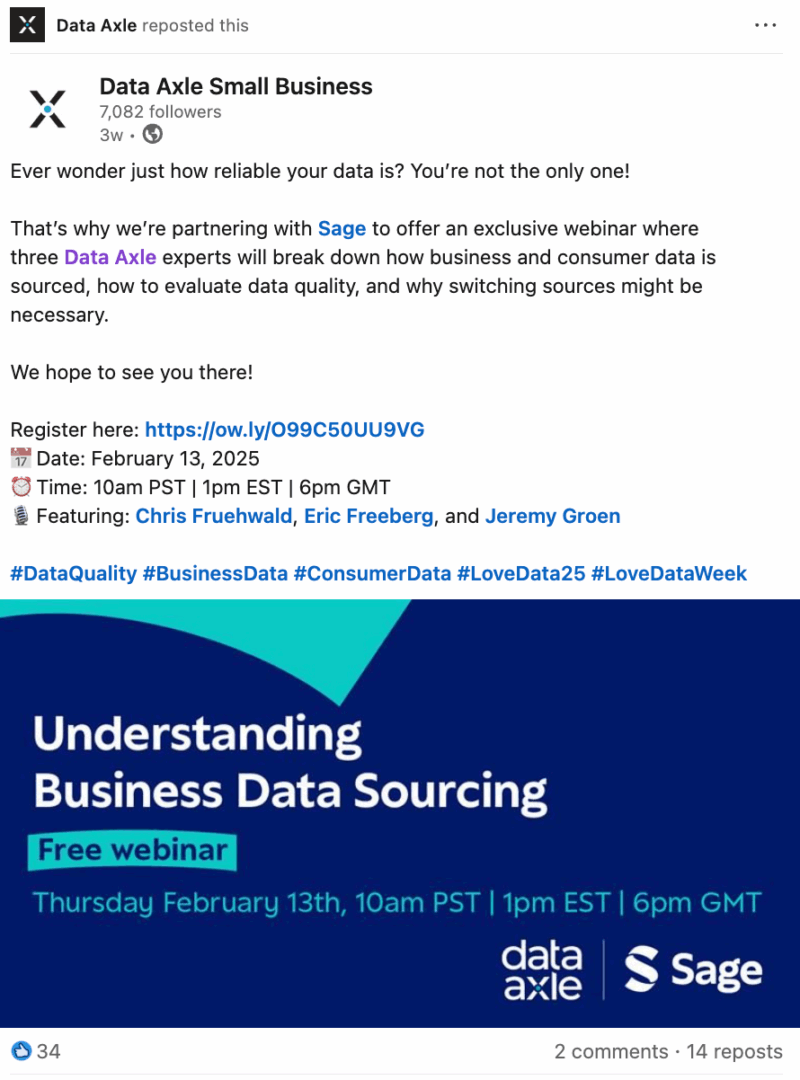
However, the webinars are not promoted by Data Axle’s primary LinkedIn page, but by a subsidiary: “Data Axle Small Business”.
The webinar takes place on Zoom, as clicking the “Register Here” link redirected us to a Zoom page.
Paid Advertising Strategy
Now, we will analyze their paid ads, especially their ad copy and messaging. The language and messaging used in their ads reveal how they position themselves and what value propositions they want to show to their target audience.
On LinkedIn, Data Axle has at the moment 274 ads.
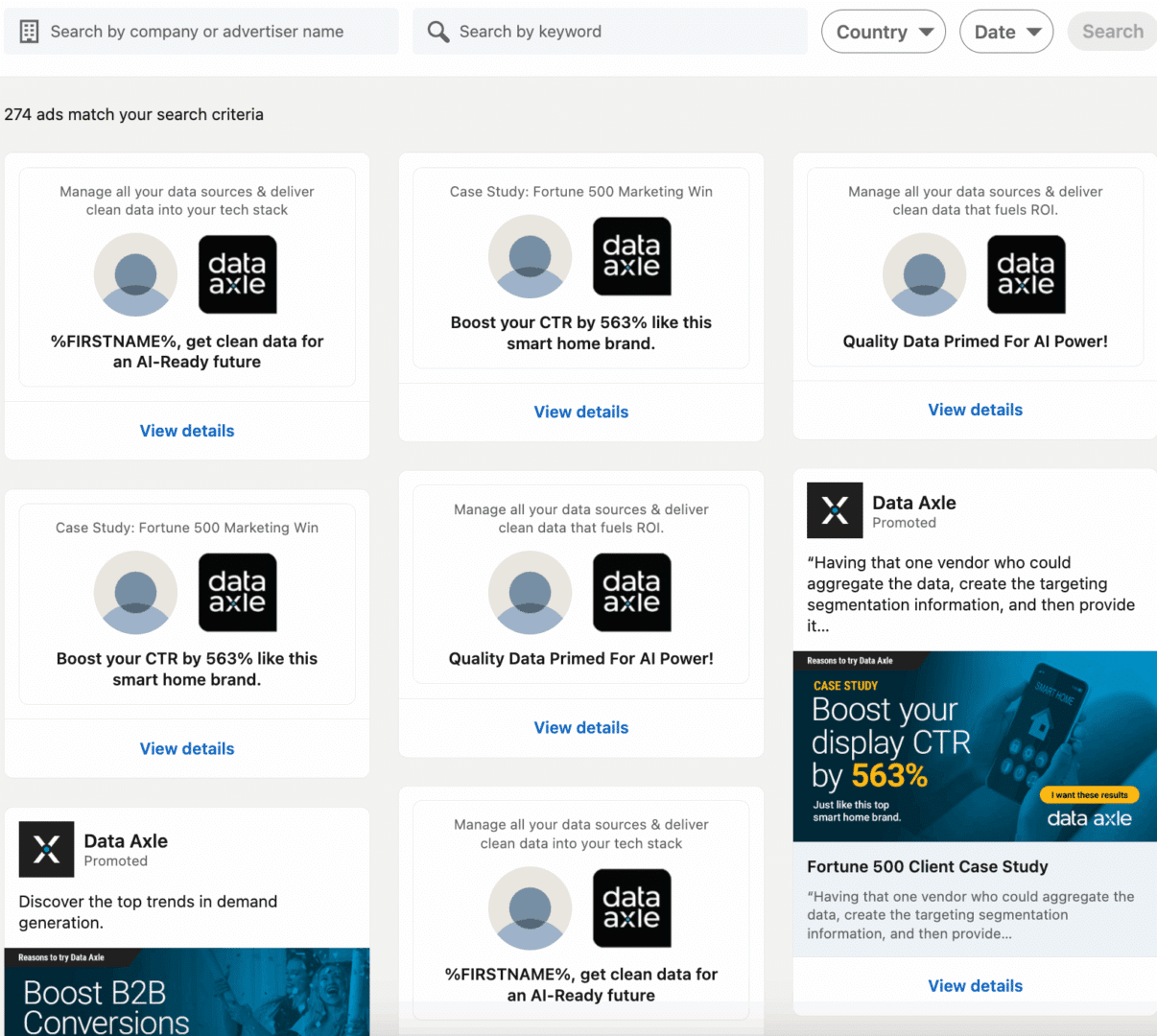
Data Axle’s ad strategy seems to focus on these themes: data management & quality and marketing strategies (ABM and demand generation).
Overall, Data Axle’s ad strategy might be created to appeal to businesses seeking to improve their marketing capabilities through data.
Using “%FIRSTNAME%” in ad copy suggests they are using LinkedIn’s targeting options to personalize ads and increase engagement. They use phrases like “boost your CTR,” “fuels ROI,” and “unlock the potential” to highlight the benefits of their solutions.
Let’s look in more detail at their ads. They promote the following:
- Case studies
- Their marketing services
- Guides
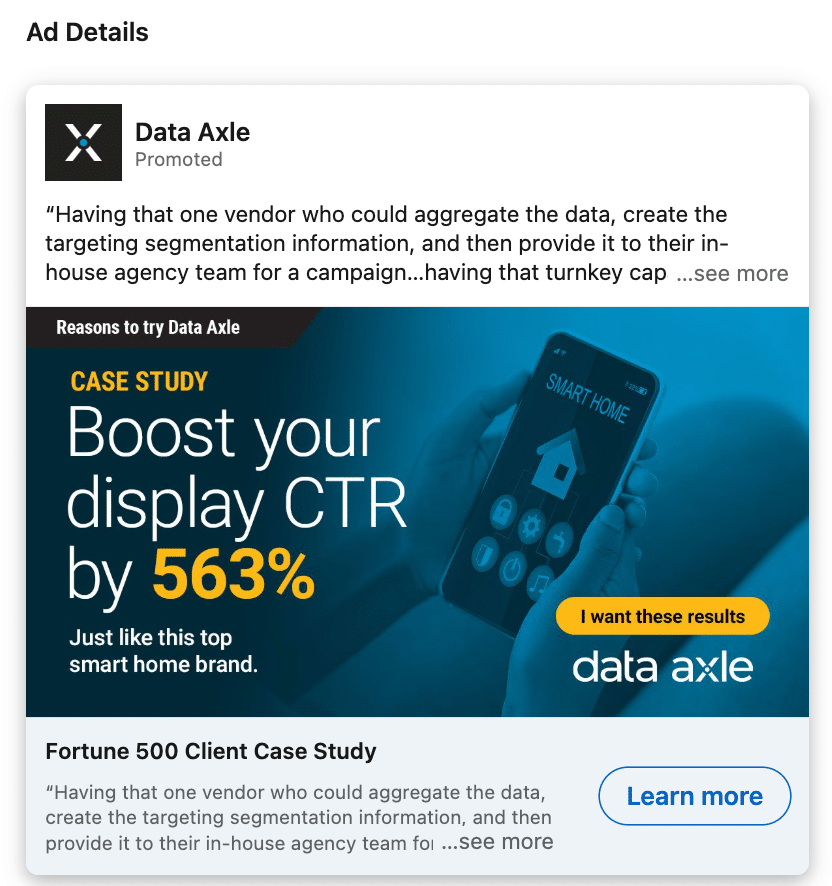
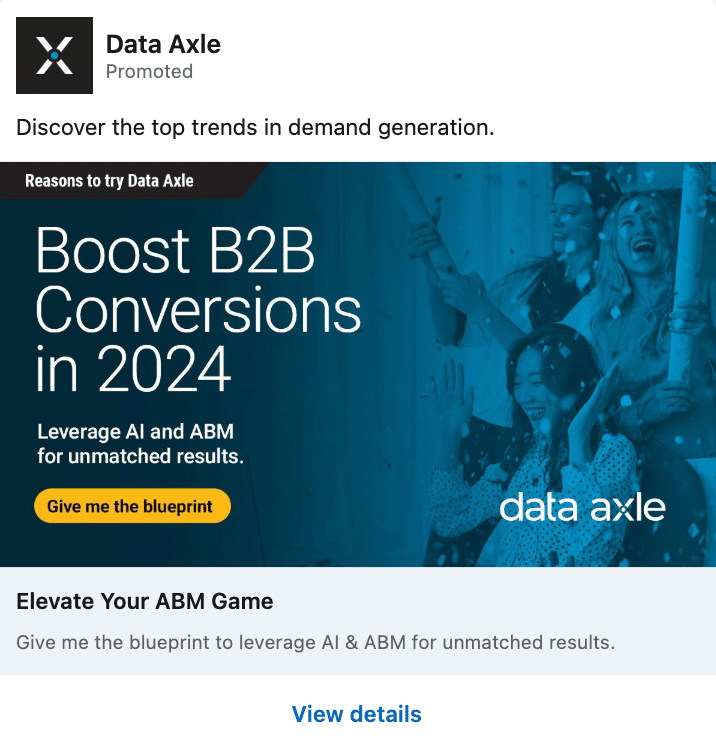

When we click on the “Download” button, we are sent to a landing page, where we can get the guide. As you can see, they only ask for the business email address.
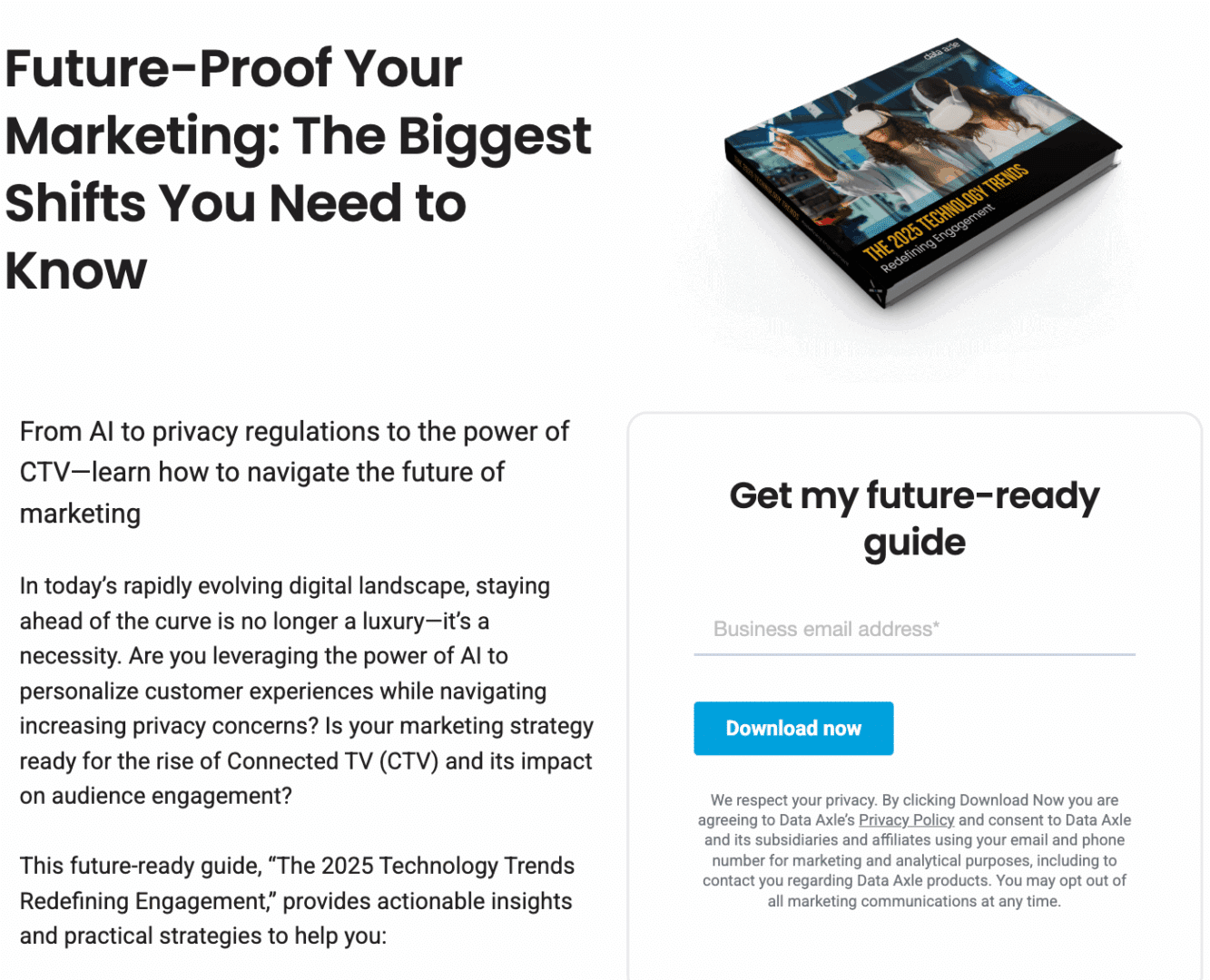
Overall, most ads aim to capture leads through downloadable assets (case studies, guides, etc).
On Facebook, Data Axle has around 20 active ads.
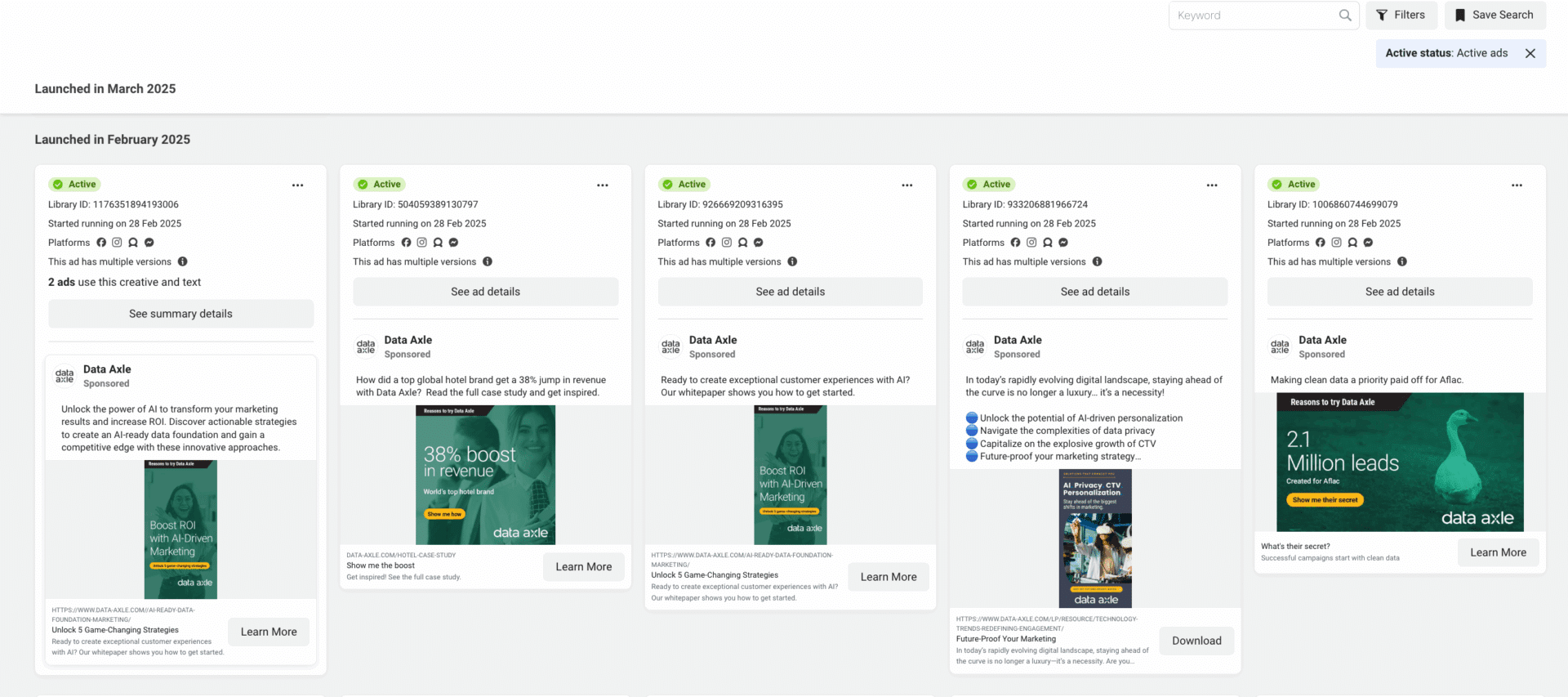
We can see that the ads are targeting Instagram and Messenger as well, as indicated by the icons in the image. Most of the ads have multiple versions.
Analyzing their Meta Ads Library, we see that they promote the following:
- Solutions and Services
- Content and Resources (whitepapers, guides, and case studies)
Conclusions: Data Axle’s Marketing Approach
When it comes to demand generation, their blog is the cornerstone of their strategy. Why? Because they have around 22 topics they write about, they publish weekly and their blog posts are meant to generate leads, establish thought leadership, and improve website traffic. As mentioned, they focus a lot on thought leadership. For example, on their thought leadership page they are offering gated content like white-papers that capture lead information while providing genuine insights.
The newsletter is another tool, having 80,000 subscribers and promising actionable marketing tips.
When it comes to lead generation, whether it’s LinkedIn ads, blog posts, or newsletter promotions, every touchpoint is an opportunity to capture interest. In the B2B tech area, attention is the most valuable currency. Data Axle has cracked the code of capturing and maintaining that attention through high-value, meticulously crafted content.
What do they do well: Inspiration points
- Data Axle Nonprofit: is a division of Data Axle, specialized in serving nonprofit organizations by offering innovative data solutions to improve fundraising efforts and donor engagement.
- Design work: This design gallery belongs to The Axle Agency. On these page you will find various design works across different industries, such as hospitality and retail, and highlights award-winning campaigns. It also provides information on how the agency helps businesses with acquisition, retention, and intelligence through data-driven solutions. Additionally, the page offers resources, news, and career opportunities related to Data Axle.
- Data Axle Digital Audiences Newsletter: This is a monthly publication that provides insights and updates on the company.
Transforming your marketing approach, from how it is known, to what it should be, needs more than just following a template. The most important aspect is to create a strategy that resonates with your target audience.
So, start by developing a content strategy that goes beyond surface-level marketing. Your goal should be to become a trusted resource, not just another vendor. This means creating meaningful content that genuinely helps your target audience solve their challenges (detailed guides, how-to, reports, whitepapers that offer actionable insights, etc.). Create gated content so compelling that potential clients are excited to share their information. Let your work speak for itself.
However, if you truly want to change your marketing game, then Account-Based Marketing (ABM) is what you should go for. The idea behind ABM lies in understanding and segmenting your most valuable potential clients. This means going beyond generic advertising and creating hyper-personalized marketing experiences. Instead of casting a wide net, you’re using a laser-focused approach that treats each high-value account as a market of one. This means developing tailored content, personalized communication strategies, and marketing campaigns that feel like they were created specifically for each potential client.
Next steps
If you need help implementing any of the above strategies, then Milk and Cookies Studio is your strategic partner. We don’t just offer services, we become an extension of your team, bringing creativity, strategy, and proven expertise to every project.
Contact us today!
Frequently Asked Questions
1. What does Data Axle do?
Data Axle is a U.S.-based data and marketing technology company that provides data services, CRM integrations, and performance-driven marketing solutions for both B2B and B2C organizations. Their goal is to help companies use accurate data to power acquisition, retention, and intelligence strategies.
2. How does Data Axle differentiate itself from competitors?
Data Axle stands out through its 50+ years of experience, commitment to data accuracy, and integrated solutions that combine data, technology, and marketing services. Their 3-in-1 approach — data, technology, and agency services — allows them to deliver measurable business growth for major brands like HP, Aetna, and CVS Health.
3. What is Data Axle’s marketing strategy?
Data Axle’s marketing strategy revolves around thought leadership, gated content, and consistent multi-platform presence. They use LinkedIn, Twitter (X), and blog content to build credibility and generate leads. Their posts often highlight data-driven insights, client success stories, and downloadable reports that attract potential customers.
4. How does Data Axle generate leads?
Data Axle generates leads through gated content like whitepapers, reports, and case studies promoted across their website and LinkedIn. They also use targeted ads, newsletter subscriptions, and event participation to capture qualified prospects. Each gated asset requires contact information, helping them build segmented email lists for nurturing campaigns.
5. What can other B2B companies learn from Data Axle’s approach?
B2B companies can learn to balance credibility with conversion by producing consistent, data-backed content, leveraging leadership visibility, and implementing account-based marketing (ABM). Data Axle shows that focusing on data accuracy, thought leadership, and clear CTAs leads to stronger trust and higher lead quality.

