Marketing spotlight
/
Marketing Spotlight: Mapping Lassie's Marketing and Sales Tactics
This article maps the marketing and sales tactics behind Lassie's $47M Series A and 1,000+ customer milestone.
TL;DR: Conclusions and Key Takeaways
🎀 This section gives you the main insights without all the details. It’s the stuff you need to remember, whether you’re reading this now or in 6 months. We made this for people who want to get the core message fast.
Lassie is the AI admin worker for independent dental and medical practices, automating insurance payments, EOB posting, and AR reconciliation so doctors spend time on patients, not paperwork. This article maps the marketing and sales tactics behind their $47M Series A and 1,000+ customer milestone.
Build your GTM by working the job first. Lassie's founders spent months as dental billers before writing a line of code.
Use one customer's story everywhere. The Dr. Eric Kwon narrative runs across every channel Lassie operates. It works because specificity builds trust faster than category claims.
Let word-of-mouth carry you until paid advertising is ready. Lassie reached hundreds of practices before hiring its first salesperson. The referral engine got them there.
Price on outcomes, not seats. Lassie charges per workflow completed, not per user. That model aligns vendor revenue with customer value and removes the biggest objection in the first sales conversation.
Get your testimonials on your conversion pages, not buried in your blog. Six named, attributed doctor quotes sit on Lassie's get-started page, right above the email field.
Hire for GTM late, then hire hard. The Lassie careers page in June 2026 shows 11 open roles weighted toward sales, growth, and operations. The product-market fit came first, and the commercial machine is being built now.
📝 A quick note before you start reading: The data and analysis in this article are valid as of the time we wrote it. We don’t know when you’ll be reading this, maybe next week, maybe six months from now, and things might have changed since we looked at this company’s marketing and sales approach. Still, the insights and lessons here stay useful, even if the numbers or tactics have evolved a bit.
If you've ever worked at a dental practice or owned one, you know what the back office looks like. Stacks of paper EOBs, insurance portals that don't talk to each other, and an office manager spending two hours on something that should take ten minutes. Lassie looked at that and decided the whole thing should run itself.
Here at Milk and Cookies Studio, we spend a lot of time reverse-engineering how companies grow, to understand the reasoning behind it, so the companies we work with can build strategies grounded in evidence.
Lassie is one of the more interesting cases we've looked at recently. Not only because of the product, but because of how they built the business around it. Two founders who worked as dental billers before writing a line of code, a referral engine that spread through Invisalign study clubs, and a GTM motion that ran entirely without a sales team until hundreds of practices were already paying. That combination got them to $47M and 1,000+ customers, and it's worth understanding why.
Understanding Lassie
Lassie is an AI-powered admin worker for independent dental and medical practices. The legal entity is Go Lassie, Inc., headquartered in San Francisco, California. The company was co-founded in 2020 by Steijn Pelle, CEO, and Frédéric Renken, co-founder. Pelle came from Robinhood and Coinbase, where he led early product growth. Renken was the first product hire at Superhuman and previously worked at Uber.
The founding story is important here because it’s also the marketing strategy. Pelle's own dentist in the Bay Area, Dr. Eric Kwon of Grace Dental in Menlo Park, showed him what running a dental practice actually looked like.
Kwon was spending more than 100 hours a month processing insurance payments by hand. Pelle and Renken did not pitch a solution. They sat down in the back office and did the work themselves, manually reconciling insurance payments and posting them into the practice management system for months.
That hands-on period became the foundation for everything Lassie built: the product integrations, the automation logic, and the initial customer base.
Lassie raised earlier rounds from SV Angel, Homebrew, and Go Global Ventures, with amounts not publicly disclosed. In June 2026, the company closed a $35M Series A led by Andreessen Horowitz, with a16z General Partner Alex Rampell (Affirm co-founder) taking a board seat. Total disclosed funding stands at $47M. The Series A valued the company at approximately $250M.
Angel investors in the Series A include Rahul Vohra (Superhuman), Zach Perret (Plaid), Taavet Hinrikus (Wise), Gokul Rajaram, Brian Balfour (Reforge), Night Capital, and Dr. Edward Zuckerberg.
The product automates four core workflows: EFT enrollment (setting up electronic payments with insurers), EFT reconciliation (matching deposits to claims), payment posting (recording results in the practice management system), and exception management (flagging underpayments, denials, and mismatched claims for staff review).
Integrations cover the three dominant dental EHR systems, Dentrix, Eaglesoft, and Open Dental, plus banking connections through Plaid and MX, and major payers including BCBS, UHC, Delta Dental, Cigna, Aetna, MetLife, and Guardian.
At time of writing, Lassie works with 1,000+ practices across 49 states and reports providing 250,000 hours of autonomous labor annually. Annualized revenue exceeds $10M per the a16z announcement, with a $100M ARR trajectory cited in multiple podcast appearances by Pelle.
💡 Steal This: If your founders have a first customer who became a vocal advocate, document that story in enough detail to feel real, and put it on every page where a buyer is close to a decision. A specific story outperforms a category claim at every stage of the funnel.
Brand Promise Analysis
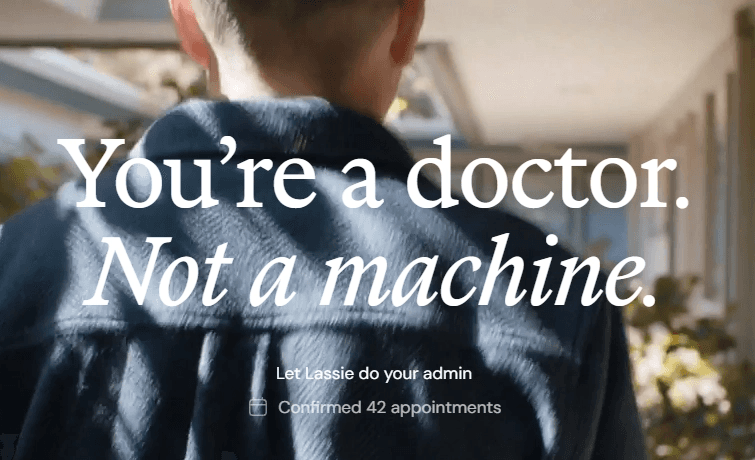
The Lassie homepage opens with: "You're a doctor. Not a machine. Let Lassie do your admin."
That is a three-sentence value proposition that does more work than most SaaS homepages manage in three paragraphs. The first sentence names the identity of the buyer. The second sentence names the problem (the machine-like repetition of admin). The third sentence names the fix. There is no jargon, no product category claim, and no mention of AI until further down the page.
The subheadline, carried in the page metadata and reinforced by the product demo section, is: "AI that runs the doctor's office." This is where the category claim lives, but it is placed after the emotional hook, not before it. The structure is deliberate: lead with the buyer's identity, then with their pain, then with what you do.
The homepage hero section shows an animated activity feed of tasks being completed: "Confirmed 42 appointments," "Posted $12,430 in payments," "Booked 8 hygiene recalls," "Completed Humana enrollment," "Closed the books for March."
This shows exactly how the product works. Rather than claiming outcomes, the page shows the work happening in real time. A dentist owner who reads that list recognizes every item on it as something their team is currently doing by hand.
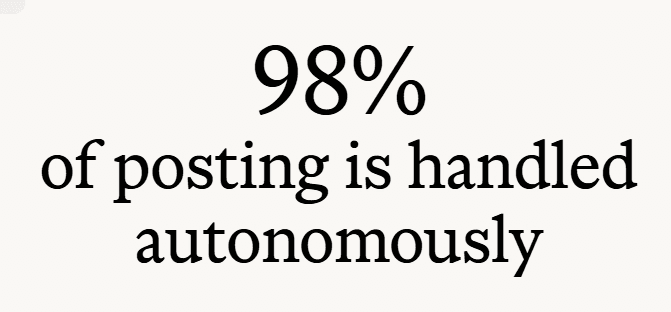
One data point anchors the middle of the homepage: "98% of posting is handled autonomously." This is a performance claim with a specific number attached, and it does the conversion work that a feature list cannot.
The about page reinforces a broader ambition: "We're pushing the boundary on autonomous systems, and believe small businesses will soon run themselves." This positions Lassie not as a billing tool but as the first product in a larger category. Dental is the wedge. Every small business is the vision.
The brand voice across the site is warm, direct, and confident without being aggressive. There is no urgency language. No countdown timers, no "limited spots," no "don't miss out." The positioning assumes the dentist already knows they have a problem. Lassie is presenting itself as the obvious solution.
💡 Steal This: Lead your homepage headline with your buyer's identity, not your product category. "You're a [role]. Not a [what they spend too much time being]." is a structure that forces clarity about who you serve and what they hate about their current situation.
Service and Product Breakdown
Lassie sells one product in one tier. There is no freemium, no self-serve trial, no pricing table on the website.
The product enrolls electronic payments by setting up and managing EFT enrollments with insurers automatically, so practices stop receiving paper checks. Reconciles EFTs by matching each incoming deposit to the correct insurer, patient, and claim. Posts payments by recording the reconciled data into the practice's PMS in real time. Manages exceptions by flagging underpayments, mismatched EFTs, and ambiguous write-offs for staff review rather than leaving them in a backlog.
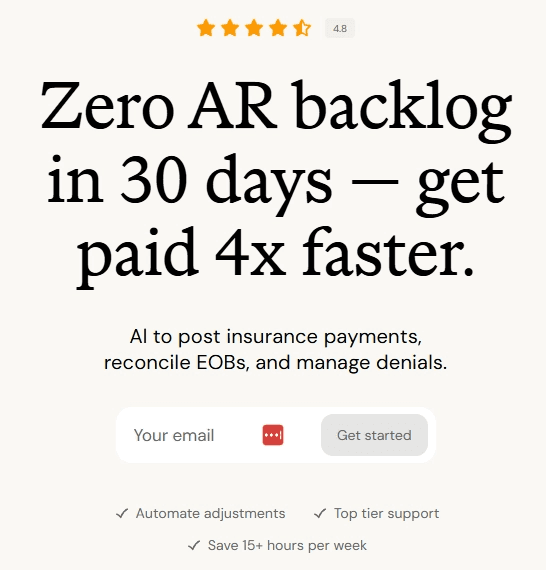
Their pricing model is usage and workflow-based. The homepage FAQ states: "Lassie gets paid when it does work for your office. Once we understand your practice's volume and workflows, we'll show you what pricing would look like." No prices are shown anywhere on the site. The get-started page shows a 4.8-star rating and promises "Zero AR backlog in 30 days, get paid 4x faster."
This is outcome-based pricing in practice. The model aligns Lassie's revenue directly with the value delivered. A practice that processes more claims pays more, but also gets more back. For dentist-owners who are skeptical about handing financial workflows to software, this removes the first objection: the tool only costs you money when it is doing work that used to cost you staff time.
Every page on the site addresses the dentist-owner directly, not an office manager, not a DSO operations team, not a billing coordinator. The copy is written for the person who owns the business and feels the financial and time costs personally. The demo page headline says "Lassie saves dental offices 15+ hours a week" and the get-started page leads with "Zero AR backlog in 30 days." Both metrics speak to the owner's two biggest pains: wasted staff time and delayed cash flow.
The book-a-demo page and get-started page are the two conversion destinations. Lassie is not trying to rank for demo-intent keywords. It’s routing warm traffic from referrals, ads, and social to these pages directly.
Lassie's single-product, single-ICP approach is a deliberate wedge strategy. Pelle has described it publicly as building one workflow to perfection before expanding. The pricing model, outcome-based rather than per-seat, is a signal that the sales motion is consultative: custom quotes require a conversation, which gives the team a discovery call for every new prospect. There are no self-serve sign-ups, and every customer comes through a human touchpoint.
💡 Steal This: If you sell to small business owners, price on outcomes they recognize, not on seats or features they have to understand first. "We get paid when we do work for you" removes the procurement conversation and the feature-comparison checklist in a single sentence.
Differentiators and Unique Assets
The 98% automation rate
Lassie states on the homepage that 98% of posting is handled autonomously. This is an operational performance number that directly answers the buyer's biggest concern: will the AI actually do the work, or will my team still have to review everything? At 98%, the answer is no. The 2% that requires human input is the exception flagging system, which surfaces only the cases where something is genuinely wrong, not a queue of items to review.
Native integration with legacy on-premise systems
Dentrix, Eaglesoft, and Open Dental together cover the majority of independent dental practices in the US. All three run on Windows-based, on-premise software that was not built to accept API connections. Lassie built a local agent that connects these systems to its cloud infrastructure. That integration layer is years of work and is difficult to replicate quickly. Competitors who pitch AI automation to dental practices but lack native PMS integration face a meaningful implementation barrier that Lassie has already crossed.
The founders' origin story as a product moat
Pelle and Renken spent over two years visiting and onboarding 100 dental offices onto test versions of the software before launching publicly. That period produced a knowledge layer about payer-specific edge cases, exception patterns, and workflow nuances that no team building from the outside could replicate. As the a16z announcement notes, "over time, the product learns from every completed workflow, building a knowledge layer that is difficult to recreate from scratch."
The community-led distribution channel
Lassie's growth engine for its first few years was dental study groups, specifically Invisalign study clubs and practitioner networks where dentist-owners share vendor recommendations. This is a referral mechanic built on genuine product satisfaction. Pelle has described it as one customer, Dr. Kwon, whose word-of-mouth spread to his wife's practice, his study friends, and their networks. The Sacra analysis confirms that conferences, practitioner dinners, and peer referrals remain key acquisition channels even after the Series A.
HIPAA compliance infrastructure
Lassie enters into HIPAA Business Associate Agreements with all customers and follows standard healthcare data-handling protocols. For a dentist-owner evaluating any software that touches insurance payments and patient financial data, HIPAA compliance is table stakes. Lassie has it built in, which removes a compliance objection that would otherwise surface in every sales conversation.
💡 Steal This: If you are building for a vertical with legacy on-premise software (healthcare, legal, construction, manufacturing), the integrations are the moat, not the AI. Build the integration layer before you build the features. The team that has native connectors to the systems the buyer already uses wins the deal before the demo begins.
Leadership Presence Analysis
Steijn Pelle, CEO and Co-Founder
Steijn Pelle, the CEO of Lassie, has 6,100 followers on LinkedIn. Pelle reposts frequently with commentary roughly every other day, and keeps his content entirely focused on Lassie. There is no personal brand content about leadership philosophy or career advice. Every post is either about the product, about a customer story, or about what Lassie is building next.
The standout post in the last three months is the Series A announcement:
"Today, we're introducing Lassie and $47M in funding led by a16z. We're building AI that runs small businesses, starting with doctors' offices. Lassie is already trusted by 700+ practices across the country, working autonomously to provide them with 30 hours of labor per month. To get here, we first had to leave Robinhood and Superhuman to work in offices ourselves. Here's how that went."
That post received 870 reactions, 184 comments, and 64 reposts. The engagement is high for a 6,100-follower account. The reason is the specificity of the founding story. "We had to leave Robinhood and Superhuman to work in offices ourselves" is not a generic founder narrative. It is a counterintuitive choice that signals conviction and produces curiosity. The comment section filled with people asking questions and sharing similar experiences.

Pelle's LinkedIn is operating as a TOFU channel for dentist-owners who find him through the funding announcement, mutual connections, or the dental community networks. His profile points to Lassie, his posts reference Lassie. Every piece of content is a referral.
Frédéric Renken, Co-Founder
Renken has 1,000 followers on LinkedIn, but his account is mostly inactive. He reposted something about Lassie two weeks ago, but the previous activity on his profile dates back five years. For a co-founder at a company that just raised $47M, this is a gap. Renken's background at Superhuman and Uber is exactly the kind of origin story that performs well with the startup and dental-tech audience Lassie is trying to reach. An inactive co-founder profile is a missed distribution channel.
No CMO or marketing leadership identified
Lassie's careers page lists a Product Marketer role as open at time of research. There is no VP of Marketing, no Head of Growth, and no CMO in any public source. The marketing function currently runs through Pelle's LinkedIn presence and a small team managing social and ads. The Series A will likely change this, but at the time of writing, the marketing operation is founder-led.
💡 Steal This: If your CEO posts specifically about one real customer, with numbers, and tells the origin story of how that customer came to trust the product, that post will outperform almost anything your marketing team produces. Generic founder content gets scrolled past.
Social Media Strategy
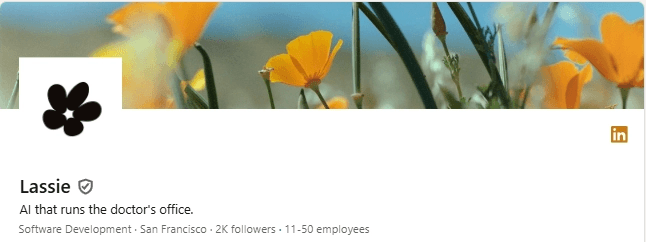
The company's LinkedIn page has 2k followers and two posts. One from two weeks ago, one from eleven months ago. The recent post is the Dr. Eric Kwon story: a narrative about a dentist spending over 100 hours a month on paperwork, missing family moments, and how Lassie changed that. It received 91 reactions, 16 comments, and 14 reposts. The eleven-month-old post is a repost of Pelle's Series B recognition from Bain Capital Ventures, which received 10 likes.
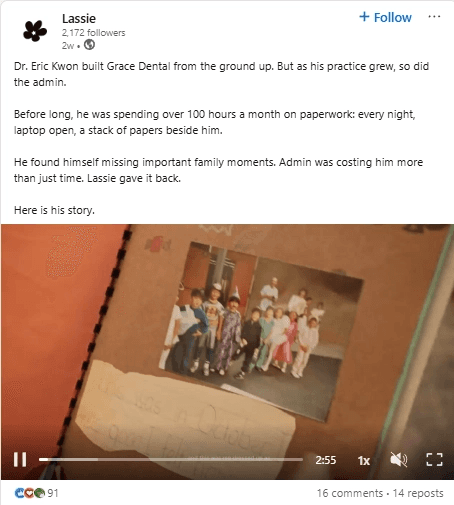
Two posts is not a LinkedIn strategy. The company page exists but has not been treated as a channel. At 2,000 followers with strong engagement on one substantive post, show potential. The audience is present, but the content infrastructure is not (yet).

On Instagram, Lassie has 1130 followers. Instagram is Lassie's most active organic channel. The account launched three weeks before the time of research, with the first post appearing three weeks ago and the most recent post three days ago. Posting frequency is a few times per week.
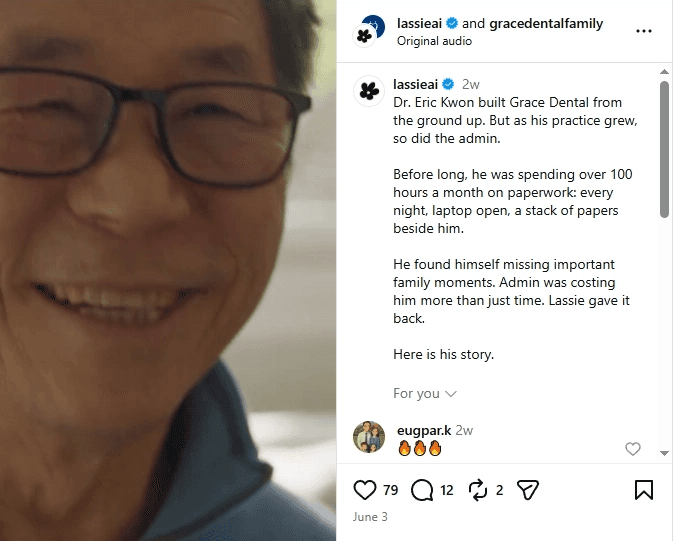
Average engagement across all posts sits at roughly 39 likes, with most posts drawing no comments or a maximum of two. That average is pulled up by two posts at 79 likes each. The floor is 13 and the median is closer to 27, which is typical for a brand account less than a month old with just over 1,100 followers.
Three content pillars are visible from the recent post captions.
The first is customer stories: named practice owners with a specific problem and a specific outcome, like the Dr. Eric Kwon narrative and a post about Dr. Suffiyah Webb, owner of two pediatric practices in Newark.
The second is benefit framing: short lines that address the dentist-owner directly, like "Leave the billing to Lassie, then focus on what you trained for" and "The to-do list that does itself. All before your first patient of the day."
The third is identity and emotion: posts that speak to the feeling of being buried in admin rather than describing the product, like "Something beautiful happens when the paperwork disappears. Admin tried to slow her down. Lassie had other plans." Customer stories consistently outperform the other two pillars.
The two posts with 79 likes are the Dr. Kwon story and a "More patients, less paperwork. Coming soon." teaser post. Both performed roughly 3x the channel average. The pattern is clear: customer stories and product outcome teasers outperform benefit copy and abstract sentiment posts.
Instagram is being used as a brand awareness and social proof channel, aimed at dentist-owners who follow dental content on the platform.
X / Twitter
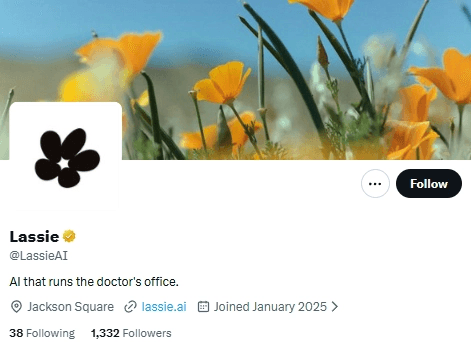
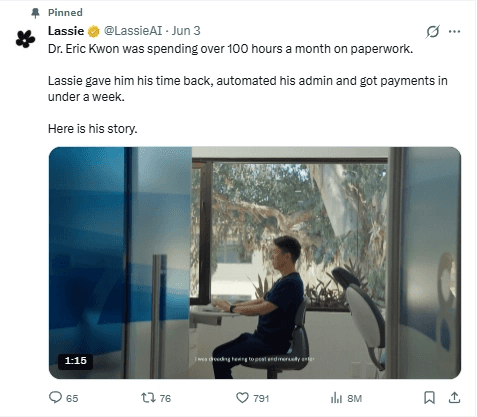
Lassie has 1332 followers on this channel. There is only one post from June 3rd, about Dr. Kwon’s story: "Dr. Eric Kwon was spending over 100 hours a month on paperwork. Lassie gave him his time back, automated his admin and got payments in under a week. Here is his story." That post received 65 comments, 76 reposts, 791 likes, and 8 million views.
8 million views from one post on a 1,300-follower account is not organic distribution. It is algorithmic amplification, likely driven by the Series A announcement timing, engagement from the wider tech and startup community reacting to the a16z news, and possibly some paid promotion. The post is a signal that the content works when it reaches the right audience, not evidence of an established X presence.

Facebook has 548 followers an 8 posts in June, with the first on June 1st and the most recent on June 18th. The content mirrors what is being posted on other platforms. The page is active but small. Facebook is being used to distribute content rather than as a primary acquisition channel.
Lassie's organic social presence tells a consistent story: one customer (Dr. Kwon), one outcome (time back, AR cleared), repeated across every platform in slightly different formats. Unfortunately, this isn’t a content strategy built for scale. It is a referral amplification strategy built for the early-adopter moment the company is in. The goal is to get the story in front of dentist-owners who know other dentist-owners. The platform is less important than the story itself.
💡 Steal This: If you have one customer whose story is specific, quantified, and emotionally resonant, that story should run on every channel you operate simultaneously. Repeating one great story across platforms is not laziness. It is message coherence, and it builds brand memory faster than variety.
Top-Performing Content
Across all platforms, the top-performing content is the same story told in slightly different formats. With channels so small at the time of this research and so few posts, it’s hard to make a deeper analysis of what works and what doesn’t.
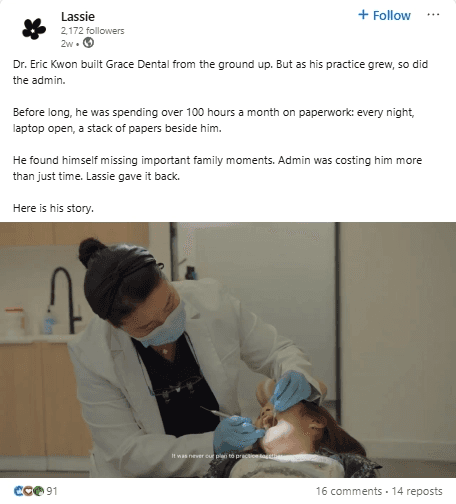
The Dr. Eric Kwon narrative post from two weeks ago is the only substantive post on the company page. 91 reactions, 16 comments, 14 reposts from a 2,000-follower account is an engagement rate well above average for B2B LinkedIn content.
The post works because it leads with identity (a doctor who built something from the ground up), moves through specific pain (100 hours a month, laptop open every night, missing family moments), and lands on a specific outcome (Lassie gave it back). There is no product description in the post, because the product is part of the story.
The two highest-performing posts both received 79 likes, roughly 3x the channel average.
The Dr. Kwon story post: 79 likes, 12 comments, 2 reposts. The same narrative runs here as on LinkedIn, adapted for the platform. Customer stories with specific numbers and emotional stakes outperform abstract benefit copy on Instagram with a healthcare audience.
The "More patients, less paperwork. Coming soon." teaser: 79 likes, 2 comments, 7 reposts. The high repost count relative to likes suggests this post spread outside the existing follower base. Teasers with clear outcome language perform well when the audience knows the brand’s story.

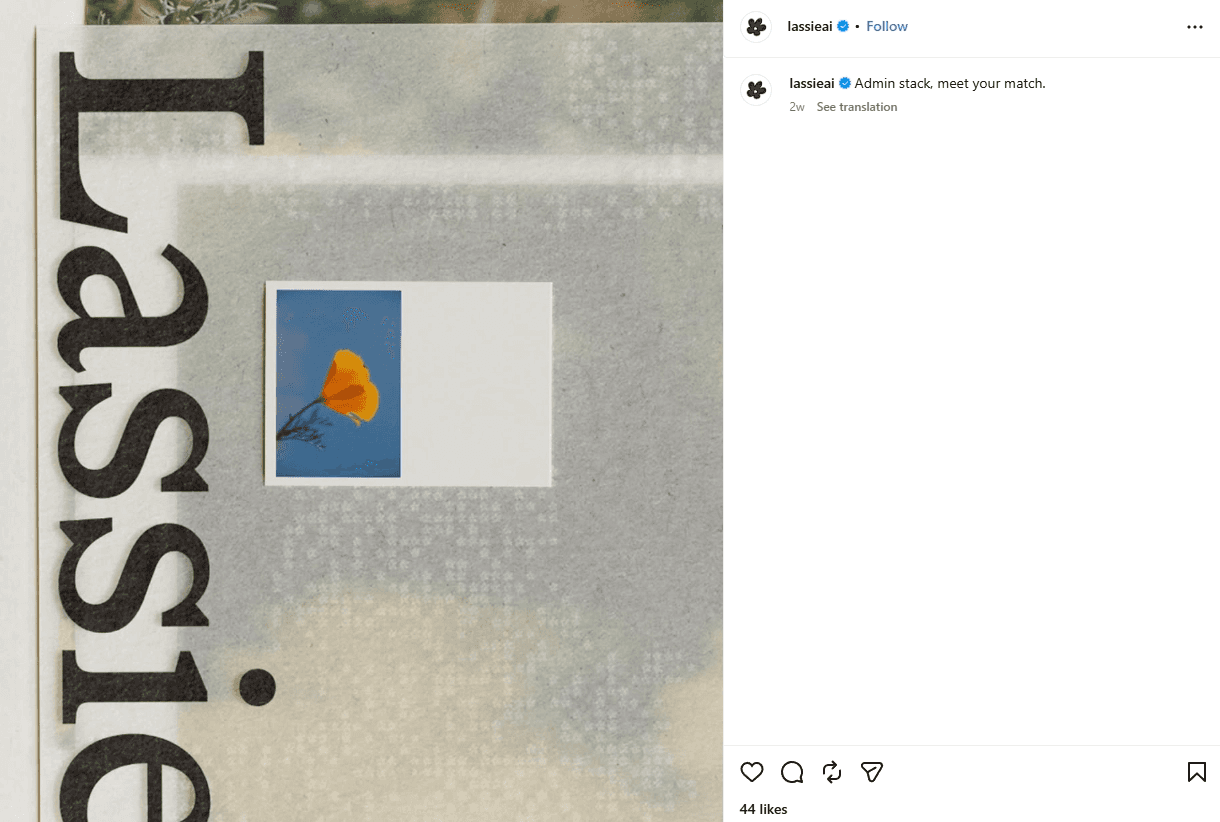
The "Admin stack, meet your match." post received 44 likes with no comments, making it the third-strongest performer. Concise, confident copy without needing a narrative setup performs when the audience already has context.
X
The June 3rd Dr. Kwon post: 791 likes, 76 reposts, 65 comments, 8 million views. The view count reflects amplification well beyond the follower base, timed with the Series A announcement. The engagement rate on views is low, which is expected for viral distribution. But 65 comments on a 1,300-follower account is a real engagement signal. The comment quality matters more than the count here: a high-visibility moment generating real conversations is worth more than passive views.
💡 Steal This: Before you build a content calendar, identify the one customer story with the most specific numbers and the most relatable pain. Write that story once, adapt the format for each platform, and then look at the engagement data before adding more stories. You need depth before breadth.
Paid Advertising Strategy
Lassie is running paid ads on Meta, LinkedIn, and Google as of June 2026. The volume and targeting approach differ meaningfully across platforms.
Meta

Lassie is running 44 ads across all Meta platforms, Facebook, Instagram, Messenger, and others. The messaging themes from the active ads:
"Dental practice owners, get paid 4x faster with zero AR backlog."
"The billing cheat code dental practice owners are talking about."
"Tired of wasting hours on insurance paperwork? Automate posting, reconcile EOBs, and manage denials in a snap!"
"Lassie automates EOB posting, claim reconciliation, and AR, so your in-house billing runs itself."
The CTA used is "Learn More," pointing to the get-started page. The messaging is benefit-led and outcome-focused. No product feature names appear in the copy. Every ad leads with a dentist-owner pain point (wasted hours, delayed payments, AR backlog) and closes with an outcome claim (4x faster, billing runs itself).
44 active ads means a moderate volume. Lassie is testing messaging variations rather than running a single campaign at scale.

LinkedIn’s 68 ads show a more direct and personalized approach. One ad uses personalization tokens:
"Hi %FIRSTNAME%, I used to spend way more time than I wanted dealing with EOBs. Reviewing them, posting them, reconciling accounts. It was exhausting and pulled me away from patients. We eventually handed all of [this to Lassie]..."
This is a first-person testimonial format written from a dentist's perspective, using personalization to simulate a direct message from a peer. Other LinkedIn ad themes:
"AI to post insurance payments, reconcile EOBs, and manage denials."
"Remember how you started your dental practice to focus on patient care? Yeah. You can still do that. Automate your EOB."
"This is what manual EOB posting turns into. Lassie automates posting and reconciliation so insurance work doesn't take over your day."
"Get the billing shortcut Dentists are talking about."
"Hey Dentists, Stop chasing paperwork and start clearing your AR backlog. Nobody does dental billing better than Lassie."
The LinkedIn ads are more aggressive in their direct address. The audience on LinkedIn is more likely to be dentist-owners evaluating professional tools, which justifies the stronger sales tone compared to Meta.
The personalization token LinkedIn ad shows that Lassie is testing ABM-adjacent tactics. Using %FIRSTNAME% in an ad that reads like a direct message from a fellow dentist simulates peer outreach at scale. For a product with a five-figure ACV and a target audience of independent practice owners, this kind of targeting-by-profession combined with social proof framing (a peer's first-person story) is the right mechanic.
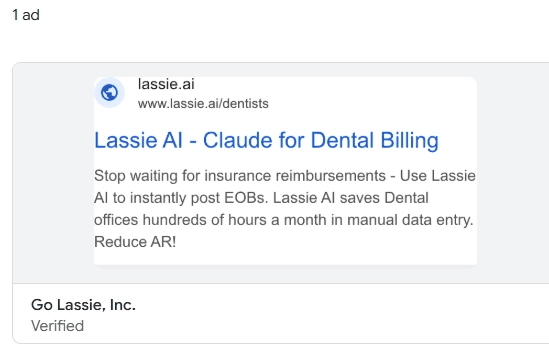
One text ad found in the Google Ads Transparency Center:
"Lassie AI, Claude for Dental Billing. Stop waiting for insurance reimbursements. Use Lassie AI to instantly post EOBs. Lassie AI saves Dental offices hundreds of hours a month in manual data entry. Reduce AR!"
The reference to "Claude for Dental Billing" is a positioning comparison, placing Lassie in the same mental category as well-known AI tools and anchoring it as the dental-specific version. The search ad targets bottom-of-funnel intent: someone searching for dental billing solutions. The language is direct and benefit-heavy.
One Google ad is a very light footprint. This is either a test or a channel that has not yet been prioritized for budget.
💡 Steal This: When writing B2B ad copy for a small business owner audience, write from a peer's perspective rather than from the vendor's. A dentist who reads "I used to spend hours on EOBs" in an ad will engage differently than one who reads "Our software automates EOBs." The peer frame reduces resistance before the product claim lands.
Sales Funnel from Social Media
Every social channel Lassie operates uses a single conversion path: link in bio or profile description, pointing to the website. There are no links embedded in individual posts. A dentist who sees a post on Instagram, LinkedIn, X, or Facebook and wants to learn more has one option: visit the profile, click the link, and land on either the homepage or the get-started page.
This is a minimal funnel by design. Lassie's GTM motion at this stage is referral-first, with paid acquisition layered on top. Social channels are brand and trust builders, not direct response channels. The funnel relies on awareness and conviction being built through content and word-of-mouth, with the click to the website happening only when a prospect is already warm.
Lassie's buyer, the independent dentist-owner, doesn’t make software purchasing decisions impulsively. They trust peer recommendations above all. A dentist who sees the Dr. Kwon story on Instagram, recognizes the pain, and wants to find out more, will navigate to the profile and click through. The content is doing the qualification work. By the time they hit the get-started page, they are a warm lead.
But the absence of any mid-funnel capture mechanism is a gap. A dentist who sees a post, finds it interesting, but is not ready to fill out a form, has no way to stay connected other than following the account.
There is no newsletter sign-up, no downloadable guide, no educational resource that captures the email address of someone who is in research mode but not yet in decision mode. For a product with an onboarding period of one to eight weeks and a custom pricing conversation required before purchase, there are buyers in the consideration stage who are being lost because there is no content infrastructure to hold them.
According to the Doximity 2026 State of AI in Medicine Report, 94% of physicians say they use AI or are interested in doing so, and administrative burden reduction is the top-cited reason. That is a large pool of interested prospects. Some fraction of them will find Lassie through social, be curious but not yet ready to book a demo, and drift away. A simple nurture mechanism, even a bi-weekly email about dental billing trends, would capture a portion of that pool and keep Lassie visible during the consideration period.
💡 Steal This: If your buyer has a long consideration cycle before they are ready to book a demo, add one mid-funnel capture point to every social channel you operate. A lead magnet, a newsletter, a free resource. Something that captures an email from a prospect who is interested but not yet ready. The link in bio does one job. A second link that points to a low-friction email capture does a different job, and both are worth having.
Reviews and Social Proof
There are no G2, Capterra, Trustpilot, or any other reviewing platforms for Lassie.
The primary review infrastructure for Lassie at this stage is the testimonials on the get-started page. Six named, attributed testimonials from practice owners appear directly above the email capture field:
Eric Kwon DDS, Owner, Grace Dental: "Lassie saved my team over 100 hours in manual data entry last month. It's reduced my outstanding AR by 75%."
Dr. Gina Marcus, Owner, Infinity Dental Associates: "My team now has more time for patient care. Cash flow issues and waiting 30+ days for insurance reimbursements is a thing of the past!"
Dr. Nelson Kanning, Owner, Kanning Dental: "My best team member stopped wasting tons of time entering checks and reconciling accounts. My team loves it."
Dr. Mina Levi, Owner, California Dental Innovations: "Choosing Lassie has allowed me to transform my operations and embrace a new level of precision in my practice."
Dr. Jason Sala, Owner, Sala Family Dentistry: "After a year of use, it has significantly accelerated our revenue cycle. Lassie has been wonderful for our practice."
Dr. Esther Pedersen, Owner, Love to Smile: "LOVE LOVE LOVE Lassie!!! It changed the insurance game for me."
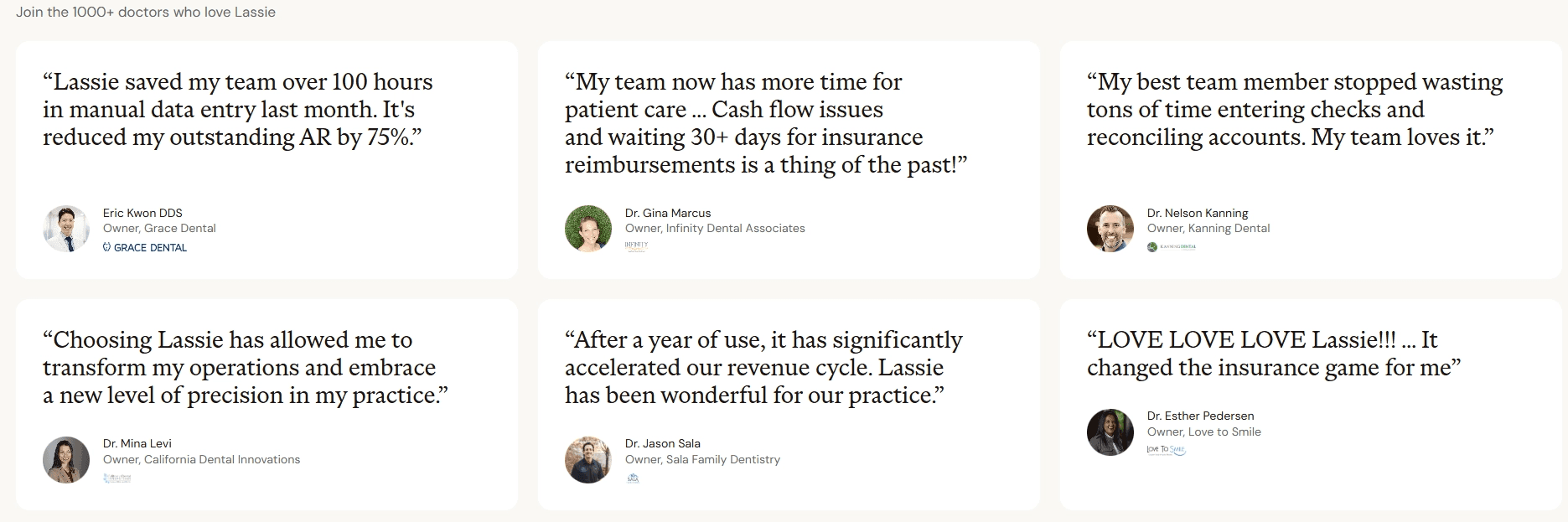
These testimonials are placed precisely where conversion happens. The get-started page asks for an email address and then routes the prospect to the sales conversation. Placing six named quotes from named practices right above that field is a textbook application of Cialdini's social proof principle: the prospect who hesitates sees that other practice owners, in their same situation, made this decision and were glad they did.
The absence of a G2 profile is a gap that will matter more as Lassie moves upmarket or faces more sophisticated buyers. A dentist-owner running a single practice trusts peer recommendations. A DSO procurement team or a medical group evaluating Lassie for multiple locations will look for third-party validation. Building a G2 presence, even with 20-30 verified reviews, would give Lassie a credibility signal in channels it does not currently occupy.
💡 Steal This: Put your strongest testimonials on your highest-intent conversion page, not on a separate reviews page nobody visits. The prospect who is about to fill out a form is the one who needs social proof most.
Content Marketing and Demand Generation
Lassie's website does not have a blog, a resources section, a knowledge base, or any downloadable content at the time of research. The content operation is entirely social and paid.
The absence of owned content is related to the company's current stage. Lassie reached 1,000+ practices through referrals and a small paid ad operation. Content marketing takes months to compound and requires a team to maintain. With few employees and no marketing leadership identified beyond a product marketer job posting, building a content engine is not the current priority.
The podcast circuit is Lassie's version of content marketing. Pelle has appeared on Founder-Led Sales Stories, the Dentalpreneur Podcast, the Mommy Dentists in Business podcast, and other healthcare and startup-focused shows. Each appearance reaches a pre-qualified audience: dentist-owners interested in business operations, or startup founders interested in GTM strategy. The podcast format allows Pelle to tell the founding story, describe the product in detail, and name real customers in a way that a blog post or ad cannot match.
The CAQH CORE webinar in August 2024 is the only formal content partnership visible in research. That webinar, featuring Pelle alongside a CAQH associate director, positioned Lassie as a credible participant in the healthcare payment standards conversation, not just a vendor pitching a product. For a company selling to practices that deal with payer compliance, association with an organization like CAQH carries trust.
There is no newsletter, no gated content, and no event calendar on the Lassie website. The content funnel starts and ends with social media and word-of-mouth.
The problem with this strategy is that someone who isn’t yet ready to book a demo but wants to learn more has no place to go on the Lassie website. The homepage is clear, and the get-started page has good social proof, but there is nothing in between for a prospect who is evaluating options and wants to build confidence before committing to a sales conversation.
💡 Steal This: If you are not ready to build a full content operation, the podcast circuit is the best alternative. Appearing on three to five niche industry podcasts per quarter reaches a pre-qualified audience, builds founder credibility, and generates SEO-positive mentions across platforms, at a fraction of the cost of building and maintaining a blog. Prioritize shows where your exact ICP listens, not shows with the biggest audiences.
Marketing and Sales Funnel Stages
TOFU (Top of Funnel)
Lassie's top-of-funnel is almost entirely word-of-mouth and referrals, with paid ads and the Series A announcement amplifying reach. Peer referrals within dental study groups, Invisalign clubs, and practitioner networks spread the product without any marketing spend. The founder's podcast appearances serve as a secondary awareness channel, reaching dentist-owners who follow business-oriented dental media. The Dr. Kwon story, repeated across Instagram, LinkedIn, X, and paid ads, is the consistent top-of-funnel content asset.
The AMA's 2026 Physician Survey on Augmented Intelligence, which surveyed 1,692 physicians and found that 81% now use AI professionally and 70% see it as a tool to address administrative burnout, confirms that the market awareness problem is largely solved. Dentist-owners are not asking "should I use AI?" They are asking "which AI, and will it work?".
MOFU (Middle of Funnel)
The middle of the funnel is thin. There is no email nurture, no gated content, no webinar series, and no structured follow-up for prospects who have engaged with content but not yet booked a demo. The referral motion means that many prospects arrive already in consideration mode, having heard about Lassie from a colleague. For this audience, the get-started page testimonials and the outcome claims (4x faster payments, 75% AR reduction, 100 hours saved) carry the MOFU weight.
For prospects who come in cold through paid ads, the gap is more visible. They arrive at the get-started page, see the testimonials, and either fill out the form or leave. There is no educational content to meet them where they are.
BOFU (Bottom of Funnel)
The conversion path is a single email field on the get-started page, leading to a sales conversation. The book-a-demo page shows six named dental practice logos and the Dr. Kwon result card (100 hours saved, 75% AR reduction, posting automated). The BOFU is well-constructed. The proof is specific and named. The ask is low-friction: an email address to find out if Lassie is a fit.
Custom pricing means every deal goes through a sales conversation. Given the usage-based model, the conversation serves two purposes: understanding the practice's claims volume (to quote pricing) and qualifying whether the practice is a good fit. This mirrors the ICP discipline Pelle has described publicly: Lassie turns away customers it cannot serve well.
Retention
No visible and publicly available retention infrastructure at the time of research. There is no customer community, no onboarding portal, no newsletter, or product update channel found on the website. Retention appears to be driven by product performance (if the automation works, the practice stays) and the relationship with the support team. The careers page lists a Customer Operations role and a Business Operations role as open, suggesting retention infrastructure is being built now.
Future Plans and Growth Indicators
The hiring map at the time of research shows where Lassie is placing its bets with the Series A capital.
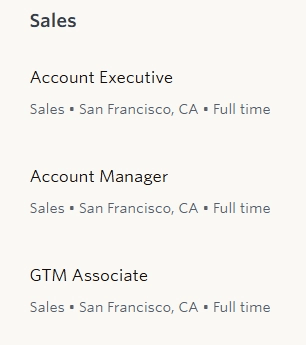
Open jobs in this category are: Account Executive, Account Manager, and GTM Associate. Three sales-focused roles in a company with few employees show that the GTM machine is being built out systematically. Pelle described the company as "founder-led up until $1M ARR" and operating without a dedicated sales hire until hundreds of customers. That constraint is now being removed. The first AE hire typically comes after the sales motion is proven. Hiring multiple sales roles simultaneously suggests the motion is proven and the goal is to scale it.
A Growth Lead role is listed. At this stage, a Growth Lead typically owns paid acquisition, conversion rate optimization, and referral loop design. This hire will likely be responsible for formalizing the referral program that has operated informally through dental study groups, and for scaling the paid ads operation beyond its current testing phase.
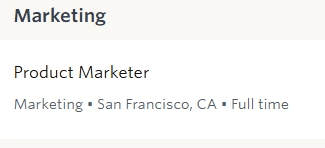
A Product Marketer is also listed. This is the hire who will own messaging, positioning, and the content infrastructure that does not currently exist. The Product Marketer at a company like Lassie will spend the first six months building what is missing: a blog, a resource library, case study documents, and the email sequences that currently have no home.
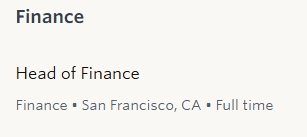
A Head of Finance role is listed. At $47M raised and a $100M ARR trajectory, this hire is preparation for the financial infrastructure needed for a Series B conversation, and eventually a public market conversation.
The Doximity 2026 State of AI in Medicine Report found that 94% of physicians use or are interested in AI, and that the fastest-growing use case is administrative burden reduction. The market Lassie is entering beyond dental is larger, more complex, and more competitive, but the same fundamental pain exists across all independent medical practices.
💡 Steal This: Read the open job postings of a company you are studying before you analyze anything else. The jobs list tells you where the money is going after the funding round, which problems the leadership team has decided to solve next, and which functions have been founder-led until now. It is the most honest signal available about strategic priorities.
Inspiration Points
1. Build ICP discipline into your sales process before you build a sales team.
Every deal at Lassie required the founder's sign-off until well past product-market fit. Pelle or Renken had to decide whether a practice was a good fit before anyone moved forward. That slows things down in the short term.
It also keeps your customer base clean enough that every case study you write reinforces the same message. The Jobs To Be Done framework explains why this matters: when you take on customers whose problem is slightly different from the one your product was built for, your proof starts pointing in too many directions. Lassie's reference base works because they said no a lot.
2. Embed yourself in the buyer's workflow before you build the product.
Pelle and Renken spent months doing dental billing by hand before they wrote code. That produced a product with a 98% automation rate and native integrations with legacy systems that competitors have not built.
Steve Blank's Customer Development methodology makes the same point: the most valuable product insights come from doing the job alongside the customer, not surveying them about it. Founders who have done the work they're automating become the most credible salespeople for it. Their objection handling is specific because their experience was real.
3. Price on outcomes your buyer already measures.
Lassie charges per workflow completed, not per seat. Dentist-owners already track AR backlog, days to payment, and time spent on admin. Pricing against those same metrics turns the first sales conversation into a simple calculation: here's what the problem costs you, here's what we charge, here's what you keep.
The Group Dentistry Now 2026 RCM Report found that 78% of dental practices reported more claim denials or tighter payer scrutiny over the past 12 months. The cost of an unoptimised AR process is going up. Outcome-based pricing lands harder when the buyer already knows the number.
4. Use one customer story everywhere until it stops working.
The Dr. Eric Kwon story runs on every channel Lassie operates: Instagram, LinkedIn, X, Facebook, the homepage, the get-started page, paid ads, and Pelle's personal LinkedIn.
Cialdini's social proof principle is clear: proof works best when the person giving it looks like the person receiving it. Kwon is a dentist-owner. The buyer is a dentist-owner. The numbers are specific: 100 hours a month, 75% AR reduction, and specificity is what makes it land. Generic case studies don't close deals, but this one does.
5. Let referrals carry you to product-market fit before you build a sales function.
Lassie reached hundreds of practices before hiring a dedicated salesperson. Dentist-owners told other dentist-owners in study groups and practice networks, without being asked. The AMA's 2026 Physician Survey found that 70% of physicians see AI as a tool to cut administrative burnout, and in healthcare, awareness of good solutions spreads fastest through peer networks. A referral engine has one requirement: a product that performs well enough that customers talk about it without incentive. Get that right first. The sales team comes after.
6. Build your testimonial page before you need it in a sales conversation.
Lassie has six named, attributed testimonials with specific outcome numbers on their get-started page. Those weren't collected for a campaign. They came from customers who had real experiences and were willing to put their name on it.
CAQH data cited in Sacra's Lassie analysis puts the savings opportunity from full healthcare administrative automation in the US at $21 billion. A buyer about to invest in software to capture part of that need to see that others in the same position already did it and were glad they did. Named proof from peers closes the gap that a product demo can't.
Frequently Asked Questions
What does Lassie AI do for dental practices?
Lassie automates the insurance payment workflow for independent dental practices: EFT enrollment, payment reconciliation, EOB posting, and exception management. The system integrates directly with Dentrix, Eaglesoft, and Open Dental and reports 98% of posting handled autonomously. The team handles only the exceptions that require human review.
How much does Lassie cost?
Lassie uses usage and workflow-based pricing rather than a per-seat subscription. Pricing is calculated based on a practice's claims volume and workflow complexity, and is discussed during the onboarding conversation. No prices are published on the website. The company's stated model is that Lassie gets paid when it does work for the practice.
How long does Lassie take to set up?
Onboarding takes one to two weeks for practices already receiving EFT payments. Practices still receiving paper checks require up to eight weeks for full setup. Lassie enters into a HIPAA Business Associate Agreement with each customer and follows standard healthcare data-handling protocols.
Who founded Lassie, and what is their background?
Lassie was co-founded by Steijn Pelle (CEO) and Frédéric Renken. Pelle was an early growth product manager at Robinhood and Coinbase. Renken was the first product hire at Superhuman. Before building the product, both founders spent months working inside a dental office processing insurance payments by hand to understand the workflow.
How did Lassie grow to 1,000 practices without a traditional sales team?
Lassie's first customers came through peer referrals in dental study groups and practitioner networks. The first customer, Dr. Eric Kwon of Grace Dental, referred colleagues, who referred others. The company reached hundreds of customers and $1M ARR with founder-led sales only, before making its first dedicated sales hire. The referral engine was built entirely on product performance.
What funding has Lassie raised?
Lassie raised $47M in total disclosed funding at the time of the research. Earlier rounds came from SV Angel, Homebrew, and Go Global Ventures. The $35M Series A closed in June 2026, led by Andreessen Horowitz with Alex Rampell taking a board seat. The round included angel investors from Superhuman, Plaid, Wise, and other fintech and healthcare backgrounds.
Does Lassie have reviews on G2 or Capterra?
No G2 or Capterra profile was found for Lassie at the time of research. Social proof is concentrated on the company's own get-started page, which features six named testimonials from dentist-owners with specific outcome metrics. As Lassie moves into more complex sales with DSOs and medical groups, third-party review presence will likely become part of the GTM strategy.
What makes Lassie different from other dental billing software?
Most dental billing tools are built on top of existing practice management systems or require replacing them. Lassie installs a local agent that connects to Dentrix, Eaglesoft, or Open Dental in place, without requiring the practice to change its existing setup. The 98% autonomy rate means the billing workflow runs without ongoing staff involvement for the vast majority of transactions. The outcome-based pricing model means the practice only pays for work that gets done.
What does Lassie's hiring in June 2026 signal about its priorities?
The eleven open roles at the time of research include Account Executive, Account Manager, GTM Associate, Growth Lead, and Product Marketer. The weighting toward sales, growth, and marketing indicates that Lassie is moving from a referral-and-founder-led model to a structured commercial operation. The Head of Finance role suggests preparation for a Series B. The Product Marketer and Growth Lead roles signal that the content and acquisition infrastructure that does not currently exist is about to be built.